


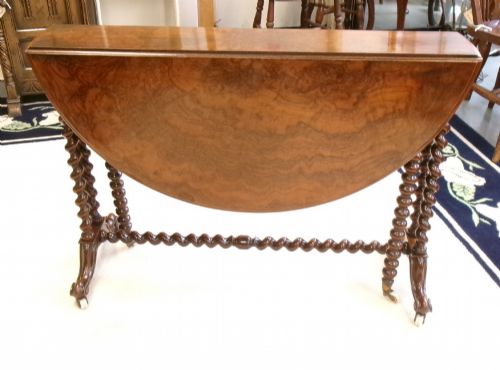
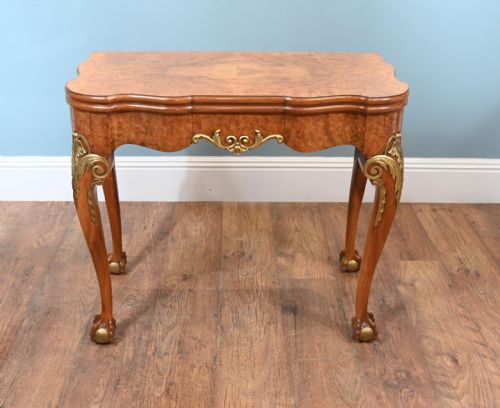
Burr Walnut Folding Table
A burr walnut folding table brings figured grain and clever hinges into a room, offering a surface that transforms from a compact console to a wide playing top.
Burr Walnut Folding Table
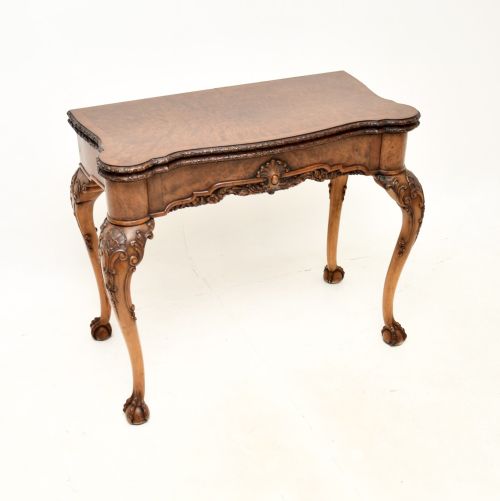
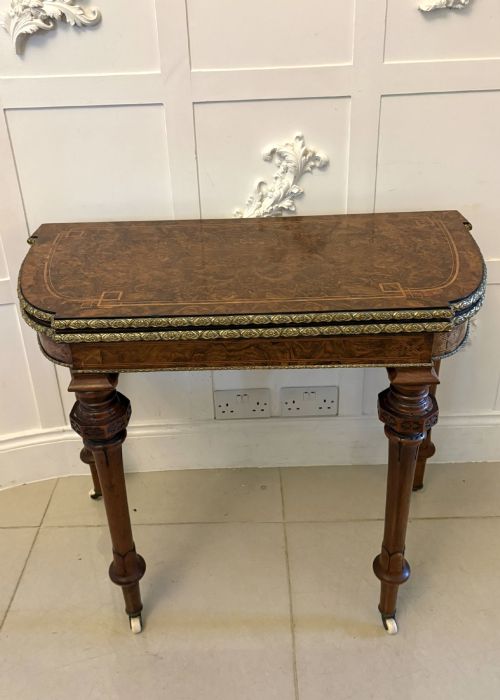
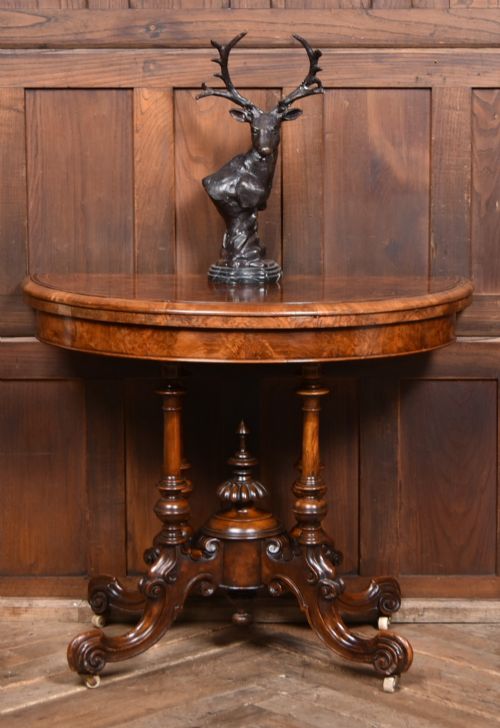
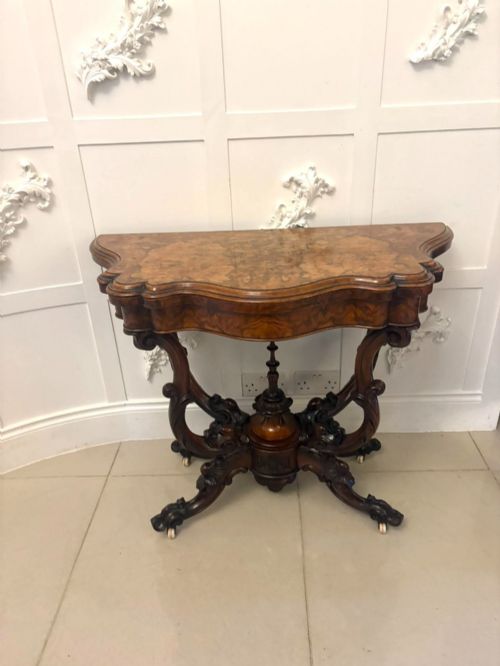
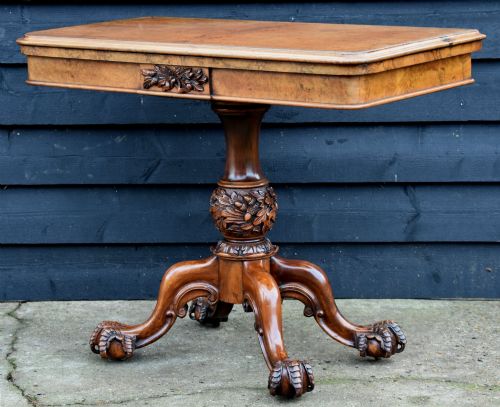
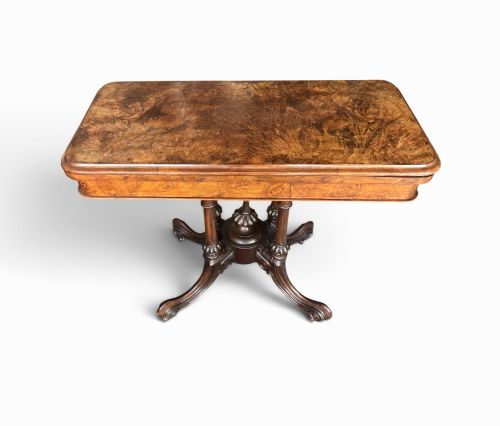
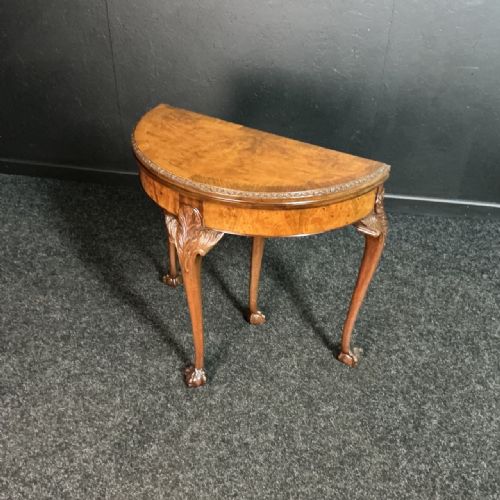
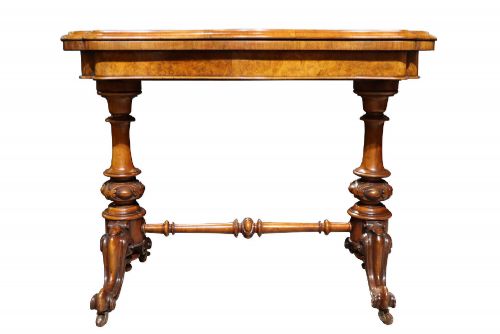
A burr walnut folding table most frequently appears as a Victorian card or games table, designed with a fold-over top that reveals a baize-lined interior for evening entertainment. These pieces span the nineteenth century and extend into later revivals, taking shapes that range from serpentine fronts to demi-lune consoles supported by carved pedestals or pillars.
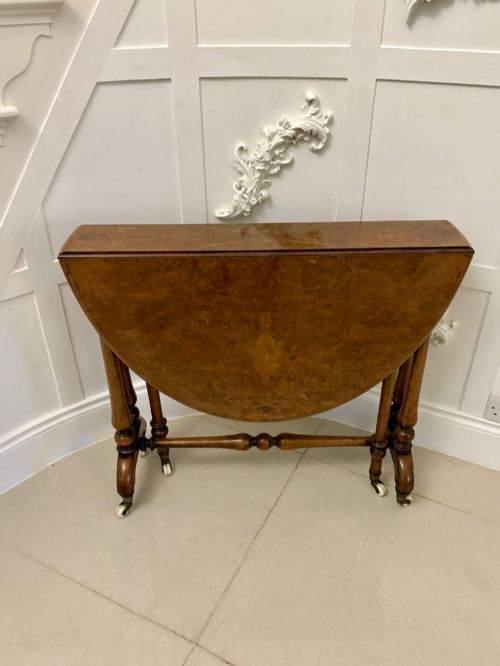
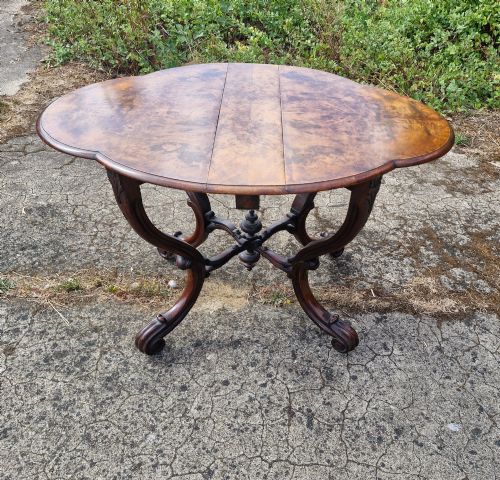
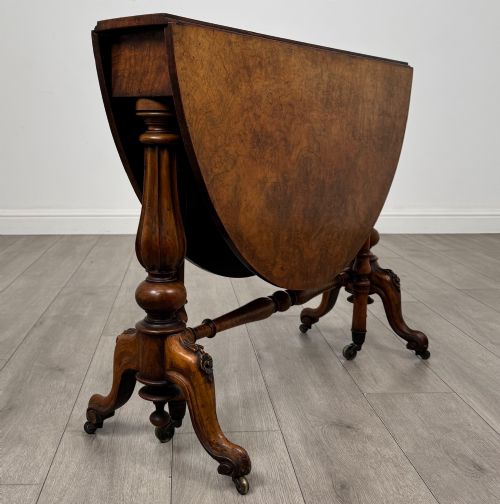
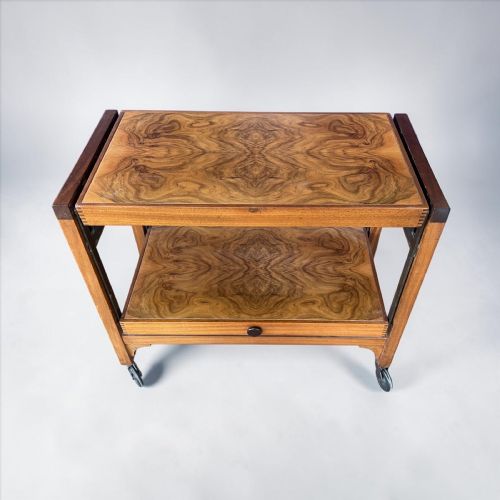
Beyond traditional card tables, the selection includes Sutherland tables with drop leaves and scissor actions, alongside occasional drop-flap designs from the early twentieth century. These variations share a clever mechanism that allows a small footprint against a wall to expand into a functional surface when guests arrive.
Materials and Construction
Cabinet makers achieved the striking patterned surfaces by applying thin veneers of burr walnut over solid wood carcases, often enhancing the natural swirls with delicate floral marquetry and wood inlay. Contrast was introduced through ebonised wood details, while structural stability relied on sturdy timbers and precisely fitted internal pivots.
Metal and ceramic elements completed the construction of finer examples, with brass hinges and castors allowing smooth movement, and ormolu mounts adding decorative weight to the corners and bases. Ceramic components occasionally appeared in working parts or internal compartments of multi-use games and sewing tables.
Some tables double as sewing desks, hiding your darning away beneath a surface meant for high-stakes whist.
Distinctions in Execution
The visual impact of a burr walnut folding table rests heavily on the selection and matching of the veneer, where symmetrical grain patterns across the folding leaves demonstrate superior workshop standards. Finer pieces display crispness in the carved basket bases, pedestal supports, and floral marquetry, whereas simpler iterations rely solely on plain polished timber.
Mechanical precision sets apart the better examples, ensuring the fold-over top or drop leaves pivot smoothly and lock flush without sagging. The integration of bronze mounts, brass pivoting mechanisms, and well-fitted interior wells for cards or sewing implements indicates the original investment of time by the maker.
Edwards and Roberts·Epstein and Co
The Burr Walnut Folding Table Glossary
- Burr walnut
- A wood veneer taken from the warted excrescences of a walnut tree. This growth produces swirling, highly decorative grain patterns prized by cabinet makers.
- Sutherland table
- A narrow drop-leaf table featuring slender swing legs that support the extended flaps. It folds down flat for storage against a wall.
- Marquetry
- Decorative patterns formed by fitting together small pieces of coloured wood veneer. Artisans use this technique to create floral motifs across table tops.
- Ormolu
- Gilded bronze mounts applied for decorative effect. They accent the corners and bases of finer Victorian furniture.
- Demi-lune
- A half-moon shape. Tables with this profile fit flat against a wall before opening out into a full circle or oval.
Burr Walnut Folding Table: Frequently Asked Questions
What were burr walnut folding tables used for?
These tables served primarily for parlour games, card playing, and social gatherings in nineteenth and early twentieth century homes. The folding top concealed a baize-lined surface kept ready for evening entertainment.
Secondary uses included tea service and needlework, particularly in multi-functional designs that incorporated interior compartments for sewing implements or writing materials. When folded, they functioned as console or side tables against a drawing room wall.
How do I care for burr walnut veneer?
Keep the wood away from direct sunlight and steady heat sources to prevent the thin walnut veneer from drying out or splitting. Dust gently with a dry, soft cloth and avoid chemical polishes that can build up on the polished surface.
Wax polish applied sparingly once or twice a year helps maintain the moisture and sheen of the wood. Lift the table rather than dragging it across the floor to protect the joints and any delicate lower pedestals.
How can I tell a Victorian table from a later revival?
Victorian examples from the mid to late nineteenth century typically feature hand-cut dovetails, heavier timber carcases, and traditional shellac French polish. The joinery and the density of the secondary woods inside the framing often point to nineteenth-century workshop practices.
Later pieces from the twentieth century often display machine-made elements and lighter interior construction, even when adopting earlier styles like Queen Anne or Louis XV revivals. Examining the hinge mechanisms and the backing timber provides further clues to the exact manufacturing period.
How do the folding mechanisms work?
Card tables usually employ a fold-over top where one half swings open on pivot hinges to rest upon a rotating or gate-leg underframe. This reveals a hidden well beneath the surface for storing playing cards and counters.
Sutherland and drop-flap tables rely on hinged leaves supported by pivoting wooden scissor legs that swing outward from the central gate. These actions are designed to operate smoothly by hand without requiring complex tools or latches.