
Burr Walnut Dressing Desk
A burr walnut dressing desk brings rich, swirling grain and dual-purpose function to a room.
Burr Walnut Dressing Desk
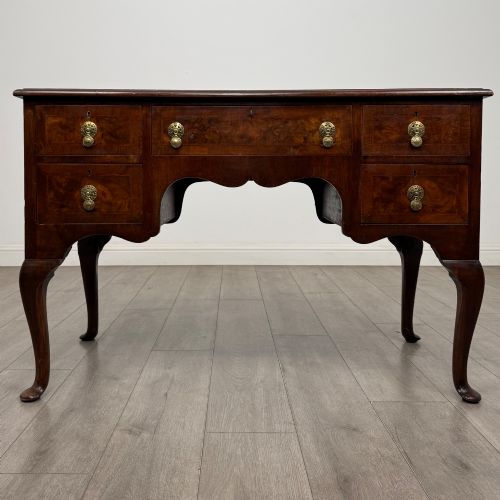
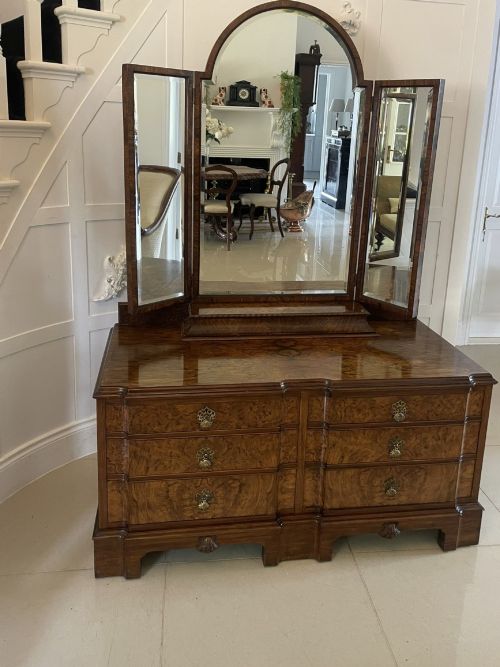
A burr walnut dressing desk serves both as a surface for personal grooming and as a practical writing table. When you search for a burr walnut dressing desk, you encounter pieces that blur the line between bedroom vanity and study furniture, often equipped with mirrors or multiple small drawers.
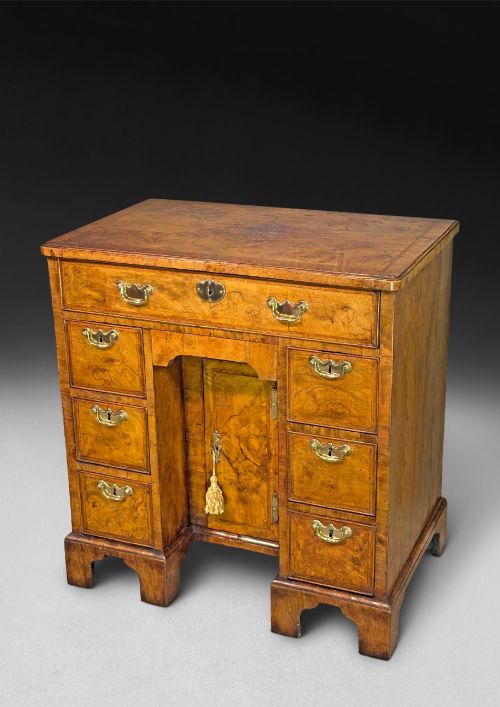
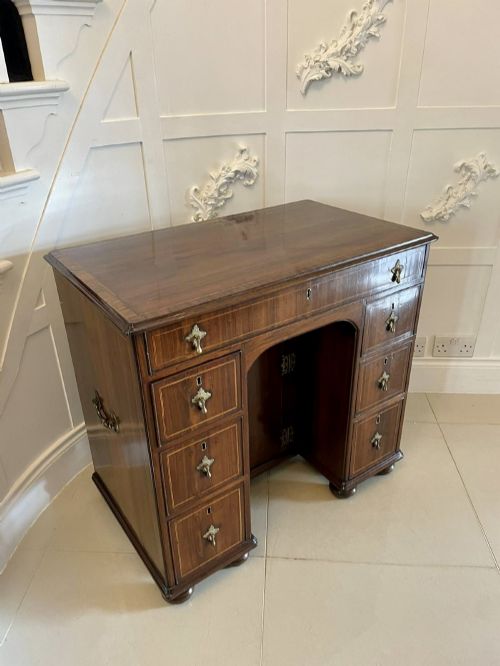
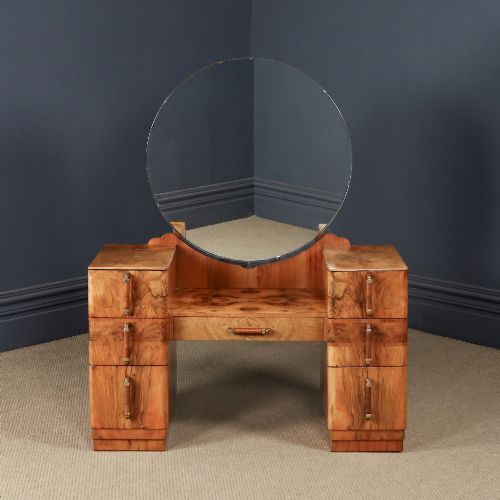
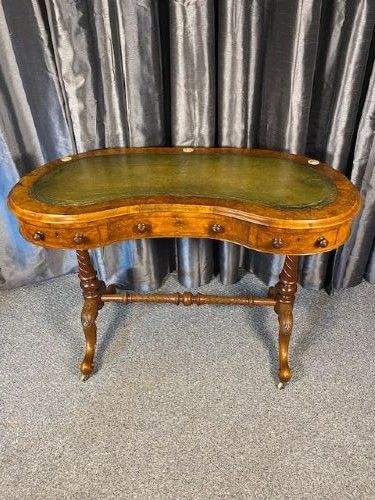
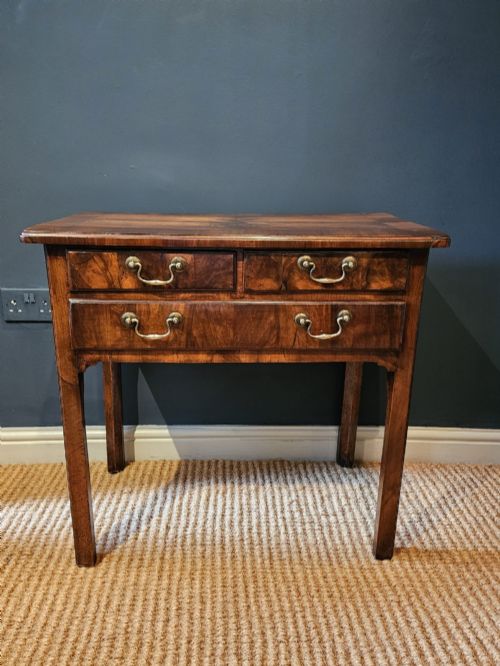
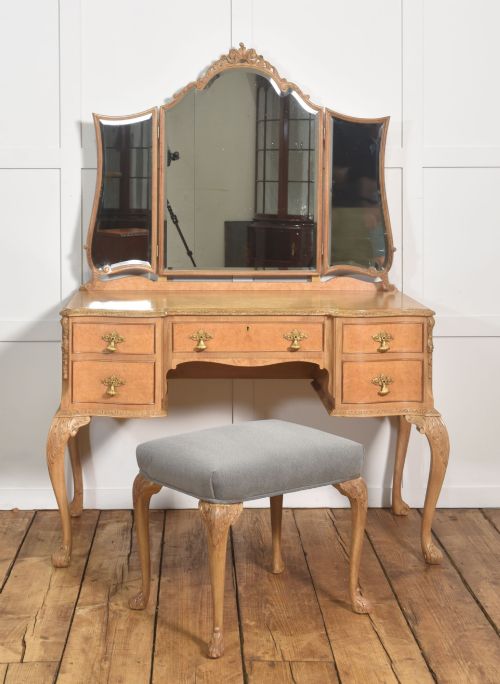
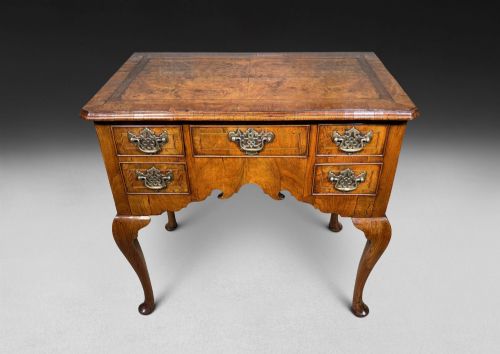
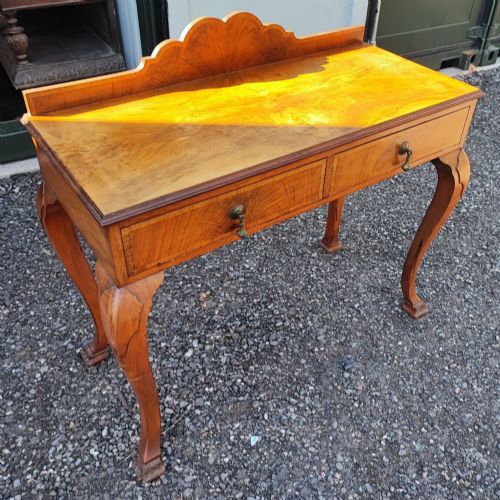
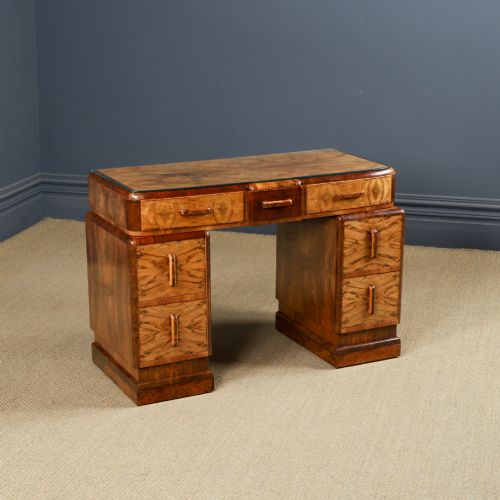
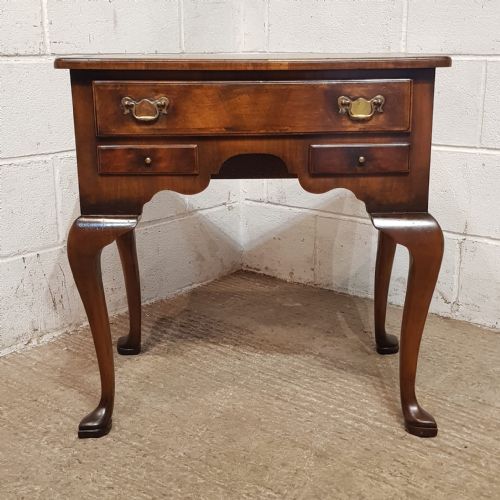
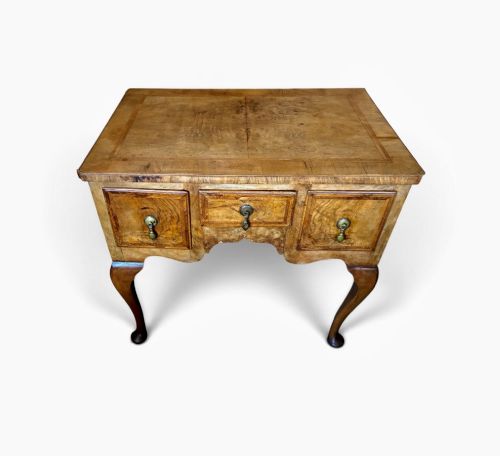
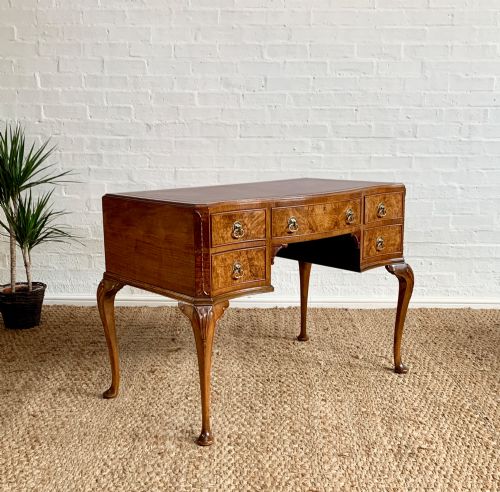
The selections span from 18th century lowboys and Georgian kneehole forms to Victorian duchess tables and streamlined Art Deco pedestal designs from 1930. The version most commonly met on this page combines a writing surface with kneehole drawer configurations or dressing mirrors, reflecting styles from Queen Anne Revival to 1920s cabinetmaking.
Forms include side tables, console tables, and dedicated vanity suites complete with matching stools. These pieces originate across the Georgian, Victorian, and early 20th century periods, demonstrating a continuous appreciation for figured wood veneers in domestic spaces.
How they were made
Cabinetmakers utilised thin slices of highly figured burr walnut veneer, prized for its complex knot formations, laid over stable secondary timbers such as oak. This decorative skin creates the signature mottled patterns across the top and drawer fronts.
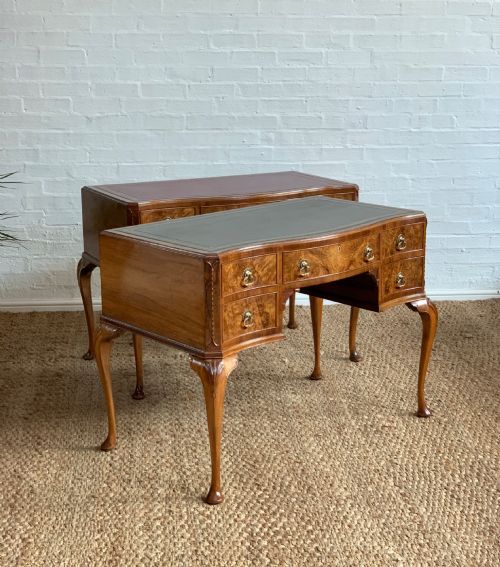
Secondary materials provide structural integrity while brass handles, glass mirror plates, and tooled green leather writing surfaces complete the construction. Joinery techniques from dovetailing in the drawers to precise veneer matching define the assembly of these desks.
Listings feature burr walnut dressing desks spanning the Georgian, Victorian, and Art Deco periods, utilising brass, glass, and leather.
What varies in quality
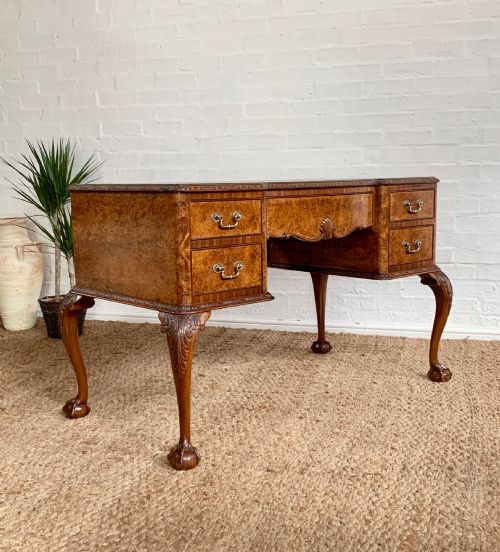
The choice of burr walnut veneer sets the visual standard, where symmetrical grain matching and deep, natural figuring elevate a piece far above plain timber surfaces. Cabinetmakers who carefully wrapped the grain around curves and drawer edges achieved a cohesive, fluid appearance.
Construction methods and hardware selection further divide the range, from simple softwood carcases to robust oak linings and finely cast original brasses. The integration of mirrors, whether fixed or triple-hinged, and the crispness of carved details like cabriole legs show the maker's hand.
Wylie and Lochhead Glasgow·Maples of London·Shoolbred and Co
The Burr Walnut Dressing Desk Glossary
- Burr walnut
- A thin decorative wood veneer sliced from the woody growths or burls on walnut trees, characterised by swirling patterns and dense clusters of knots. This material forms the primary visual appeal of these dressing desks.
- Kneehole desk
- A compact writing table featuring a central recessed space for the legs, flanked by columns of small drawers. This form often doubles as a dressing table.
- Lowboy
- A small low table with one or more rows of drawers, originating in the early 18th century. They frequently serve as dressing tables or writing desks.
- Veneer
- A thin layer of choice wood applied to a solid secondary timber base to create decorative surfaces without warping the underlying structure. Master craftsmen excelled at book-matching these sheets.
- Queen Anne style
- A graceful furniture design idiom characterised by cabriole legs, pad feet, and restrained curves popularised in the early 18th century and revived in later eras.
Burr Walnut Dressing Desk: Frequently Asked Questions
How do I use a dressing desk today?
These pieces function ideally as compact writing desks in a study or as elegant dressing tables in a bedroom. Their multiple drawers offer convenient storage for modern stationery or cosmetics.
Position the desk near natural light to appreciate the intricate burr walnut grain. Pairing the table with a simple stool or upholstered chair maintains the traditional proportions.
Were these originally desks or dressing tables?
Many examples were designed to serve both purposes interchangeably, reflecting historical furniture traditions where multi-use items saved space. The inclusion of compartments, mirrors, or kneeholes allowed owners to write letters or apply grooming preparations at the same surface.
Makers frequently adapted standard writing table frames by adding mirrors or specialised drawer layouts. This versatility explains why similar forms appear under multiple historical descriptions.
How do I distinguish an 18th century piece from a later revival?
Examine the secondary woods inside the drawers and the construction methods used for the dovetails. Eighteenth-century pieces typically feature hand-cut joints and native timbers like oak or pine in hidden areas.
Revival pieces from the Victorian era or the 1920s often display machine-assisted precision or different interior woods. The thickness of the walnut veneer and the style of the brass hardware also offer clues to the true age.
How should I care for burr walnut veneer?
Keep the wood away from direct sunlight and extreme temperature fluctuations to prevent the delicate veneer from drying out or lifting. Dust regularly with a soft, dry cloth and avoid silicone-based polishes.
Applying a traditional beeswax occasionally helps nourish the walnut surface. Protecting the top from moisture ensures the grain retains its depth and clarity over time.