


Burr Walnut Buffet
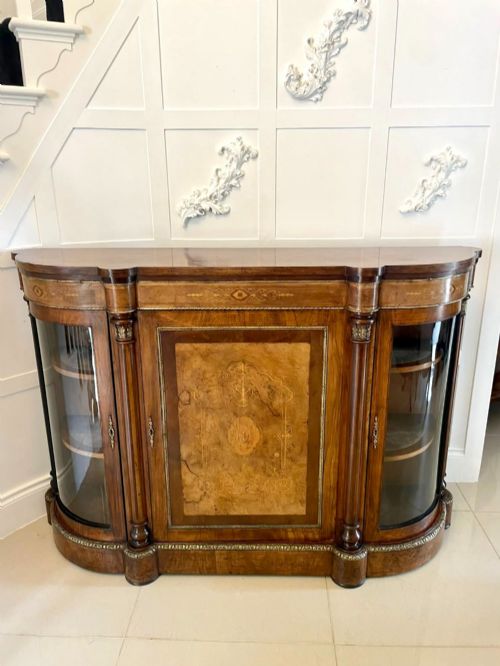
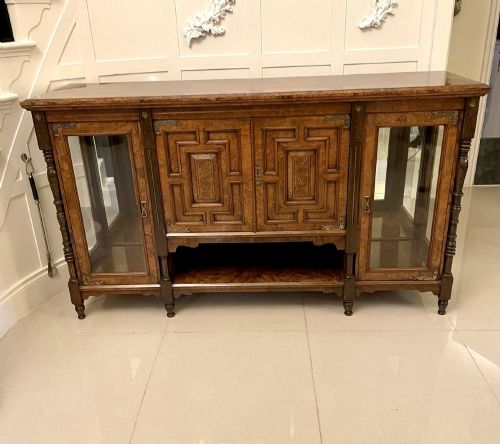
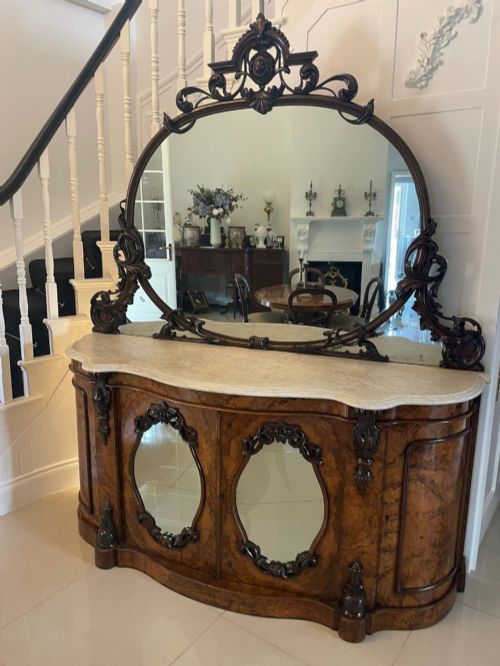
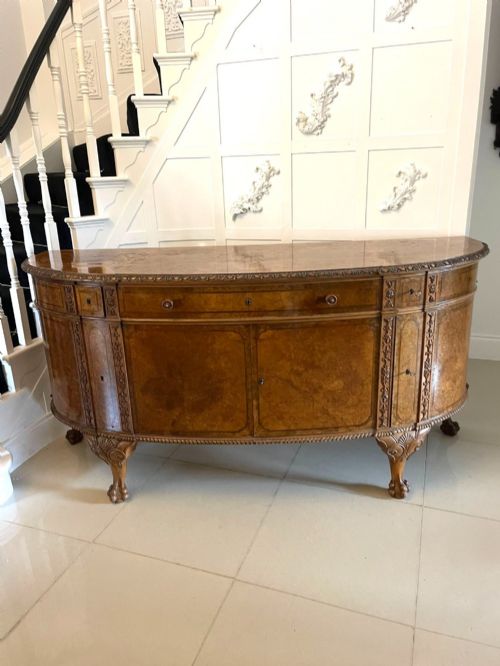
Burr walnut buffet pieces bring rich, highly figured timber grain and generous storage into a room.
Burr Walnut Buffet
A burr walnut buffet combines substantial storage with the distinct swirling grain patterns of burr timber, appearing in forms such as credenzas, sideboards, and tiered server tables. These items serve dining rooms and living spaces alike, providing flat top surfaces for service alongside enclosed shelving.
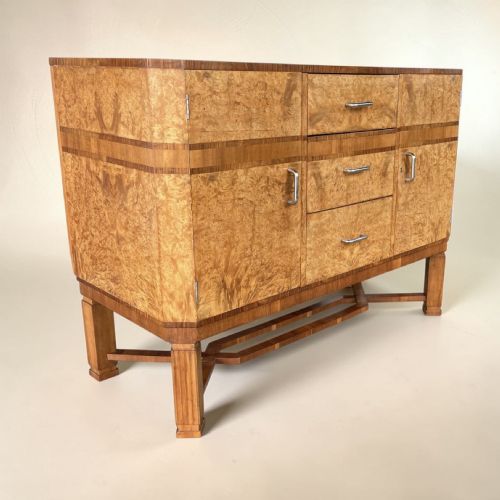
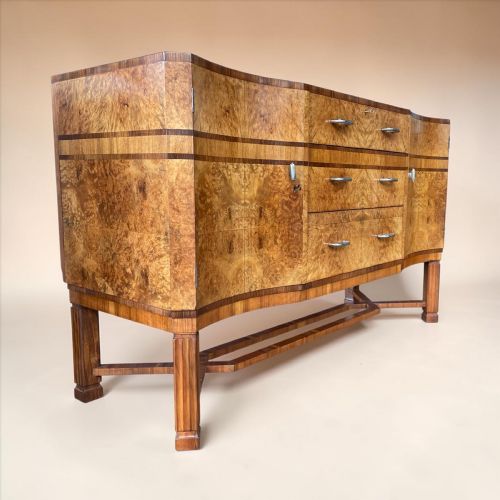
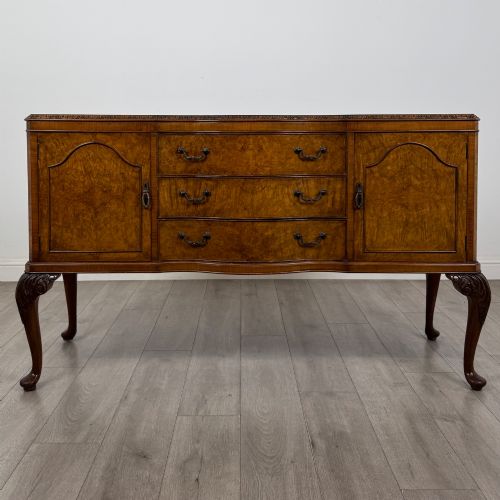
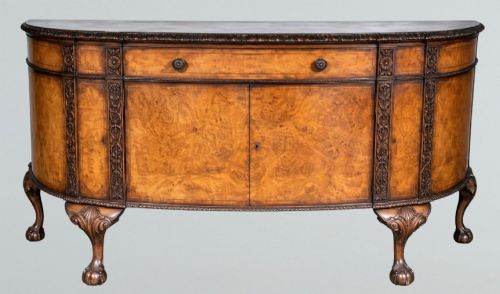
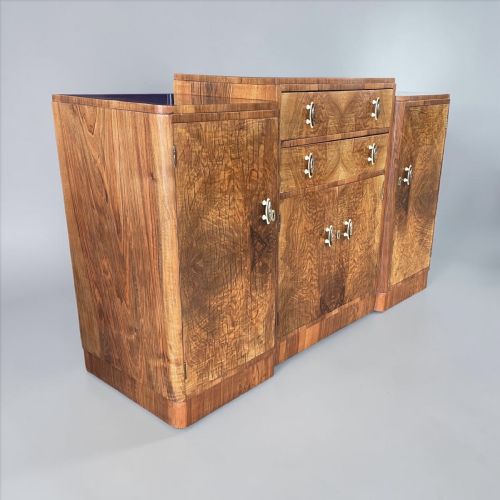
The selection spans Victorian periods through to Art Deco and 1930s modernist designs, reflecting shifts from heavily inlaid cabinetry to streamlined geometric silhouettes. Pieces emerge in various regional revivals including Queen Anne, Georgian, and Louis XV styles.
Makers and workshops range from Victorian cabinet makers to prominent twentieth-century firms like Hille and Epstein, matching functional utility with decorative presence.
How They Were Made
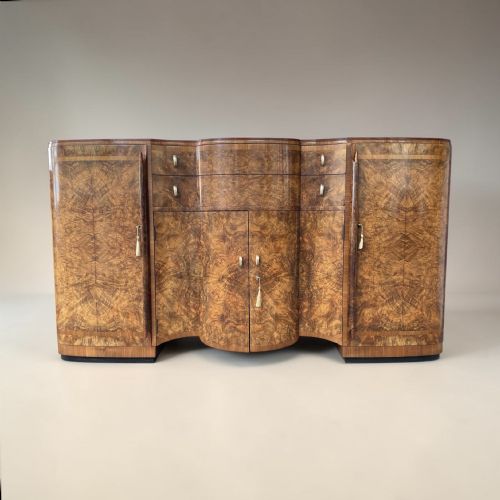
Craftsmen applied thin veneers of burr walnut over solid secondary timbers, carefully book-matching the swirling grain across doors and drawer fronts to create symmetrical patterns. This technique maximised the visual impact of scarce, highly figured growths from walnut trees.
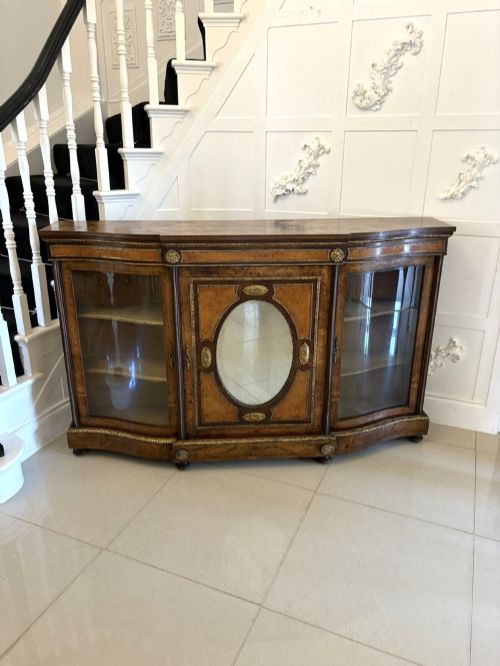
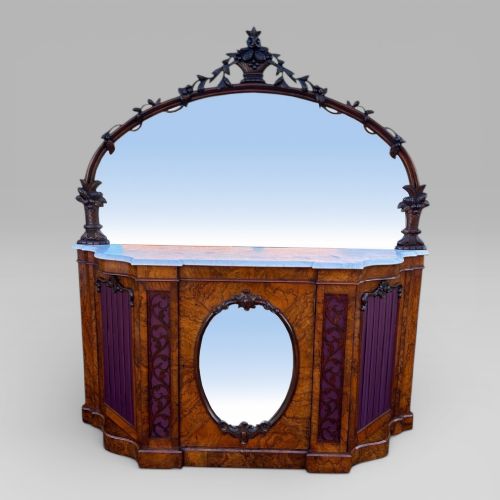
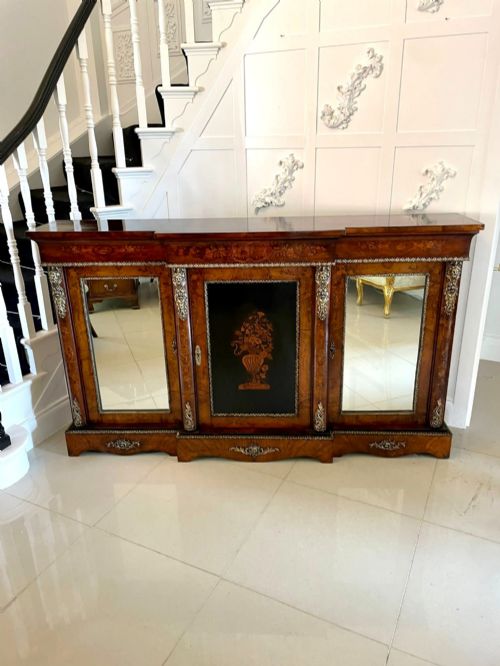
Mounts in ormolu, brass, and gilt bronze highlight structural corners and door frames, whilst marble tops provide durable surfaces on specific Victorian and continental buffet designs. Marquetry inlay, glass panels, and carved mirror backs further enrich the primary timber framework.
Materials recur in combinations of burr walnut veneer, marble, ormolu, and brass hardware.
What Varies in Quality
The density and continuity of the burr walnut grain dictate the visual standard of the piece, with matched patterns demonstrating superior timber selection. Skill in cutting and laying the veneer ensures stability and longevity across large surface areas.
Execution of secondary details separates standard production from finer examples, visible in the precision of marquetry, the weight of cast ormolu mounts, and the integration of carved architectural elements.
Maurice Adams·Harry and Lou Epstein·Hille·Hamptons of Pall Mall London
The Burr Walnut Buffet Glossary
- Burr Walnut
- Timber taken from the wart-like growth on a walnut tree, producing intricate, swirling grain patterns highly prized for decorative veneer work. It requires expert application to prevent lifting over time.
- Credenza
- A low cabinet or sideboard, frequently featuring glass doors or mirrored backs, developed in the Victorian era for display and storage. Ormolu mounts and floral marquetry often embellish these pieces.
- Ormolu
- Gilt bronze ornamentation applied to furniture mounts, feet, and borders during the nineteenth century. It provides a metallic contrast to dark timber surfaces.
- Marquetry
- The art of applying pieces of veneer to a structure to form decorative patterns and pictures. Floral motifs appear frequently on Victorian cabinet doors.
- Buffet
- A sideboard or serving table designed for holding food, tableware, or linens during dining occasions. Multi-tiered versions also function as dumb waiters.
Burr Walnut Buffet: Frequently Asked Questions
How do I style a burr walnut buffet?
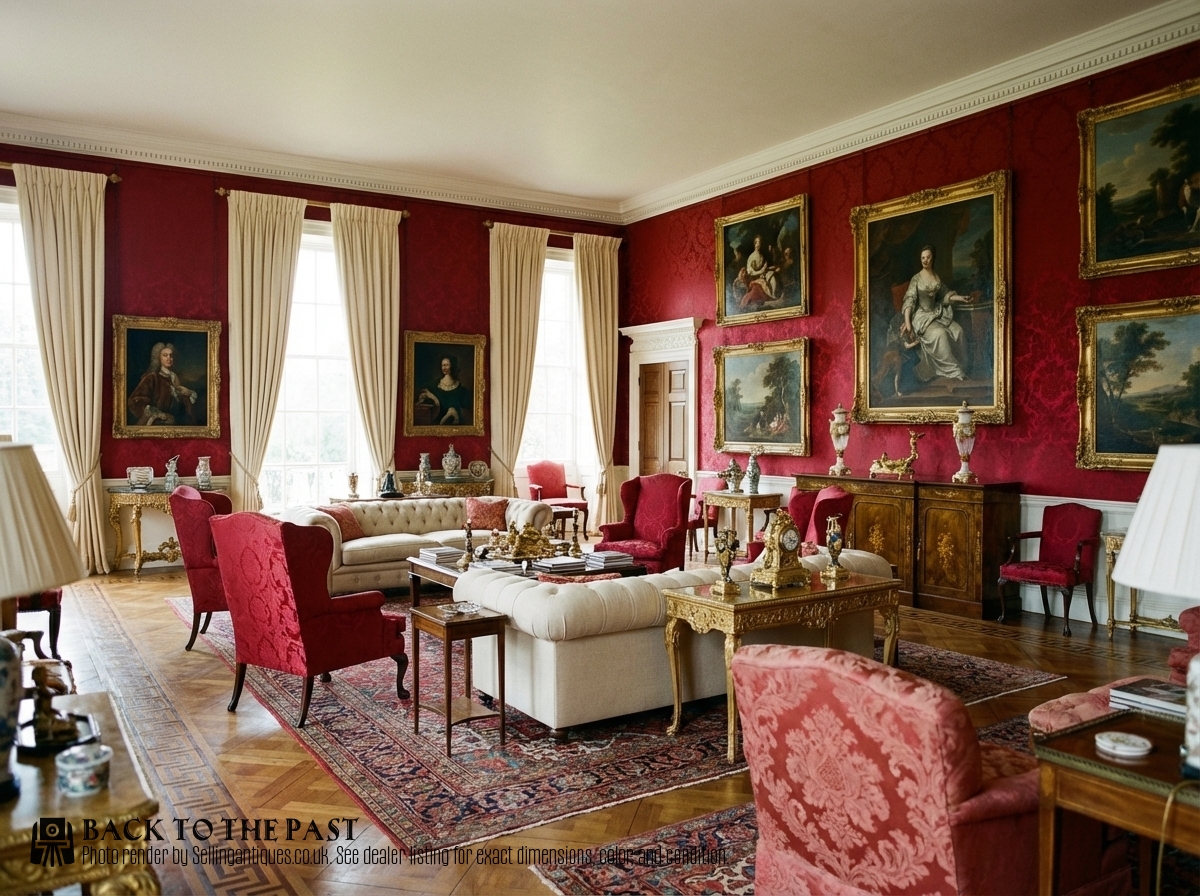
Position the buffet against a neutral wall to allow the figured timber grain and ormolu mounts to stand out without visual competition. Keep decorative items on the top surface minimal to preserve the impact of the wood.
Pair the piece with lighting that highlights the warm tones of the walnut veneer. Complementary tableware or ceramics placed inside glass-fronted cabinets complete the traditional or modern arrangement.
What is the difference between a buffet and a sideboard?
Buffets traditionally focus on serving food and holding dishes during meals, often incorporating tiers or open display surfaces. Sideboards lean more towards enclosed storage with cupboards and drawers for cutlery and linens.
Over time, these terms became interchangeable in furniture descriptions. Many pieces combine elements of both functions within a single timber cabinet.
How do I care for burr walnut timber?
Maintain the wood by dusting regularly with a soft, dry cloth and avoiding excessive moisture. Keep the furniture away from direct sunlight and heat sources to prevent the veneer from drying or cracking.
Apply a quality beeswax polish periodically to nourish the surface and preserve the natural sheen of the walnut grain. Avoid silicone-based sprays that damage antique finishes.
How can I tell Victorian pieces from Art Deco examples?
Victorian burr walnut buffets feature ornate carved details, floral marquetry, ormolu mounts, and mirrored backs. The silhouettes tend to be curvaceous, reflecting historic revival styles such as Queen Anne or Louis XV.
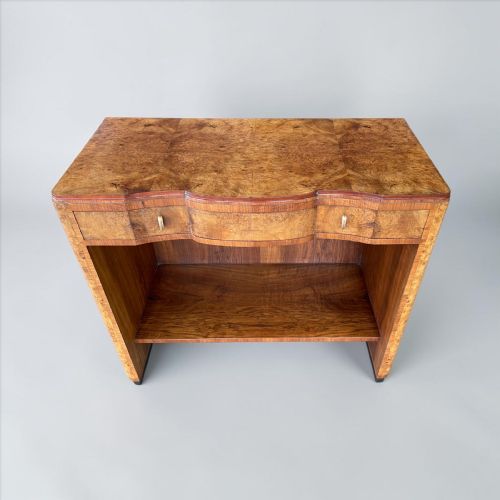
Art Deco versions from the 1930s embrace streamlined geometric forms, smooth polished surfaces, and contrasting secondary timbers like sycamore. These modernist designs drop heavy ornamentation in favour of clean architectural lines.