
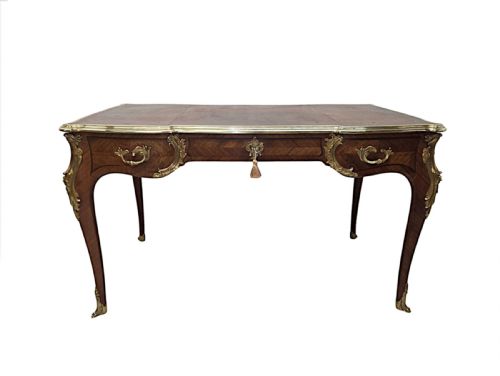
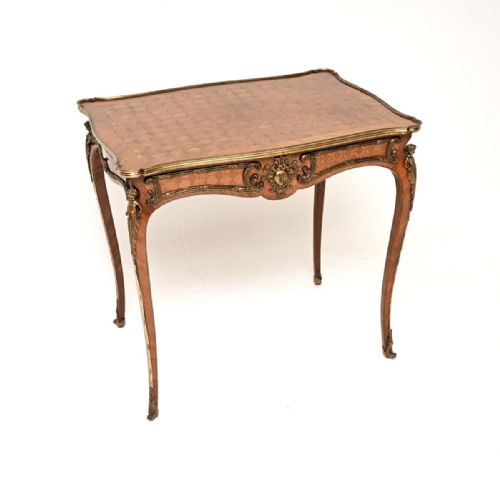
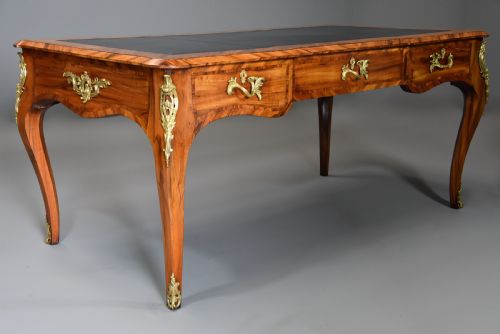
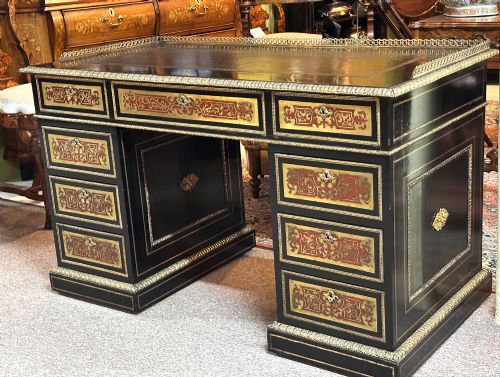
Bureau Plat Desk
A bureau plat desk is a freestanding writing table designed to sit in the centre of a room, bringing French elegance and practical workspace together.
Bureau Plat Desk
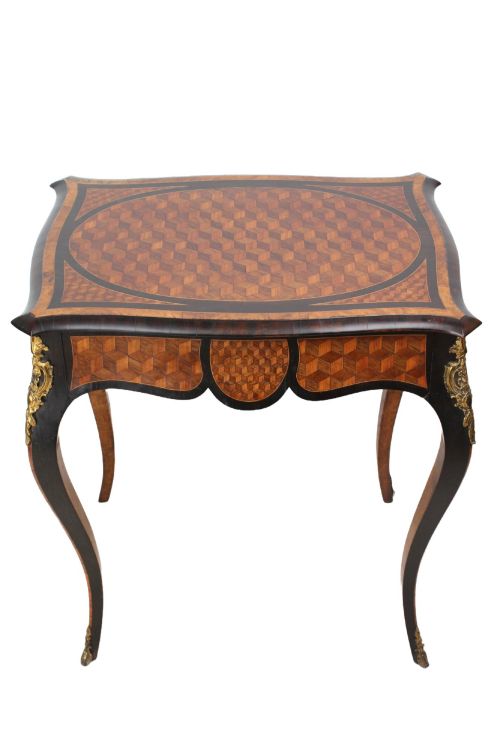
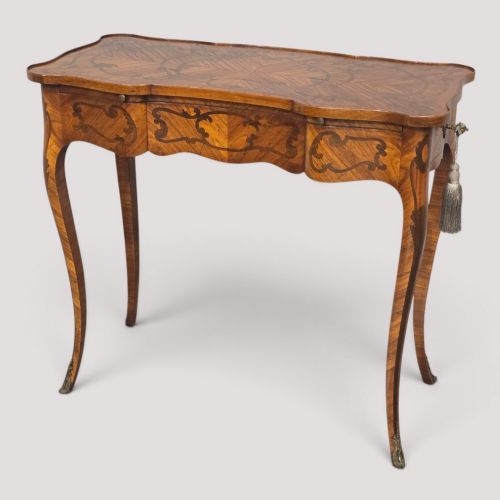
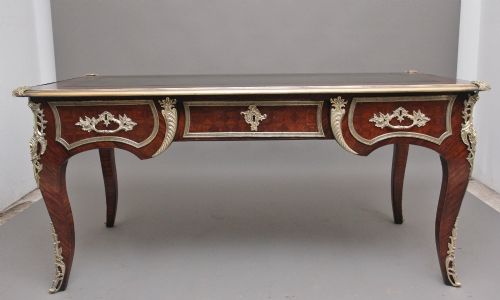
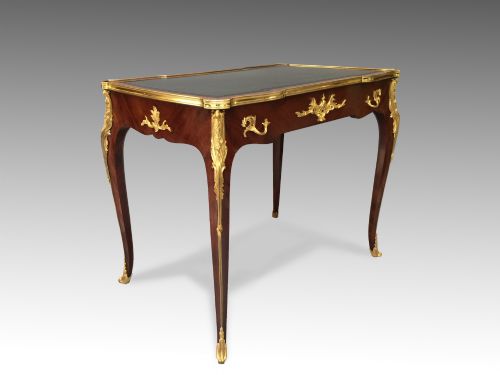
When searching for a bureau plat desk, buyers encounter freestanding writing tables primarily originating from the nineteenth century. These pieces function as central writing surfaces finished on all sides so they do not need to stand against a wall.
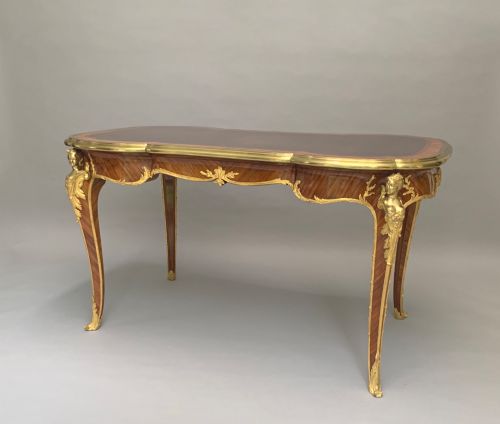
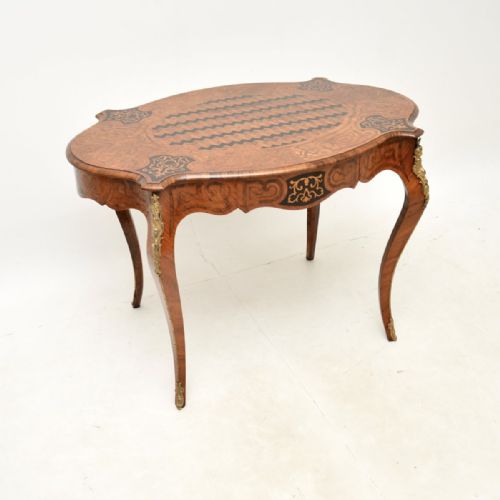
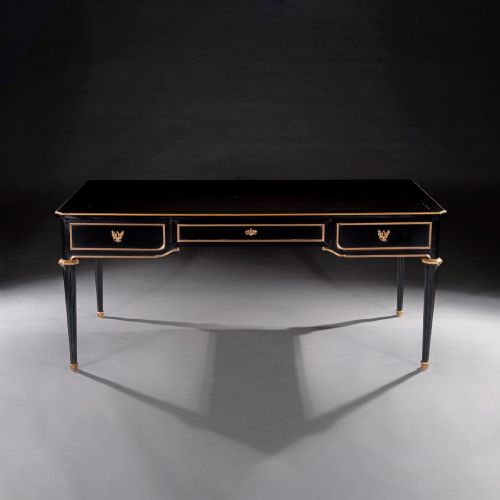
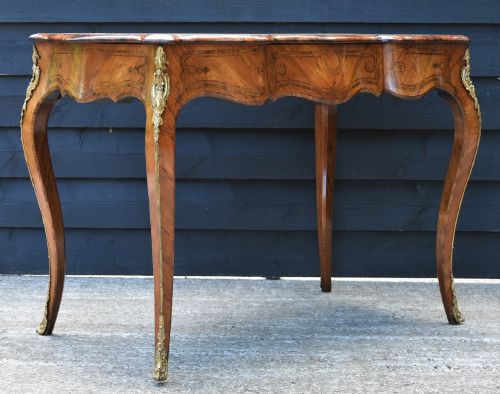
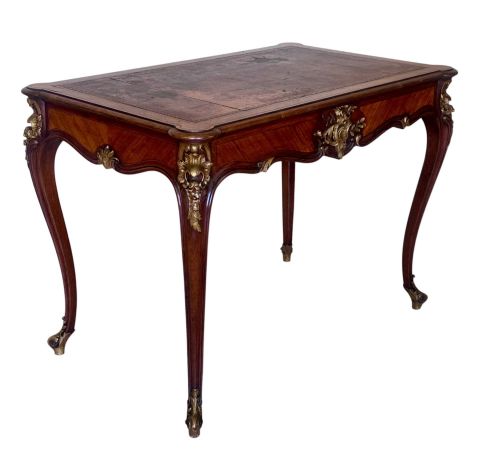
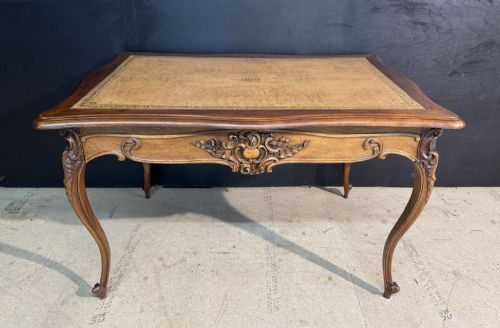
The prevailing style on this page is French revival, particularly Louis XV and Louis XVI interpretations, alongside Victorian variations. Many examples incorporate leather inset writing surfaces paired with serpentine or kidney shapes.
Makers and retailers from the nineteenth century such as François Linke and Edwards & Roberts produced elaborate variations of these tables. The selection also includes simpler walnut, mahogany, and parquetry forms intended for domestic studies.
How They Were Made
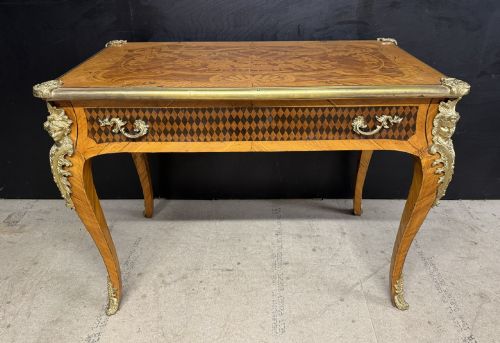
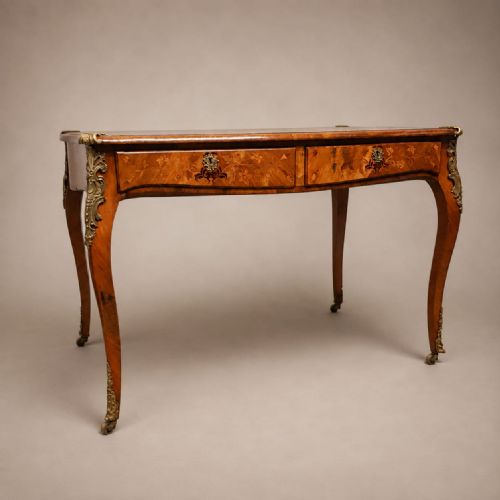
Cabinetmakers constructed these desks using native and exotic timbers like kingwood, walnut, rosewood, and mahogany as carcase foundations. Marquetry and parquetry veneers formed geometric or floral patterns across the tops and drawer fronts.
Gilt bronze and ormolu mounts highlighted the structural lines, corners, and sabots of the legs, cast and chased in the French manner. Inset leather writing surfaces provided a durable writing plane, frequently tooled with gold leaf borders.
Bureau Plat Desk Retail Price Guide 2026
Typical asking prices for bureau plat desk among the pieces listed under this phrase on Sellingantiques today, from the lower quarter to the upper quarter. They describe what is for sale here now, not the wider market.
Listings feature eighteenth-century echoes through nineteenth-century revival periods, using kingwood, mahogany, walnut, and ormolu mounts.
What Varies in Quality
The distinction between standard production and masterwork pieces rests in the execution of the bronze mounts and the precision of the timber veneers. Finer desks feature crisply chased ormolu where every detail remains sharp, whereas lesser pieces show softer, cast-blurred metalwork.
JAS Shoolbred·Francois Linke·Edwards & Roberts·Durand·CH. Jeanselme & Co·Hopilliart Paris
The Bureau Plat Desk Glossary
- Bureau plat
- A freestanding writing table fitted with drawers, designed to stand in the middle of a room. This form dates back to seventeenth-century France and remains the primary term for these desks.
- Ormolu
- Gilt bronze mounts applied to furniture for decoration and edge protection. The technique involves applying a mercury and gold amalgam to cast bronze before firing.
- Marquetry
- Decorative veneer work arranged in pictorial or floral patterns using various coloured woods. Master cabinetmakers contrasted different timbers to achieve naturalistic shading.
- Parquetry
- Geometric veneer patterns such as cubes, lozenges, or herringbone designs. This technique showcases the grain and colour of woods like kingwood and satiné.
- Boulle work
- Inlay technique utilising tortoiseshell and brass, popularised in France. It adds a dramatic metallic sheen to the surfaces of writing desks.
Bureau Plat Desk: Frequently Asked Questions
Can a bureau plat desk float in the middle of a room?
Yes, these desks are specifically designed to be freestanding. The back is finished with the same attention to detail and veneer work as the front.
This allows placement in the centre of an office or study without needing support from a wall.
How do I distinguish Louis XV revival from Louis XVI style?
Louis XV revival pieces feature curved serpentine lines, cabriole legs, and naturalistic rococo ormolu mounts. The overall silhouette appears flowing and asymmetrical.
Louis XVI style desks introduce neoclassical straight tapered legs, fluting, and geometric symmetry with crisper bronze mounts.
What are partners desks within this category?
Partners desks are larger variations equipped with drawers on both sides to accommodate two people working opposite each other. They retain the finished all-round appearance of standard bureau plat tables.
These large formats were built for libraries and grand administrative rooms.
How should I care for the leather writing surface?
The inset leather top requires gentle cleaning with a slightly damp cloth followed by a neutral leather cream. Avoid harsh modern chemical sprays that can strip the gold tool work.
Keeping the room humidity stable prevents the leather from drying and cracking over decades of use.