

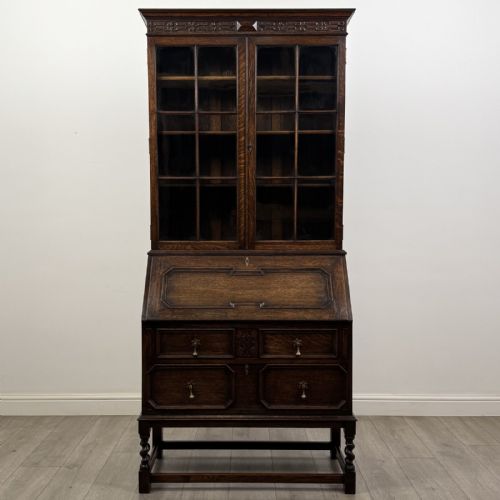
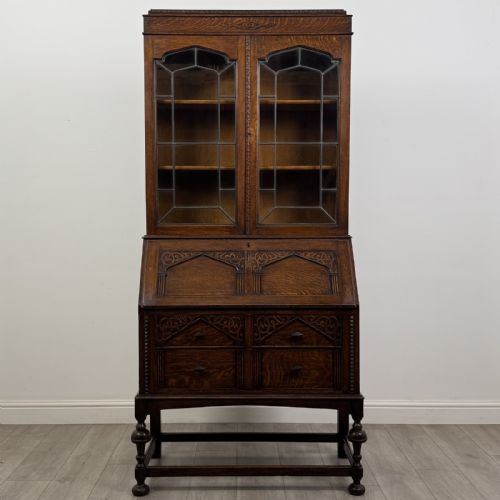
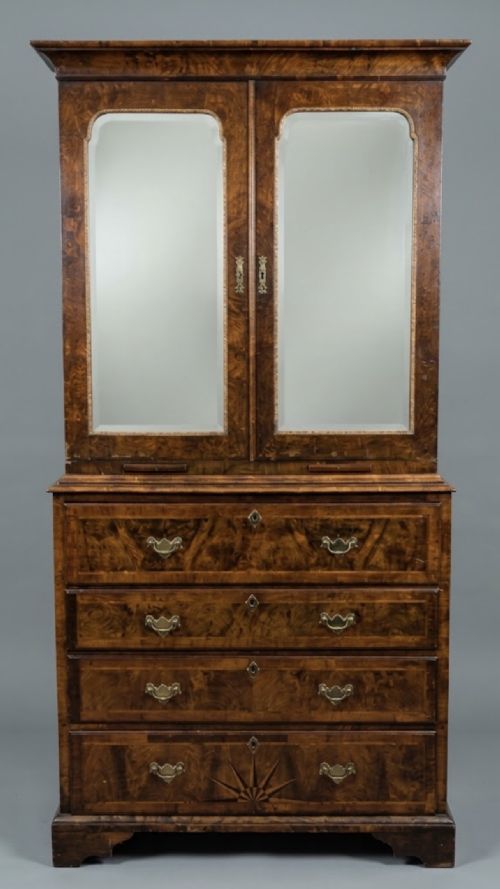
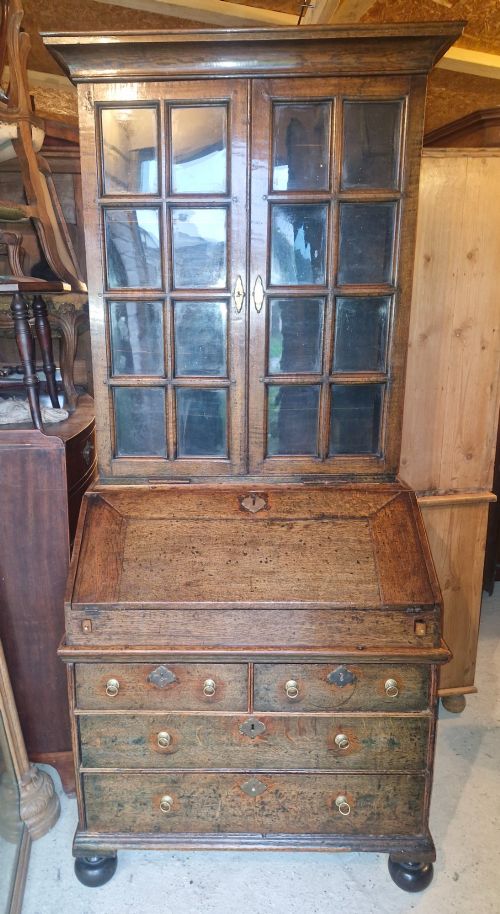
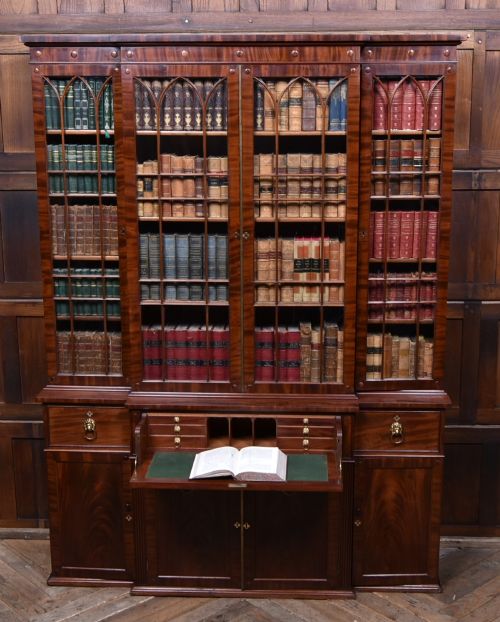
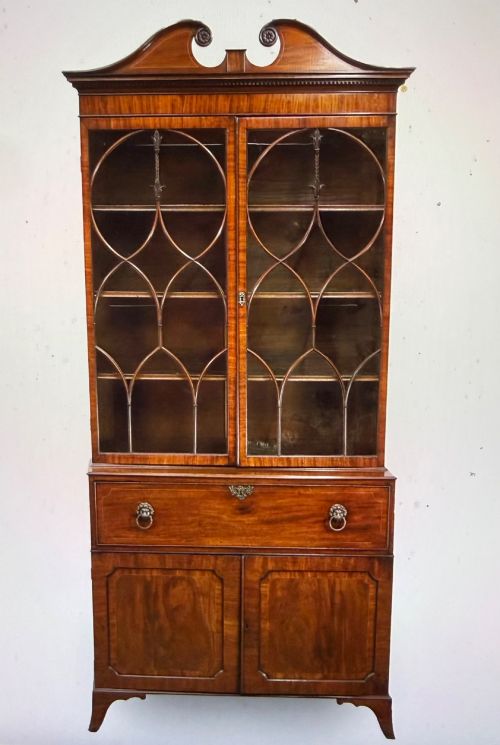
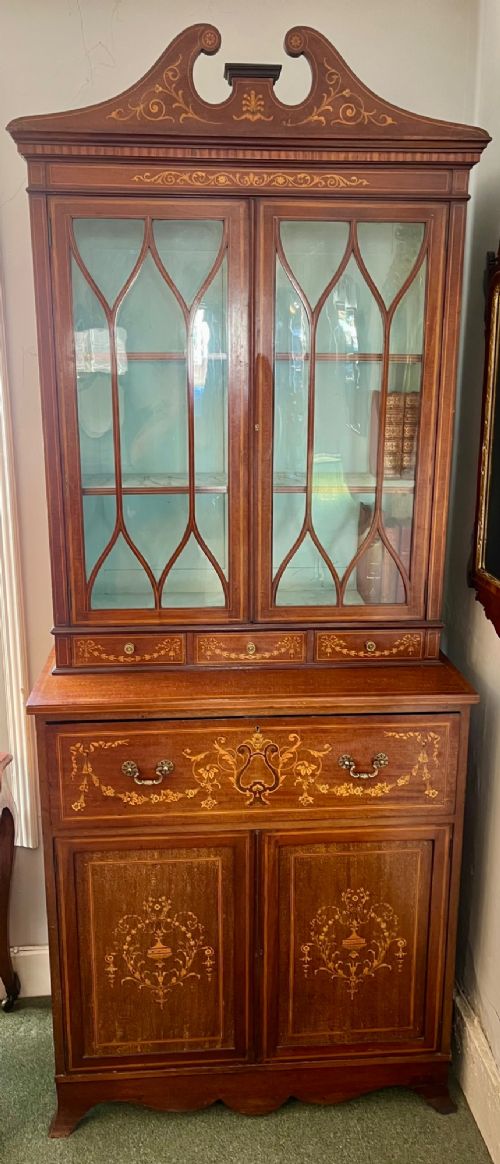
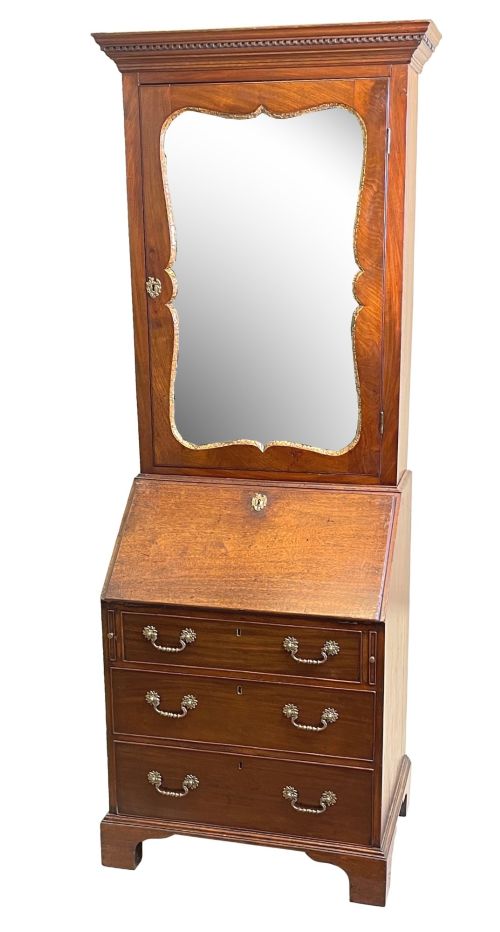
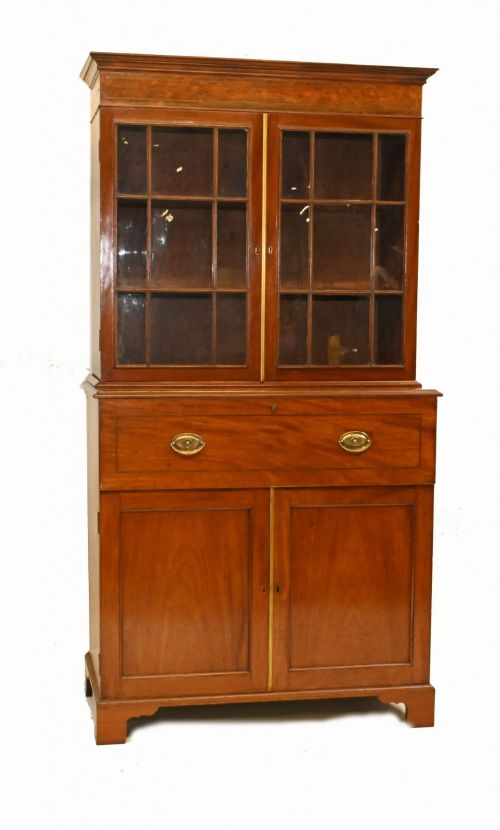
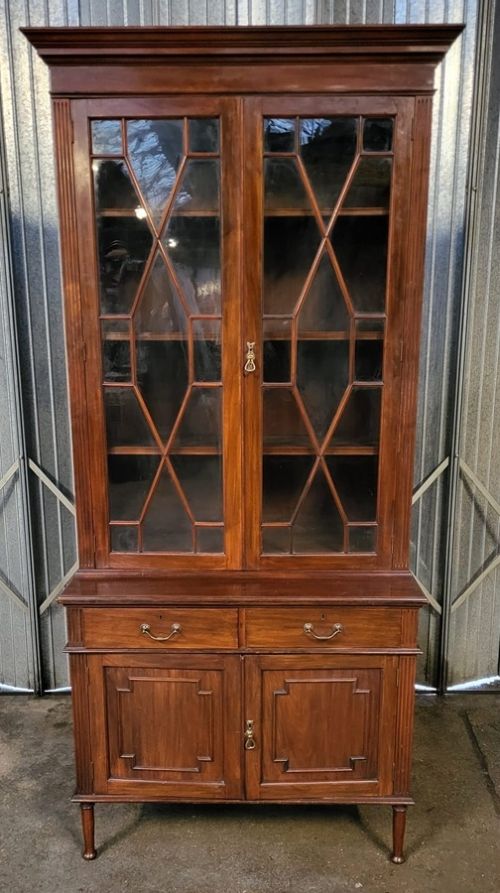
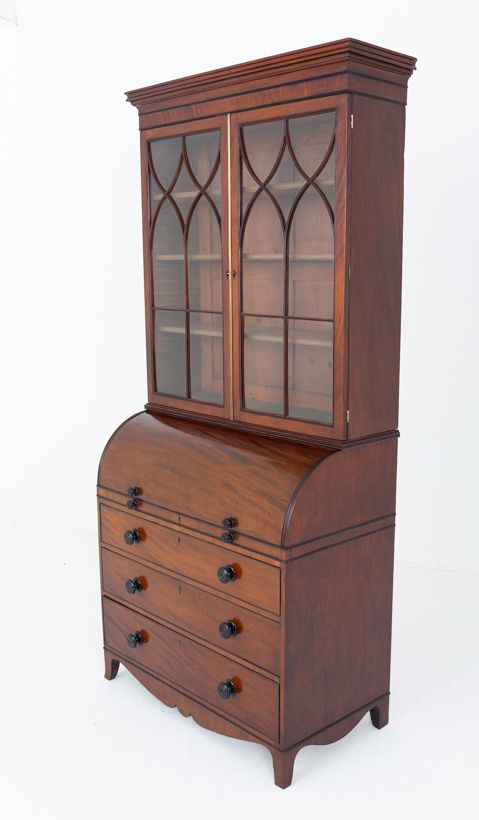
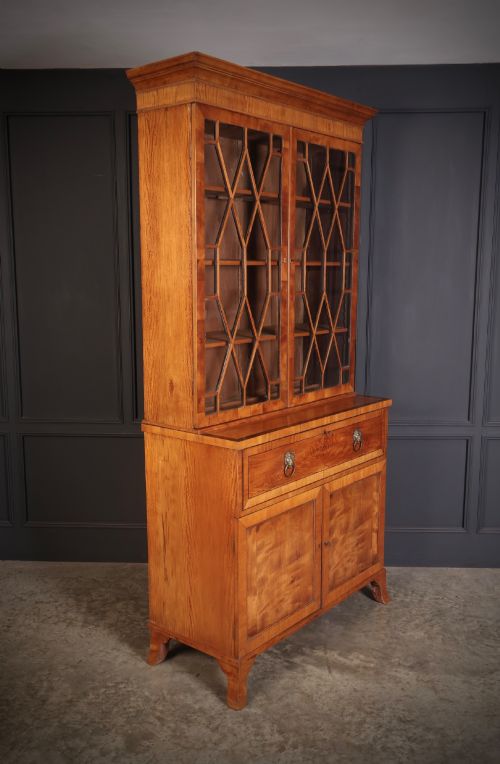
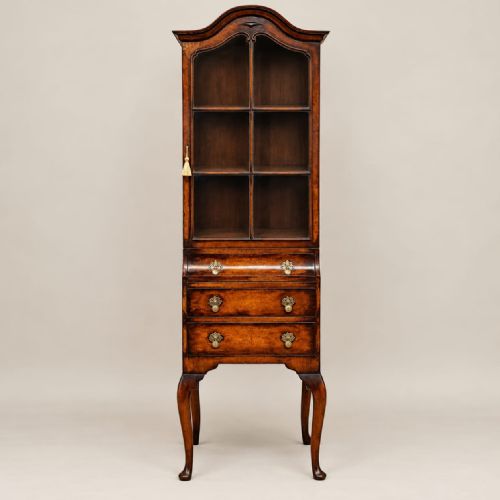
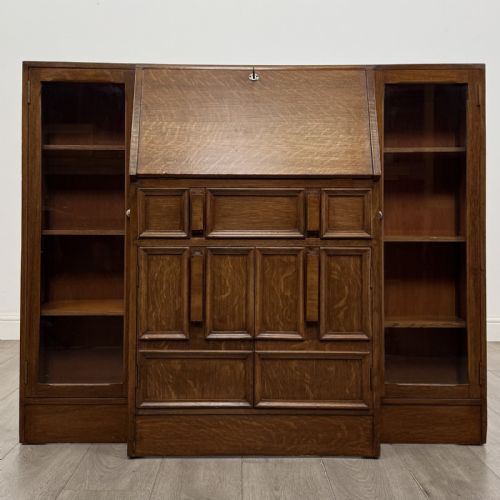
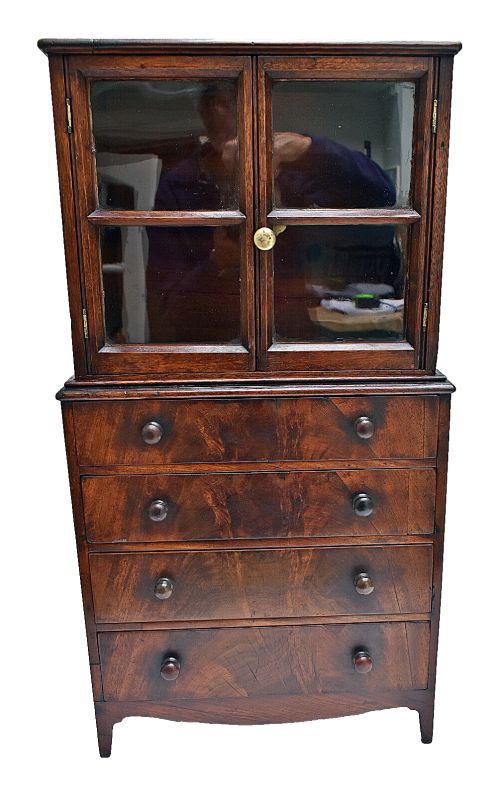
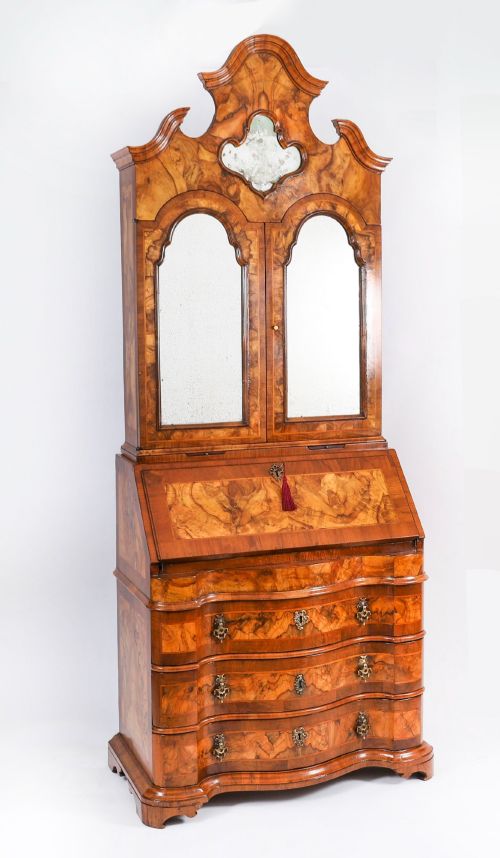
Bureau Bookcase Cabinet
A bureau bookcase cabinet combines a writing desk with upper shelving, offering a practical room centrepiece for display and storage.
Bureau Bookcase Cabinet
When you search for bureau bookcase cabinet, you encounter substantial dual-purpose furniture designed to house books and provide a writing surface. These pieces combine a lower bureau or secretaire section with an upper glazed bookcase.
The lower section typically contains a drop-front fall or a pull-out drawer concealing pigeonholes and small drawers. The upper section provides shelved storage behind glass doors, often framed with astragal bars.
Examples on this page span several centuries, with walnut, mahogany, and oak appearing frequently across Georgian, Regency, and Edwardian periods. Regional variations include Dutch marquetry and English revival styles.
Materials and Construction
Cabinetmakers utilised dense timbers such as mahogany, oak, and walnut, frequently applying figured veneers or marquetry to exterior surfaces. Solid secondary timbers like oak or pine form the interior drawer linings and backboards.
Upper doors incorporate individual panes of glass held in timber frames, while fall-front desks require sturdy brass hinges and internal support brackets. Drawer construction relies on hand-cut dovetails and solid timber bases.
Bureau Bookcase Cabinet Retail Price Guide 2026
Typical asking prices for bureau bookcase cabinet among the pieces listed under this phrase on Sellingantiques today, from the lower quarter to the upper quarter. They describe what is for sale here now, not the wider market.
Many old bureau desks conceal tiny secret drawers behind pigeonholes, built for hiding private letters or family coins.
Quality Markers
The grade of timber selection distinguishes higher examples, particularly figured walnut, flame mahogany, or intricate satinwood and marquetry inlay. Grain matching across drawer fronts and fall flaps indicates careful planning by the maker.
Interior execution also separates standard production from finer work, seen in shaped pigeonholes, secret compartments, and secondary woods. The delicacy of glazing bars and the weight of the brass hardware further indicate the workshop standard.
E Gomme·Edwards & Roberts·Gillows
The Bureau Bookcase Cabinet Glossary
- Secretaire
- A desk or drawer fitted with a drop-front or sliding writing surface concealing small drawers and pigeonholes. It often forms the middle section of a tall cabinet.
- Astragal glazed
- Glass doors divided into smaller panes by narrow wooden mouldings called astragals. These bars create geometric patterns across the bookcase front.
- Marquetry
- Decorative veneer work forming pictures or patterns by fitting together small pieces of different woods, ivory, or shell. It frequently embellishes walnut furniture.
- Fall front
- A hinged writing flap that drops into a horizontal position for use. When closed, it conceals the fitted interior of the bureau.
- Featherbanding
- A delicate banding inlay made of veneer strips cut diagonally to form a herringbone pattern. It frames the drawer fronts and borders of walnut cabinets.
Bureau Bookcase Cabinet: Frequently Asked Questions
What is a bureau bookcase cabinet?
A bureau bookcase cabinet is a tall piece of furniture that merges a writing desk with an enclosed bookcase. The lower section contains a desk surface, while the upper section holds books behind glass doors.
These pieces served as functional household units for correspondence and library storage. They evolved through various stylistic periods from the seventeenth century onwards.
How do I date a bureau bookcase cabinet?
Dating relies on observing timber choices, construction methods, and stylistic details. Walnut predominates in earlier eighteenth-century examples, while mahogany becomes widespread later in the Georgian era.
Hardware design, foot styles such as bracket or claw and ball, and internal drawer dovetailing provide further chronological clues. Revival pieces from the Edwardian period often copy these earlier traits using later machinery.
Where should I place a bureau bookcase cabinet?
These cabinets require substantial wall space and adequate clearance for the drop-front writing surface to open fully. Placing them away from direct sunlight protects vulnerable wood veneers and antique glass.
Rooms with stable humidity levels help preserve solid timbers and prevent warping. Their imposing height makes them suitable as focal points in studies, libraries, or living rooms.
How do I maintain the wood surface?
Regular dusting with a soft, dry cloth prevents particulate accumulation on polished surfaces. Applying appropriate natural waxes periodically nourishes the timber without building up heavy residues.
Avoiding harsh chemical cleaners protects the original polish and patina. Maintaining consistent indoor temperatures also prevents the timber from drying out or cracking.