

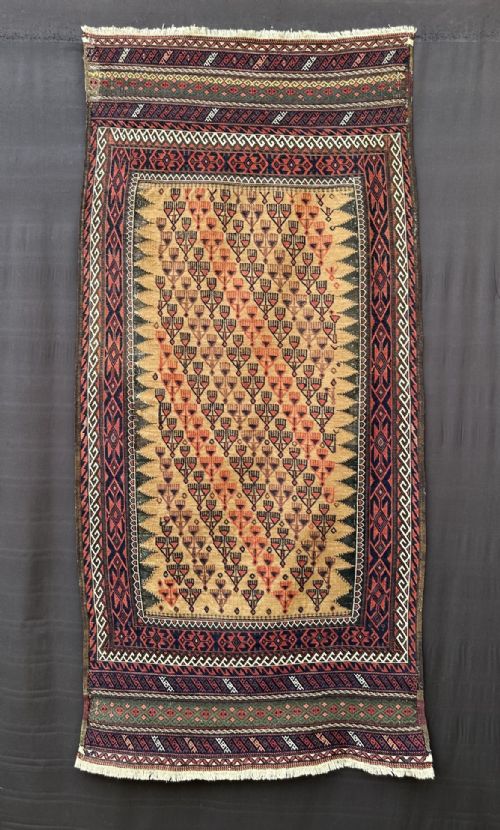


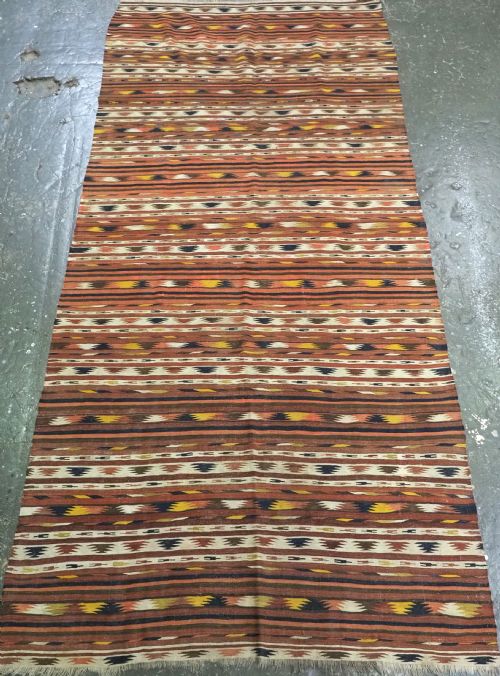


Brown Wool Kilim Runner
These brown wool kilim runner pieces are flatwoven tribal textiles that bring authentic nomadic geometry and rich earthy tones to a hallway or narrow floor space.
Brown Wool Kilim Runner
When you search for a brown wool kilim runner, you are looking at flatwoven textiles originating from tribal weaving traditions across Persia, Afghanistan, Central Asia, and the Caucasus. These pieces span production periods from the late nineteenth century through the early decades of the twentieth century, taking the form of elongated runners, long flatweaves, and tent bands. The most likely examples you will encounter on this page reflect nomadic and village aesthetics, including tribal pieces from Afghan, Turkmen, and Persian workshops.
The format serves functional traffic areas in a home, drawing on regional motifs such as banded designs, geometric field patterns, and prayer formats. Makers constructed these items using traditional slit-tapisserie and weftwork techniques, resulting in a reversible textile without a pile. The surviving examples range from compact corridor lengths to larger room-sized formats adapted into narrow proportions.
Materials and construction methods
Weavers constructed these flatweaves using hand-spun wool and cotton foundations, often incorporating natural dyes to achieve deep brown, rust, and indigo tones. Some pieces utilise camel hair alongside standard wool to provide varied texture and natural coloration without synthetic agents.
The technique relies on tight weft-face flatweaving, where coloured weft threads wrap tightly around warp threads to form crisp geometric patterns. Certain examples employ supplementary weftwork, soumak wrapping, or embroidery stitches to add structural depth and surface detail.
Brown Wool Kilim Runner Retail Price Guide 2026
Typical asking prices for brown wool kilim runner among the pieces listed under this phrase on Sellingantiques today, from the lower quarter to the upper quarter. They describe what is for sale here now, not the wider market.
Some weavers cleverly repurposed old animal transport bags into small flatweaves, giving humble saddle storage a second life on the floor.
Factors that separate grades of quality
Quality rests primarily on the tightness of the weave and the precision of the geometric execution. Tighter knotting or denser flatweave tension produces a sturdier textile that holds its shape under foot traffic.
The choice of dyestuffs and wool preparation dictates the visual depth of the brown ground. Hand-spun wool dyed with natural materials yields subtle abrash and tonal variation across the surface, whereas uniform mechanical yarns lack this optical richness.
The Brown Wool Kilim Runner Glossary
- Kilim
- A flatwoven textile produced without a pile by tightly interlocking weft threads over a warp foundation. This technique creates a lightweight, reversible rug suitable for floors or wall hanging.
- Abrash
- Natural colour variation within a single field of a textile, caused by changes in dye batches or hand-spun wool lots. It creates a subtle, shifting depth across the colour spectrum.
- Warp
- The stationary vertical threads stretched across a loom that form the structural foundation of the textile. Weft threads pass horizontally over and under these foundational strands.
- Weft
- The horizontal threads woven tightly across the warp to create the visible pattern and colour blocks of the flatweave. In kilims, weft turns back at the boundary of each colour block to form small slits.
- Soumak
- A brocading technique where coloured weft threads wrap over and under warp threads in a herringbone or braided pattern. This adds texture and durability to the flatwoven surface.
Brown Wool Kilim Runner: Frequently Asked Questions
Are kilim runners durable enough for hallways?
These flatwoven textiles withstand regular corridor foot traffic because their dense wool construction lacks a fragile pile that can crush over time. Placing a quality underlay beneath the textile prevents slipping and cushions the weave against hard flooring.
Rotating the runner periodically distributes wear evenly along the length. Routine gentle shaking and low-suction vacuuming remove embedded grit without snagging the flatwoven threads.
How do I clean a wool flatweave?
Professional specialist cleaning is the safest method for historic wool and natural dye textiles. Harsh detergents and excessive water can strip natural dyes or weaken hand-spun wool.
Spot cleaning minor spills requires blotting gently with a damp cloth rather than rubbing. Keeping the textile away from prolonged direct sunlight preserves the rich brown and natural tones of the wool.
How do I identify tribal designs?
Tribal designs rely on geometric motifs, repeating medallions, and serrated diamond patterns passed down through specific regional weaving groups. Distinctive borders and palette choices point to specific traditions such as Baluch, Turkmen, or Qashqa'i.
Examining the end finishes, side cordings, and structural materials helps confirm the regional origin. Each tribal group utilised particular weaving quirks and wool preparations that distinguish their work.