


Brown Wooden Wall Cupboard
A brown wooden wall cupboard brings honest utility to a room, offering warm timber tones and compact storage for small collections or everyday essentials.
Brown Wooden Wall Cupboard
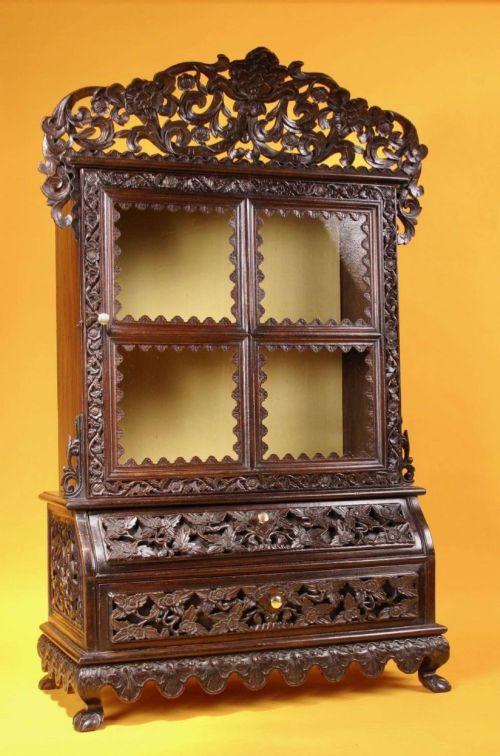
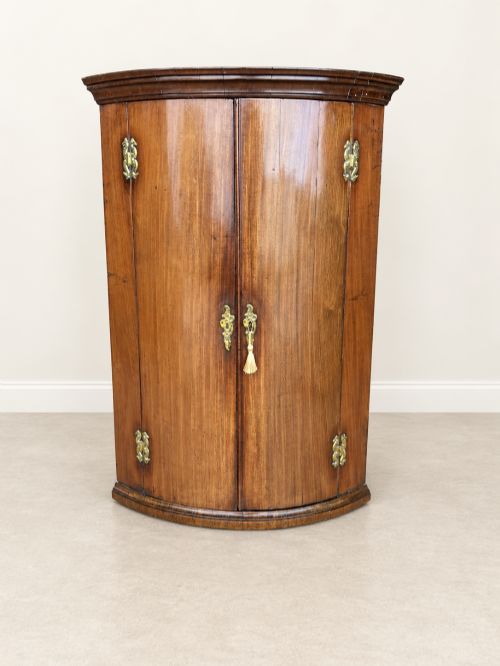
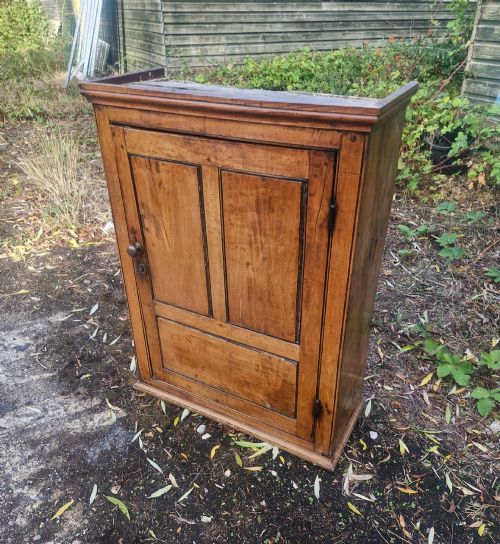
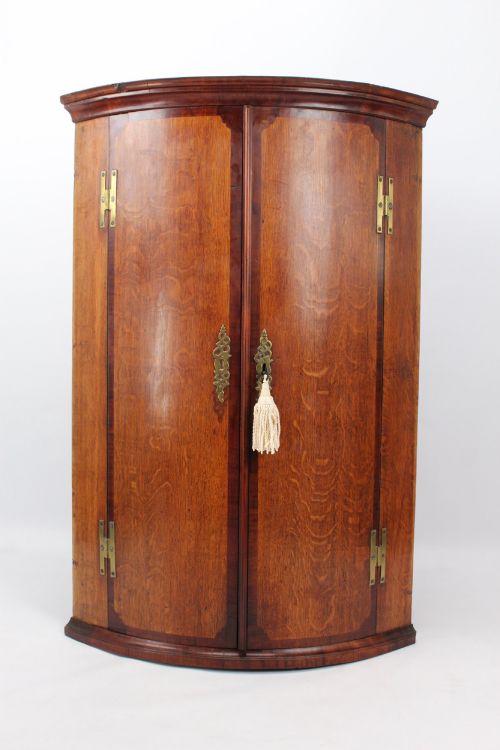
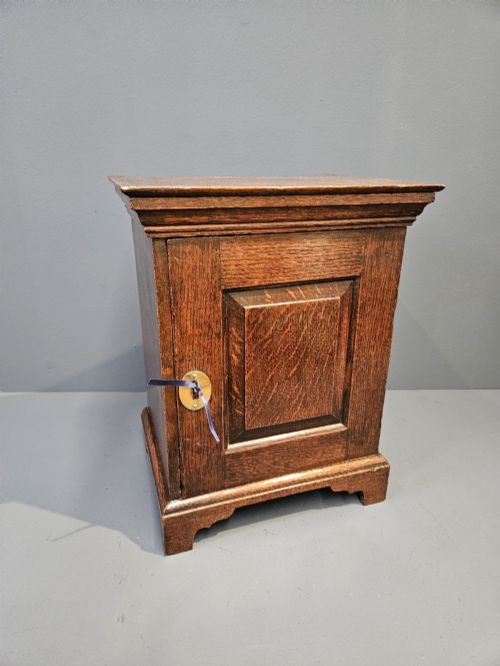
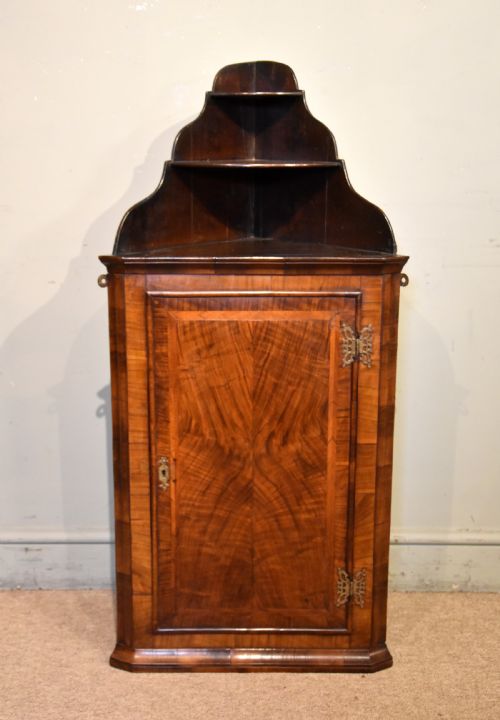
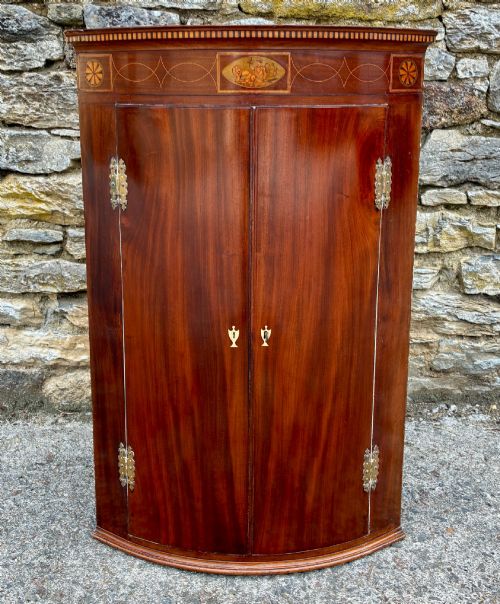
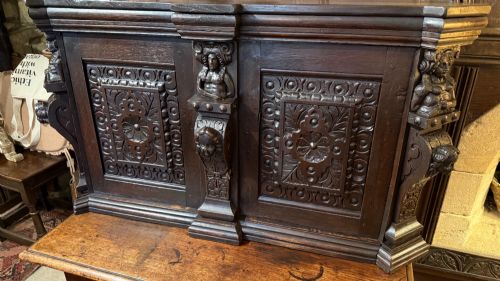
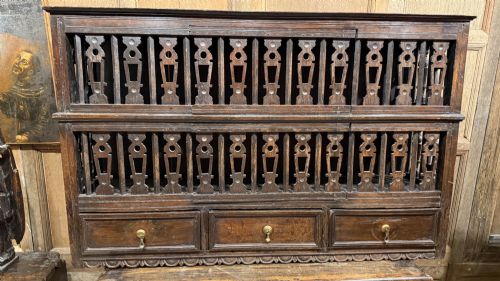
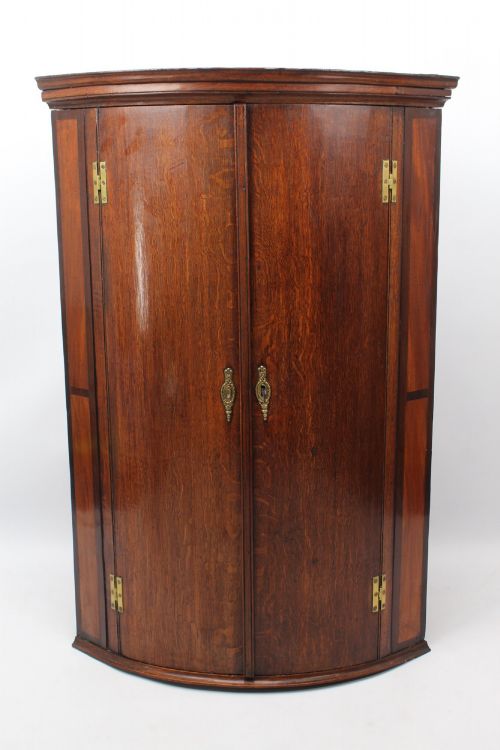
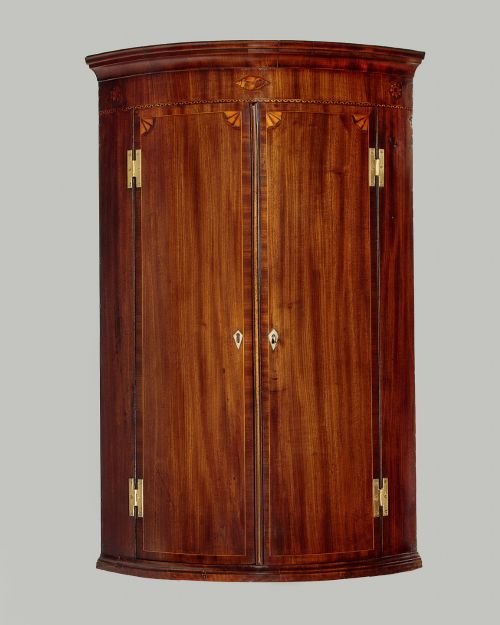
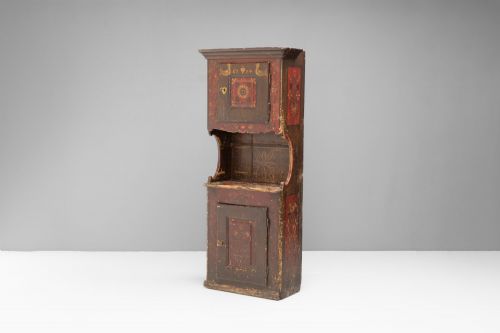
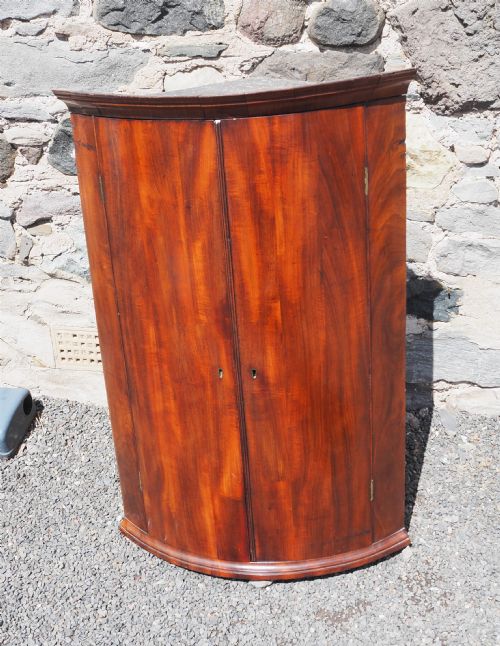
A brown wooden wall cupboard serves as a practical timber storage unit designed to mount securely on a wall while saving valuable floor space. The selections available here include corner cupboards, flat wall cabinets, spice cupboards, and hanging shelves spanning centuries of craftsmanship.
The brown wooden wall cupboard appears most frequently in enduring timbers such as oak, mahogany, and walnut. These pieces originate from distinct eras ranging from the seventeenth century through the Georgian period and into the Victorian and Arts and Crafts movements.
Makers often shaped these wall-mounted units with specific domestic uses in mind, ranging from displaying ceramics in a corner to housing keys, spices, or tobacco. The forms vary from simple hanging boxes to bow-fronted corner cabinets with sophisticated inlaid details.
Materials and construction methods
Makers constructed these cabinets using robust native and exotic timbers including oak, walnut, mahogany, and pine, often finished with brass hinges and escutcheons. Cabinetmakers utilised solid wood and matched veneers, incorporating satinwood and boxwood stringing for decorative contrast on select pieces.
Joinery techniques relied upon traditional methods such as dovetailing for drawers and mortise and tenon joints for frames to ensure structural longevity. Carving, pokerwork, and painted finishes appear across various pieces, demonstrating the breadth of decorative skill applied by makers.
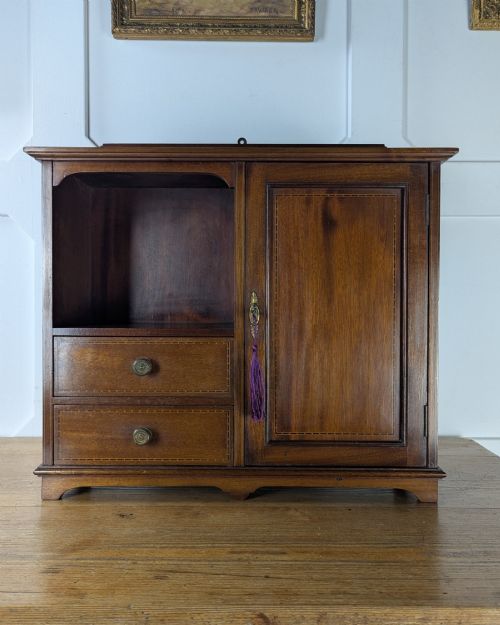
One smoker's cupboard from the late 19th century arrived with inlaid satinwood, proving that even tobacco storage demanded fine decorative art.
Distinguishing quality in timber wall furniture
Quality rests upon the selection of the timber, where dense grain patterns, rich natural patination, and well-chosen mahogany or figured walnut elevate a piece significantly. The precision of the joinery and the integrity of original backboards and hanging fixings also separate standard utility items from finer cabinetwork.
Refined detailing distinguishes superior examples, seen in crisp carved elements, neat inlaid stringing, and well-preserved brass hardware rather than heavy subsequent alterations. The harmony of proportions, particularly in bow-front and corner configurations, dictates the visual success of the cabinet.
Arthur Simpson·H. Upmann
The Brown Wooden Wall Cupboard Glossary
- Bow Front
- A convex, curved front section common on corner cabinets and wall cupboards of the Georgian period. This curved design softens room angles and showcases figured mahogany or walnut veneers.
- Spice Cupboard
- A small wall-mounted cabinet traditionally used for storing culinary spices and herbs. These early pieces frequently feature small internal drawers behind a single panelled door.
- Corner Cupboard
- A storage unit specifically built with a triangular footprint to fit neatly into the corner of a room. They maximise spatial efficiency while displaying timber panels or shelving.
- Inlay
- A decorative technique where contrasting woods such as boxwood or satinwood are inserted into recesses within the primary timber surface. This creates geometric lines or delicate botanical motifs.
- Panetière
- A traditional freestanding or wall-mounted cabinet originally designed for bread storage, featuring ventilated turned spindles. These French provincial pieces are typically constructed from walnut.
Brown Wooden Wall Cupboard: Frequently Asked Questions
How do I hang a heavy wooden wall cupboard safely?
Check the structural integrity of the original backboards and hanging brackets before attempting installation on a wall. Secure the cabinet directly into wall studs or utilise appropriate heavy-duty fixings suited to the weight of the timber.
Ensure the unit is level and balanced, particularly with older corner models where the centre of gravity shifts forward when doors are opened.
How should I clean and maintain antique wood finishes?
Dust the timber regularly with a soft, dry cloth to prevent particulate buildup on carved details and polished surfaces. Avoid modern silicone sprays or heavy liquid polishes that can penetrate old finishes and attract dirt.
Feed dry hardwoods occasionally with a traditional microcrystalline wax or a suitable furniture balsam to preserve the natural lustre of the grain.
Can I date a wall cupboard by its timber and hinges?
Examining the wood species and construction marks offers reliable clues to a cabinet's age and origin. Early pieces often feature solid oak with hand-cut dovetails and wrought iron hinges, while later Georgian and Victorian examples introduce mahogany, walnut, and refined brass hardware.
Tool marks on the interior boards and the style of any inlay work further help narrow down the period of manufacture.