
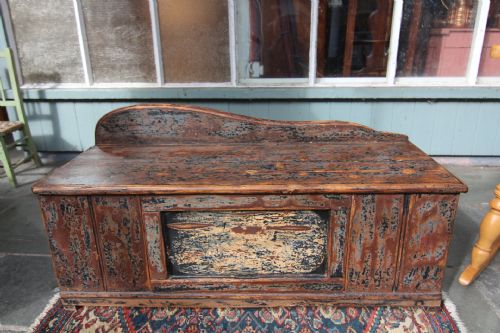
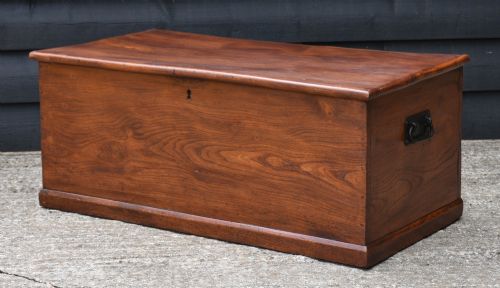
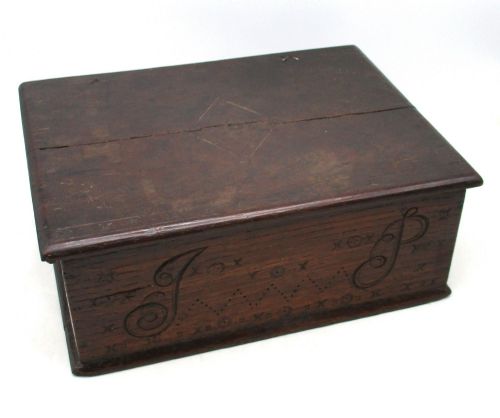
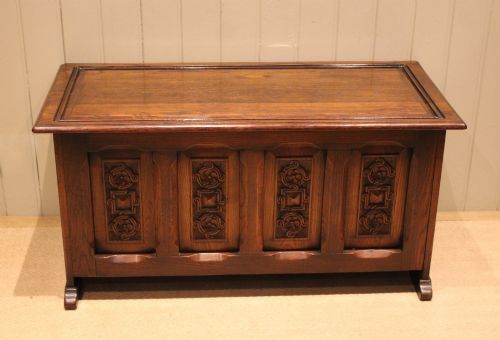


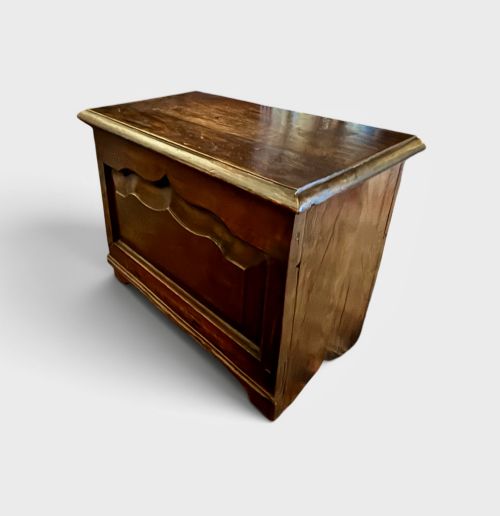
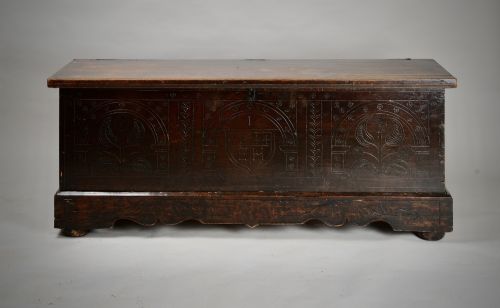
Brown Wooden Storage Coffer
A brown wooden storage coffer offers sturdy utility and rich historical timber, serving as a practical chest for modern living.
Brown Wooden Storage Coffer
A brown wooden storage coffer is a heavy, lidded box designed primarily for holding household goods, textiles, and valuables. When searching this phrase, buyers encounter robust utilitarian containers spanning several centuries of domestic and military life.
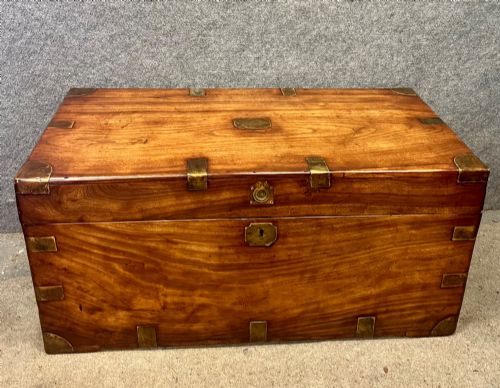
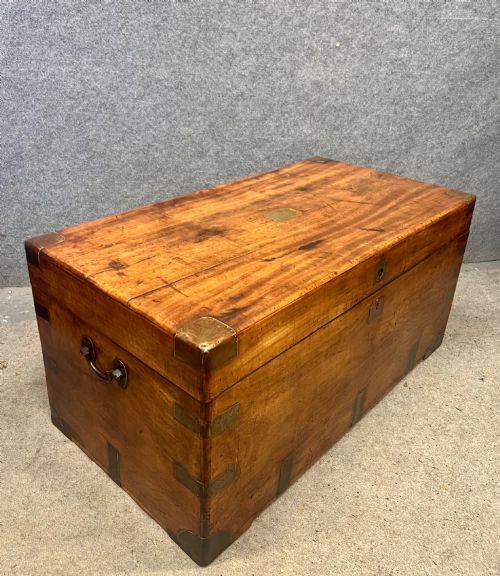
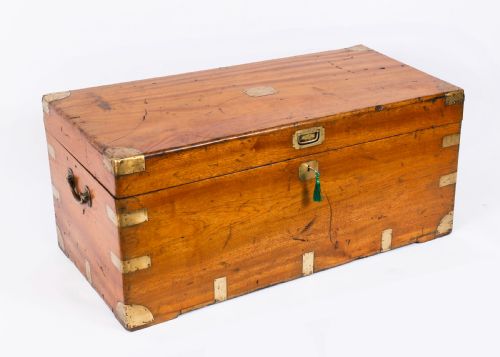
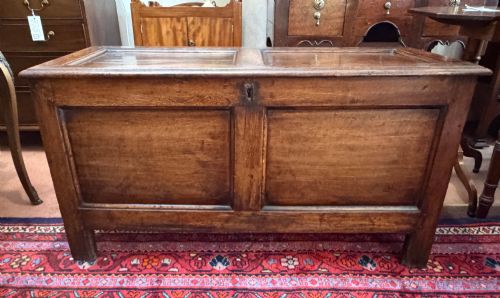
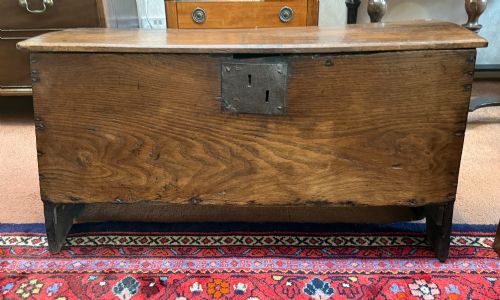
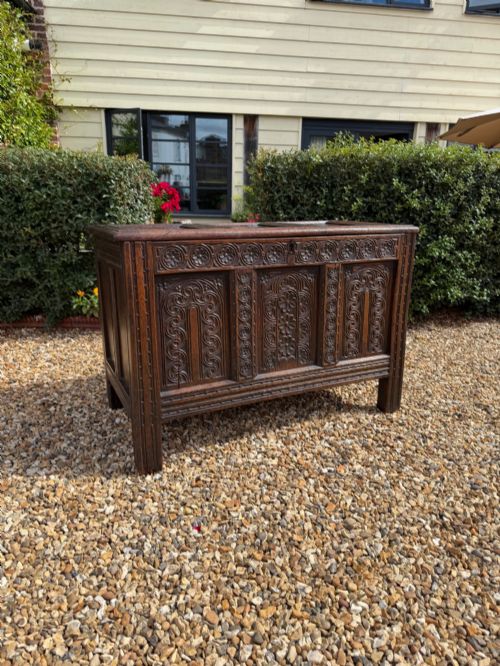
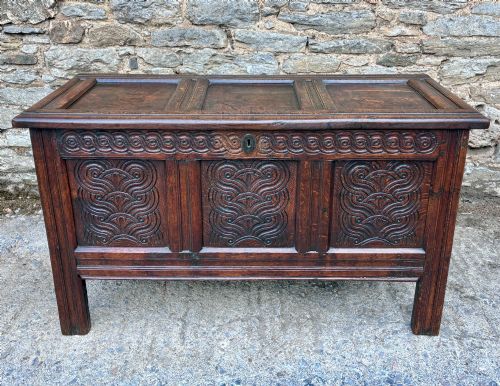
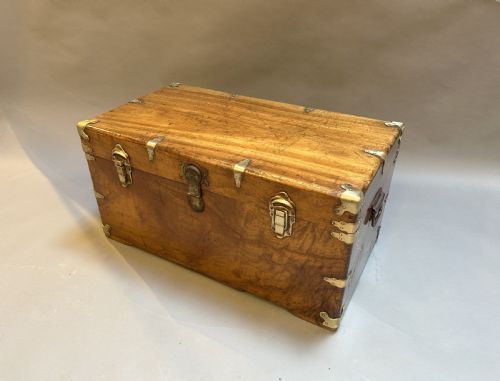
The most common examples on this page are sturdy oak pieces dating from the seventeenth and eighteenth centuries, often featuring panelled construction. Alongside these domestic chests appear nineteenth-century campaign trunks fashioned from exotic timbers like camphor wood and teak.
Forms range from simple six-plank constructions to elaborate carved boxes, sword chests, and Lancashire mule chests fitted with lower drawers. Origins stretch across British workshops, European centres, and colonial outposts, reflecting varied regional joinery traditions.
Materials and construction methods
Carpenters relied predominantly on native oak for early domestic pieces, using heavy planks joined with pegs and panelled frames to combat seasonal timber movement. Elm, ash, walnut, and mahogany also feature across different periods and regional workshops.
Campaign trunks and travel chests utilise durable imported woods such as camphor wood, teak, and padouk, selected for their resistance to humidity and insects. These are typically reinforced with substantial brass or iron bindings and corner brackets to endure arduous journeys.
Joinery techniques evolved from primitive six-plank box construction to sophisticated mortise and tenon frames surrounding floating panels. Iron hardware, brass locks, and dovetail joints secure the structures, whilst hand-carving and crossbanding ornament the surfaces.
Listings span eight distinct centuries, running from the sixteenth century through the Georgian and Victorian eras up to nineteen-hundred.
Distinctions in quality
Quality rests upon the integrity of the timber selection, the crispness of any hand-carved ornamentation, and the original state of the structural joinery. Pieces retaining their early hinges, locks, and patinated surfaces command greater regard than those rebuilt with replacement elements.
The sophistication of the construction differentiates utilitarian boxes from bespoke commissions, visible in the tightness of dovetails and the thickness of the boards. Regional variations in carving depth and the harmony of proportions also elevate superior examples above standard workshop output.
The Brown Wooden Storage Coffer Glossary
- Coffer
- A large wooden chest used for holding valuables, documents, or clothes. These heavy boxes typically feature hinged lids and sturdy boarded or panelled walls.
- Campaign trunk
- A portable chest constructed for military officers on active service. They often split into modular sections or feature recessed brass handles and protective metal corners.
- Mule chest
- A storage box combining a deep lidded compartment with one or more drawers at the base. This hybrid form gained popularity during the eighteenth century.
- Six-plank coffer
- A primitive chest constructed from six individual boards joined simply at the edges. Pegs and basic butt joints hold the vertical and horizontal panels together.
- Patina
- The surface sheen and mellow colour developed by aged wood through handling, polishing, and exposure to light over centuries.
Brown Wooden Storage Coffer: Frequently Asked Questions
How were these coffers originally used?
Households utilised these heavy chests primarily for storing textiles, bedding, valuable silver, and important household documents safely away from damp floors and pests.
Travellers and military officers relied on reinforced campaign versions to pack uniforms and equipment securely across long sea voyages and overland expeditions.
How do I care for antique timber?
Keep wooden coffers away from direct sunlight and sudden radiator heat to prevent the ancient boards from drying out and splitting.
Apply occasional natural beeswax and buff gently with a soft cloth to nourish the grain and preserve the surface sheen.
Can I use one as a coffee table?
Their flat lids and sturdy construction make these chests ideal for positioning in a living room as a combined table and hidden storage unit.
Ensure items placed on top will not scratch the aged surface, and measure the height to match existing seating.
How do I distinguish seventeenth-century oak from later revivals?
Early pieces display authentic tool marks, hand-split grain irregularities, and pegged joints that reveal natural shrinkage and centuries of wear.
Revival furniture from later eras often exhibits uniform machine-sawn timber and lack the deep, tactile patina of genuine age.