

Campaign Travel Chest
A campaign travel chest is a sturdy, portable container built for officers and travellers on the move, combining rugged utility with refined craftsmanship.
Campaign Travel Chest
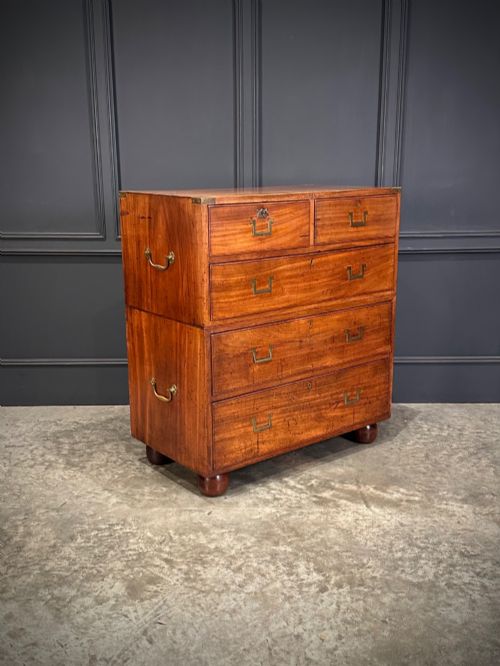
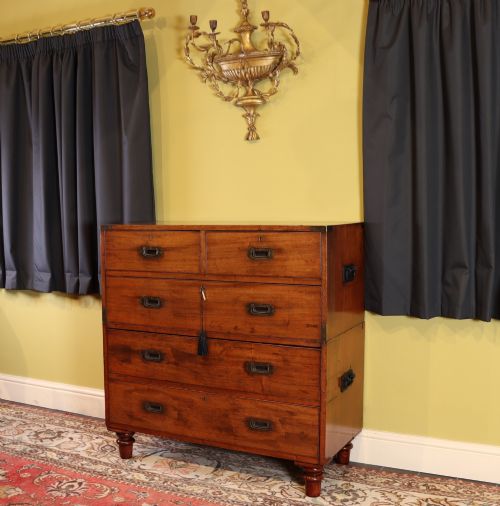
A campaign travel chest encompasses heavy-duty wooden trunks, compartmentalised chests of drawers, and metal-bound travelling cases designed to withstand arduous journeys. These pieces emerge predominantly from the Georgian, Regency, and Victorian eras, spanning the eighteenth, nineteenth, and early twentieth centuries.
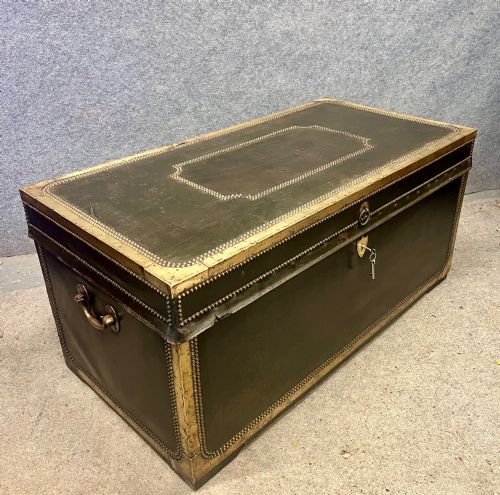
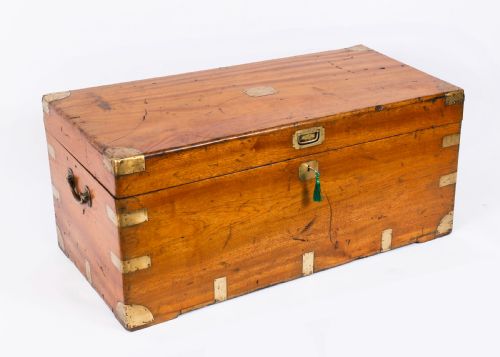
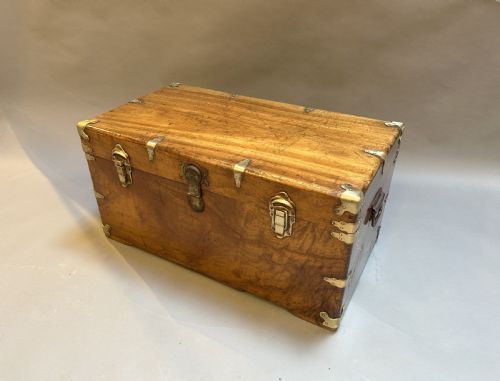
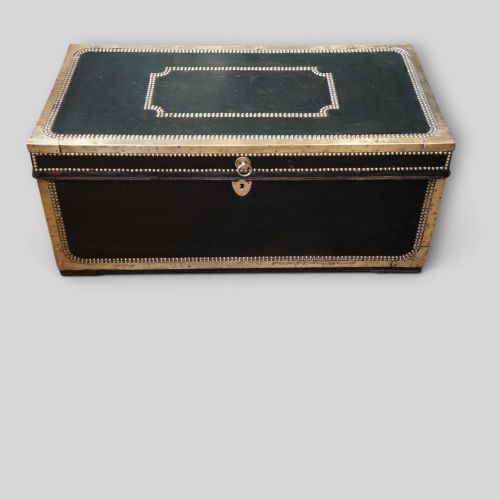
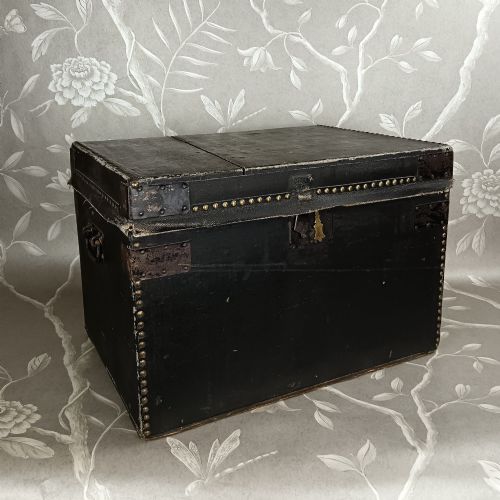
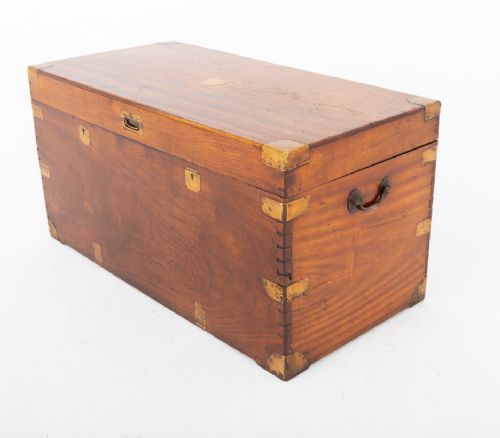
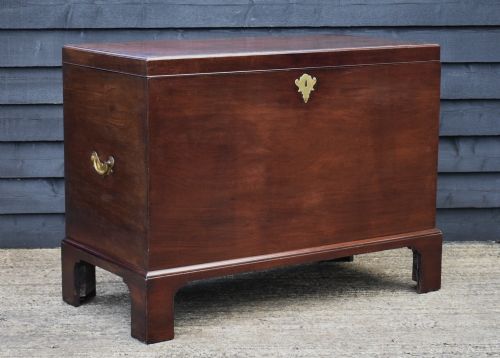
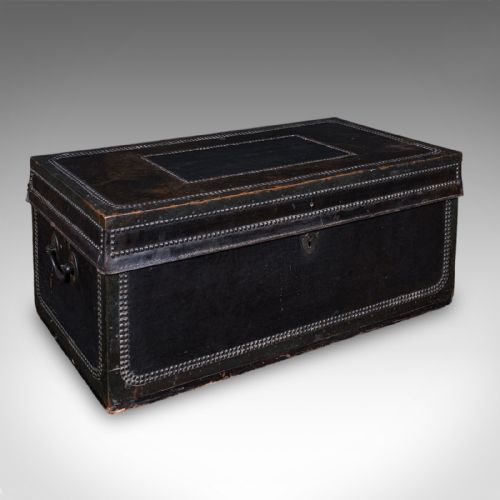
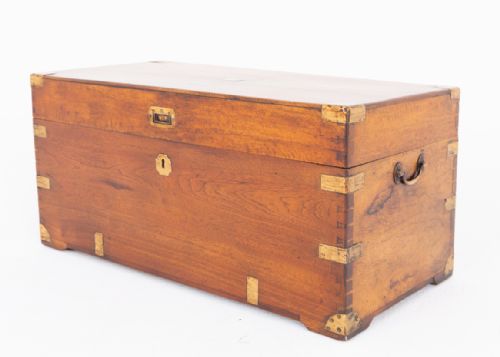
The most common forms on this page include brass-bound camphor wood trunks, teak or mahogany chests of drawers built in two separable sections, and leather-covered travelling cases. Many feature recessed carrying handles and protective metal corners intended for military transport.
How they were made
Construction relies on durable timbers such as mahogany, teak, pine, and fragrant camphor wood, which naturally repels insects during tropical service. These woods are joined with robust framing to endure the rigours of transit.
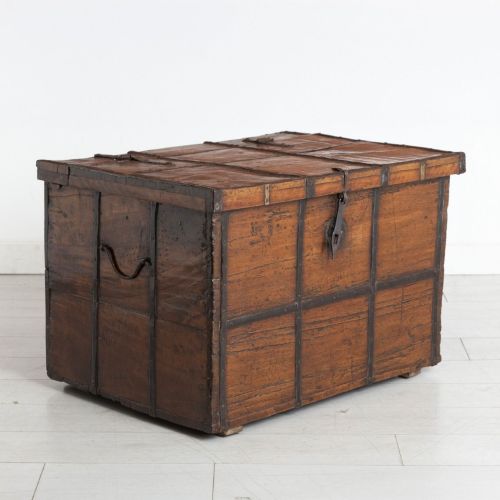
Makers reinforced the structure using brass corners, iron bands, studding, and heavy leather upholstery. Recessed brass handles and flush hardware allowed chests to pack tightly into transport wagons or ship holds without snagging.
The selection spans Georgian, Regency, Victorian, and early twentieth-century periods.
What varies in quality
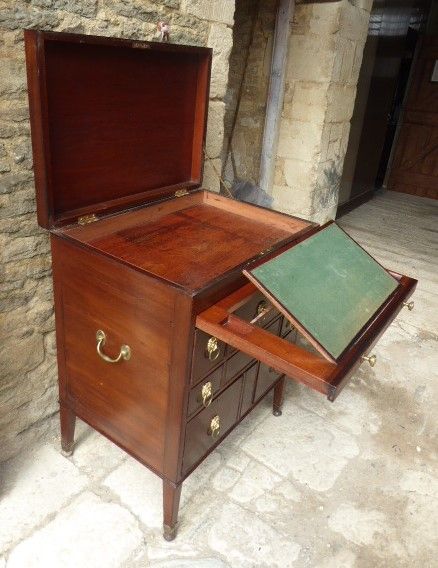
The distinction between ordinary utility boxes and high-end officer pieces lies in the sophistication of the internal fittings and the precision of the hardware. Superior examples incorporate secret compartments, folding writing desks, or fitted apothecary drawers.
Material selection and maker signature also dictate standing, with marked pieces from known outfitters commanding greater attention. The crispness of the brass bound joints and the integrity of original leather and ironwork distinguish finer survivals.
Samuel Pratt·Wm. Insall of Bristol·S. W. Silver and Co.·Chapple and Sons·Drew and Sons·Allen of London·Seabrook
The Campaign Travel Chest Glossary
- Camphor wood
- A durable, aromatic timber native to Asia, prized for its resistance to insects and dampness in campaign trunks.
- Two-part chest
- A modular chest of drawers designed to split horizontally into separate sections for easier lifting and transport.
- Recessed handle
- A metal handle set into a shallow cavity so it does not project beyond the flat surface of the chest.
- Secretaire chest
- A chest featuring a fitted pull-out drawer with a drop-front writing surface and small interior compartments.
Campaign Travel Chest: Frequently Asked Questions
What is a campaign travel chest used for?
These chests served officers and colonial administrators as portable wardrobes, desks, and storage vaults during military campaigns and long sea voyages. They were engineered to protect uniforms, documents, and personal valuables through rough handling.
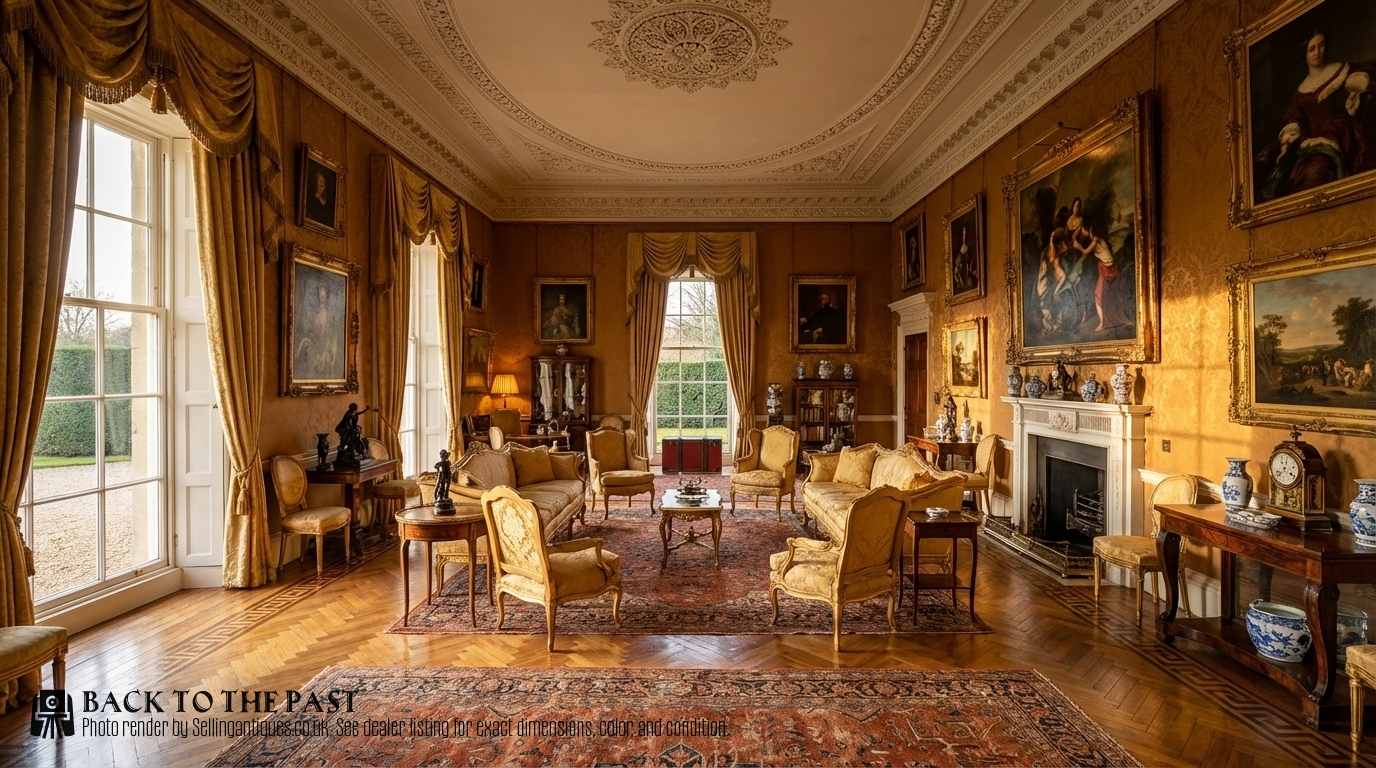
Today, they function as robust coffee tables, blanket boxes, or statement storage furniture in modern homes while retaining their historic modular character.
Why are many campaign chests made in two parts?
The two-section design allowed military personnel to divide a heavy chest of drawers into manageable loads for pack animals, wagons, or porters. Each half was secured with sturdy brackets before transit.
This clever engineering makes surviving examples remarkably adaptable for placement in contemporary hallways, bedrooms, and living spaces.
How do I identify camphor wood in a trunk?
Camphor wood is easily recognised by its distinctive, aromatic fragrance, which often endures for centuries inside closed trunks. The timber displays a warm reddish-brown hue with varied grain patterns.
Cabinetmakers utilised it extensively for tropical postings because the natural oils deter moths and insects from damaging stored textiles.
Are these chests waterproof?
While historically built to withstand rain, deck spray, and humid climates, antique chests are not sealed against modern extremes of central heating and moisture. The tight-fitting lids and metal bindings provided adequate protection during nineteenth-century travel.
Owners should keep them away from direct heat sources to prevent the historic timbers and leather bindings from drying out or splitting.