
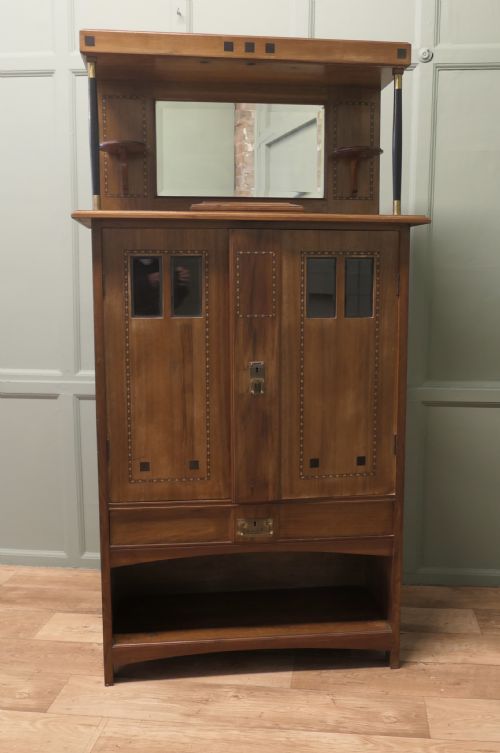
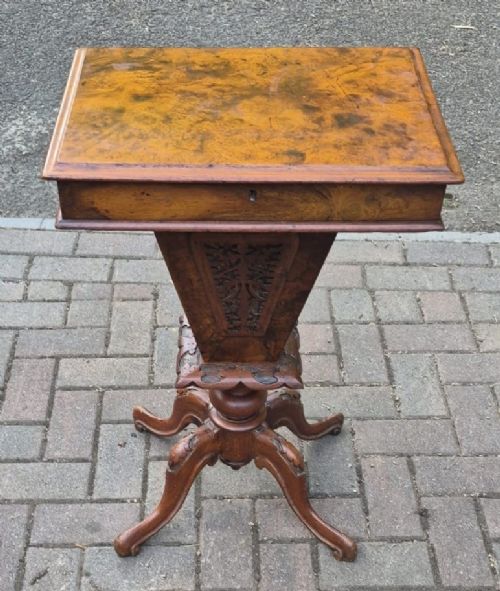
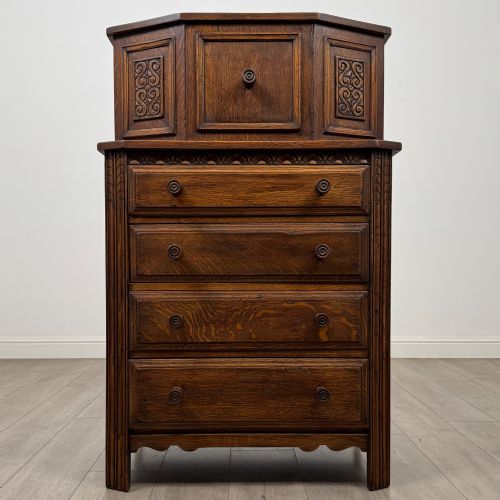
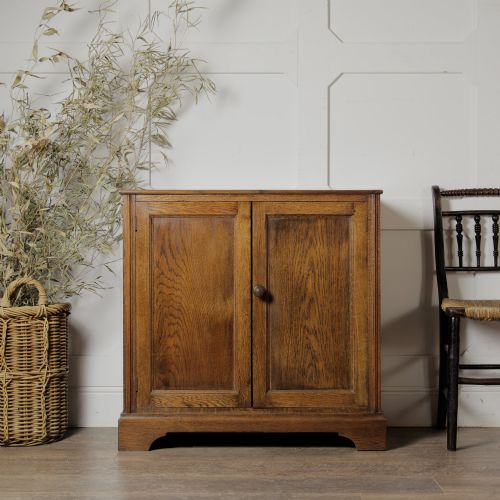

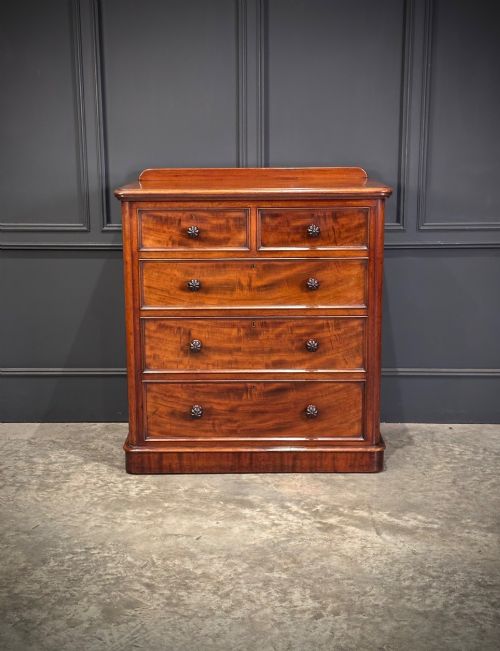
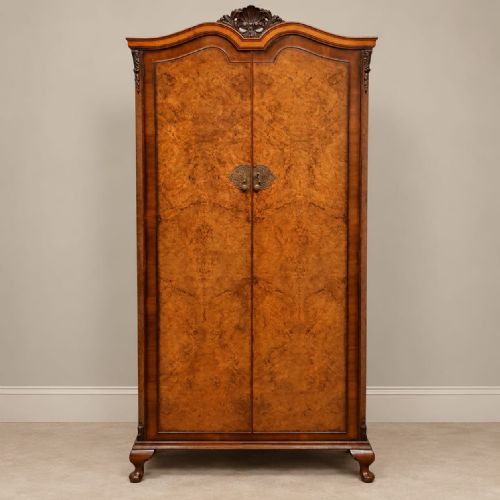
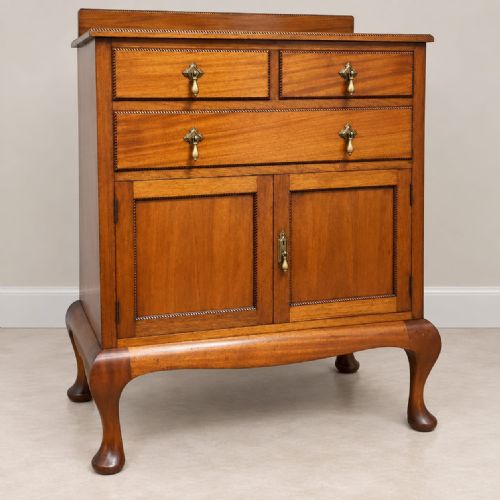
Brown Wooden Storage Cabinet
A brown wooden storage cabinet brings warmth and practical order to a room, ranging from compact oak bedside cupboards to towering mahogany wardrobes.
Brown Wooden Storage Cabinet
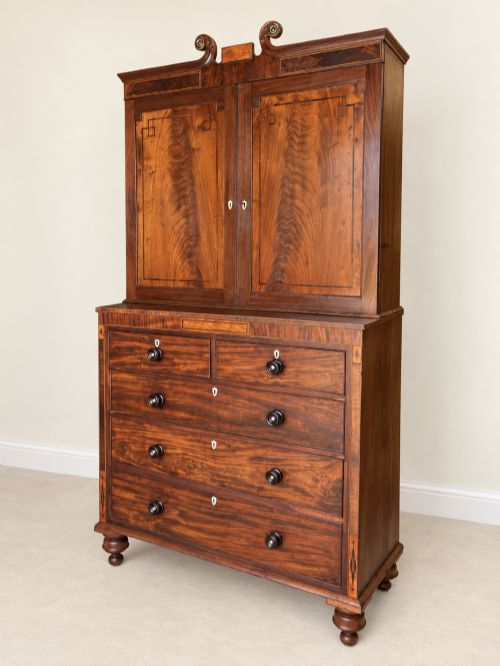
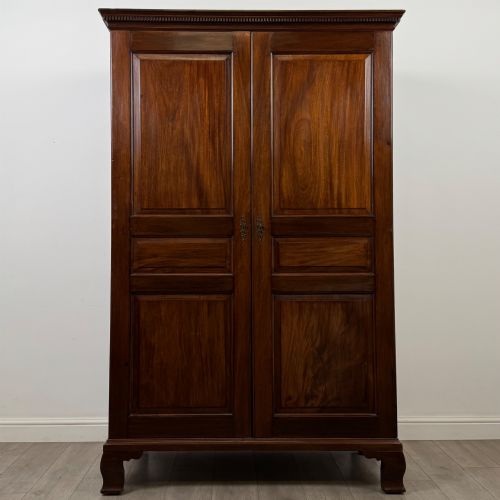
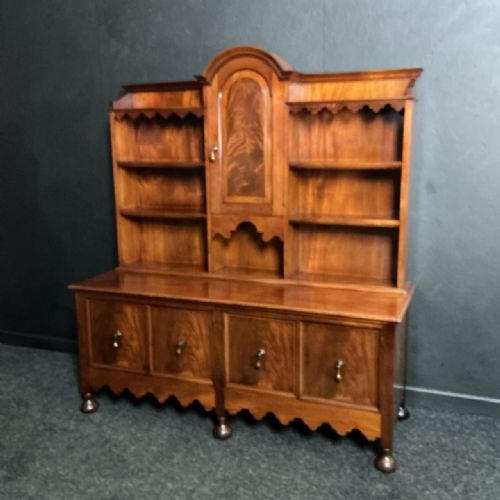
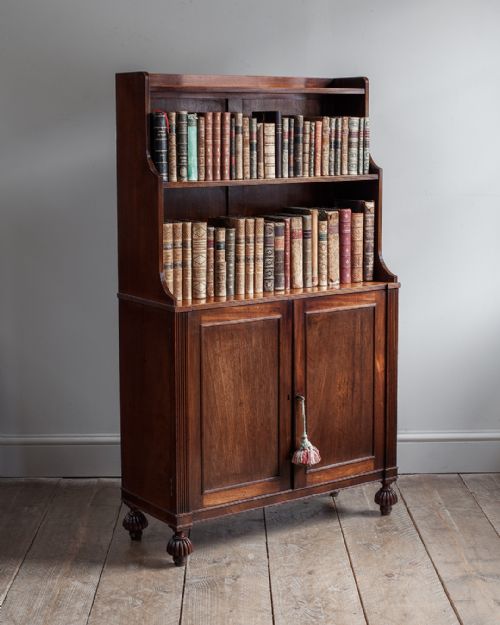
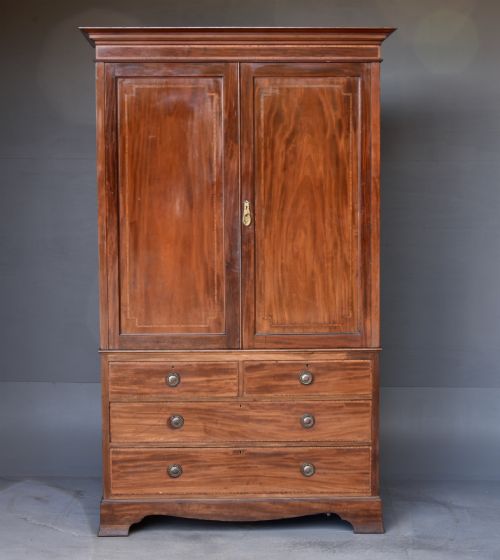
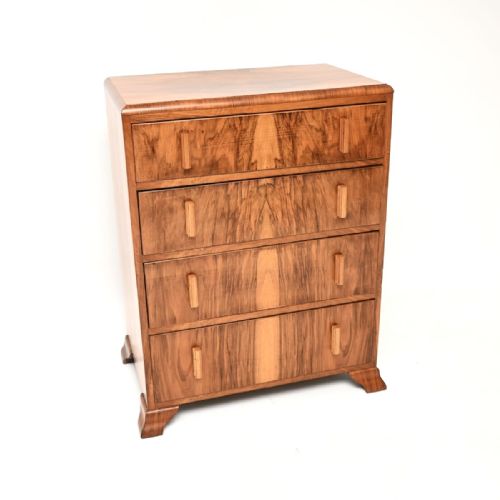
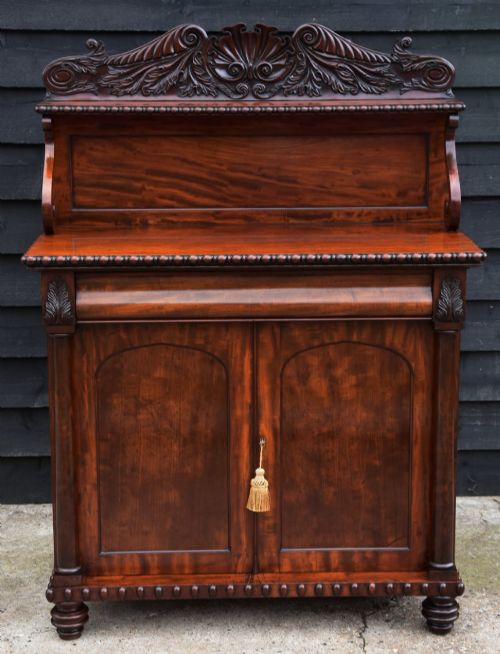
A brown wooden storage cabinet covers a diverse group of domestic furnishings designed to hold clothing, books, and household goods, spanning centuries of British and European cabinet-making. When searching for a brown wooden storage cabinet, buyers encounter forms such as chests of drawers, bookcases, wardrobes, sideboards, and bedside cupboards originating from the Georgian, Victorian, and Edwardian periods.
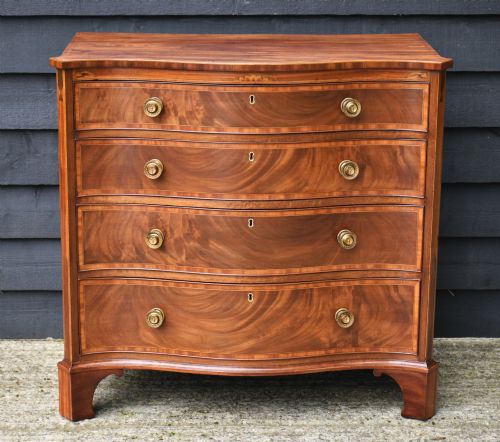
The material palette leans heavily towards rich timbers, with mahogany, oak, and walnut dominating the selection alongside decorative veneers like flame mahogany and burr walnut. Pieces range from formal Georgian serpentine chests and Regency waterfall bookcases to sturdy Edwardian oak cupboards and early twentieth-century filing drawers.
Materials and construction
Cabinet makers utilised solid timbers such as oak, mahogany, and walnut for structural integrity, often applying figured veneers like satinwood, flame mahogany, and burr walnut to prominent surfaces for visual depth. Secondary timbers were employed for internal drawer linings and carcases, ensuring stability across seasonal humidity changes.
Joinery techniques relied on traditional dovetail joints for drawers, mortise and tenon frames for doors, and hand-carved decorative elements or subtle inlay work. Hardware in brass and iron added functional closure mechanisms, whilst finishes were built up through hand-applied polishing methods.
The listings on this site span Georgian, Victorian, and Edwardian eras, utilising solid mahogany, oak, walnut, and decorative veneers.
Distinctions in execution
The distinction between standard utility furniture and superior examples lies in the selection of timber and the precision of the joinery. Finer pieces display carefully matched veneer grains across drawer fronts, tight dovetails, and substantial secondary woods that resist warping.
Proportion and decorative restraint further separate the range, where well-considered brass handles, restrained carving, and balanced secondary details elevate a functional storage piece into an accomplished work of cabinet-making.
maples & co·Luxmore's of Ilfracombe
The Brown Wooden Storage Cabinet Glossary
- Tallboy
- A tall chest of drawers, typically comprising a double-chest configuration where a smaller chest sits atop a larger base.
- Wellington chest
- A vertical chest of seven drawers secured by a hinged locking side pilaster that fastens with a key.
- Breakfront
- A cabinet or sideboard whose central section projects forward from the recessed outer sections.
- Serpentine
- A front contour characterised by a convex centre flanked by concave curves.
- Pot cupboard
- A small bedside cabinet originally designed to house a chamber pot, often featuring a single door and enclosed top.
Brown Wooden Storage Cabinet: Frequently Asked Questions
How do I identify a Georgian cabinet?
Georgian cabinets often display characteristic proportions, bracket or ogee feet, and dense mahogany or walnut timbers constructed with hand-cut dovetails.
Interior construction typically reveals solid secondary woods like oak or pine without modern mechanical fasteners.
What is the difference between an Edwardian and Victorian cupboard?
Victorian cupboards tend to use heavy solid mahogany or walnut with deep carved mouldings, bun feet, and rich dark patination.
Edwardian pieces frequently incorporate lighter oak framing, simpler lines, inlaid satinwood stringing, or linenfold panels.
How are walnut and mahogany distinguished?
Mahogany presents a reddish-brown hue with a straight grain that darkens gracefully over time with polishing and exposure to light.
Walnut exhibits a cooler brown tone marked by intricate swirling figure patterns and distinctive contrasting grain variations.
Where were bedside cupboards placed?
Bedside cupboards and pot cupboards stood beside sleeping quarters to hold night-time necessities, water jugs, and chamber pots.
Their compact footprints made them versatile auxiliary storage units for small spaces.