


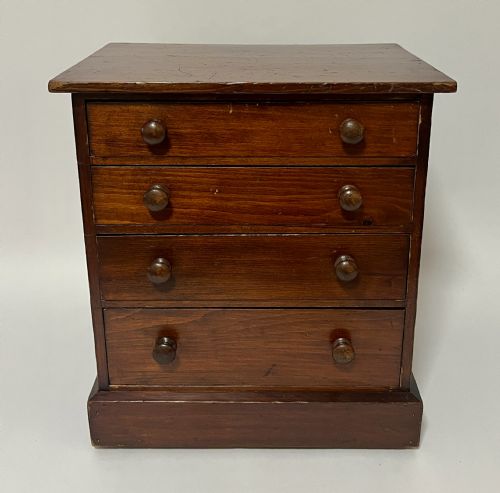
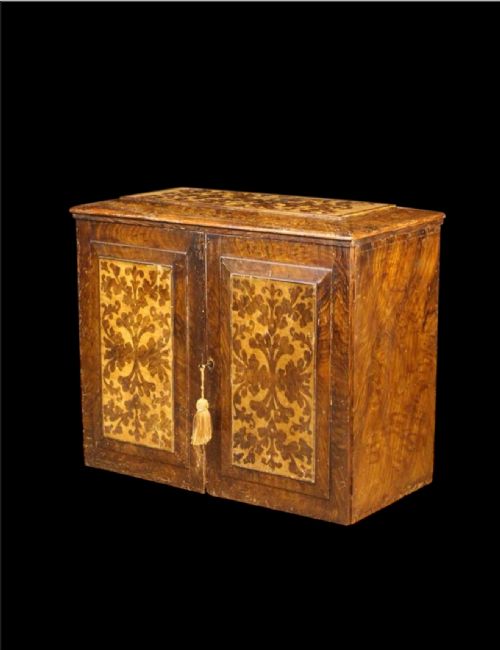
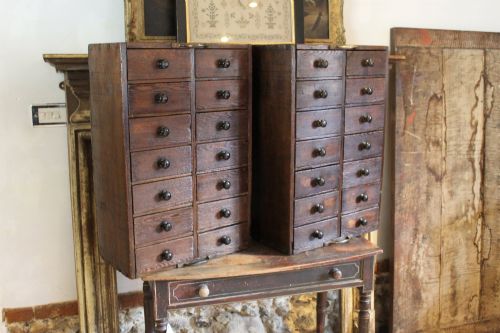


Brown Wooden Specimen Chest
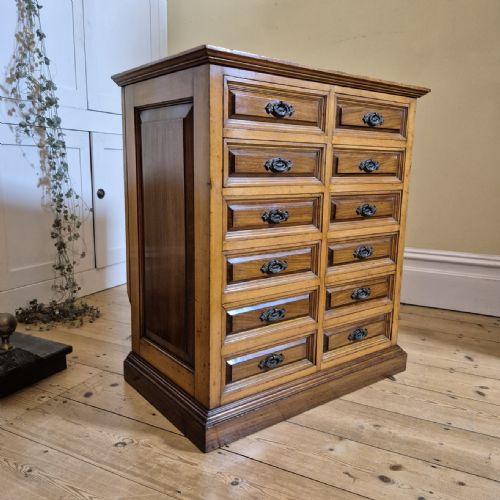
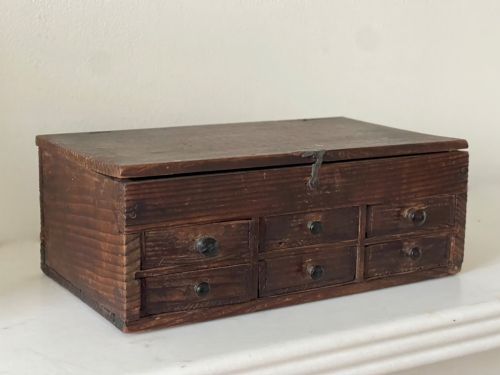
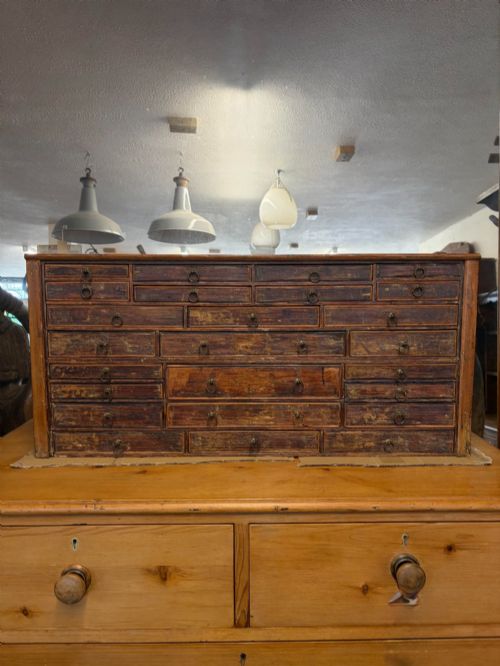
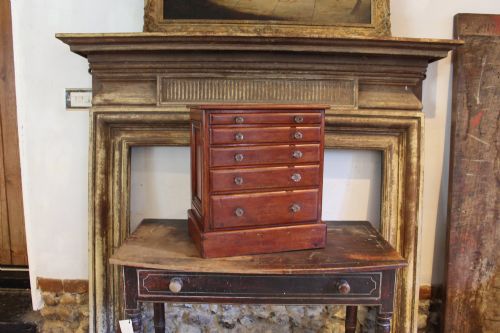
A brown wooden specimen chest organises small objects into neat, shallow tiers, bringing a quiet sort of order to a desk or tabletop.
Brown Wooden Specimen Chest
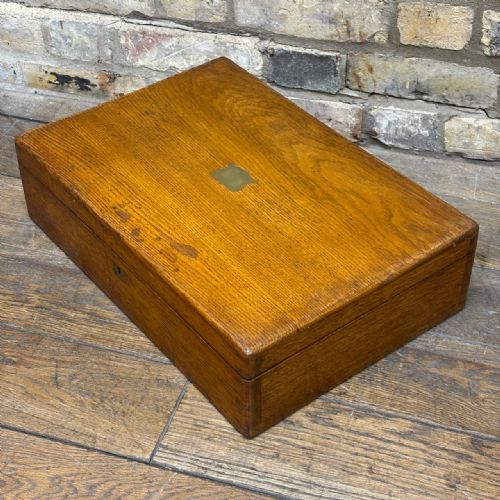
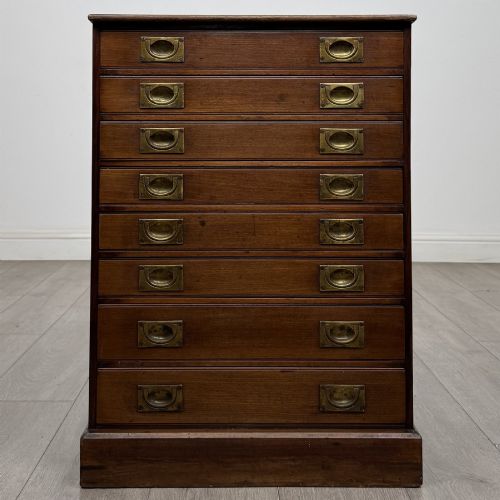
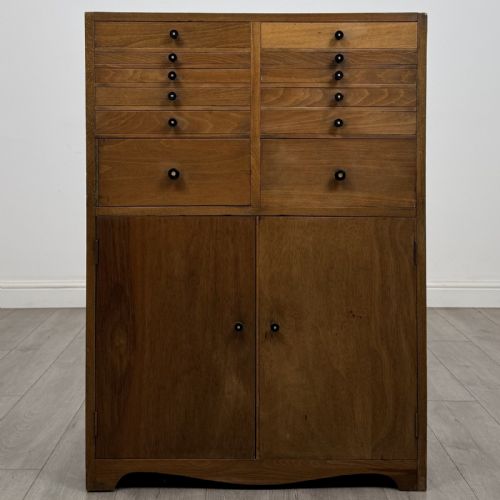
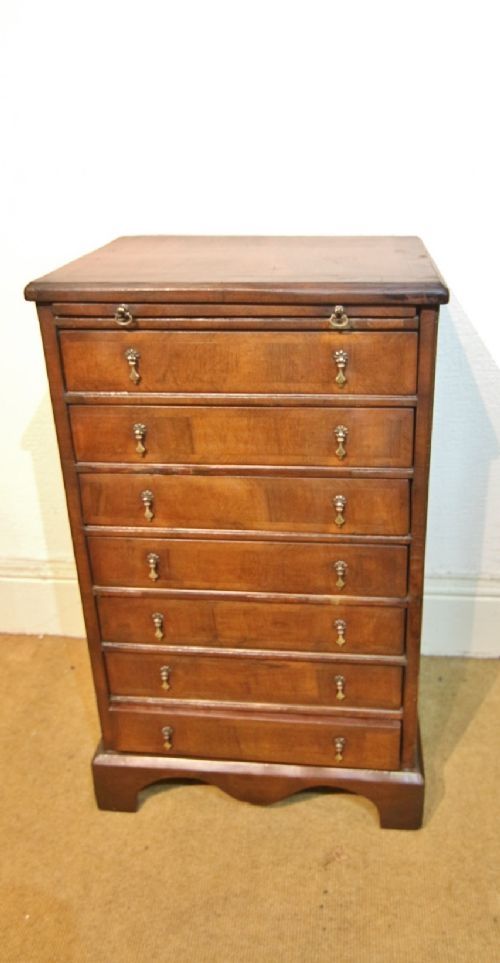
A brown wooden specimen chest is a purpose-built cabinet designed to hold small collections, ranging from insects and botanical slides to watch parts and jewellery. The pieces listed here span the Georgian, Victorian, and Edwardian periods, taking the form of miniature chests of drawers, table cabinets, and fitted instrument cases.
Most examples you meet on this page are constructed with multiple shallow drawers, sometimes secured by locking doors or locking stiles characteristic of Wellington chests. Woods like mahogany, walnut, and oak dominate, reflecting the practical needs of Victorian and earlier collectors who required stable, dense timber.
How they were made
Cabinet makers utilised dense hardwoods such as mahogany, walnut, and oak to build frames that would not warp and compromise the tight fit of the drawers. Secondary timbers like pine and deal appear in internal framing and drawer linings.
Drawer construction relies on precise joinery, often with fine dovetails to withstand the constant pulling of multiple tiers. Brass handles, label holders, and locking mechanisms provide structural reinforcement as well as function.
Brown Wooden Specimen Chest Retail Price Guide 2026
Typical asking prices for brown wooden specimen chest among the pieces listed under this phrase on Sellingantiques today, from the lower quarter to the upper quarter. They describe what is for sale here now, not the wider market.
Listings feature items built from mahogany, walnut, oak, and pine across the Georgian, Victorian, and Edwardian eras.
What varies in quality
The degree of refinement in the timber selection and veneer work separates utilitarian workshop storage from pieces made for a gentleman's drawing room. Figured veneers like burr walnut or amboyna indicate a higher tier of production.
Precision in the internal fitting of the drawers and the survival of original brass hardware, glass panels, and locking mechanisms dictate the overall integrity of a cabinet.
Luxmore s of Ilfracombe·D Napier and Sons·Brady
The Brown Wooden Specimen Chest Glossary
- Wellington chest
- A tall, narrow chest of drawers secured by a hinged locking stile on one side that fastens with a key.
- Apprentice piece
- A small-scale item made to demonstrate a cabinet maker's skill to attain master status, or produced as a detailed sample.
- Specimen case
- A shallow cabinet or box designed specifically to hold scientific samples, minerals, or natural history collections.
- Stile
- The upright vertical member of a cabinet frame or door that provides structural support and stability.
- Burr walnut
- Timber taken from a tree growth or burl, yielding complex, swirling grain patterns highly prized for decorative furniture fronts.
Brown Wooden Specimen Chest: Frequently Asked Questions
What were brown wooden specimen chests used for originally?
These cabinets served scientists, naturalists, and tradesmen for organising delicate items such as microscope slides, watch components, and botanical samples.
Collectors kept their prized acquisitions safe from dust and light in custom-fitted drawers tailored to specific objects.
How do I date a Victorian specimen chest?
Dating relies on examining the construction methods, such as hand-cut dovetails, timber choices like mahogany or walnut, and the style of brass hardware.
Later Victorian pieces often incorporate mass-produced elements while retaining traditional carcase forms.
Are miniature chests the same as apprentice pieces?
Miniature chests encompass both skilled scale models and working desktop storage units intended for domestic tabletops.
Apprentice pieces specifically represent a craftsman's test of skill, though distinguishing the two often depends on documentation.
How do I care for a walnut specimen cabinet?
Keep the wood away from direct sunlight and sudden temperature changes to protect the delicate veneers from splitting.
Feed the timber sparingly with traditional wax polish to maintain the finish without building up residue.