




Small Bank of Drawers
A small bank of drawers offers compact, multi-tiered storage that brings character and daily utility to any room.
Small Bank of Drawers
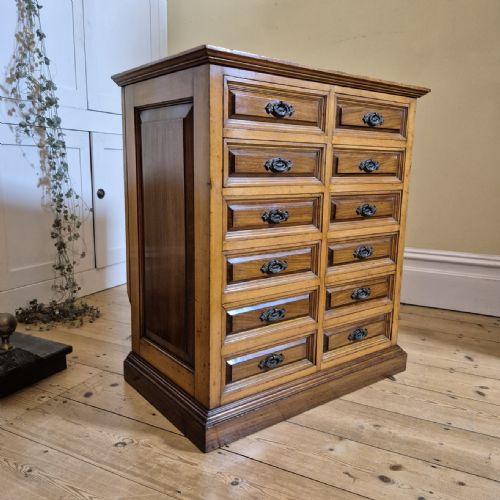
A small bank of drawers gathers multiple compact compartments into a single multi-tiered structure, originating primarily from apothecary, shop and office settings. These utilitarian pieces range from Georgian mahogany chests and Victorian chemist cabinets to Edwardian satin walnut units and industrial office organizers.
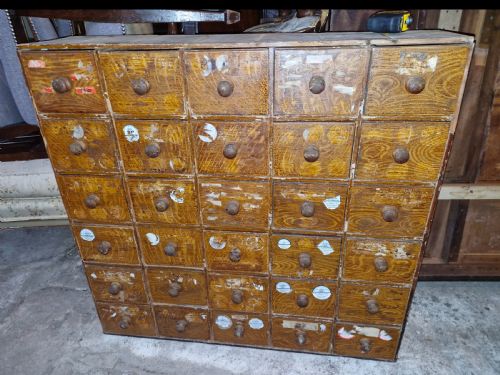
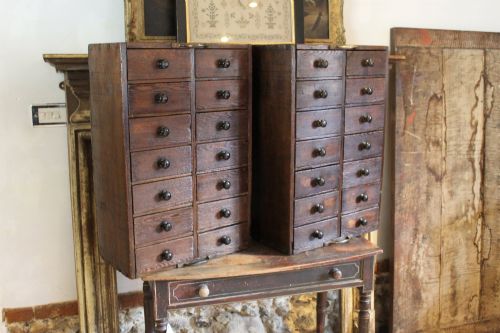
The versions most frequently met on this page include nineteenth-century apothecary units, pine shop drawers, and compact mahogany or oak collectors' chests. Buyers often select these pieces for their multitude of small compartments, which suit the organisation of modern stationery, collections or household items.
Originating across the nineteenth and early twentieth centuries, these units span Georgian, Victorian, Edwardian and industrial styles. Their forms include narrow apothecary banks, spice drawers, and low office cabinets designed to sit upon counters or desks.
How they were made
Cabinetmakers constructed these functional units using solid timbers such as pine, mahogany, oak, walnut and satin walnut, frequently selecting durable woods to withstand heavy commercial use. Drawer construction typically involved traditional jointing techniques suited to the daily friction of frequent opening and closing.
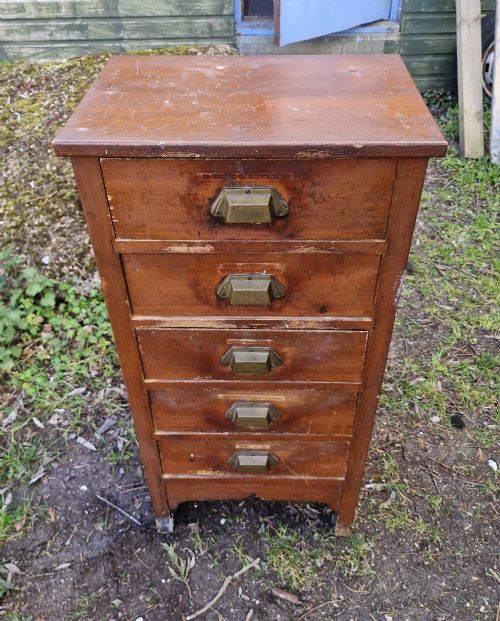
Metal hardware played an essential role in their daily operation, with brass drop handles, brass pulls, and iron details fitted to secure the numerous drawers. Many period examples also incorporated locking mechanisms with brass escutcheons to secure valuable contents in shop or pharmacy environments.
Small Bank of Drawers Retail Price Guide 2026
Typical asking prices for small bank of drawers among the pieces listed under this phrase on Sellingantiques today, from the lower quarter to the upper quarter. They describe what is for sale here now, not the wider market.
Some pharmacy drawers retain their original handwritten paper labels, offering a delightful glimpse into nineteenth-century apothecary inventories.
What varies in quality
The presence of original period hardware, such as matching brass handles and working locks with keys, elevates a piece considerably. Furthermore, the retention of original painted surfaces or polished finishes distinguishes untouched historical examples from heavily restored units.
Luxmore's of Ilfracombe·D Napier & Sons
The Small Bank of Drawers Glossary
- Apothecary chest
- A multi-drawer cabinet originally utilised by chemists and pharmacists for storing herbs, powders, and medicines. These units typically feature numerous small drawers, sometimes retaining legible paper labels.
- Collectors cabinet
- A specialised piece of furniture designed to house botanical specimens, coins, or small artefacts within shallow, dust-tight drawers. They often employ fine hardwoods like mahogany or walnut.
- Escutcheon
- A protective metal plate surrounding a keyhole, commonly cast in brass on period drawers. It prevents the surrounding wood from wearing away through the repeated insertion of a key.
- Graduated drawers
- A series of drawers arranged vertically within a cabinet where each drawer increases in depth from top to bottom. This traditional arrangement provides structural balance and varied storage capacities.
Small Bank of Drawers: Frequently Asked Questions
What were small banks of drawers used for originally?
These multi-compartment units served commercial and domestic purposes alike, functioning as apothecary storage for medicines, shop counters for hardware or dry goods, and office storage for documents.
Pharmacists and ironmongers relied upon the numerous small drawers to keep stock sorted and accessible during busy trading days.
How do I date a small bank of drawers?
Dating relies upon observing the timber species, construction joints, and overall style characteristics such as Georgian proportions or Victorian moulding profiles.
Original hardware like brass drop handles and the presence of makers' names or retailer stamps also provide reliable chronological markers.
Can I use a chemist chest in a modern kitchen?
These compact drawer units integrate naturally into modern kitchen spaces, offering practical storage for utensils, spices, or dry goods on countertops or sideboards.
Their shallow compartments help keep small household items organised while introducing distinct period texture to contemporary interiors.
Are all small banks of drawers made of hardwood?
While many finer examples utilise mahogany, walnut, oak or satin walnut, a significant portion of utilitarian and shop pieces are constructed from pine.
Pine versions were frequently painted or left with a natural waxed finish for everyday commercial utility in Victorian and Edwardian shops.