

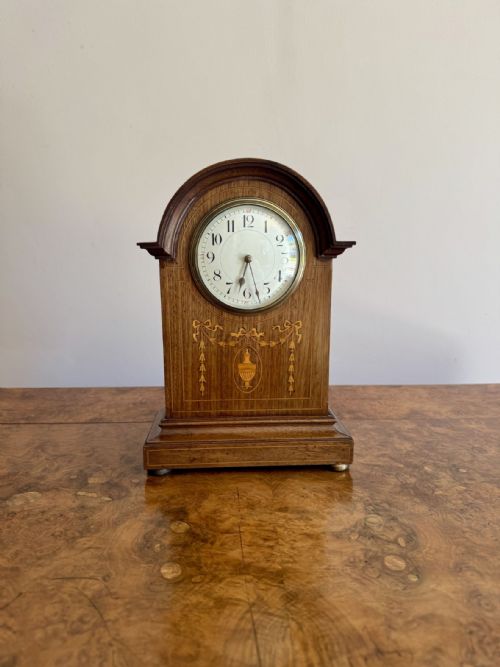


Brown Wooden Mantle Clock
A brown wooden mantle clock brings solid mahogany, walnut, or oak warmth to a room while keeping strict time.
Brown Wooden Mantle Clock
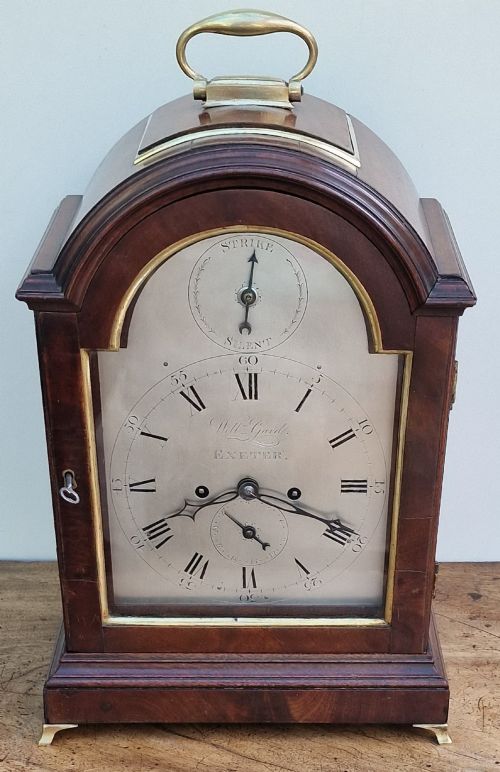
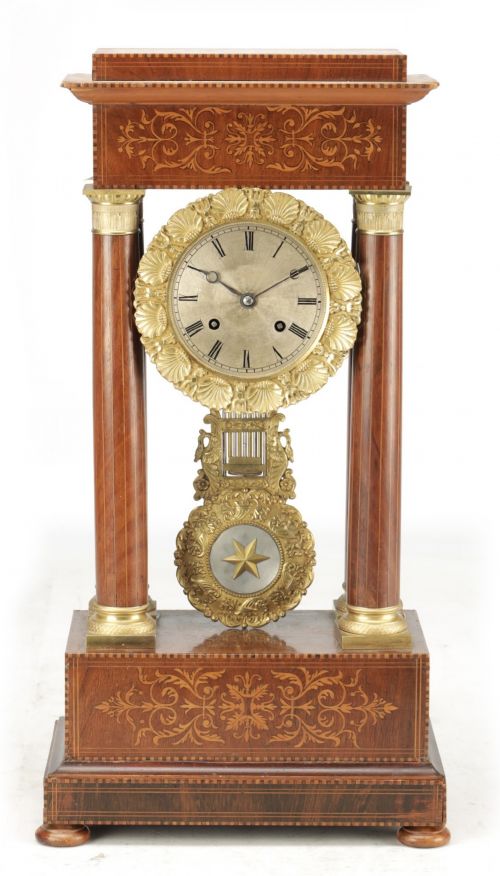
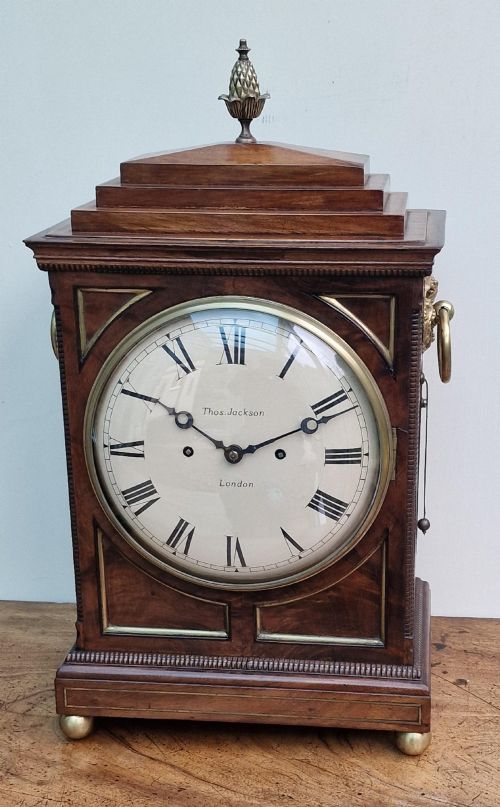
When you search for a brown wooden mantle clock, you encounter timepieces shaped from mahogany, walnut, oak, and satinwood across periods spanning the Georgian, Regency, Victorian, Edwardian, and Art Deco eras. These objects range from compact bedside timepieces to substantial bracket and boardroom clocks designed to sit steadily on a shelf or table.
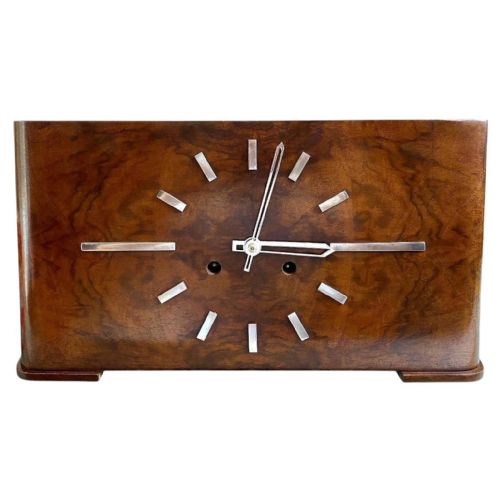
The version you are most likely to meet on this page is an Edwardian inlaid mahogany mantle clock or a later Art Deco walnut chiming model. Makers housed these movements in traditional break arch, dome top, bell top, or balloon wooden cases that display rich timber grains and brass details.
Makers ranged from notable London workshops to regional clockmakers, housing eight-day fusee and striking movements inside timber housings. Collectors and interior decorators select these brown wooden timepieces for their architectural presence and mechanical function.
What varies in quality
Quality rests in the precision of the cabinetwork and the reputation of the maker who signed the movement. Pieces featuring fine satinwood inlay, well-figured walnut or mahogany timbers, and detailed brass mounts sit at the upper end of the range.
The mechanical sophistication of the movement separates standard timepieces from finer bracket clocks. Signed movements by established makers like Elliott, Mappin & Webb, or London watchmakers demonstrate superior engineering compared to unmarked or later commercial alternatives.
Mappin & Webb·Haller·L. Vick of Stroud·Webster Cornhill London·Thomas Moss·Cording of London·Piggin Norwich·Jas Whitelaw of Edinburgh·ELLIOTT of LONDON·Chater & Son London·Watson London·Adams of Lombard Street·Seikosha Seiko
The Brown Wooden Mantle Clock Glossary
- Bracket clock
- A portable spring-driven clock originally designed to sit on a wall bracket or table. These typically feature brass carrying handles and elaborate wooden cases.
- Fusee
- A conical pulley used in mechanical clocks to maintain an even pull on the movement as the mainspring unwinds. This mechanism ensures more accurate timekeeping.
- Bell top
- A style of clock case roof that curves upward in a bell shape, popular during the Georgian and Regency periods. This form gives the timber silhouette greater height and presence.
- Inlay
- A decorative technique where contrasting woods such as satinwood or ebony are inserted into recesses within the primary mahogany or walnut case. This creates geometric or floral patterns.
- Balloon clock
- An Edwardian clock case form featuring a rounded, bulging top that resembles a hot air balloon. These usually combine oak or mahogany timber with delicate inlay.
Brown Wooden Mantle Clock: Frequently Asked Questions
What is a brown wooden mantle clock?
A brown wooden mantle clock is a tabletop or shelf timepiece housed in a timber case made from materials like mahogany, walnut, or oak. These clocks were produced across various centuries and include styles ranging from Georgian bracket clocks to Art Deco walnut designs.
They combine mechanical timekeeping movements with decorative woodwork designed to sit steadily on a mantelpiece or desk.
How do I identify the period?
You can identify the period by examining the architectural style, timber choice, and inlay techniques of the wooden case. Georgian and Regency pieces often feature classic proportions with bell top or bracket forms, while Edwardian examples frequently display mahogany with delicate satinwood inlay.
Art Deco clocks from the 1920s and 1930s utilise bold walnut veneers and geometric silhouettes that reflect the design shifts of the twentieth century.
Where were these clocks placed?
These timepieces were designed primarily for domestic and professional interiors, sitting atop fireplaces, mantelpieces, and wooden brackets mounted to walls. Their portable nature allowed owners to move them between rooms as needed.
Larger boardroom clocks and striking bracket models provided reliable timekeeping and acoustic chimes for communal spaces and offices.
How do I care for a wooden clock?
Caring for a wooden mantle clock involves keeping the timber case away from direct sunlight, excessive heat, and moisture to preserve the polished veneer and natural grain. Periodic dusting with a soft, dry cloth protects the finish.
Mechanical movements benefit from professional servicing by a horologist to ensure the gears, springs, and striking mechanisms continue to function smoothly.