



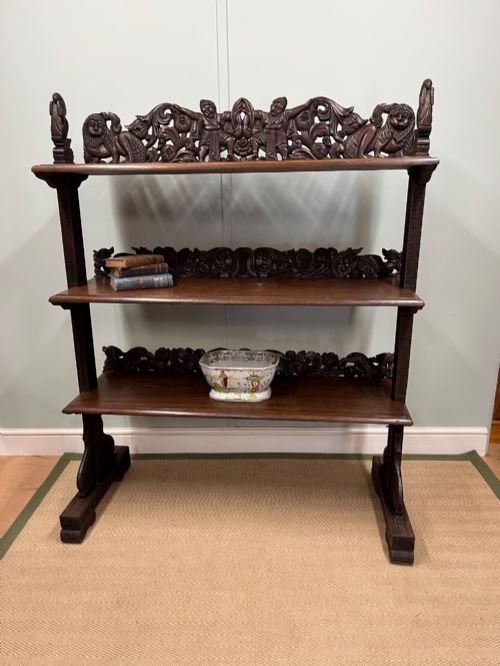


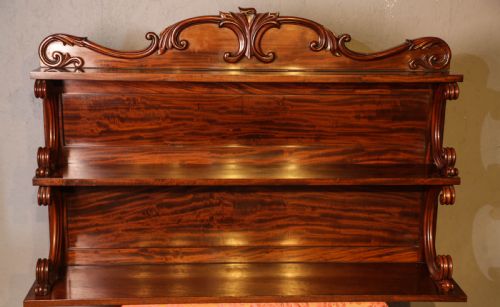


Brown Wooden Etagere
A brown wooden etagere brings tiered display space and rich timber grain to a room, offering practical elegance for collectors of refined period furniture.
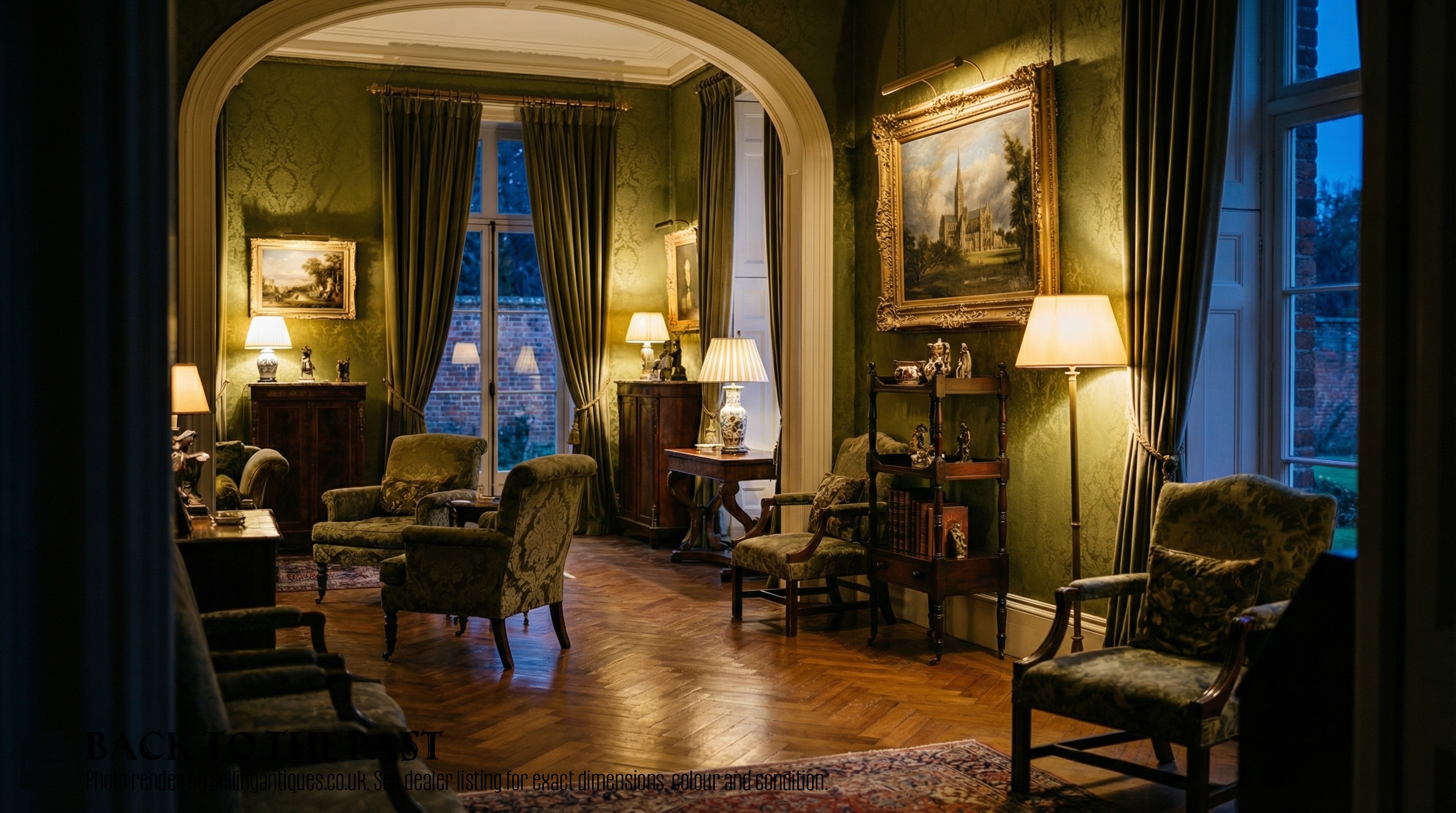
Brown Wooden Etagere
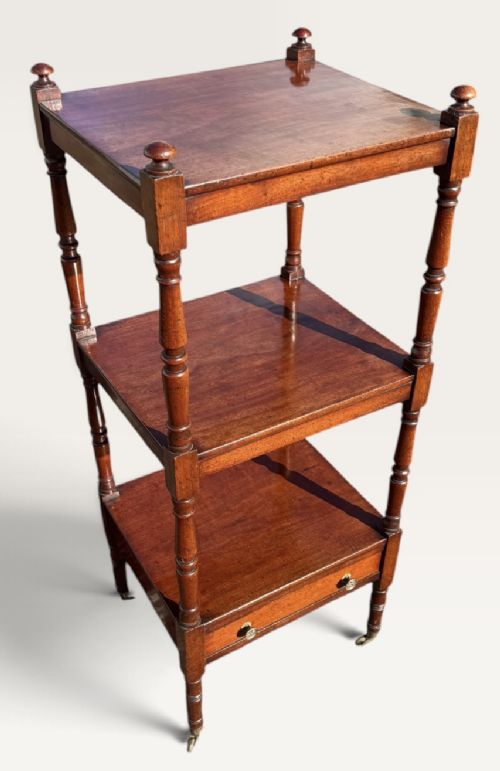
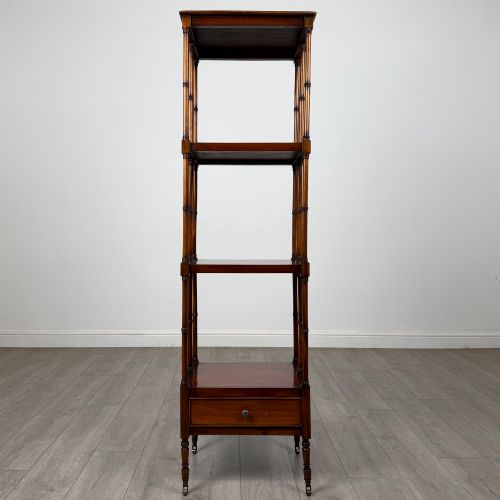
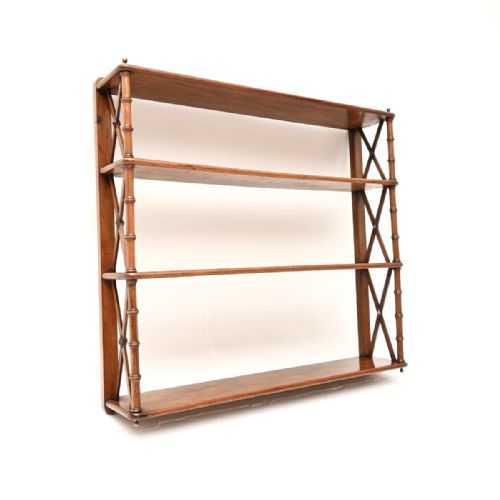
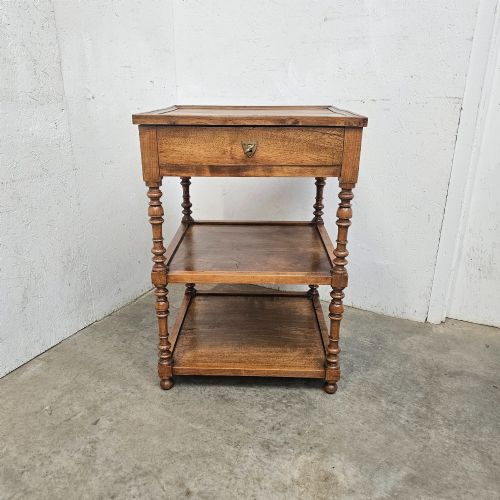
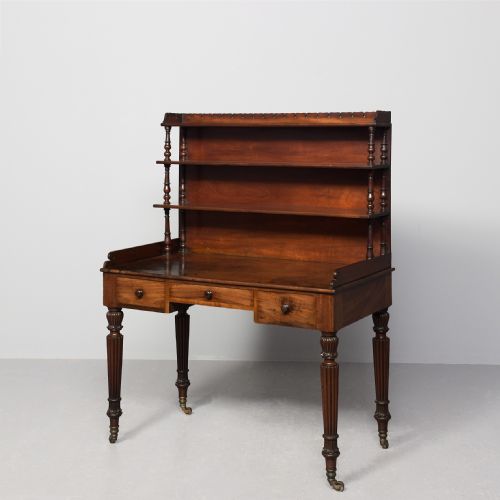
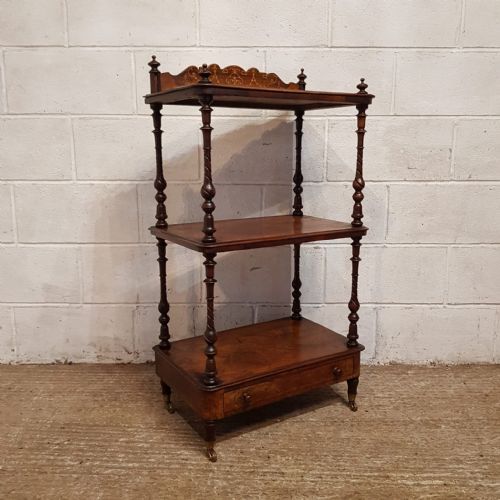
A brown wooden etagere serves as an open tiered shelf unit for books, ornaments or smaller objects, appearing across the Georgian, Regency and Victorian periods. These pieces bridge the gap between functional storage and decorative display, adopting various formats from corner units to rolling trolleys and tall multi-tiered stands.
Origins stretch from English workshops to French and Anglo-Indian makers, utilising timbers such as teak, burr walnut and yew wood. Alongside standard etageres, related forms like whatnots and wall shelves share the same vertical display logic.
Materials and construction methods
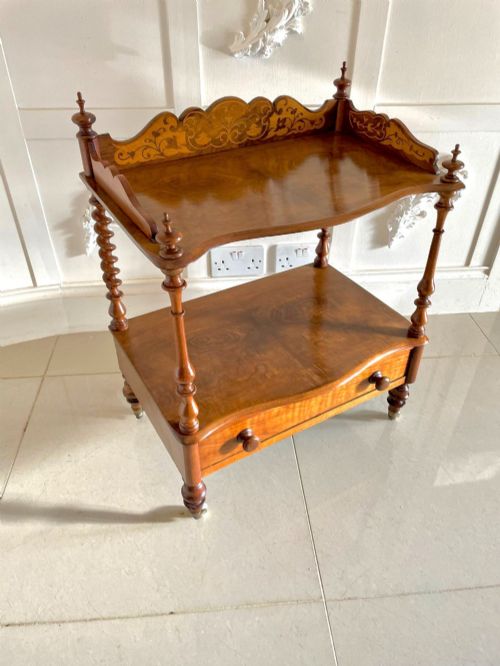
Cabinetmakers relied heavily on dense hardwoods like mahogany and walnut, frequently selecting burr walnut veneers or marquetry inlay to introduce dramatic figuring to the shelves and tops. Brass fittings, castors and mirrored backs frequently supplement the timber structure, adding utility and reflecting light through the tiers.
Joinery methods across these pieces involve careful turning for upright supports, precise jointing for tiered platforms and delicate fretwork or gallery rails to secure display items. Surfaces received hand-applied finishes that enhanced the natural colour and grain of the timber over centuries of use.
Brown Wooden Etagere Retail Price Guide 2026
Typical asking prices for brown wooden etagere among the pieces listed under this phrase on Sellingantiques today, from the lower quarter to the upper quarter. They describe what is for sale here now, not the wider market.
Listings feature etageres and whatnots spanning the Georgian, Regency and Victorian eras, constructed primarily in mahogany, walnut and teak with occasional brass and glass additions.
Assessing quality in tiered shelving
Proportion and stability separate standard utility pieces from exceptional examples. A finely made etagere maintains rigid tiers without wobble, balancing visual lightness with structural integrity across every level.
James Mein of Kelso·W. Turner Lord & Co
The Brown Wooden Etagere Glossary
- Etagere
- An open piece of furniture with multiple tiers for displaying small objects or ornaments. It evolved in France during the eighteenth century before becoming popular in British interiors.
- Whatnot
- A multi-tiered shelving unit used for general storage and display in nineteenth-century homes. It functions similarly to an etagere and the terms are frequently used interchangeably.
- Marquetry
- Decorative veneer work forming geometric or pictorial patterns using various tinted woods. Cabinetmakers applied this technique to tabletop surfaces and cabinet doors to catch the eye.
- Dumb waiter
- A tiered revolving or stationary stand placed beside a dining table to hold dishes or serving items. These eighteenth and nineteenth-century pieces share the stacked-shelf construction of etageres.
- Turned-leg
- A support column shaped on a lathe to create cylindrical, swelling or spiral profiles. This method provides both structural strength and decorative detail to table and etagere uprights.
Brown Wooden Etagere: Frequently Asked Questions
What is the difference between an etagere and a whatnot?
An etagere originates from French design traditions with a primary focus on decorative display, whereas a whatnot is a traditional British term for a multi-tiered shelving unit designed for general household storage.
In practice, both terms describe stacked wooden shelves used for books and ornaments, and antique dealers often use them interchangeably depending on the regional style of the piece.
How do I style a brown wooden etagere at home?
Balance the weight of your items by placing heavier books or ceramics on the lower shelves and lighter glassware or small decorative objects near the top. Leaving some open space between items allows the wood grain and structural uprights to remain visible.
Because many pieces feature mirrored backs or open sides, position the unit where ambient light can pass through or reflect off the surfaces to brighten darker corners of a room.
How can I tell a Georgian etagere from a Victorian one?
Georgian pieces generally display restrained classical proportions, straightforward mahogany construction and clean architectural lines. They often take the form of sturdy three-tier stands or A-frame library shelves.
Victorian examples tend towards greater ornamentation, utilising burr walnut veneers, inlaid marquetry, turned supports, mirrored panels and integrated drawers or cabinet bases.
Are these tiered shelves sturdy enough for heavy books?
Most antique etageres and whatnots were built for lighter display items, decorative volumes and ornaments rather than heavy folio libraries. The lighter framing and slender turned supports are engineered for elegance and balance.
While sturdy enough for everyday display, distribute weight evenly across the shelves and avoid overloading the upper tiers to protect the antique joinery.