


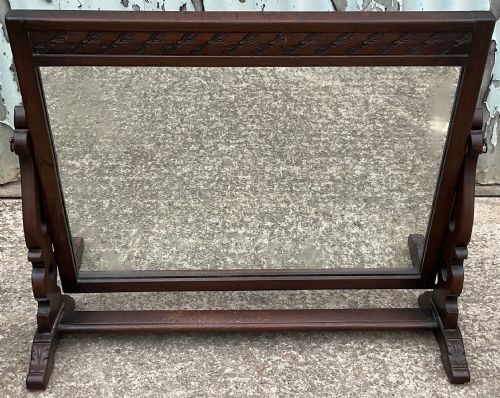

Brown Wooden Dressing Glass
A brown wooden dressing glass brings warmth and reflective utility to a room, offering period charm through rich timber frames and pivoting mirror plates.
Brown Wooden Dressing Glass
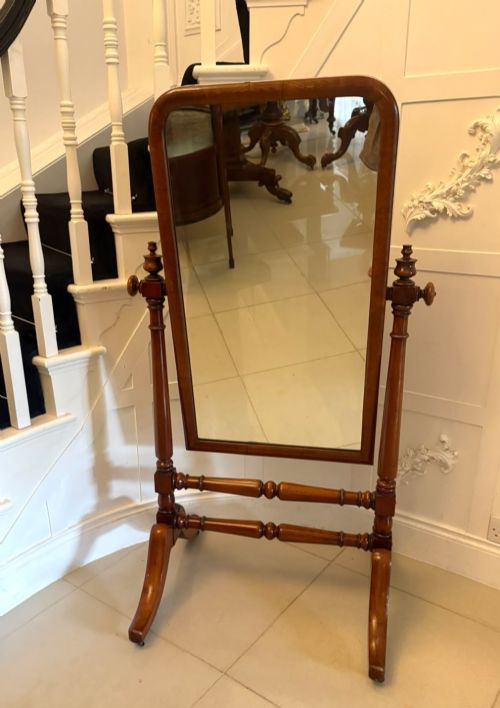
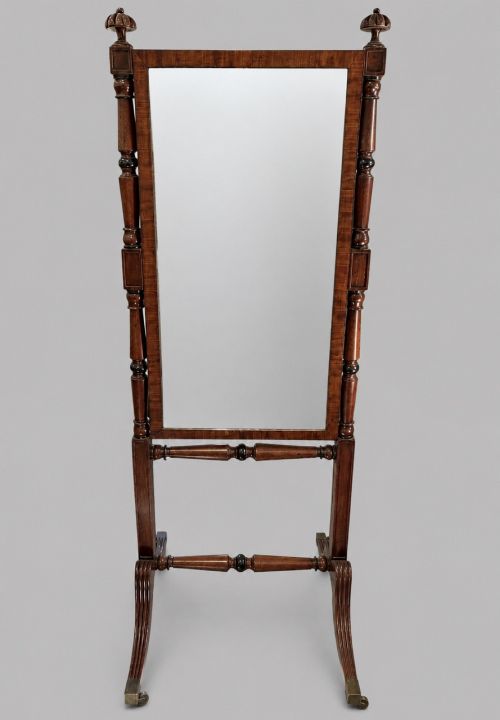
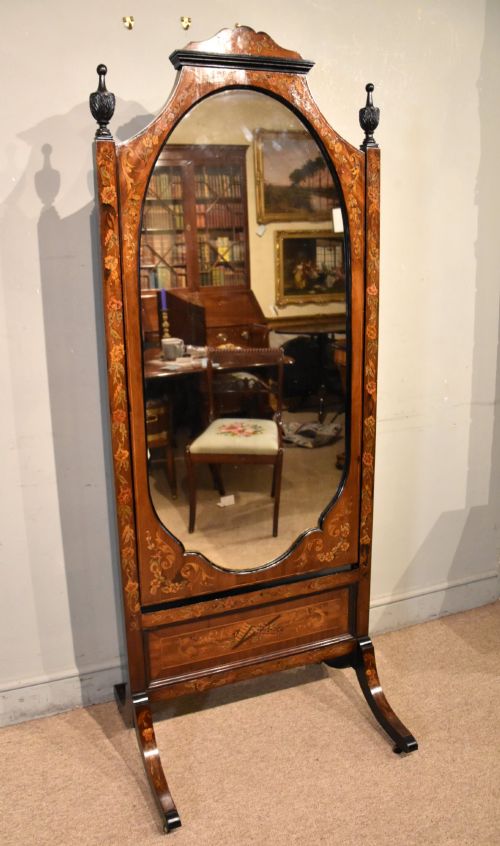
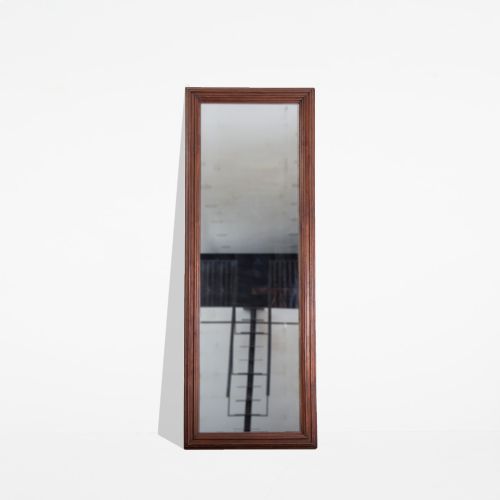
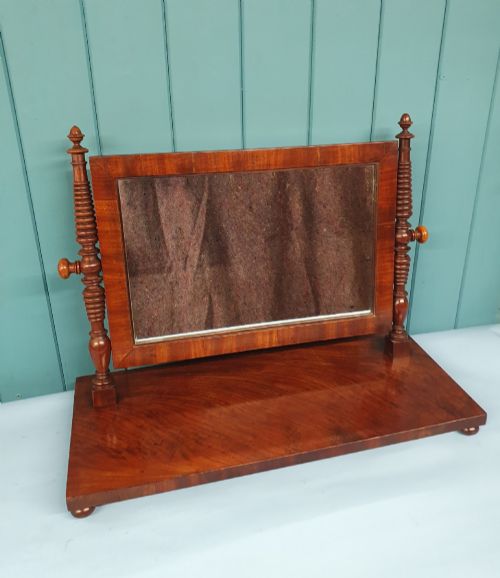
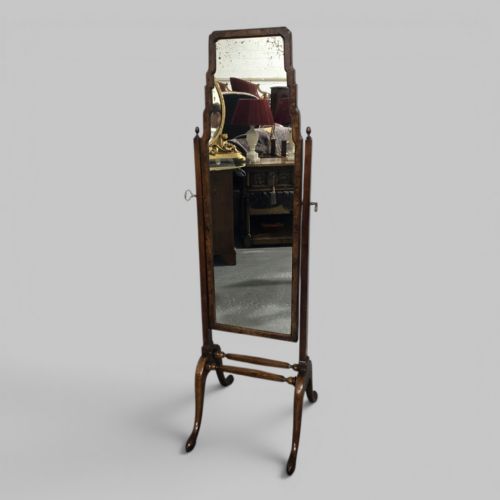
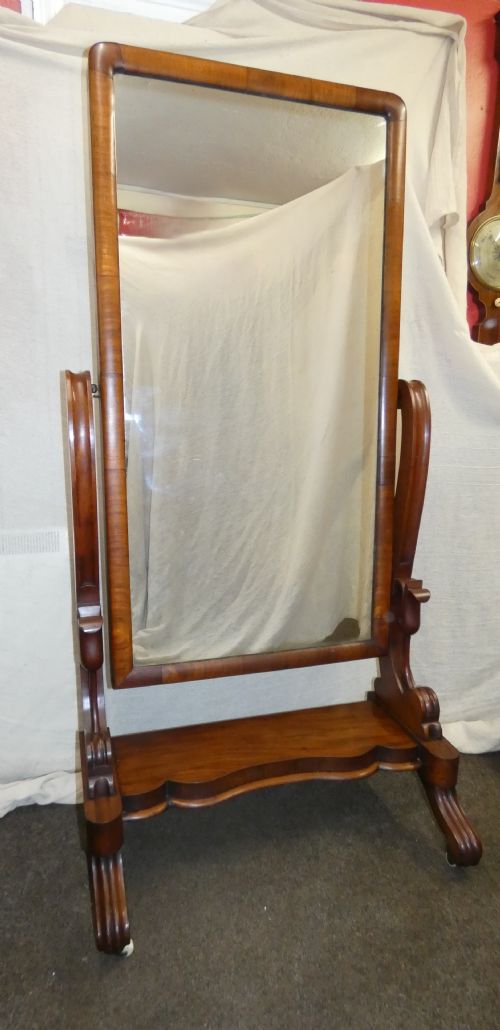
A brown wooden dressing glass comprises freestanding toilet mirrors and full-length cheval mirrors designed for personal grooming and interior reflection. These items appear across multiple periods including Georgian, Regency, and Victorian eras, utilising timber frames that rest upon tabletop boxes or floor supports.
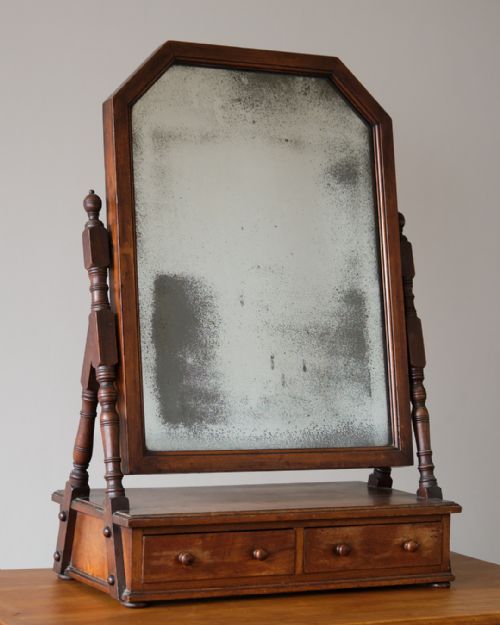
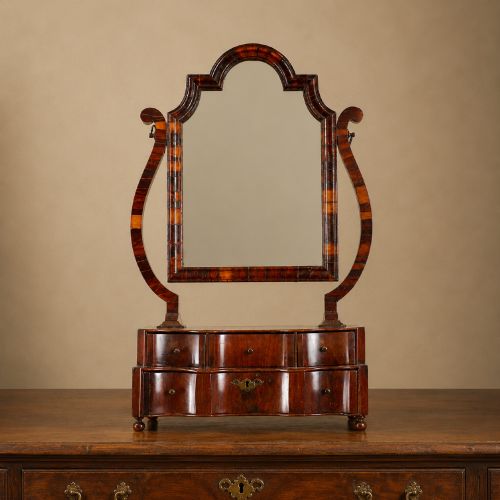
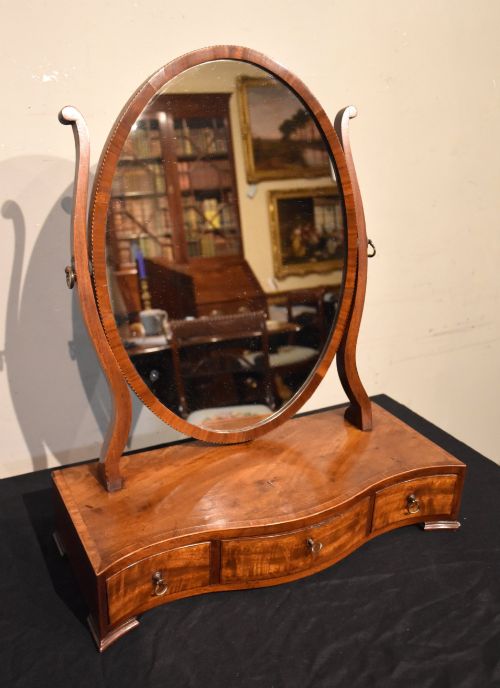
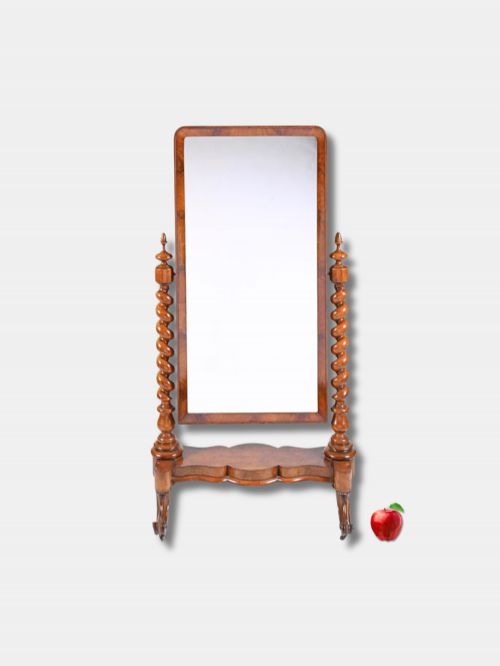
The version most commonly encountered on this page is the Victorian mahogany swing mirror, often featuring a serpentine front or barley twist supports. These pieces combine practical glass surfaces with compartmentalised wooden bases intended for dressing tables and chests of drawers.
Makers such as Heal & Sons also contributed to the form, producing dressing table mirrors during the early twentieth century. Buyers seeking a brown wooden dressing glass will find both compact toilet glasses and taller floor-standing cheval variants spanning the eighteenth to twentieth centuries.
How they were made
Craftsmen built these frames using traditional cabinet timbers such as mahogany, walnut, burr elm, and oak, frequently embellished with inlaid details or laburnum banding. Mirror glass was housed within adjustable wooden frames supported by side pivots, allowing the user to tilt the reflective surface.
Structural elements incorporated brass hardware, bone details, and turned supports like barley twists, whilst larger cheval mirrors utilised robust floor frames. Marquetry techniques also surface on continental Dutch examples, adding decorative floral or geometric patterns to the wooden surfaces.
The listings span multiple centuries of woodworking traditions, uniting Georgian mahogany and Victorian walnut with Edwardian and Art Deco oak designs.
What varies in quality
The distinction between standard examples and the finest pieces rests upon the selection of timber veneers, such as richly figured burr walnut or premium mahogany, alongside the subtlety of cabinet work. Superior items display refined serpentine shaping, precise joinery, and well-executed decorative inlays rather than plain or utilitarian construction.
Proportion and the integration of original brass fittings or turned supports heavily influence the character of each mirror. Pieces that retain their original mirror glass, balanced proportions, and integrated drawer bases command greater appreciation among collectors.
Heal And Sons
The Brown Wooden Dressing Glass Glossary
- Cheval mirror
- A large freestanding mirror supported by a frame with four legs, tall enough to reflect the entire figure.
- Toilet mirror
- A smaller dressing glass designed to sit upon a table, chest, or vanity unit, often featuring small drawers in the base.
- Serpentine front
- A curved furniture front characterised by a convex centre flanked by concave ends, frequently seen on Georgian dressing mirror bases.
- Barley twist
- A type of turned wooden support carved in a helical spiral resembling a twist of barley, popular during the Victorian period.
- Burr elm
- A highly decorative wood grain obtained from the growths on elm trees, valued for its swirling patterns in cabinet making.
Brown Wooden Dressing Glass: Frequently Asked Questions
What is a dressing glass?
A dressing glass is a moveable mirror mounted within a wooden frame, historically placed on a dressing table or chest to assist with personal grooming and styling.
These pieces range from small tabletop toilet mirrors with integrated storage drawers to grand freestanding cheval mirrors designed for full-length reflection.
Where were they placed?
These mirrors typically sat upon dedicated dressing tables, washstands, or large chests of drawers within bedrooms and dressing rooms of period homes.
Floor-standing cheval mirrors stood independently in bedrooms or hallways, allowing individuals to check their complete attire before stepping out.
How do I date a mirror?
Dating relies upon observing the timber choices, construction methods, hardware, and prevailing architectural styles of the period. For instance, serpentine drawer fronts and fine mahogany indicate Georgian craftsmanship, whilst barley twist supports often point towards Victorian production.
Cabinet construction details, such as hand-cut dovetails on base drawers and the bevel or thickness of the mirror glass, provide further clues to the age of the piece.
Are the mirror plates original?
Many surviving pieces retain their original mercury or early silvered glass, which often exhibits characteristic foxing, light speckling, or gentle oxidation.
Replacement glass is sometimes fitted during the long history of these antiques, though original plates remain preferred by purists who value authentic age.