
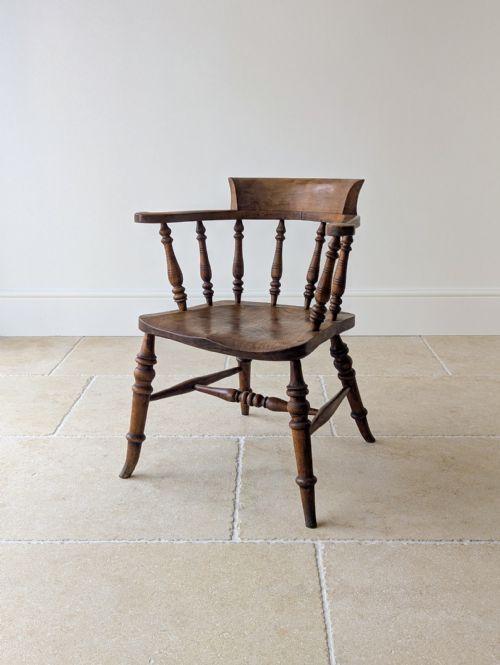
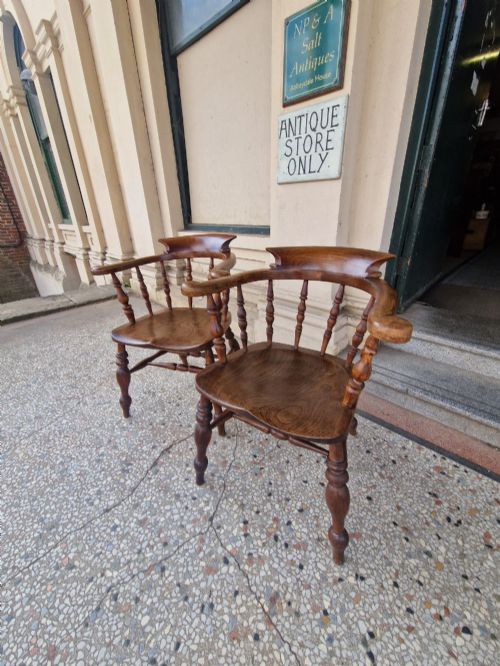
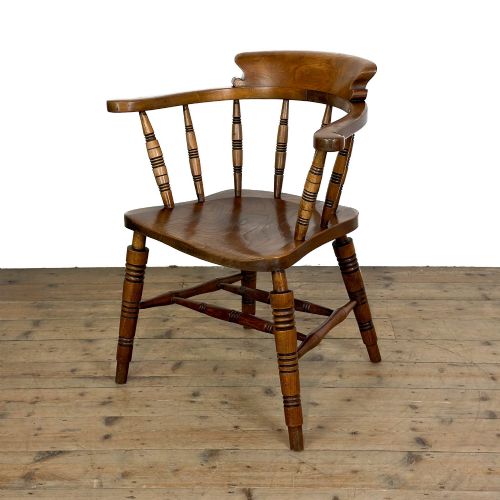
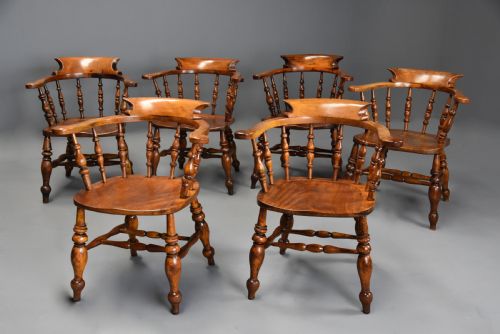
Brown Wooden Captains Chair
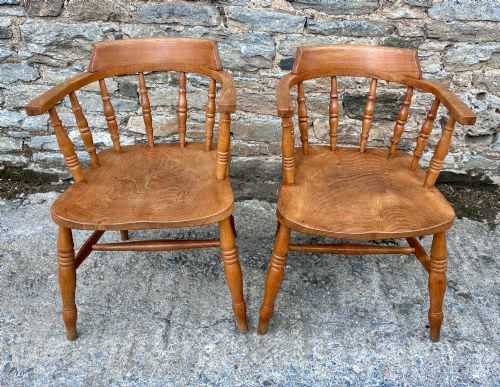
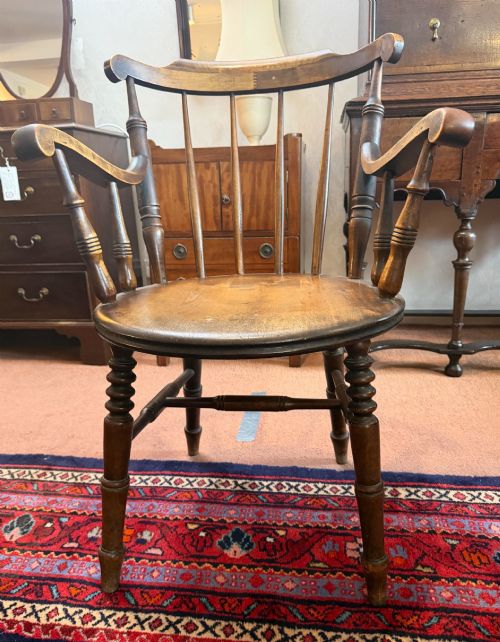
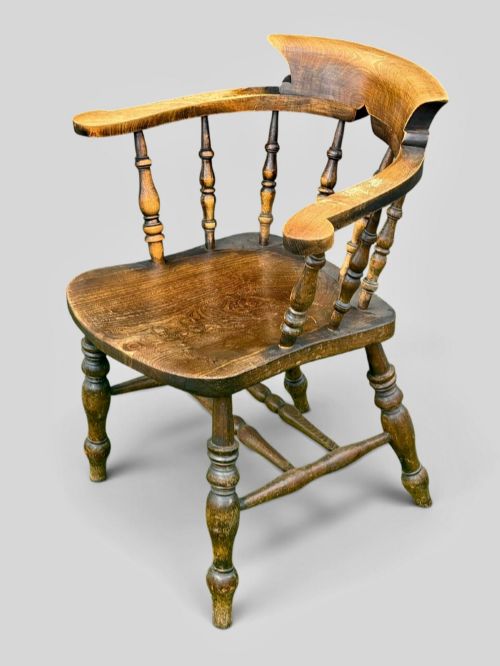
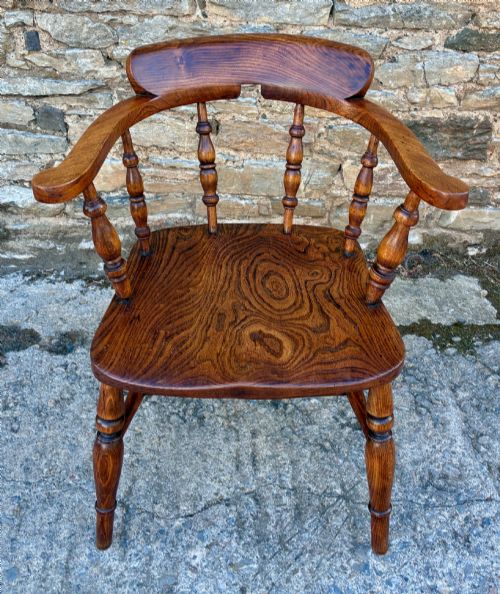
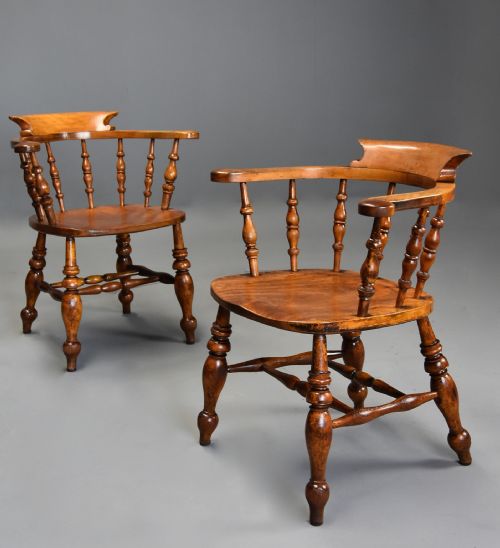
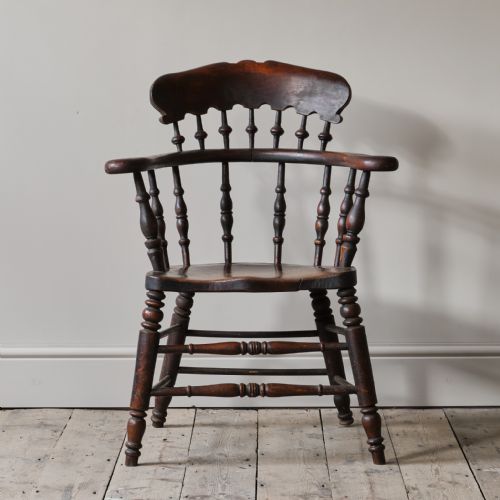
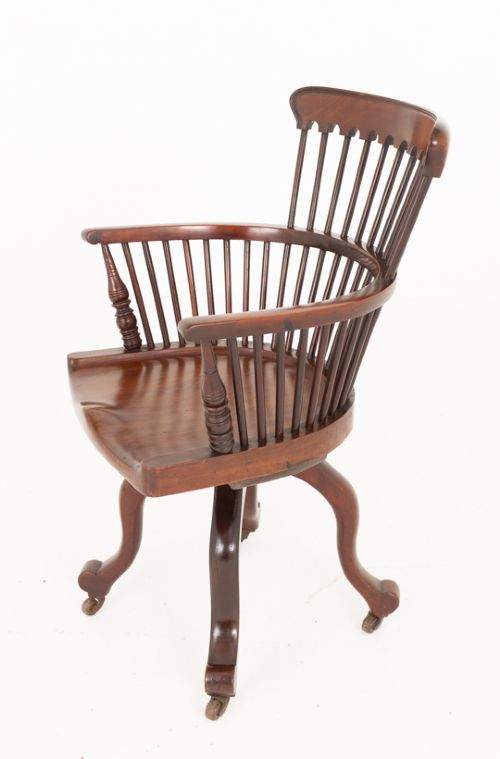
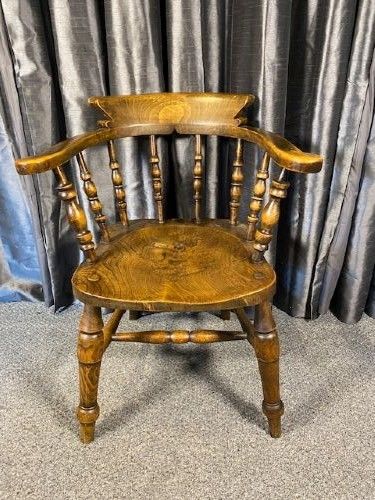
A brown wooden captains chair offers sturdy seating with a curved back, combining solid timbers and practical desk or study use.
Brown Wooden Captains Chair
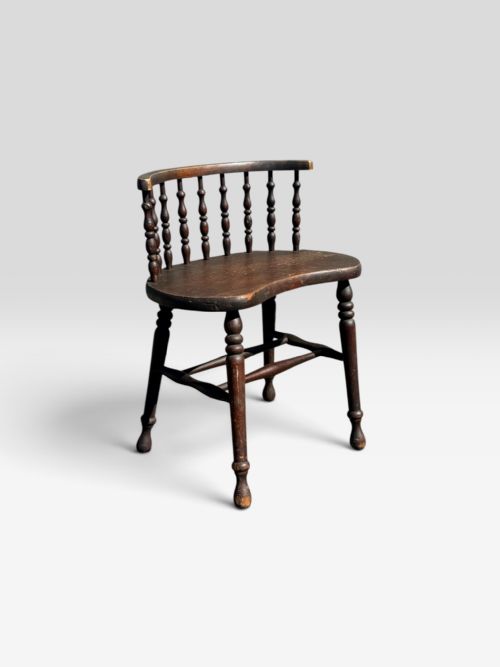
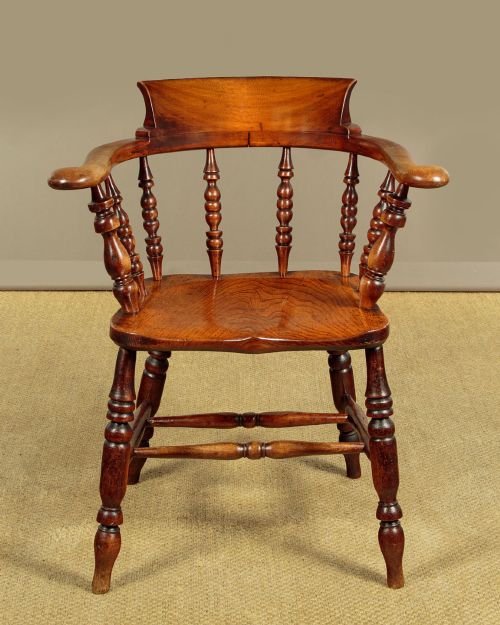
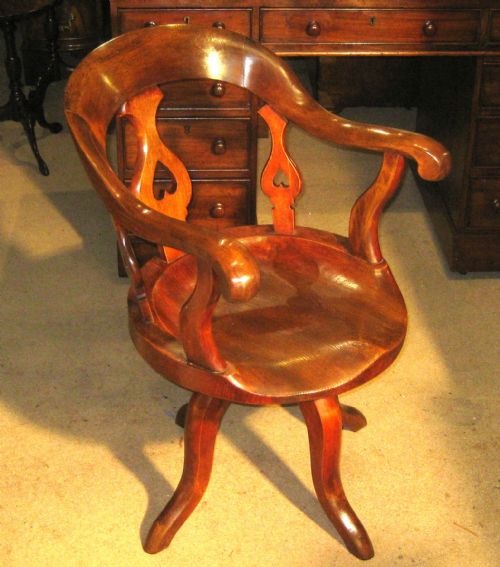
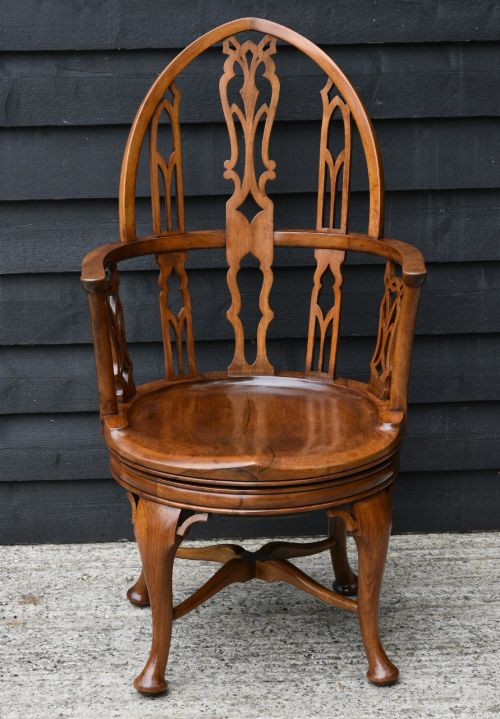
When searching for a brown wooden captains chair, buyers encounter robust seating designed for desks, studies and country parlours. The pieces on this page span the nineteenth century through the early twentieth century, taking forms such as desk chairs, smokers bows and Windsor armchairs.
How they were made
Maker's workshops built these chairs using combination timbers, pairing elm seats with beech, ash or oak for spindles, arms and legs. Steam-bending techniques shaped the continuous back rails into comfortable curves.
Joinery relied on traditional pegging and wedged tenon joints to secure the uprights to the thick saddle-shaped wooden seats. Certain desk variants incorporated brass swivel mechanisms and leather upholstery.
Some chairs sport rich patination from decades of pipe smoke and ink spills in Victorian studies.
What varies in quality
Quality differences rest in the choice of timber figure, such as burr elm or rich walnut, and the depth of the patination built up over decades of use. Simpler vernacular pieces contrast with finely turned Gothic Revival or Aesthetic Movement examples.
Proportion and comfort also set examples apart, with superior pieces retaining balanced carriage, robust arm bow construction and original turning details without heavy alterations.
The Brown Wooden Captains Chair Glossary
- Smokers bow
- A low-backed Windsor armchair featuring a turned spindle gallery and a continuous curved arm rail. These comfortable elbow seats were common in vernacular settings.
- Windsor chair
- A chair built with a solid wooden seat into which the legs and back spindles are directly fitted. They utilise turned components and steam-bent wood.
- Saddle seat
- A thick wooden seat base scooped and shaped for ergonomic comfort. This timber foundation anchors the structural undercarriage and back frame.
- Spindle
- A slender turned wooden upright used to fill the space beneath the arm rail. Spindles provide structural support while keeping the back light.
- Vernacular
- Furniture made by local regional craftsmen using traditional methods rather than following metropolitan design canons. These objects reflect local timber availability.
Brown Wooden Captains Chair: Frequently Asked Questions
What is a captains chair?
A captains chair is a sturdy wooden armchair with a low, curved back rail supported by spindles. It was traditionally used in offices, ships and studies.
Over time, the form merged with the Windsor tradition and the smokers bow, creating a comfortable low-backed seat suitable for long hours at a desk.
How do I date a wooden chair?
Dating relies on examining the timber species, construction methods, and tool marks visible beneath the seat. Victorian and Edwardian examples often show specific turning patterns and screw types.
Changes in style from Gothic Revival to Aesthetic Movement also help narrow down the decade of manufacture.
Were these chairs used at desks?
Many examples functioned as office or library seating, particularly those featuring revolving wooden bases, brass mechanisms and leather pads. Heavier versions served as partner desk chairs.
Standard non-swivel elbow chairs also worked well in studies, parlours and dining rooms across country houses.
What woods were used?
Elm is the primary timber found in the thick, sculpted seats due to its resistance to splitting. Ash and beech appear frequently in the turned legs and bentwood back rails.
Mahogany, walnut and oak appear in more formal Victorian and Edwardian office chairs, sometimes paired with brass swivel fittings.