


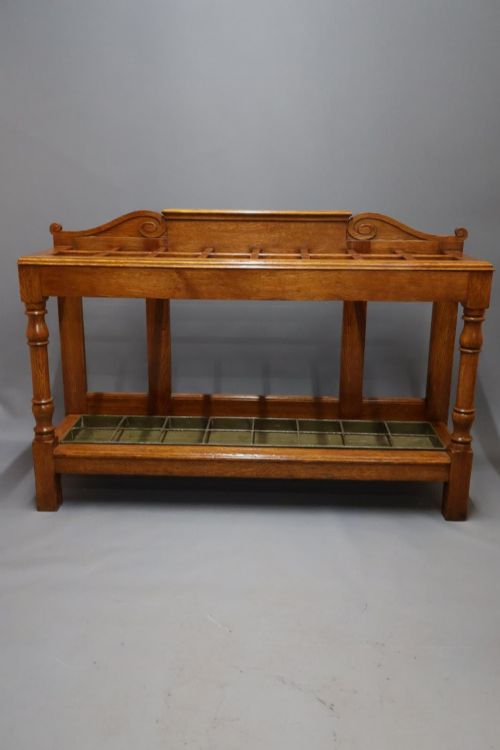


Brown Wooden Cane Holder
A brown wooden cane holder brings functional order to an entrance hall while grounding the space in rich timber tones.
Brown Wooden Cane Holder
A brown wooden cane holder, commonly catalogued as an umbrella or stick stand, is a hallway furnishing designed to hold walking sticks, canes, and umbrellas upright. The versions met most frequently on this page date from the Victorian and Edwardian periods, constructed primarily in solid oak or mahogany.
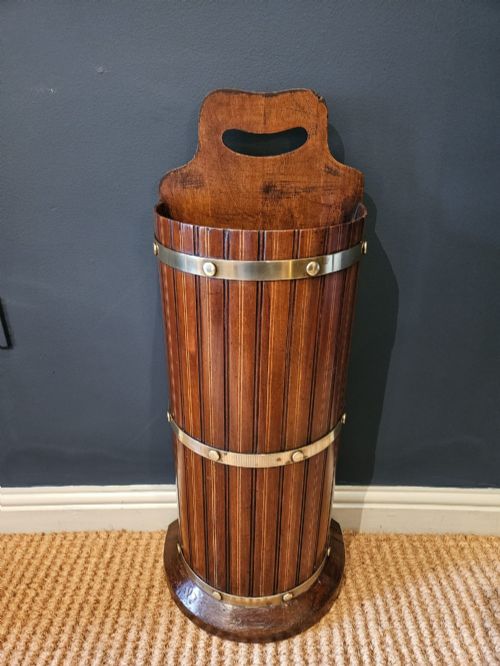
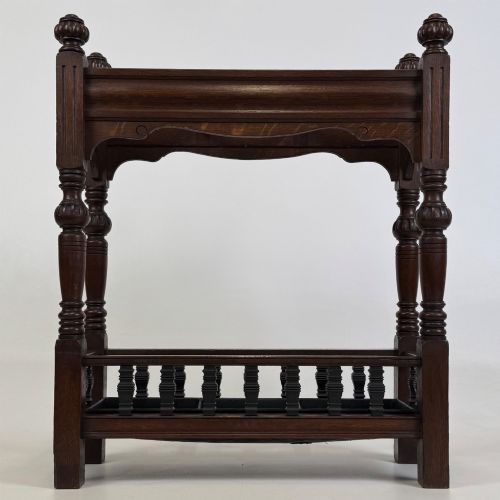
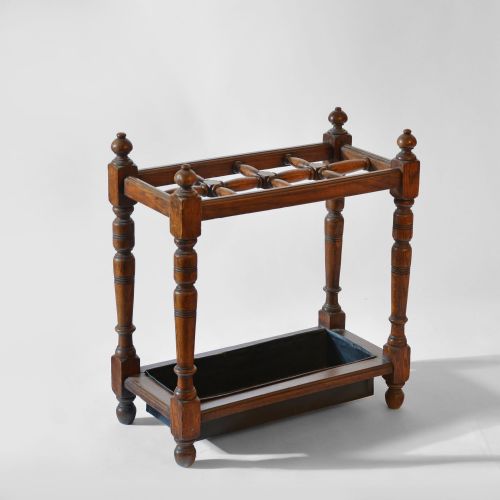
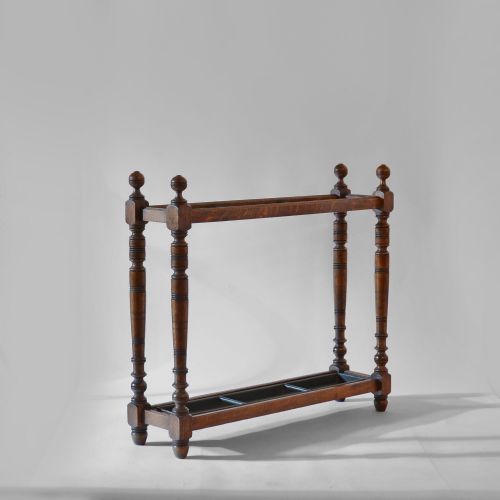
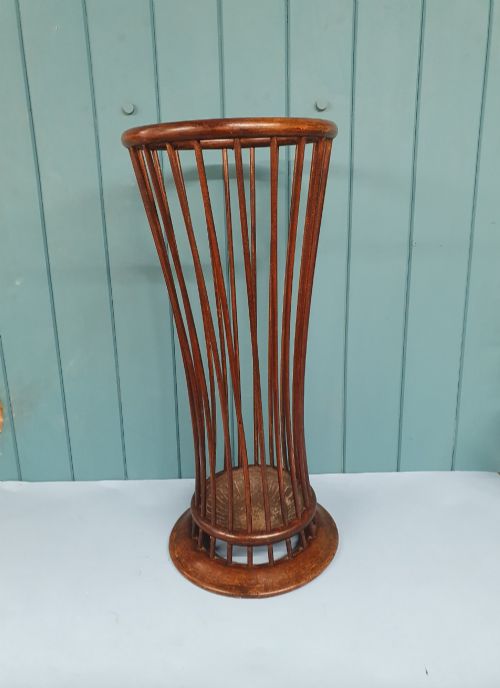
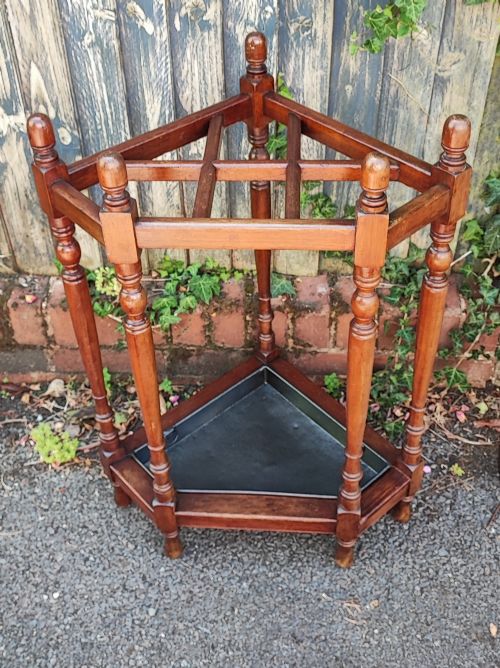
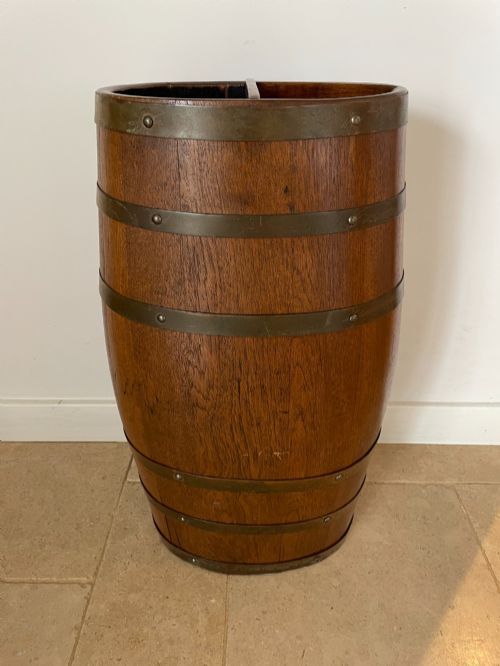
Forms vary from sturdy rectangular compartments with internal divisions and metal drip trays to coopered barrel designs bound with brass. Buyers encounter pieces styled across various design movements, including Arts and Crafts, Aesthetic Movement, and Gothic Revival, alongside rustic Black Forest carvings.
These stands serve as practical organizational pieces for hallways and vestibules, combining utilitarian function with period craftsmanship. They utilise the natural warmth and grain of timbers like oak, mahogany, and walnut to anchor domestic interiors.
Materials and construction techniques
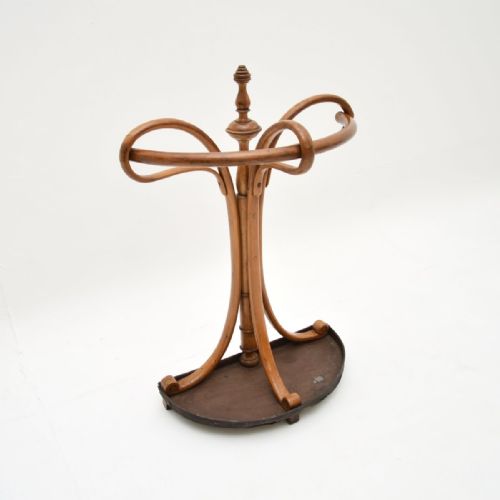
Makers constructed these stands predominantly using solid timbers such as oak and mahogany, often enhanced by steam-bent beechwood or carved lindenwood. Carpenters employed traditional joinery techniques, including coopered stave construction for barrel-shaped forms and framed panels for rectangular racks.
Metal components played a vital structural and functional role, with brass bindings, copper accents, and iron or zinc drip trays fitted to catch moisture from wet umbrellas. Carved details, turned uprights, and applied mouldings defined the decorative styles of the Victorian and Edwardian eras.
Listings feature woods including oak, mahogany, walnut, and bent beechwood, spanning Victorian, Edwardian, and Arts and Crafts styles.
Distinctions in quality
Quality rests upon the selection of timber, the integrity of the joinery, and the retention of original functional hardware such as metal drip trays. Superior examples display thoughtful proportion, crisp carving, and durable construction that withstands daily domestic use.
The presence of maker attribution, specialised regional styles like Black Forest carving, or distinctive movement characteristics elevate a piece above standard utilitarian hall furniture. Original patination and intact structural framing distinguish finer examples from later or heavily restored pieces.
Thonet
The Brown Wooden Cane Holder Glossary
- Coopered
- Constructed using vertical wooden staves bound by metal hoops, similar to traditional barrel-making techniques. This method provides robust structural integrity for cylindrical vessel forms.
- Drip tray
- A removable metal basin positioned at the base of a stand to catch water from wet umbrellas. These trays protect the underlying timber from moisture damage.
- Bent beechwood
- Timber shaped into curves using steam and pressure, a technique famously utilised for fluid, organic furniture designs. It offers lightweight strength.
- Black Forest
- A nineteenth-century carving style originating from the German region, known for highly detailed animal figures and naturalistic foliage. Pieces often incorporate realistic representations of bears.
- Gothic Revival
- An architectural and decorative style drawing inspiration from medieval forms, featuring pointed arches and structural tracery. This aesthetic imbues wooden stands with ecclesiastical gravity.
Brown Wooden Cane Holder: Frequently Asked Questions
What is a brown wooden cane holder?
A brown wooden cane holder is a piece of hallway furniture designed to store walking sticks, canes, and umbrellas in a vertical position.
These stands use timber frameworks and internal dividers to keep entryways organised and tidy.
How do I use a stick stand?
Stick stands sit in hallways or porches to hold walking aids and umbrellas ready for use when heading outdoors.
The integrated metal drip trays catch moisture and mud to protect flooring from wet items.
How do I date a wooden umbrella stand?
Dating relies on identifying period characteristics, construction methods, and design styles associated with Victorian, Edwardian, or Arts and Crafts movements.
Examining the fixings, timber selection, and wear patterns helps place the piece within the nineteenth or early twentieth century.
Where should I place a cane holder?
These holders suit placement in entrance halls, mudrooms, or vestibules where outdoor wear is stored.
They function best on hard flooring near an exit for convenient access to walking sticks and umbrellas.