
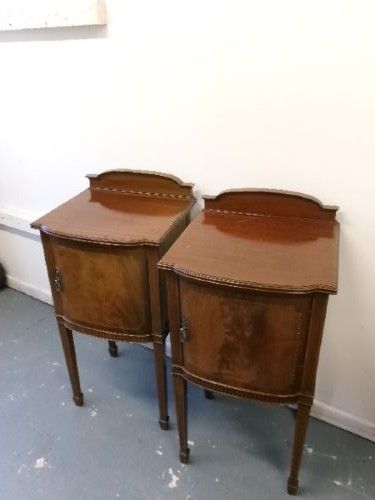
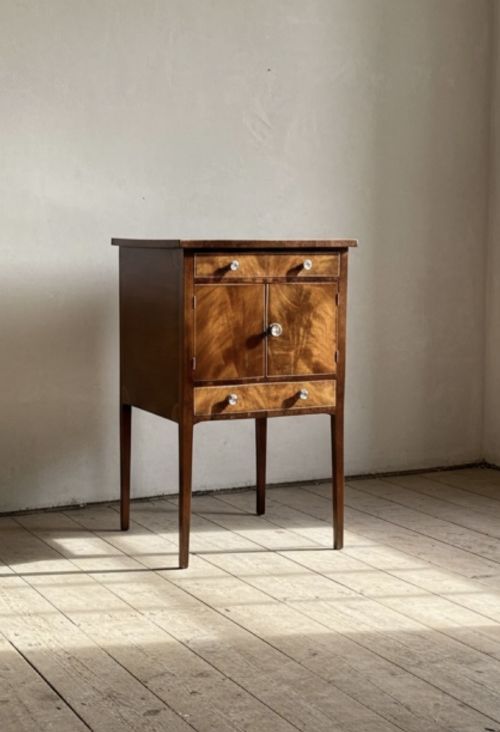

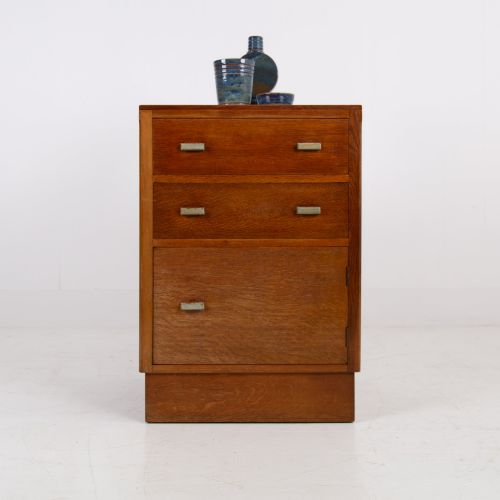
Brown Wooden Bedside Cupboards
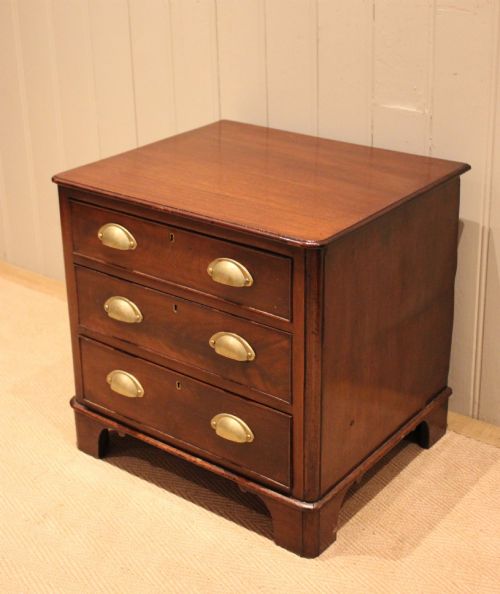
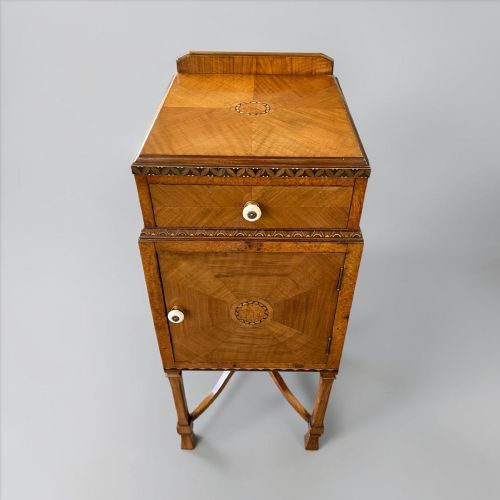
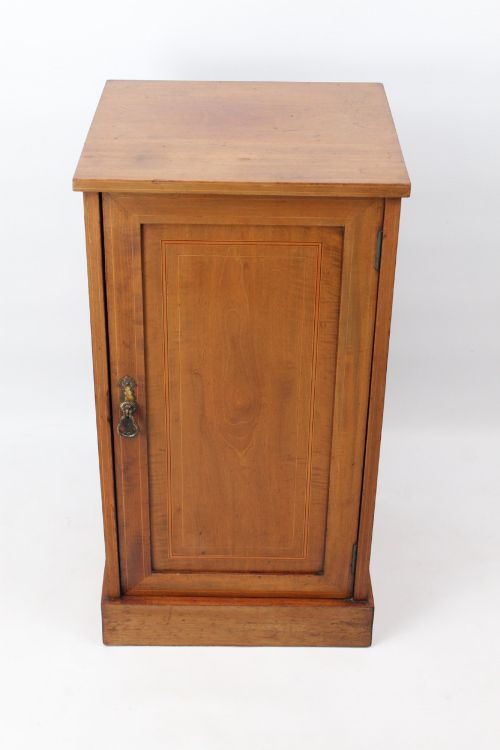
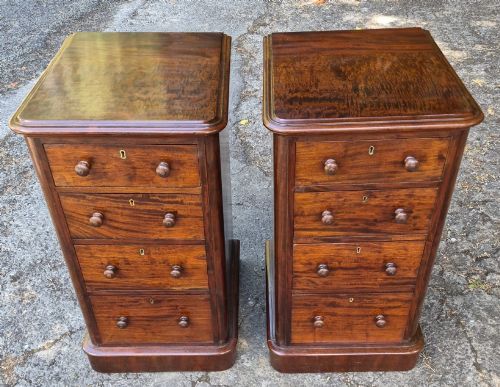
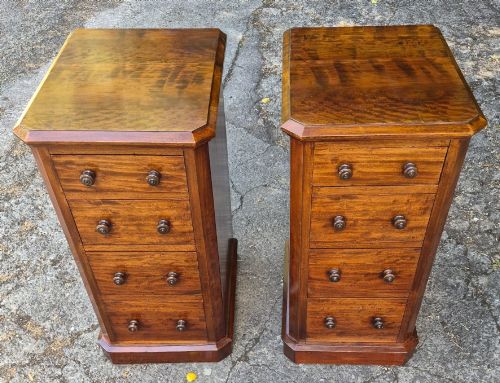
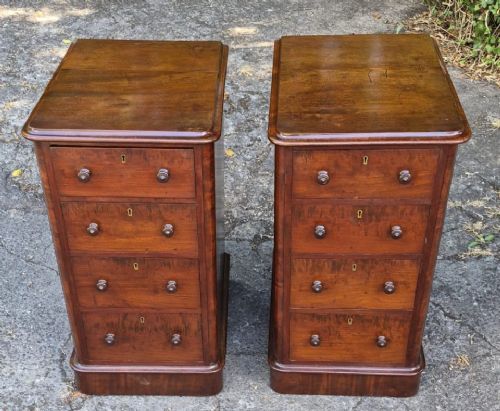
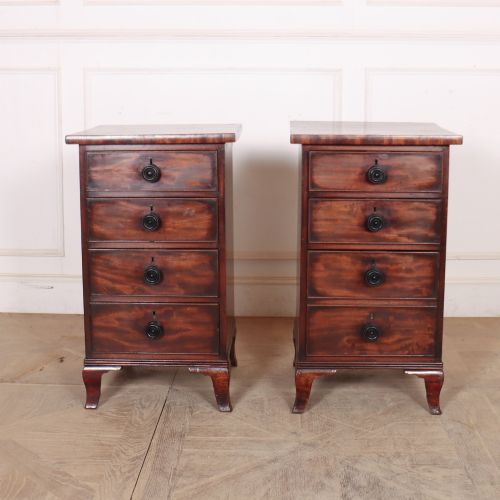
Brown wooden bedside cupboards solve the bedside storage problem with timber warmth, bringing together Victorian mahogany chests, Edwardian inlaid cabinets, and Art Deco walnut pieces.
Brown Wooden Bedside Cupboards
When you search for brown wooden bedside cupboards, you look for timber storage placed beside a bed. The pieces appearing most frequently on this page take the form of Victorian mahogany chests, Edwardian inlaid cabinets, and Art Deco walnut designs.
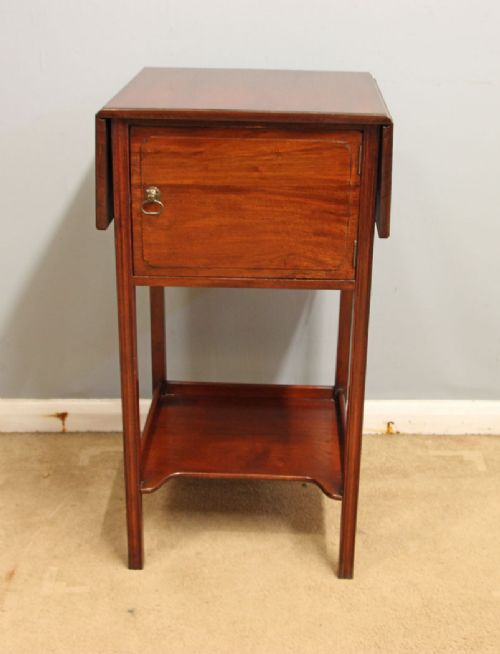
Makers utilised various timber forms across different periods, ranging from Georgian close stools disguised as small chests to 19th-century cylindrical marble-top cabinets and pedestal units. These items served practical domestic functions in bedrooms before evolving into decorative standalone furniture.
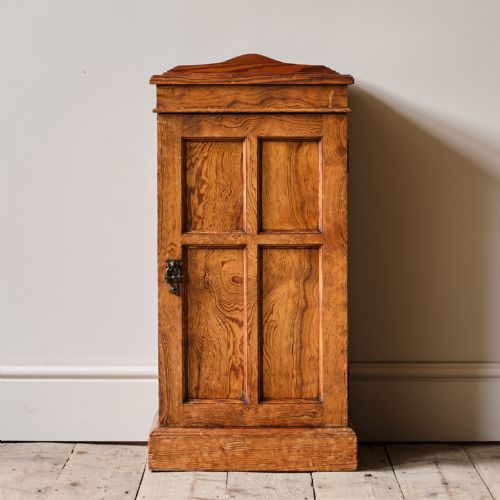
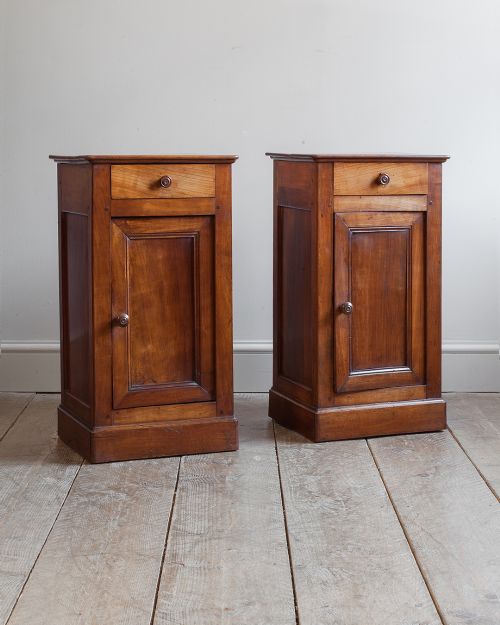
The selection includes specific regional and stylistic variants such as French cherrywood and kingwood pieces, alongside Gothic Revival Oregon pine pot cupboards and Sheraton revival serpentine commodes.
Evaluating Quality and Construction
Quality in these bedside pieces rests upon the selection of timber figures, such as flame mahogany or burr walnut, and the precision of inlaid decorative motifs. Superior examples display careful matching of wood grain across doors and drawer fronts.
The integration of original hardware, such as brass handles and hinges, distinguishes better pieces from later replacements. Construction depth, including the use of solid secondary woods in drawer linings and sturdy internal shelving, separates standard utility items from finer workshop output.
The listings span eight distinct periods, from 18th-century Georgian pieces through Victorian and Edwardian designs to 1930s Art Deco.
Gomme
The Brown Wooden Bedside Cupboards Glossary
- Close Stool
- A piece of furniture designed to enclose a chamber pot, often built in the form of a small chest or cupboard. 18th-century examples frequently mimic the appearance of standard bedside storage.
- Pot Cupboard
- A small bedside cabinet originally constructed to house a chamber pot. These items typically feature a single door enclosing a shelf and sometimes incorporate a small upper drawer.
- Pedestal Cabinet
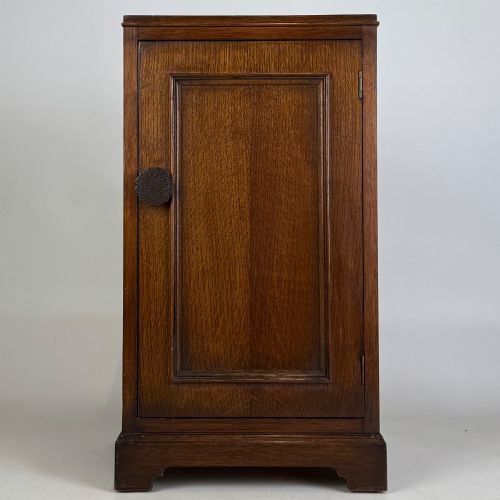
- A tall, single-door freestanding cabinet designed to stand beside a bed or desk. They often feature panelled doors and moulded top surfaces.
- Serpentine Commode
- A chest of drawers or cabinet featuring a front with a concave centre flanked by convex ends. Sheraton revival examples from the early 20th century demonstrate this undulating profile.
- Burr Walnut
- Timber taken from the warted growths on walnut trees, yielding highly figured swirling grain patterns. Cabinetmakers used it as a decorative veneer on statement bedroom furniture.
Brown Wooden Bedside Cupboards: Frequently Asked Questions
What is a pot cupboard?
A pot cupboard is a compact bedside cabinet originally designed to conceal a chamber pot behind a single door. These practical items formed a standard part of bedroom furniture throughout the 19th century.
Over time, their internal space adapted to general bedside storage whilst retaining the compact footprint required for placement next to a bed frame.
How do I date a wooden bedside cabinet?
Dating relies on identifying timber choices, construction techniques, and stylistic markers associated with specific periods like the Georgian era, Victorian reign, or Art Deco movement. Inlaid satinwood and slender proportions often point to Edwardian manufacture.
Heavier proportions, Gothic revival motifs, or cylindrical marble tops usually indicate mid-to-late 19th-century origin, whilst geometric veneers and streamlined shapes suggest 1930s production.
Were bedside cupboards made in pairs?
Makers frequently produced bedside cabinets in matching pairs to flank larger double beds in Victorian and Edwardian bedrooms. Finding matched pairs remains common across 19th-century mahogany and walnut pieces.
Single cabinets also appear regularly, having originated either as solitary pieces or become separated from their original pairing over decades of domestic use.
What woods were used for bedside cabinets?
Mahogany, oak, and walnut serve as the primary timbers found across these listings, reflecting prevailing tastes from the Georgian period through the early 20th century. Burr walnut and kingwood provided highly figured surfaces for decorative pieces.
Utility items and regional pieces occasionally utilised cherrywood, elm, pine, or satinwood for inlay work, demonstrating a wide range of material availability across different workshops.