



Brown Wooden Barometer
A brown wooden barometer brings practical science and rich timber grain to a wall, offering a handsome record of shifting weather.
Brown Wooden Barometer
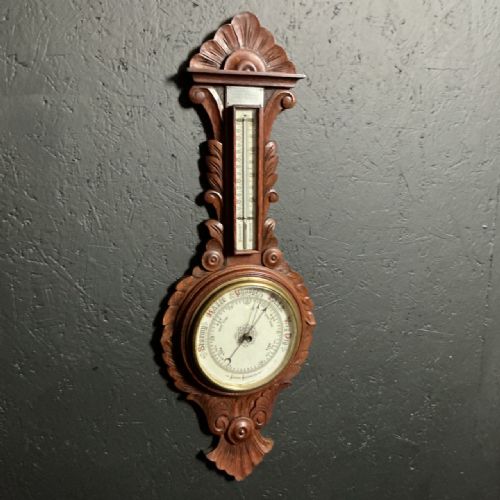
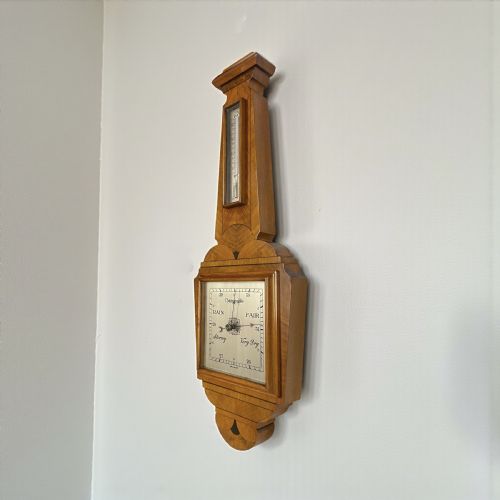
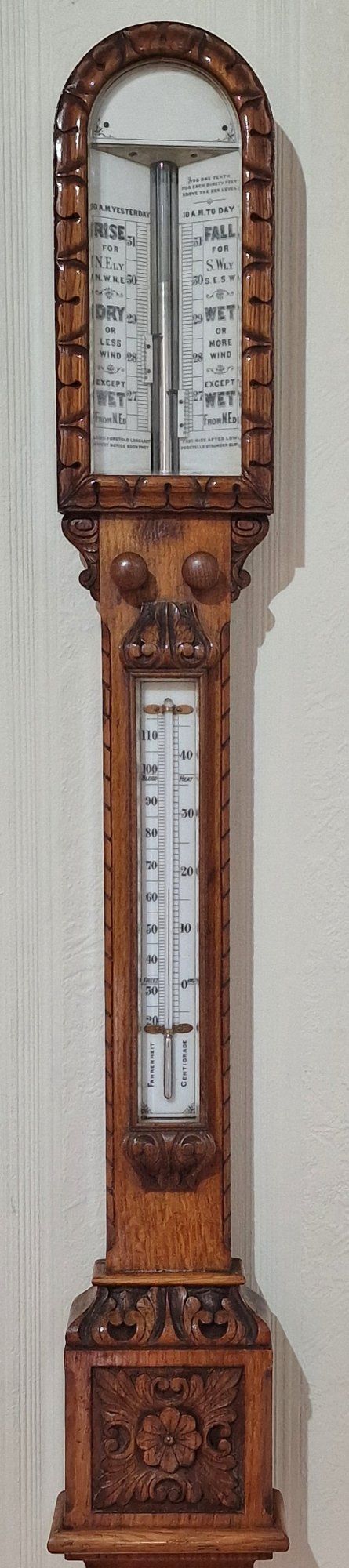
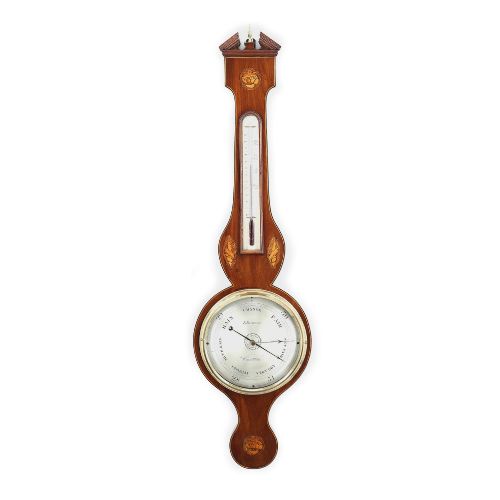
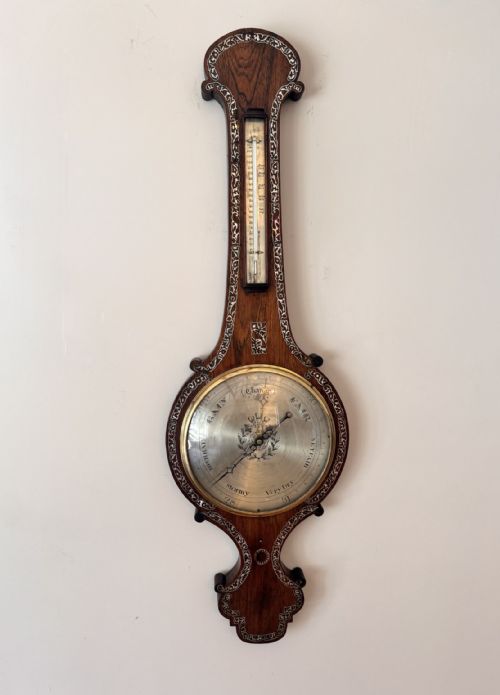
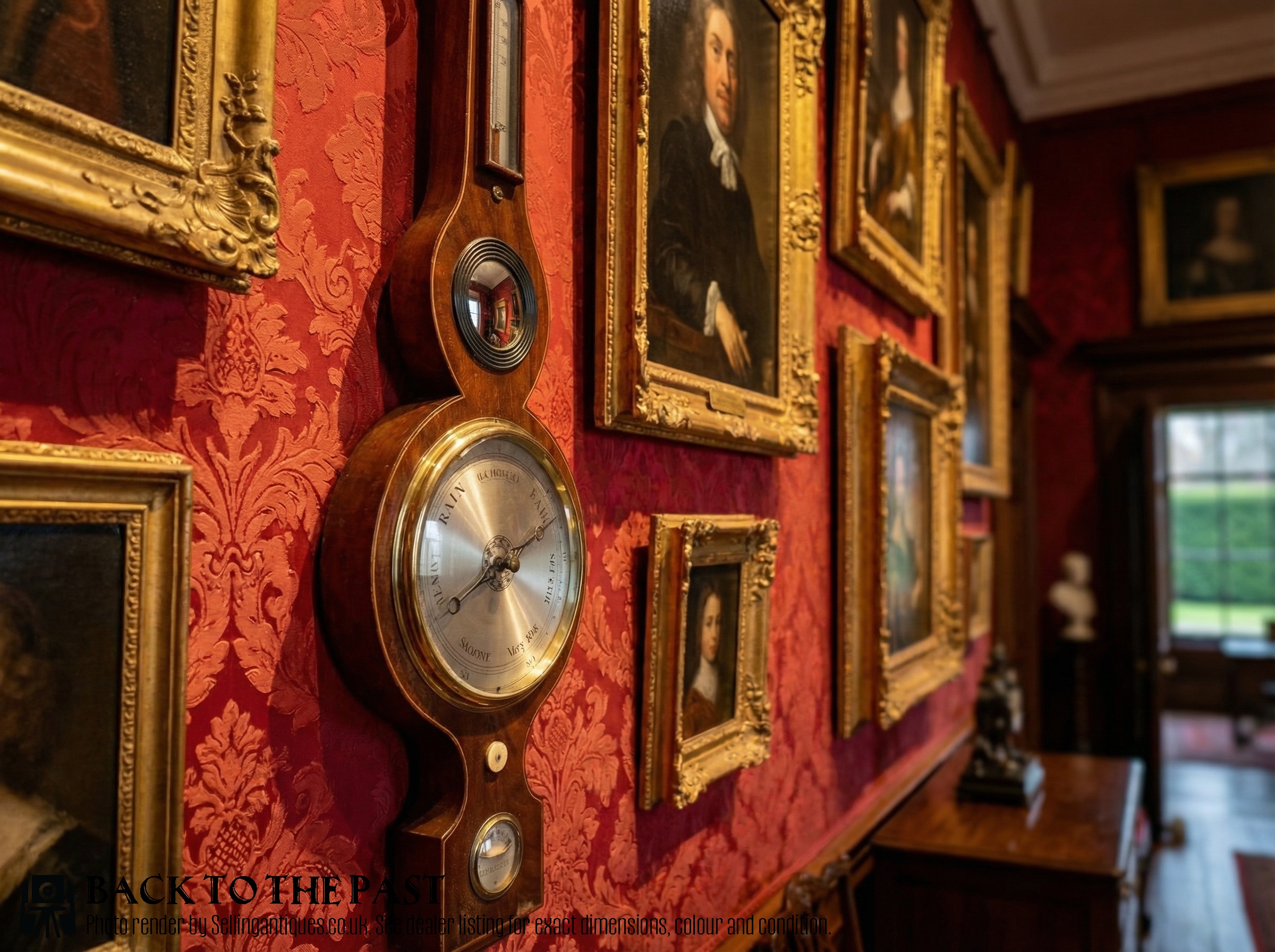
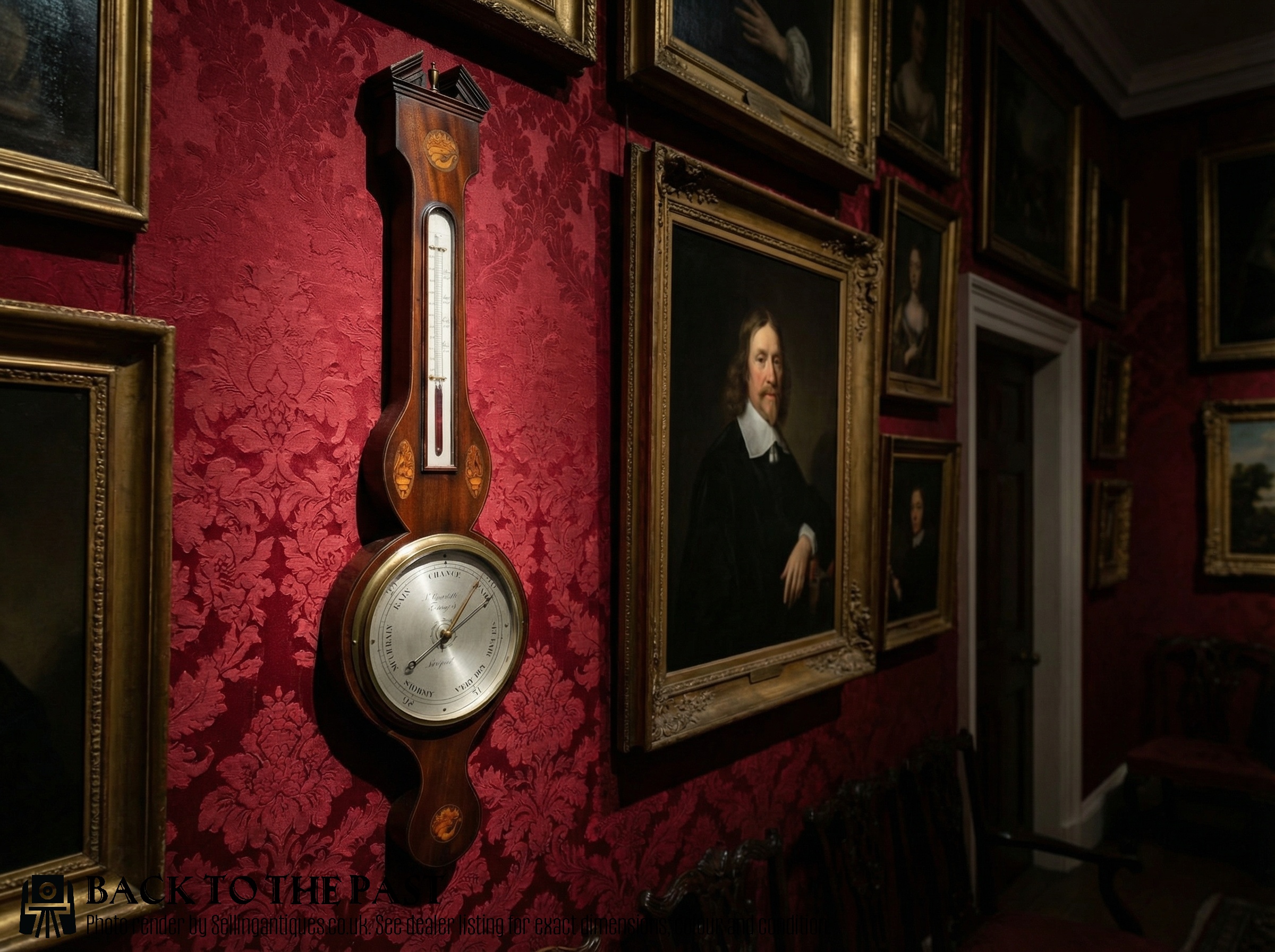
A brown wooden barometer is a functional wall instrument housed in timbers such as mahogany, oak, walnut, beechwood, and birds eye maple. These pieces span the Georgian, Regency, Victorian, Edwardian, and Art Deco periods, encompassing various regional British and European styles.
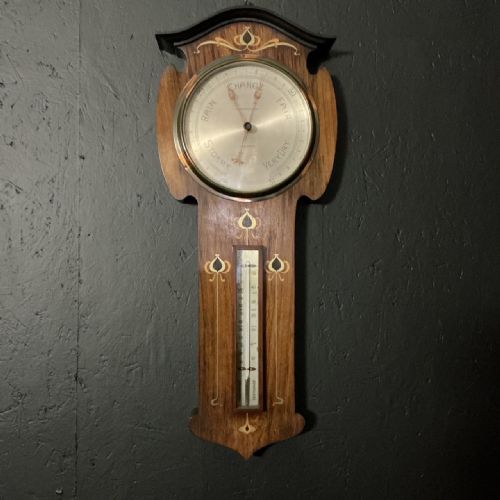
The most common forms on this page include wheel barometers, banjo barometers, and stick barometers, often accompanied by mercury thermometers or combined clock faces. Many examples display detailed carvings, geometric designs, or mother-of-pearl inlay.
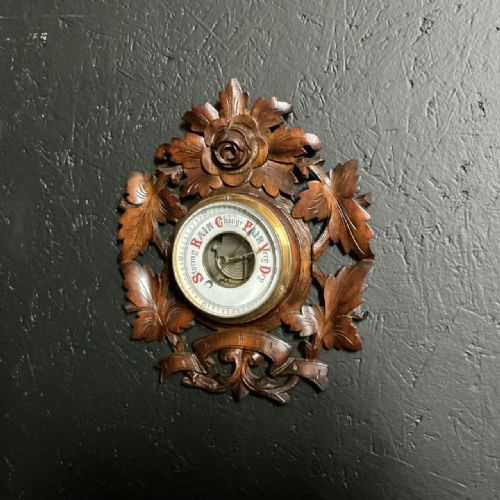
Originating as essential domestic and marine instruments, these wall-hanging pieces bridge the gap between scientific utility and period interior decoration. They range from simple domestic oak cases to elaborate Black Forest carved walnut designs.
Materials and construction
Cabinet makers utilised dense hardwoods like mahogany and oak, shaping them into curved onion tops, banjo outlines, and geometric wall cases. Wood inlay and mother-of-pearl accents frequently decorate the timber surfaces alongside deep relief carvings.
Internal mechanics rely on sensitive glass tubes containing mercury or aneroid metal chambers linked to visible dial faces and brass indicators. Metal bezels, thermometer scales, and cast brass fittings complete the construction of these wall instruments.
Brown Wooden Barometer Retail Price Guide 2026
Typical asking prices for brown wooden barometer among the pieces listed under this phrase on Sellingantiques today, from the lower quarter to the upper quarter. They describe what is for sale here now, not the wider market.
Assessing quality
Quality reveals itself in the crispness of the wood carving, the selection of figured timber veneers, and the legibility of the engraved dial. Superior pieces exhibit harmonious proportions, intact bezels, and refined cabinetry rather than plain joinery.
The sophistication of the movement and the presence of supplementary instruments, such as integrated thermometers or clock mechanisms, elevate the standing of a piece. Original glass, balanced brass pointers, and signed maker dials further distinguish finer examples.
B. Besozzi of Weymouth·Molton of Norwich·Jenkins Of Old Swindon·L Casatelli of Liverpool·W.E. Pain of Cambridge·J Groce, York·J Hicks of London·Malacrida of Dublin
The Brown Wooden Barometer Glossary
- Aneroid barometer
- A barometer that measures atmospheric pressure using an expanding and contracting metal capsule rather than liquid mercury. This design allowed for more compact and varied wall cases.
- Stick barometer
- A tall, vertical barometer that displays the exact height of a column of mercury in a glass tube. These linear instruments provide a direct and traditional reading of atmospheric changes.
- Wheel barometer
- A round-dial barometer connected by a pulley and weight system to track internal pressure shifts. They often take the popular banjo shape with an integrated thermometer above.
- Admiral Fitzroy barometer
- A storm glass and barometer combination popularized in the nineteenth century for coastal and domestic weather forecasting. These instruments include detailed descriptive porcelain or paper scales.
- Black Forest style
- A carved wood aesthetic originating from central Europe, characterised by deeply sculpted natural motifs, foliage, and animals. Such pieces showcase elaborate three-dimensional woodwork.
Brown Wooden Barometer: Frequently Asked Questions
How do I read a mercury barometer?
Read the instrument by observing the position of the mercury column against the engraved scale, then tap the glass lightly to settle the pointer. Rising levels indicate fair weather while falling levels point towards approaching rain or wind.
Compare the primary pointer with the secondary movable brass indicator to track whether pressure has increased or decreased since your last check.
Where should I hang a wooden barometer?
Hang your barometer on an interior wall away from direct sunlight, radiators, and sudden draughts. Rapid temperature fluctuations can affect the internal mechanics and timber casing.
Choose a stable location at eye level where the dial or mercury tube can be easily read and adjusted during seasonal weather changes.
How do I date a wooden barometer?
Examine the timber species, case style, and dial typography to determine the likely period of manufacture. Georgian and Regency pieces often feature classic banjo shapes with string inlay, while Victorian examples frequently showcase heavier carved oak or walnut.
Look for maker signatures on the dial plate or thermometer backing, as historical trade directories can pinpoint active dates for individual instrument makers.
Can antique barometers still be calibrated?
Most antique barometers can be adjusted or calibrated to reflect local barometric pressure. Aneroid movements feature a small screw on the back for tension adjustment, while mercury stick instruments rely on fixed glass scales.
Consult a specialist horologist or instrument restorer if the internal mercury tube requires re-filling or the delicate brass linkages need professional realignment.