


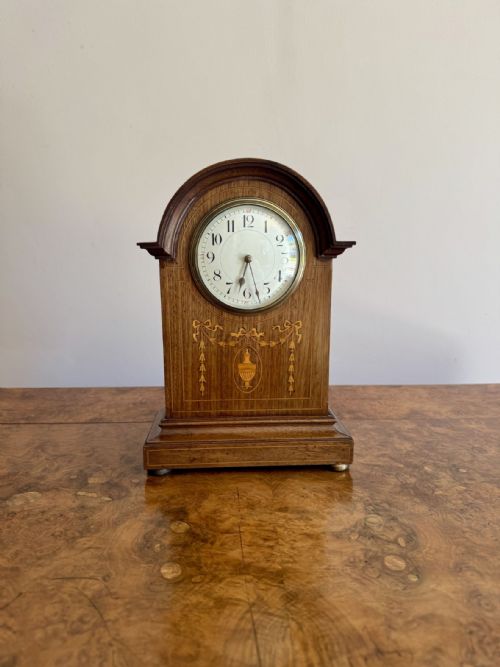


Brown Wood Table Clock
A brown wood table clock brings the steady motion of a mechanical movement and the warmth of timber into a room.
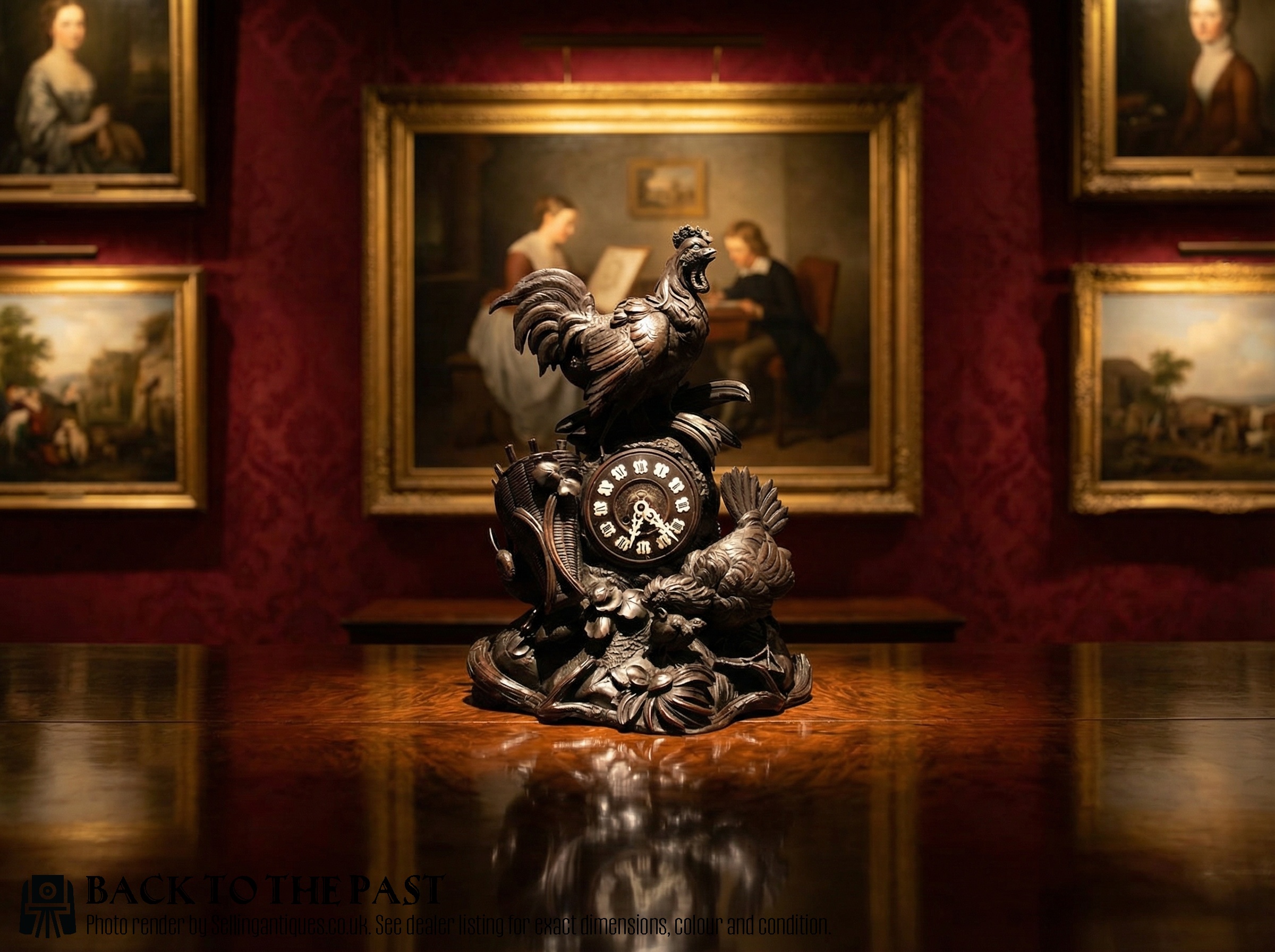
Brown Wood Table Clock
A brown wood table clock sits upon a shelf, bracket, or mantelpiece, keeping domestic time through various historical periods. The examples found here span from the eighteenth century through the early twentieth century, showing substantial variety in their housing.
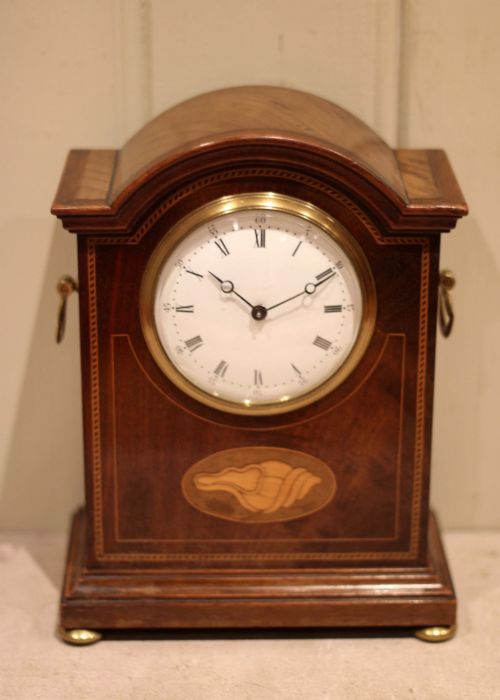
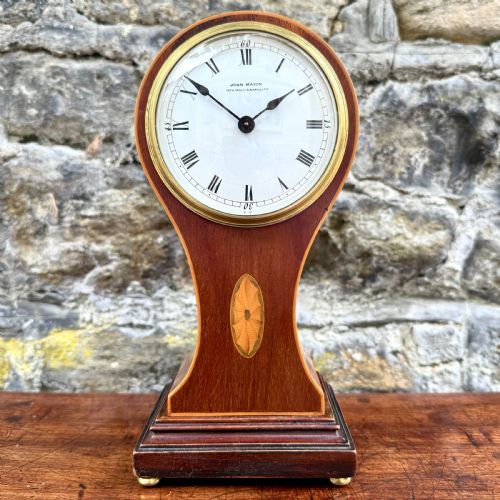
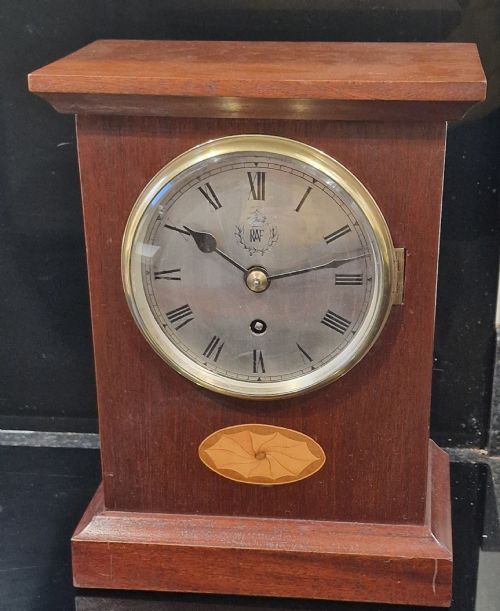
The most common version to meet on this page is the Edwardian or late nineteenth-century mahogany mantel clock, often featuring delicate inlay work. These pieces take forms such as balloon cases, break arch bodies, and traditional bracket clock shapes.
Makers and regional styles introduce distinct character, ranging from carved Swiss Black Forest timber designs to English London bracket clocks and French Belle Epoque pieces. Each object combines cabinet-making traditions with functional horology.

What varies in quality
The refinement of the cabinet work distinguishes finer examples, visible in the precision of the wood inlay, the crispness of any carved ornamentation, and the selection of highly figured timber veneers. Simpler mass-produced housings contrast with pieces exhibiting bespoke joinery and hand-finished details.
The sophistication of the internal movement and the reputation of the maker also divide the range. Signed movements by established horologists or specialised firms demonstrate greater mechanical complexity, such as fusee mechanisms or specialised striking trains.
Brown Wood Table Clock Retail Price Guide 2026
Typical asking prices for brown wood table clock among the pieces listed under this phrase on Sellingantiques today, from the lower quarter to the upper quarter. They describe what is for sale here now, not the wider market.
The listings on this page span the eighteenth, nineteenth, and early twentieth centuries, featuring housing built from mahogany, oak, walnut, rosewood, and satinwood.
Mappin and Webb·Brockbanks of London·Jas Whitelaw of Edinburgh·DeLa Salle And Christie·Pennington of Camberwell
The Brown Wood Table Clock Glossary
- Bracket Clock
- A portable mechanical clock originally designed to sit upon a wall bracket to aid sound projection. Later examples function primarily as large table or mantel clocks.
- Fusee
- A conical pulley connected to the mainspring by a cord or chain that equalises the driving force as the spring unwinds. This mechanism improves timekeeping accuracy across the power reserve.
- Inlay
- A decorative technique where contrasting pieces of wood, metal, or shell are fitted into recessed pockets within the primary timber surface. This creates flat, patterned ornamentation on the clock case.
- Portico Clock
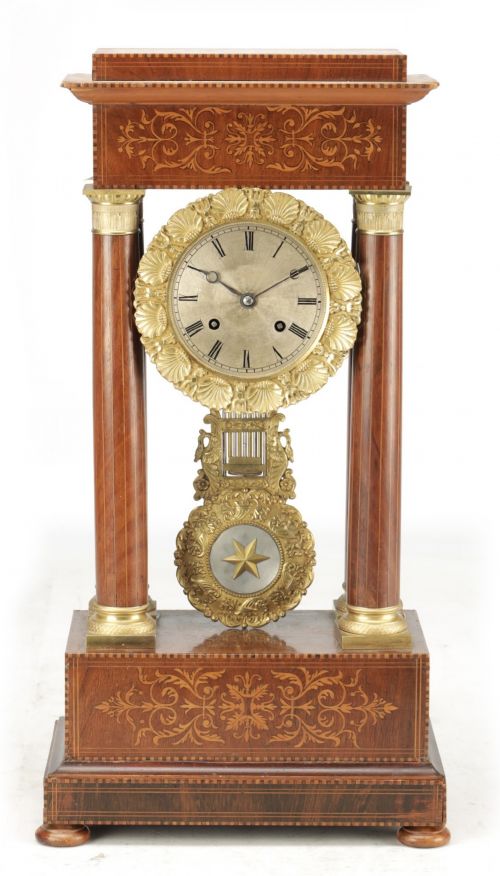
- A architectural clock style featuring columns supporting a central pediment housing the dial. These designs reflect neoclassical building forms.
- Caddy Top
- A raised, domed, or stepped lid design reminiscent of tea caddies found on eighteenth-century clock cases. This profile adds vertical prominence to bracket clocks.
Brown Wood Table Clock: Frequently Asked Questions
How do I wind a mechanical table clock?
Most spring-driven clocks require a key inserted into the dial holes to tension the mainsprings. Care must be taken not to overwind the movement.
Striking clocks often require the chime train to be wound alongside the timekeeping train to maintain full function.
What is the difference between a bracket clock and a mantel clock?
Bracket clocks originated as portable spring-driven clocks placed on wall brackets, typically featuring fine wooden cases and brass carrying handles. Mantel clocks emerged later as heavier, decorative pieces intended for direct placement on a fireplace shelf.
Over time, the terms became largely interchangeable in trade descriptions for table-standing wooden clocks.
How can I tell the period of a wooden clock?
Cabinet styles, wood selections, and dial materials offer clear chronological markers. Regency and eighteenth-century pieces often display architectural bracket forms, while Edwardian examples favour inlaid mahogany and lighter satinwood banding.
Signatures on the dial or movement backplate also help anchor the piece to a specific decade or maker.
Where should I place a wooden table clock in my home?
These clocks require a stable, level surface away from direct sunlight, extreme temperature fluctuations, and damp environments. Placement on a sturdy mantelpiece or sideboard ensures the pendulum or balance wheel operates correctly.
Keeping the clock away from drafty areas protects the wooden veneer and internal mechanical lubricants.