
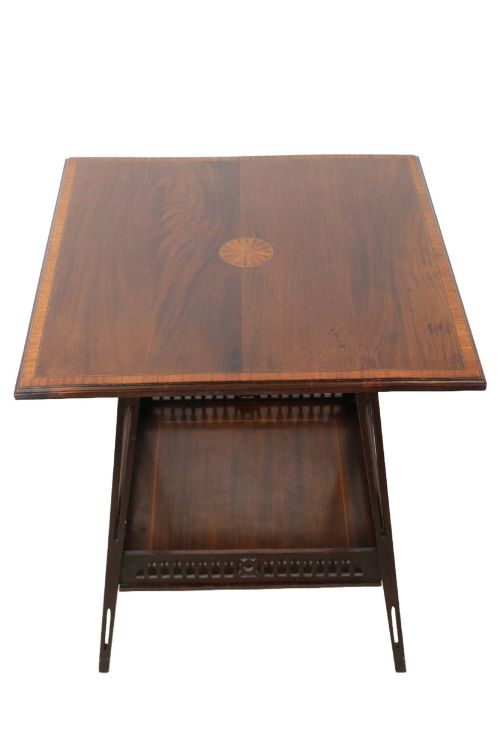
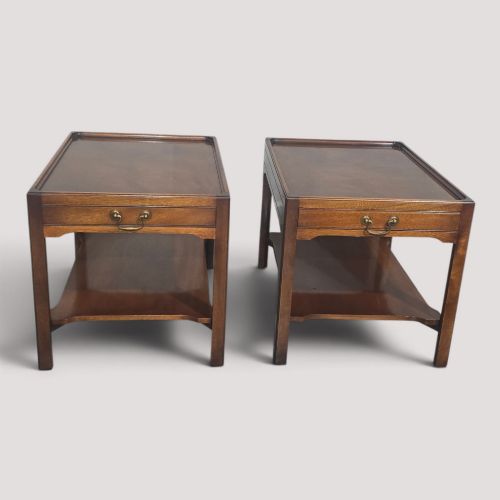
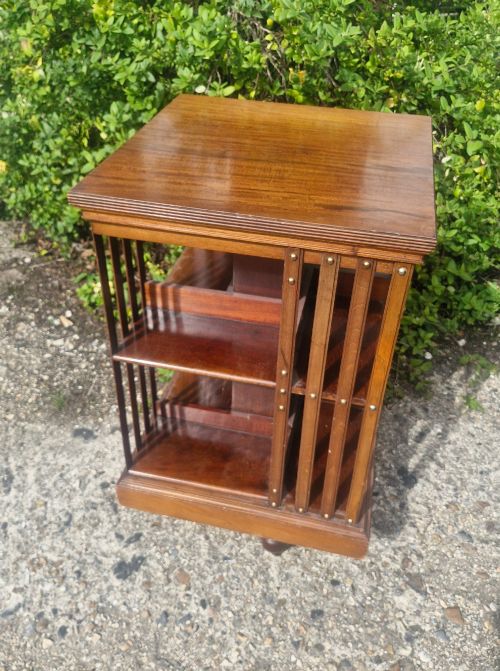
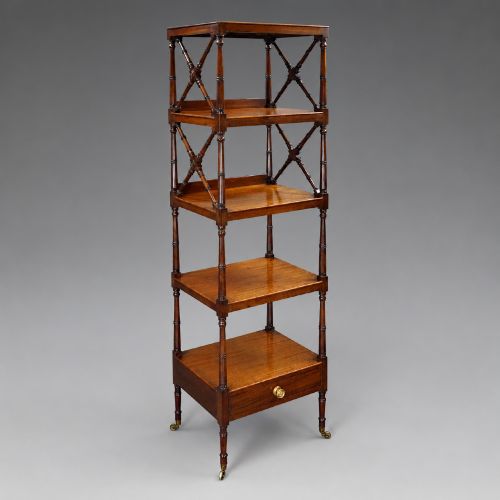


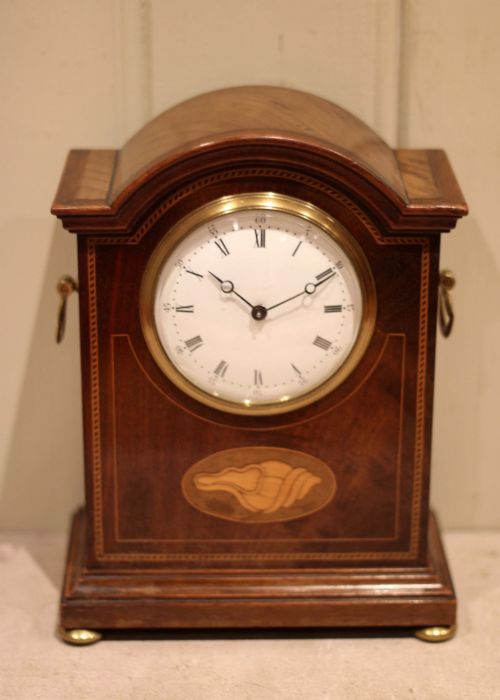
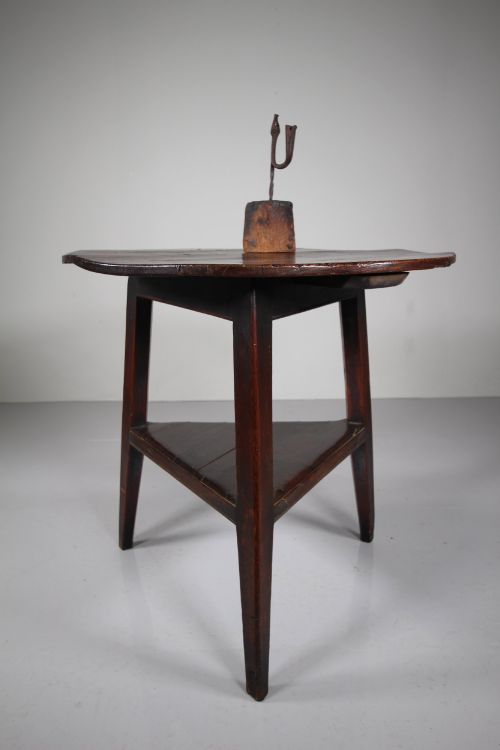
Brown Wood Shelf
These brown wood shelf pieces provide practical storage and display while bringing rich grain and period character to a room.
Brown Wood Shelf
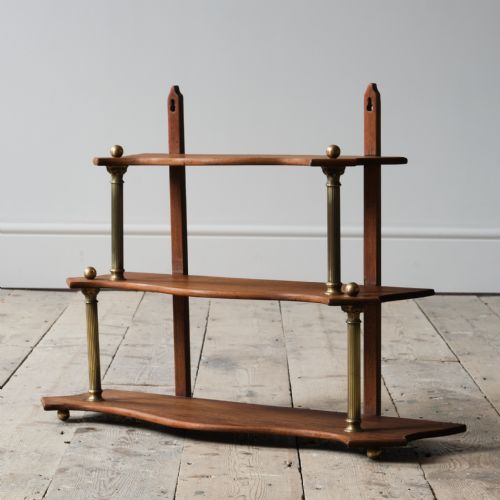
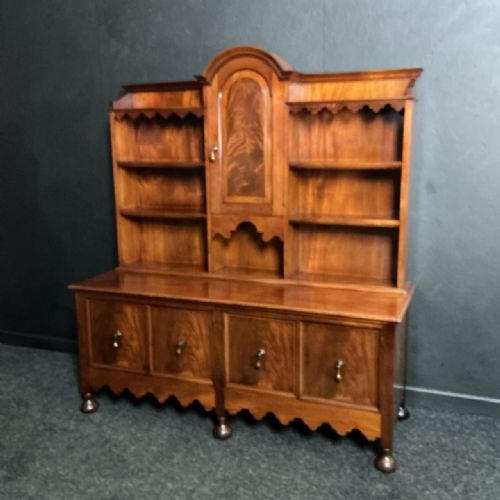
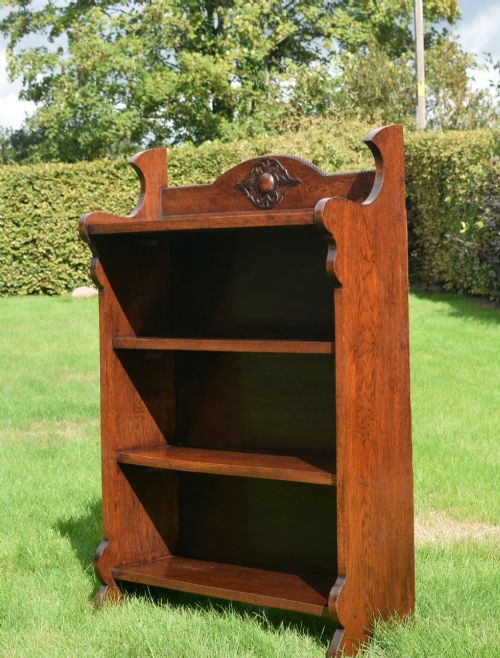
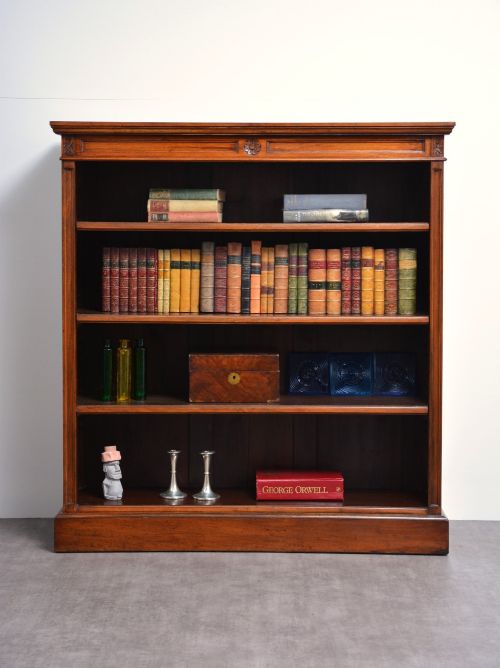
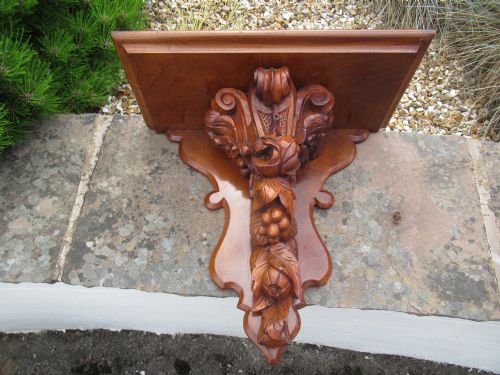
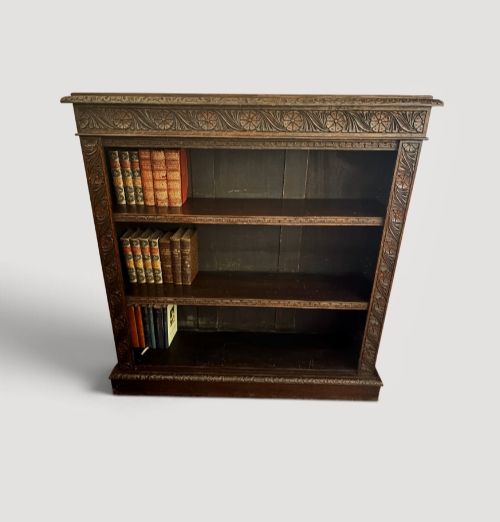
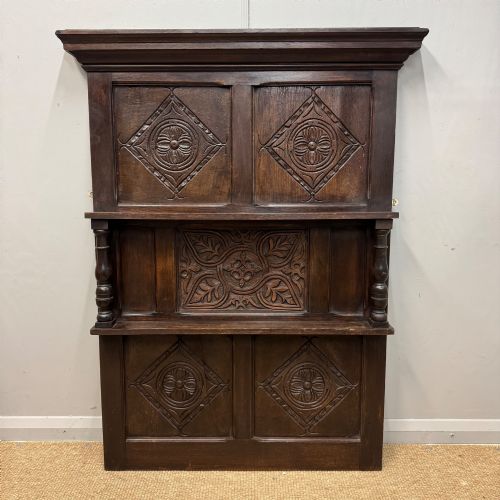
Wall hanging shelves and wall brackets in mahogany, walnut, and oak dominate the lighter wall-mounted formats, whilst larger open bookcases and display cabinets provide substantial floor-standing storage.
Makers utilised dense hardwoods to construct functional furniture that accommodated books, ornaments, and domestic objects across diverse domestic settings.
How they were made
Cabinetmakers constructed these brown wood shelf designs primarily using solid mahogany, walnut, and oak, frequently applying burr walnut or satinwood veneers for decorative effect.
Joinery methods included mortise and tenon joints for structural stability, alongside brass fittings, inlaid stringing, and carved wooden detailing such as barley twist supports.
What varies in quality
Quality rests in the selection of timber figures, such as figured walnut or flame mahogany, and the crispness of hand-carved elements like brackets and mouldings.
Finer examples demonstrate integrated design harmony, such as adjustable shelving mechanisms in bookcases and precise inlay work executed by skilled cabinetmakers.
Trevor Page Co·H.A.C.
The Brown Wood Shelf Glossary
- Whatnot
- A piece of furniture consisting of a set of open shelves for displaying small objects or books. These tiers are typically supported by slender vertical columns.
- Bookcase
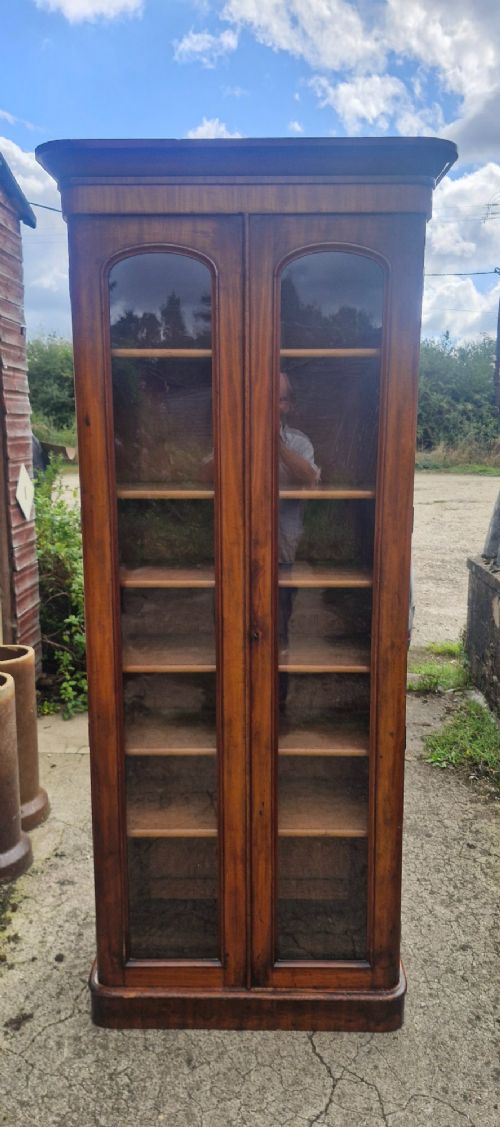
- A piece of furniture with horizontal shelves used for storing books. Versions range from low open shelving units to tall glazed cabinets.
- Wall Bracket
- A decorative support projecting from a wall to hold an ornament or shelf. They often feature carved wooden motifs in various period styles.
- Inlay
- A technique of ornamenting a surface by embedding pieces of contrasting material into the wood. Edwardian pieces frequently utilise this for linear decoration.
- Barley Twist
- A turned wooden column resembling a twisted rope. This technique appears frequently on Victorian supports and uprights.
Brown Wood Shelf: Frequently Asked Questions
How do I clean an antique brown wood shelf?
Dust regularly with a soft, dry cloth to prevent particulate buildup on the timber surface. Avoid modern silicone sprays that can degrade historic finishes over time.
Apply a traditional beeswax polish sparingly when the wood appears dry to nourish the grain. Buff gently with a clean cloth to maintain a natural lustre.
Can these shelves hold heavy books?
Many Victorian and Edwardian bookcases feature adjustable wooden shelves designed to support standard book collections. Solid hardwood construction provides dependable structural capacity for everyday library use.
Heavier volumes sit best on lower fixed shelves rather than upper adjustable ledges. Inspect the shelf supports to ensure they rest securely within their vertical tracks.
How do I identify a Victorian shelf?
Victorian brown wood shelf pieces frequently display dense mahogany or walnut timber with dark patination. Look for robust proportions, carved details such as barley twists, and functional additions like adjustable shelf racks.
Construction methods from this era often include hand-cut joints and heavier brass hardware. Comparing the style to dated examples helps confirm the nineteenth-century origin.
Where should I place a wall hanging shelf?
Wall hanging shelves suit living rooms, studies, or hallways where floor space remains limited. Secure them directly into wall studs or utilise appropriate fixings to support the weight of the wood and displayed items.
Keep antique timber away from direct sunlight and strong heat sources to prevent the wood from warping or splitting. Proper placement preserves both the structural integrity and the finish of the piece.