
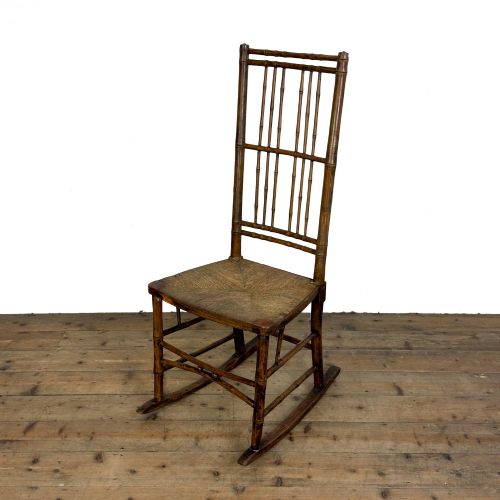
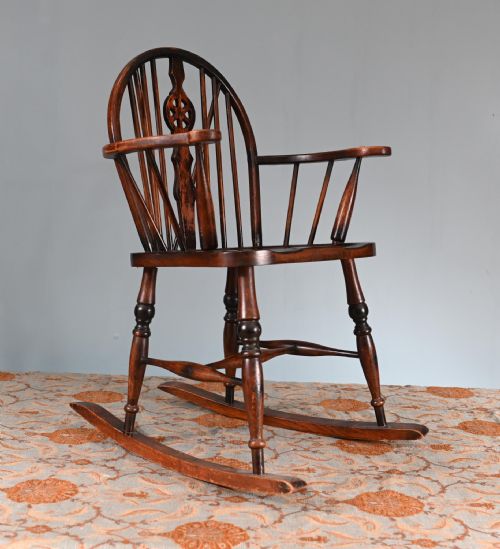


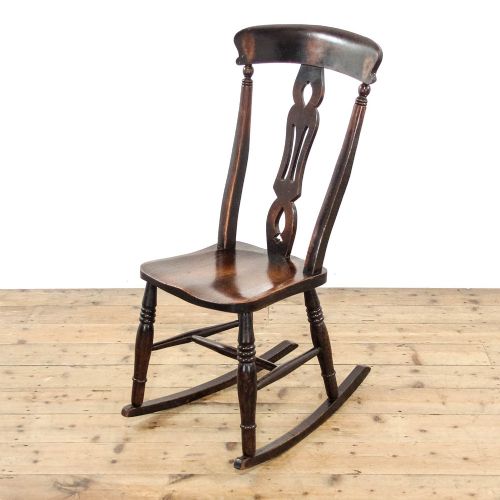


Brown Wood Rocker
These brown wood rocker examples combine traditional craftsmanship with gentle motion, offering comfortable seating from past centuries.
Brown Wood Rocker
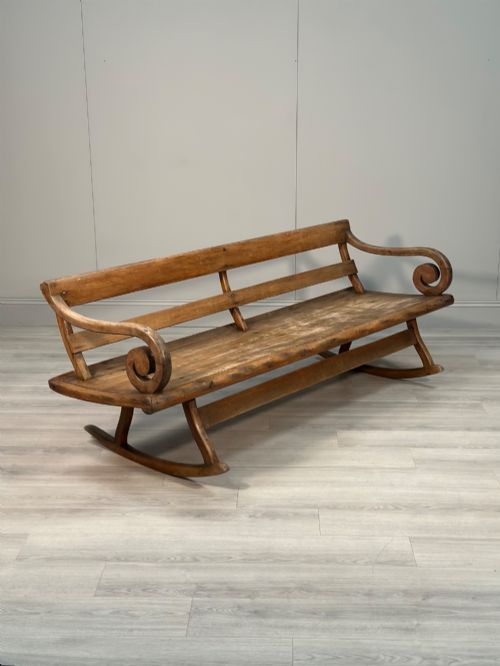
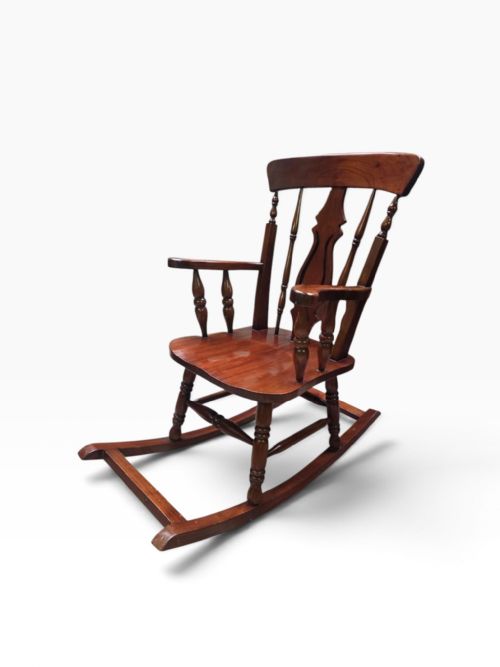
A brown wood rocker is a seating or resting furniture piece fitted onto curved wooden bases to allow back-and-forth movement. When you search for this phrase, you encounter traditional forms built from timber, spanning the nineteenth century and early twentieth century.
Makers utilised woods such as beech, oak, elm, and mahogany to construct these functional household items. The styles stretch from Scottish vernacular and rustic country to Aesthetic Movement and shaker influences.
How they were made
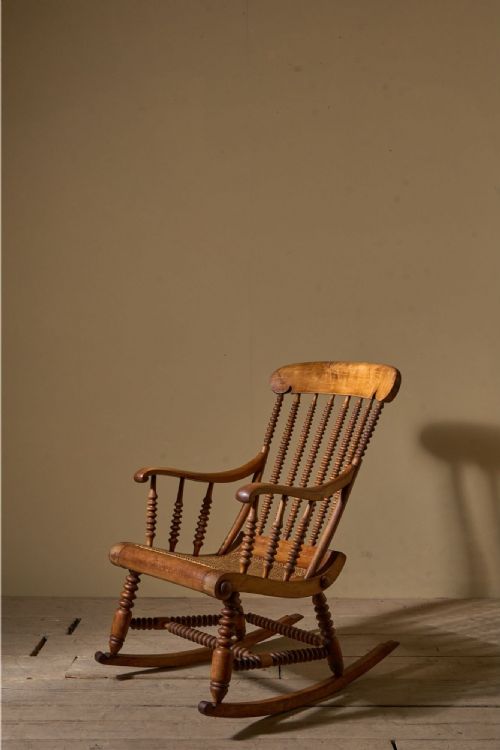
Makers constructed these frames using solid hardwoods like oak, elm, mahogany, and beech, often combining multiple timbers within a single piece. Turned components, bobbin frames, and steam-bent wood define the structural techniques seen across the selection.
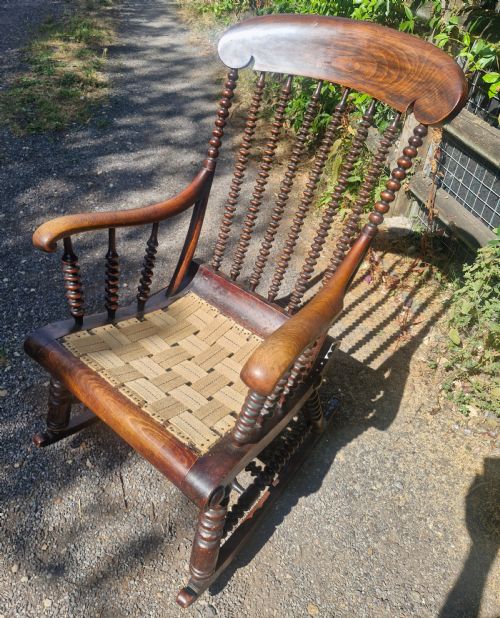
Seating areas frequently incorporate woven cane or rush inserts fitted into wooden frames. Traditional joinery methods secure the spindles, wheelbacks, and armrests to withstand the constant motion of rocking.
Doll-sized rocking chairs sit alongside full-scale settles, proving that relaxation was scaled down for every member of the household.
What varies in quality
Quality separates through the selection of timber and the precision of the turning and joinery. Pieces utilising dense hardwoods like mahogany or figured elm show greater refinement than standard utility items.
The integrity of the structural frame and the execution of decorative elements, such as bobbin turnings or steam-bent curves, determine the overall calibre of the piece.
Thonet
The Brown Wood Rocker Glossary
- Windsor
- A chair built with a solid wooden seat into which the legs and back spindles are directly inserted. These often feature distinctive wheelback or spindle back designs.
- Bobbin turned
- Furniture legs and stretchers shaped on a lathe to resemble a series of rounded bobbins or spools. This decorative turning technique appears frequently on nineteenth-century vernacular seating.
- Bentwood
- Wood softened through steam heating and then bent into curved structural shapes. This technique produces flowing, lightweight frames.
- Crib
- A small infant's bed mounted upon curved wooden rockers. These pieces provide a traditional enclosed sleeping space for young children.
- Settle
- A high-backed wooden bench featuring solid arms and an enclosed base. When mounted on rockers, it combines bench seating with motion.
Brown Wood Rocker: Frequently Asked Questions
What woods are used in these rockers?
Makers constructed these chairs from a variety of timbers including beech, oak, elm, mahogany, ash, fruitwood, and general hardwood.
Different sections of a single chair often combine multiple woods, such as an elm seat paired with ash or beech spindles.
How do I identify a Victorian rocker?
Victorian examples date from the nineteenth century and often display characteristic regional styles like Windsor, ladder back, or bobbin-framed construction.
They frequently utilise dark hardwoods and incorporate woven cane seating or turned spindle details.
Were cradles and cribs also made with rockers?
Period infant beds were frequently built with curved wooden bases to allow gentle movement for soothing babies.
These pieces match the timber and construction methods of the adult seating from the same era.