



Brown Wood Mantle Clock
These brown wood mantle clock pieces offer classic timekeeping, bringing period character and warm timber tones to a mantelpiece.
Brown Wood Mantle Clock
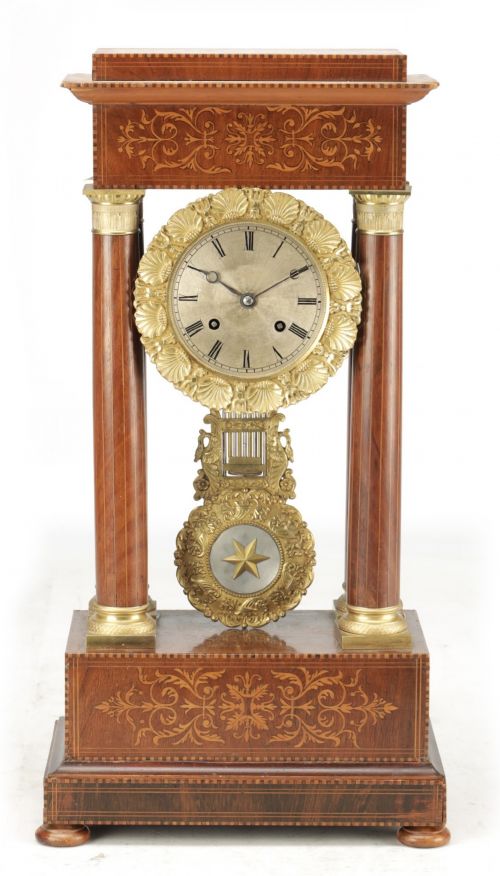
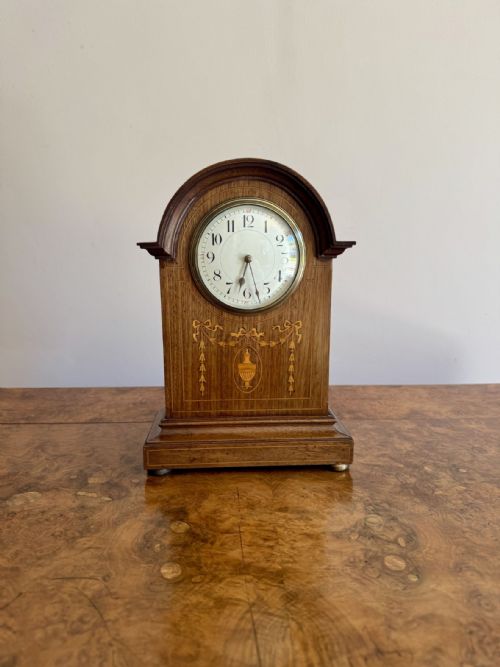
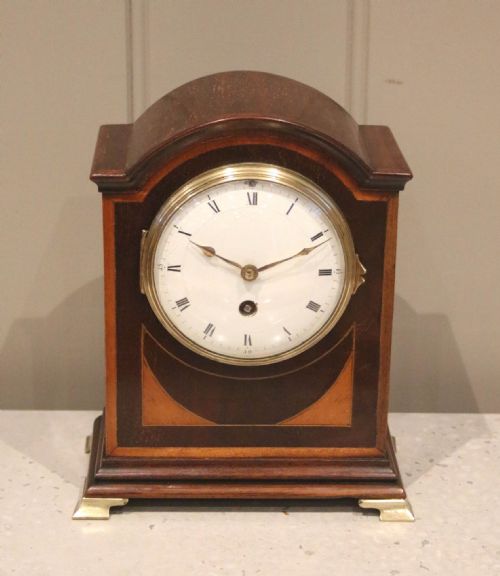
A brown wood mantle clock is a tabletop timepiece designed to sit on a fireplace mantel, shelf or bracket. The selection here spans the Victorian, Edwardian and Regency periods, alongside later twentieth century examples.
The forms range from traditional bracket clocks and break arch designs to dome top models and small table clocks. Most examples utilise rich timber cases housing traditional mechanical movements.
Edwardian mahogany inlaid pieces appear frequently in the current selection, often featuring contrasting light wood stringing or decorative shell motifs. These mantel clocks serve both a practical timekeeping function and a decorative role within a room.
Materials and construction
Cabinetmakers constructed these clock cases primarily using mahogany, walnut and rosewood, often enhanced with satinwood or boxwood inlay. The warm brown timber provides a stable housing for intricate brass movements and enamelled dials.
Gilding, brass feet and cast bezel rings complement the timber casework, protected behind glazed doors or hinged glass covers. These materials reflect traditional cabinetmaking techniques spanning multiple historical periods.
A tiny winding key left inside a Victorian clock case reminds us of generations of morning routines.
Judging quality in timber timepieces
Quality in a brown wood mantle clock depends on the precision of the cabinetwork and the refinement of the dial and movement. Finely executed satinwood inlay and crisp carving distinguish superior examples from simpler production pieces.
The integration of recognised makers and signed movements elevates a clock's standing. Well-proportioned cases with unblemished wood grain and original glass elements represent the upper tier of the range.
Mappin & Webb·Jas Whitelaw of Edinburgh·Piggin Norwich·Seikosha Seiko
The Brown Wood Mantle Clock Glossary
- Bracket clock
- A portable table clock originally designed to sit upon a wall bracket. These clocks often feature architectural wooden cases and sophisticated striking mechanisms.
- Inlay
- A decorative technique where contrasting pieces of wood such as satinwood or boxwood are inserted into recesses in the primary mahogany or walnut surface.
- Enamel
- A glassy substance fused to a metal dial surface to create a durable, smooth face for painted numerals. Enamelled dials are common on nineteenth and early twentieth century timepieces.
- Bezel
- The metal ring that holds the glass protecting the clock face in place. It is typically hinged to allow access for setting the time.
Brown Wood Mantle Clock: Frequently Asked Questions
How do I wind my clock?
Most mechanical mantle clocks utilise a key inserted into winding holes on the dial to tension the internal springs. Care must be taken not to overwind the movement.
Consult the specific mechanism type to ensure proper operation and regular maintenance for sustained timekeeping accuracy.
Can these clocks be placed on any mantelpiece?
These timepieces are designed for stable, flat surfaces such as mantels, shelves or tabletops. Ensure the location is free from excessive vibration or dampness.
Allowing adequate clearance around the case protects delicate wood finishes and decorative inlay work.
What does an eight day movement mean?
An eight day movement indicates that the clock requires winding approximately once a week to maintain continuous operation. This mechanism was popular in Edwardian and Victorian designs for practical convenience.
Spring driven systems power these clocks without the need for hanging weights.
How do I identify the period of a clock?
Dating relies on stylistic clues such as casework proportions, inlay patterns and dial materials. Edwardian pieces often feature delicate satinwood stringing, whereas Regency examples display distinct architectural bracket top forms.
Signatures on dials or movements also provide direct evidence of origin and date.