

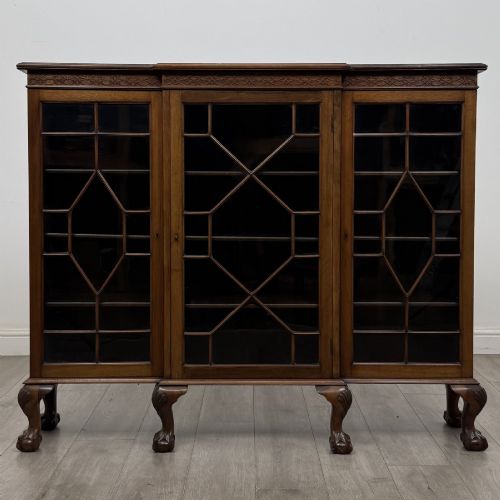
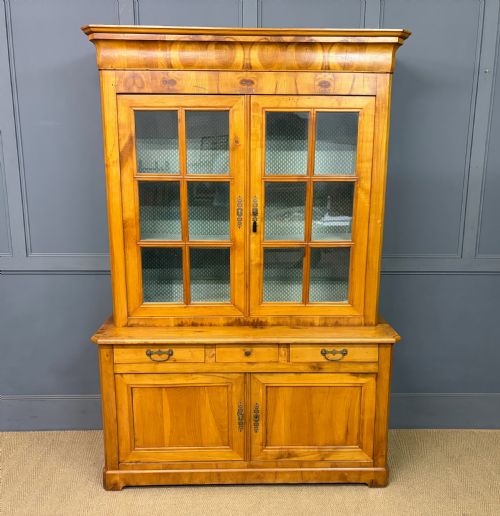
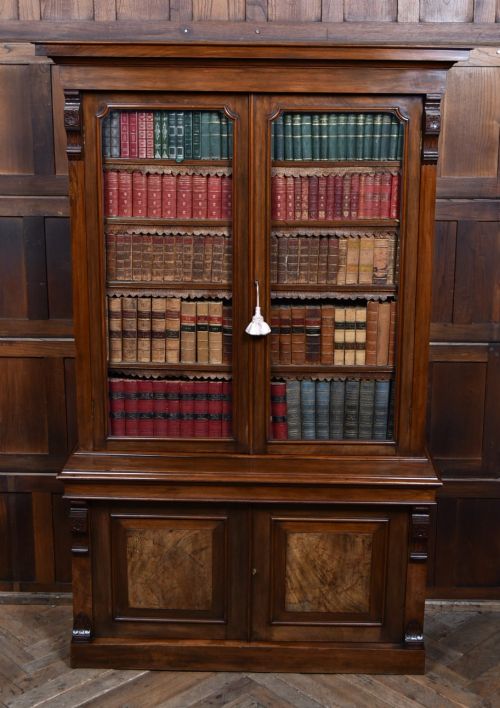
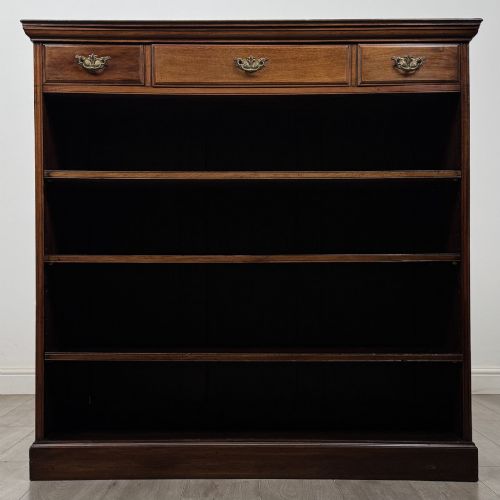
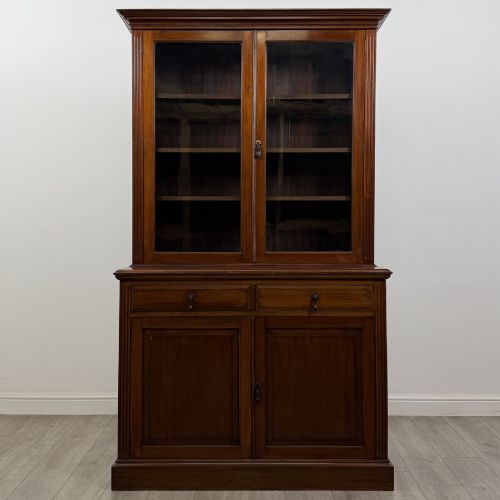
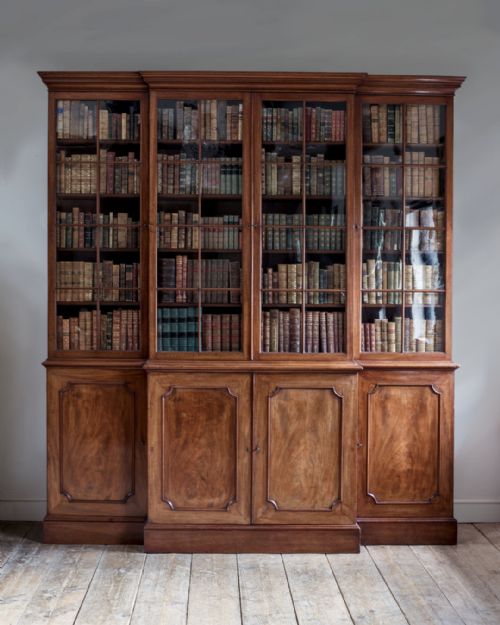
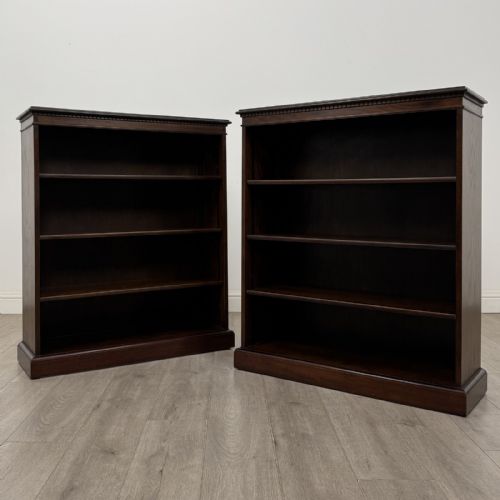
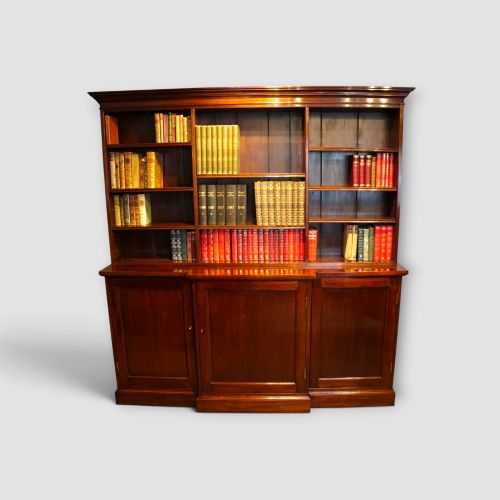
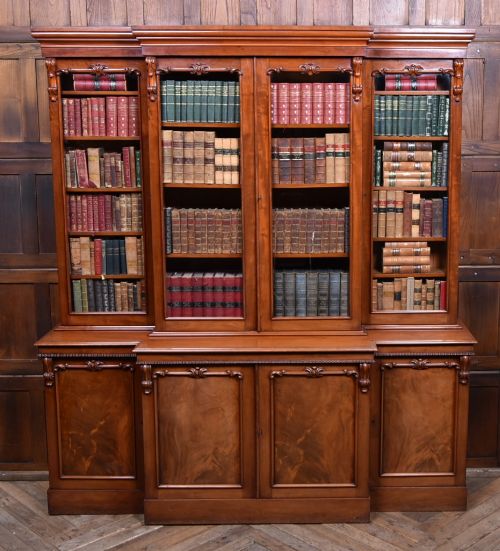
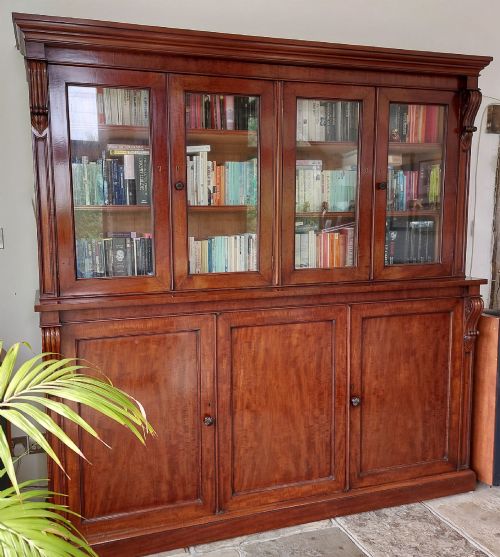
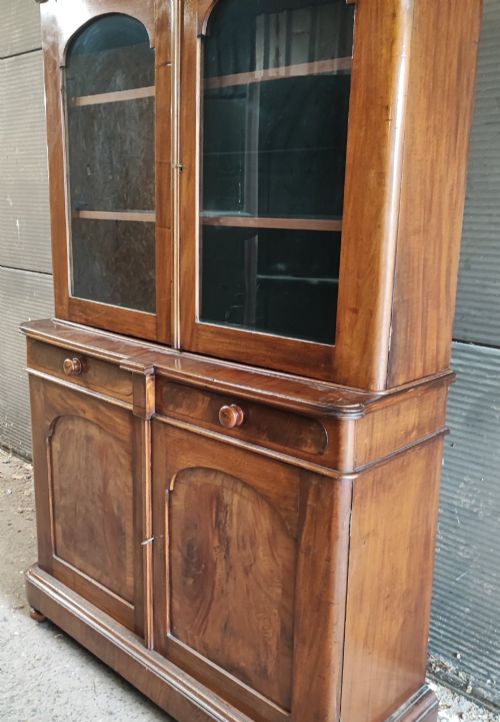
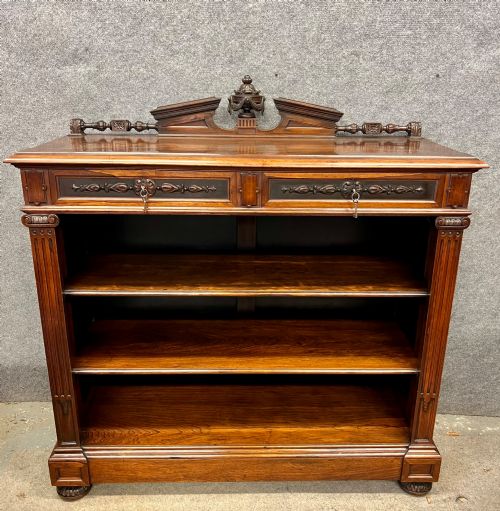
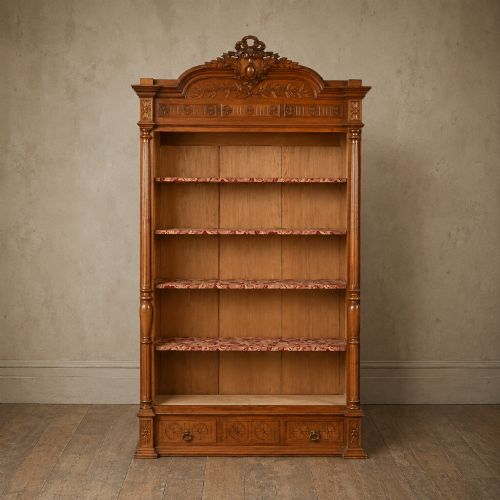
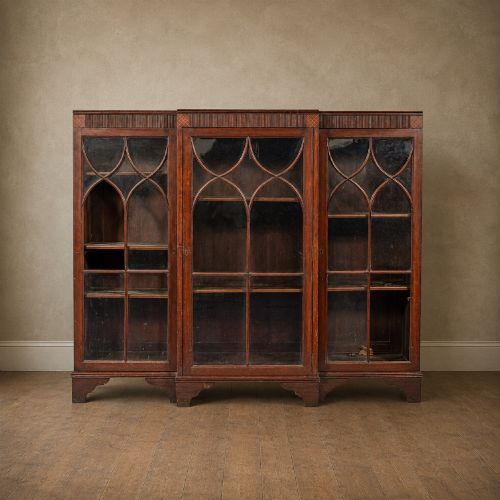
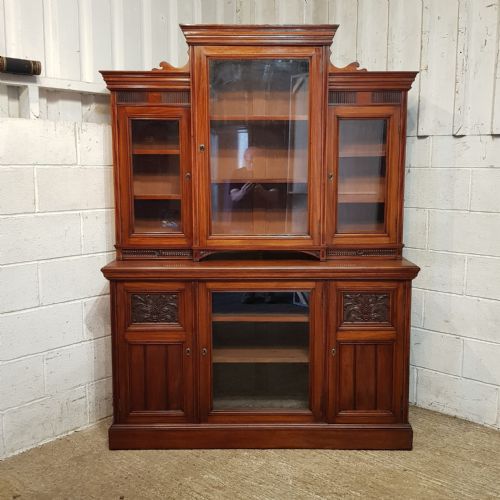

Brown Wood Library Cabinet
These brown wood library cabinet pieces offer practical storage and historical character, anchoring a study or sitting room.
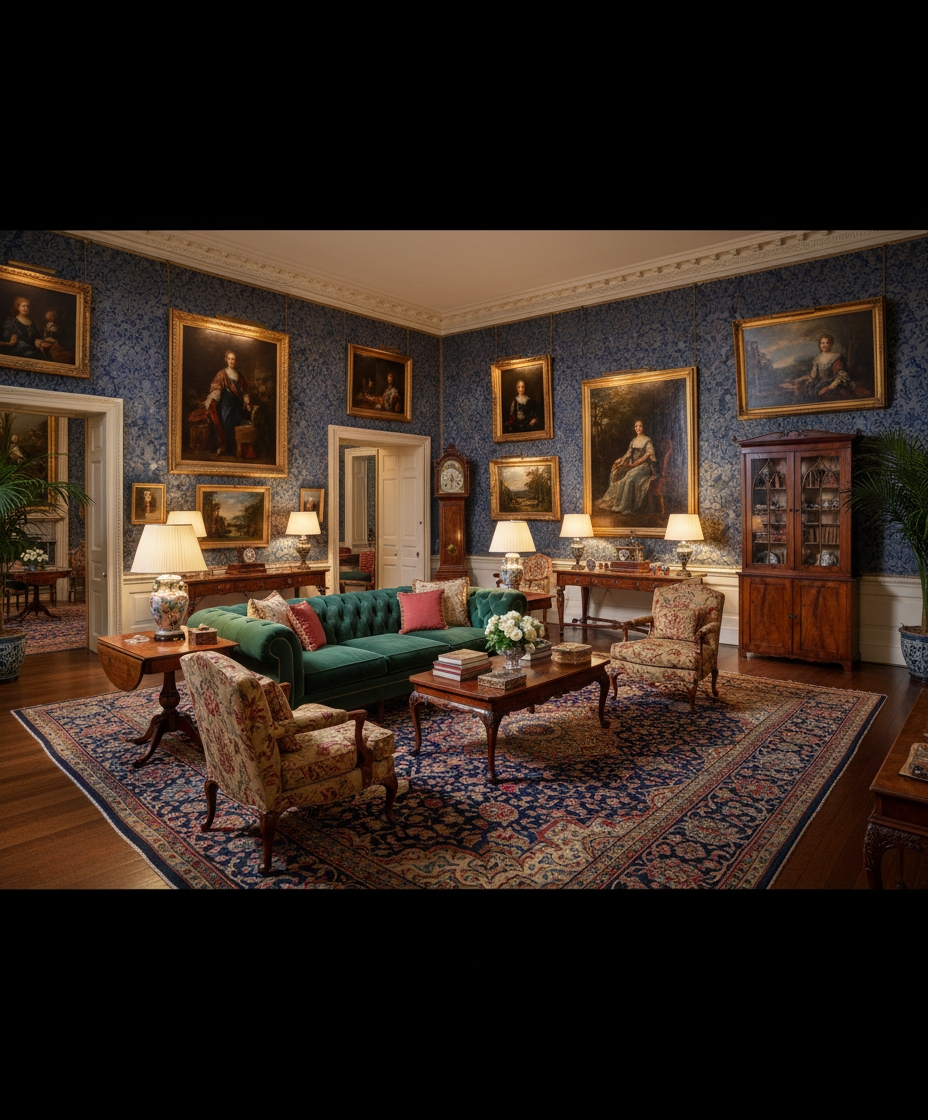
Brown Wood Library Cabinet
A brown wood library cabinet serves as a heavy-duty receptacle for books, papers, and display items, evolving through various domestic functions over centuries. When exploring this phrase, buyers encounter large breakfront bookcases, glazed display units, and open shelving systems designed for domestic studies.
The pieces appearing on this page span the Georgian, Victorian, and Edwardian eras, with a strong representation of nineteenth-century craftsmanship. Common configurations range from enclosed cabinets with glazed doors to open library bookcases and specialised storage units like card filing drawers.
Makers and workshops of these periods utilised dense timbers to support heavy volumes, creating proportions that suit both traditional and contemporary interiors. Identifying the specific form helps determine whether a piece functioned primarily as a writing desk, a display cabinet, or a book repository.
Materials and construction methods
Cabinet makers relied heavily on mahogany, walnut, and oak as primary structural woods, often selecting figured varieties like burr walnut, pollard oak, or amboyna for decorative impact. These durable timbers provided the necessary strength to support deep shelves loaded with heavy books.
Secondary materials such as brass for hardware and castors, glass for panelled doors, and leather for writing surfaces appear frequently across the listings. Joinery techniques involved precise dovetailing and mortise-and-tenon joints, ensuring structural stability without relying on modern adhesives.
Brown Wood Library Cabinet Retail Price Guide 2026
Typical asking prices for brown wood library cabinet among the pieces listed under this phrase on Sellingantiques today, from the lower quarter to the upper quarter. They describe what is for sale here now, not the wider market.
Listings span the nineteenth and early twentieth centuries, incorporating Victorian, Edwardian, and Georgian periods alongside styles like Gothic Revival and Chippendale Revival.
Distinguishing quality across the range
Quality rests primarily on the selection of timber veneers and solid woods, where highly figured grains and uniform matching elevate a piece. The presence of secondary timbers inside drawers and behind back panels indicates the care taken by the workshop.
Execution of carved details, inlay work, and operational hardware such as working locks and adjustable shelving tracks separates standard utility items from top-tier commissions. Superior proportions and restrained architectural styling indicate a maker working at the height of their discipline.
Robert Strahan·Paul Sormani·Holland and Sons
The Brown Wood Library Cabinet Glossary
- Breakfront
- A piece of furniture with a central section that projects forward from the flanking wings. This configuration creates visual depth and extra interior capacity in large library units.
- Glazed
- Fitted with glass panes, typically held in place by wooden glazing bars. This treatment protected valuable volumes from dust while allowing titles to remain visible.
- Kneehole
- A desk or cabinet configuration featuring a central recess for the user's legs, flanked by pedestals of drawers or cupboards. It provides a compact workspace within a library setting.
- Ormolu
- Gilded bronze mounts applied to furniture for decorative enrichment. Workshops utilised these metallic accents to highlight corners, keyhole escutcheons, and structural framing.
- Waterfall
- A stepped bookcase design where each successive shelf is shallower than the one below, following a cascade silhouette. This style gained popularity during the late nineteenth and early twentieth centuries.
Brown Wood Library Cabinet: Frequently Asked Questions
How do I identify a Victorian library cabinet?
Victorian pieces often display heavier proportions, darker timber tones, and robust carving styles influenced by Gothic revival or classical revival movements. Look for machine-sawn backing boards and robust brass hardware characteristic of nineteenth-century manufacturing.
Interior fittings such as adjustable wooden shelf racks secured by brass pins also point toward this expansive manufacturing era.
How should I care for a mahogany cabinet?
Keep wooden cabinets away from direct heat sources and strong sunlight to prevent the timber from drying out or the polish from fading. Dust regularly with a dry, soft cloth and apply quality beeswax periodically to nourish the surface.
Avoid using silicone-based polishes that can penetrate the grain and damage antique finishes over time.
Are shelves usually adjustable in these cabinets?
Many library cabinets include adjustable shelving supported by wooden ratchets, brass studs, or metal strip tracks. This adaptability allowed owners to store books of varying heights, from pocket volumes to large folios.
Original adjustable mechanisms serve as a strong indicator of quality workshop production.