


Brown Wood Keepsake Box
A brown wood keepsake box holds small treasures and personal papers, offering a tangible link to past craftsmanship through walnut, rosewood, and mahogany.
Brown Wood Keepsake Box
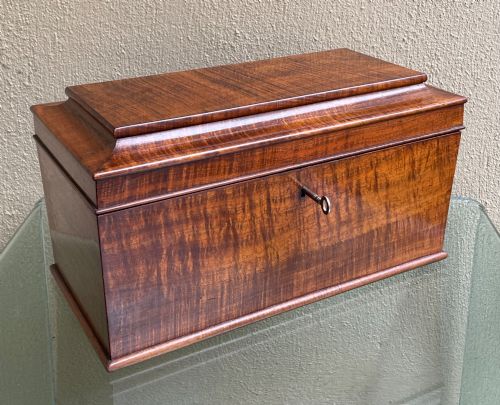
A brown wood keepsake box covers functional containers designed for personal items, jewellery, and letters across several centuries of cabinet making. The pieces found here span forms such as tea caddies, jewellery chests, trinket boxes, and larger caskets originating from periods including the seventeenth century, the Regency era, and the Victorian epoch.
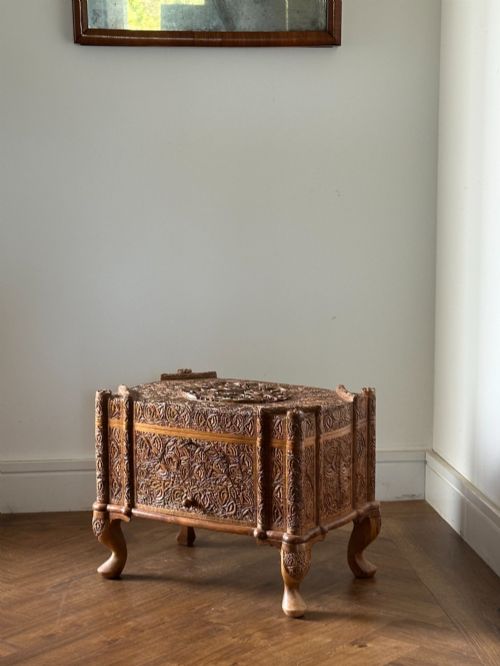
Victorian examples in walnut and rosewood dominate the selection, often featuring parquetry, brass banding, or intricate Tunbridge ware mosaic inlays. Alongside these familiar domestic receptacles appear distinct regional styles, including Anglo-Indian sandalwood workboxes, Italian Sorrento olive wood caskets, and Black Forest carved wooden boxes.
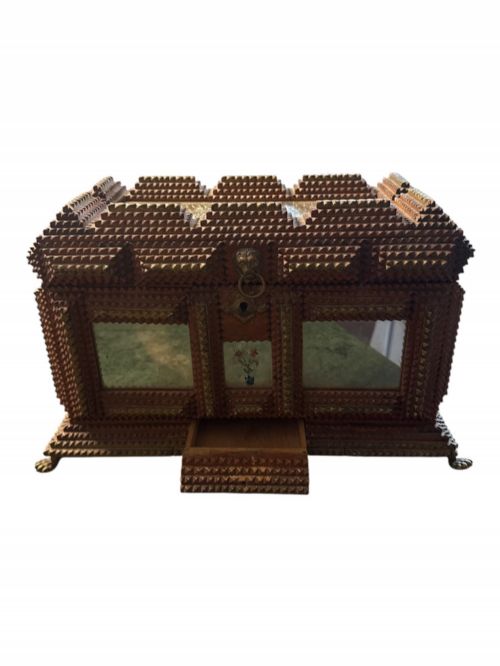
Buyers also encounter specialised forms like book-shaped boxes, games boxes, and tramp art creations utilising sycamore, fruitwood, and laburnum oyster veneers. Each object serves to store small valuables while displaying the characteristic grain and tone of its timber.
Materials and construction
Cabinet makers utilised dense hardwoods such as mahogany, walnut, rosewood, and coromandel, often applying them as fine veneers over secondary woods to create stable carcass structures. Decorative surfaces relied on contrasting timbers like boxwood, yew, and fruitwood arranged in geometric parquetry or floral marquetry patterns.
Specialised techniques defined regional workshops, from the microscopic mosaic tesserae characteristic of Tunbridge ware to the relief carving found on Black Forest walnut caskets and Afghan or Indian wooden boxes. Brass mounts, escutcheons, and banding provided structural reinforcement and visual contrast to the polished timber.
Listings feature woods such as walnut, rosewood, mahogany, olive wood, fruitwood, and boxwood across periods spanning the seventeenth century to the 1930s.
Assessing quality and execution
Quality rests upon the precision of the cabinet work, visible in the tightness of dovetail joints, the alignment of parquetry panels, and the stability of the timber grain. Finer examples display meticulous attention to interior fittings, such as original silk linings, fitted trays, and functional brass locks with matching keys.
The sophistication of surface decoration separates standard utilitarian pieces from exceptional works of decorative art. Intricately detailed Sorrento mosaics, complex floral marquetry, and deeply carved reliefs demonstrate superior hand execution by skilled artisans.
The Brown Wood Keepsake Box Glossary
- Tunbridge ware
- Tunbridge ware. A form of British woodworking from Kent featuring intricate mosaic patterns built from thousands of tiny wood blocks to form pictorial or geometric motifs.
- Marquetry
- Marquetry. The art of applying thin slices of veneer in various coloured woods to a wooden structure to create decorative pictures or ornamental patterns.
- Parquetry
- Parquetry. A geometric mosaic of wood pieces used for decorative flooring or box surfaces, creating repeating patterns like cubes or chequers.
- Sarcophagus
- Sarcophagus. A box form featuring a stepped, domed or sloping lid reminiscent of ancient stone coffins, popular for Regency and Victorian tea caddies and jewellery chests.
- Caddy
- Caddy. A small container originally designed for storing tea leaves, often featuring internal lidded compartments to separate different varieties.
- Oyster veneer
- Oyster veneer. Cross-cut sections of branches or small tree trunks showing circular growth rings, prized by seventeenth-century cabinet makers for their decorative figuring.
Brown Wood Keepsake Box: Frequently Asked Questions
How were these wooden boxes used historically?
These boxes served secure, private functions in homes, holding valuable jewellery, correspondence, tea leaves, or personal trinkets. Wealthy households relied on them to keep small possessions organised and protected from dust and light.
Over time, specific forms evolved for specific contents, such as tea caddies with internal foil linings or stationery boxes designed for desktop use.
How do I date an antique wooden box?
Dating relies on observing construction methods, timber choices, and decorative styles characteristic of specific eras. Seventeenth-century pieces often show thick oak or olive wood construction with hand-cut joinery, while Regency and Victorian examples feature exotic veneers like rosewood and intricate inlays.
Hardware such as hinges, escutcheons, and locks also offer reliable clues to the period of manufacture.
How should I care for a wooden keepsake box?
Maintain stable environmental conditions away from direct sunlight and central heating sources to prevent the timber and delicate veneers from drying and cracking. Occasional applications of appropriate microcrystalline wax help nourish the polished wood surface without building up excessive residue.
Avoid using modern liquid polishes or abrasive cleaners that can damage historic finishes and inlays.
What is Tunbridge ware?
Tunbridge ware refers to a distinct nineteenth-century English craft centered in Kent, famous for small wooden boxes decorated with mosaic veneer. Artisans glued together tiny multi-coloured wooden prisms to form complex geometric or pictorial scenes of castles and flowers.
These detailed mosaics cover the lids and sides of otherwise simple mahogany or walnut boxes.