



Brown Wood Etagere Shelf
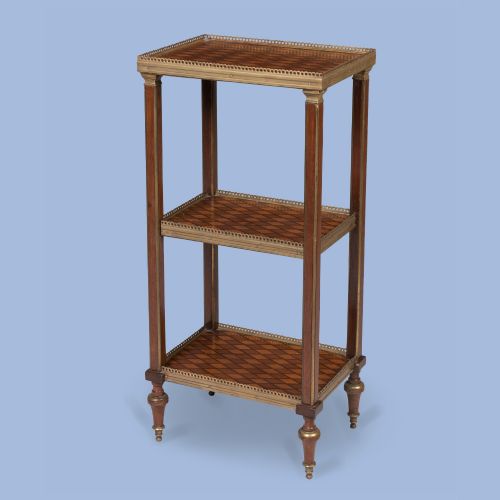
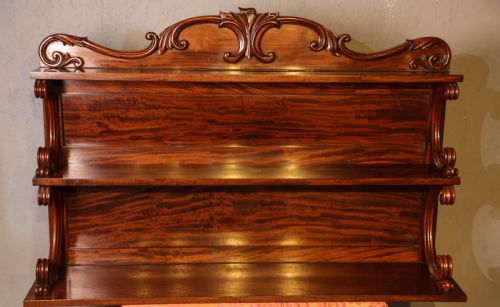
A brown wood etagere shelf brings open tiered display and classic timber character to a room.
Brown Wood Etagere Shelf
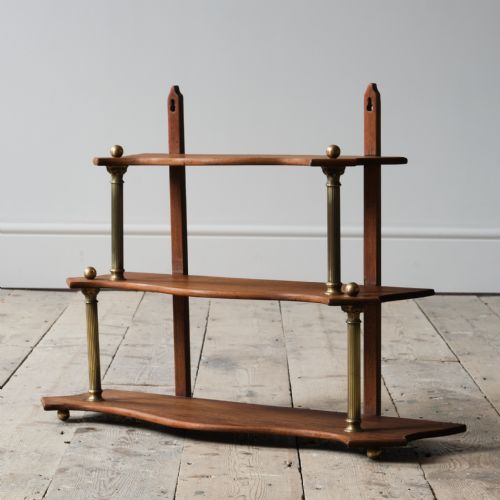
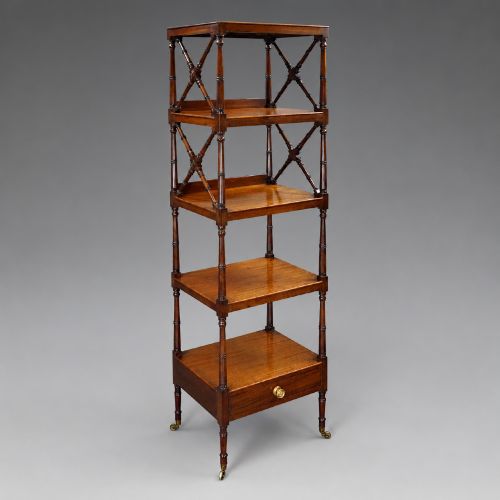
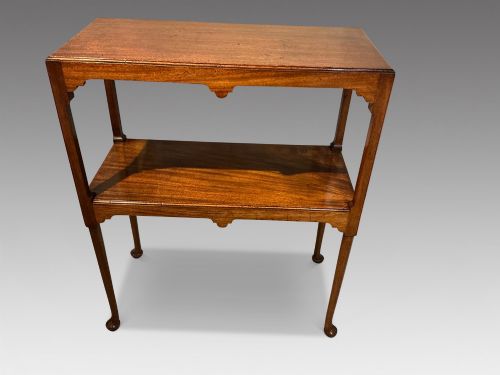
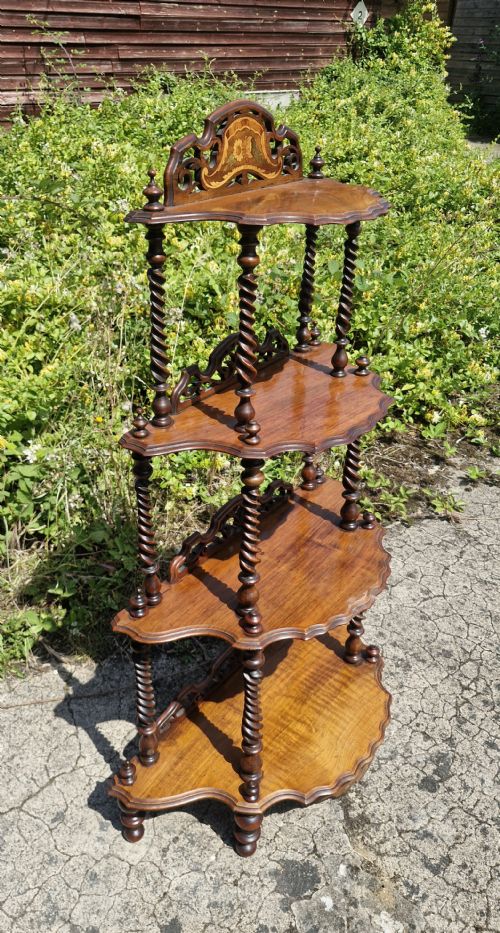
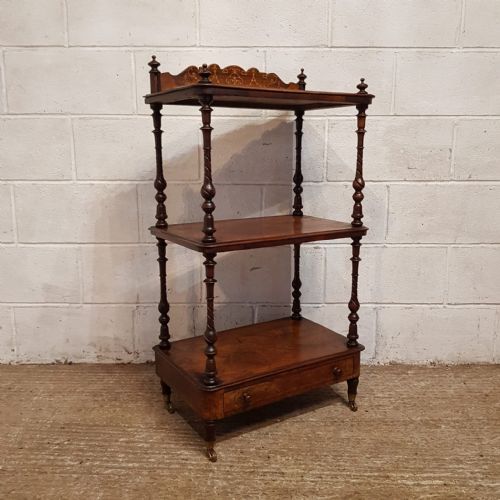
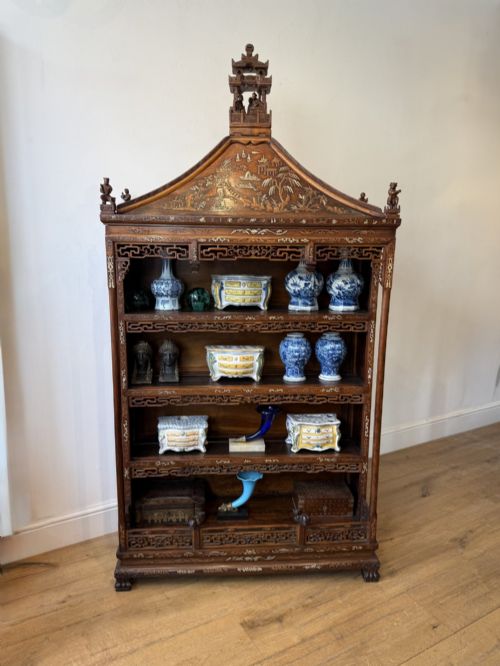
A brown wood etagere shelf encompasses multi-tiered display stands, wall hanging shelves and corner units designed for holding books, ornaments and decorative objects. When searching for a brown wood etagere shelf, a buyer encounters forms ranging from compact three-tier tables and corner units to tall six-tier stands with turned feet and castors.
The pieces on this page span the Georgian, Regency and Victorian periods, with nineteenth-century examples dominating the selection. Makers and craftsmen utilised rich timbers to construct versatile furniture that functioned equally well as a whatnot, side table or display cabinet.
Forms include freestanding tiered structures alongside wall-mounted shelving and cupboard base configurations. The variety reflects domestic requirements for accessible display space across different eras of interior design.
What varies in quality
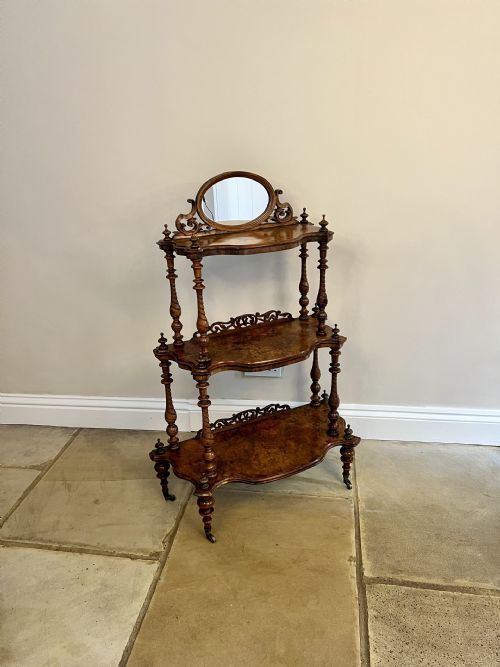
The calibre of a piece rests in the choice of timber figure, particularly the richness of burr walnut or figured mahogany veneers selected for the tiers. Superior examples display thoughtful proportion, whether built as a compact corner stand or a tall multi-tiered tower.
Attention to detail in the turning of columns, joinery at the shelf corners and the presence of original castors distinguish finer workshops from standard production. Subtle elements like marquetry inlay executed with precision elevate the overall character of the furniture.
Proportion and scale dictate the visual success of tiered shelving, with well-balanced dimensions ensuring the stand holds its presence in a room without appearing heavy.
One remarkably enthusiastic nineteenth-century maker added six tiers and hollow barley twist columns to ensure no ornament ever lacked a proper home.
Gillows
The Brown Wood Etagere Shelf Glossary
- Etagere
- A piece of furniture consisting of a set of open shelves for displaying small objects or ornaments. It originated in France and offers multiple levels for tiered display.
- Whatnot
- A nineteenth-century multi-tiered shelving unit used for holding books, china or decorative items. It is essentially synonymous with the etagere in British furniture terminology.
- Marquetry
- Decorative veneer work where pieces of wood and other materials are fitted together to form geometric or floral patterns. It adorns the surfaces of finer Victorian cabinets.
- Burr walnut
- A highly prized wood featuring swirling, knotty grain patterns harvested from the growth excrescences of walnut trees. It provides exceptional visual texture on table tops and shelf surfaces.
- Barley twist
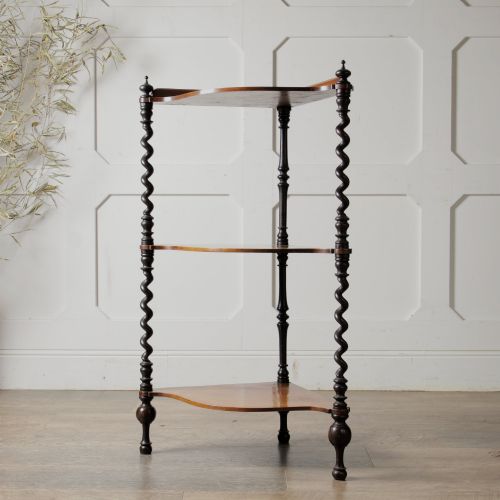
- A carved wooden column shaped in a continuous spiral resembling a twist of barley. This decorative turning style appears frequently on nineteenth-century supports and legs.
Brown Wood Etagere Shelf: Frequently Asked Questions
What is the difference between a whatnot and an etagere?
A whatnot is the traditional British term for a multi-tiered shelving unit used for general display and storage in nineteenth-century homes. An etagere is the French equivalent term, often denoting a slightly more decorative or formal tiered stand.
In practice, antique dealers and collectors use both terms interchangeably for open wooden shelving units designed to hold ornaments and books.
How do I style a brown wood etagere shelf at home?
Tiered shelving looks best when objects are grouped with varying heights and materials, combining books, ceramics and glassware across the different levels. Allowing some empty space on each shelf prevents the display from looking cluttered and highlights the timber frame.
Positioning the unit against a plain wall lets the wood grain and turned supports stand out as focal points in a room.
Were these shelves meant for corners or walls?
Makers produced both freestanding units and specific variants designed to fit into room corners or hang directly on walls. Corner models make efficient use of difficult spaces while providing multiple tiers of display.
Wall-hanging versions free up floor space entirely and were often utilised in smaller parlours or sitting rooms for books and small ornaments.
How can I tell a Victorian whatnot from a Georgian one?
Georgian pieces, including George III examples, tend to feature restrained lines, lighter mahogany frames and simple A-frame structures. They emphasise clean proportions and understated elegance.
Victorian pieces frequently embrace richer burr walnut veneers, elaborate turned supports like barley twists, marquetry inlay and sometimes mirror glass backs or cupboard bases.