



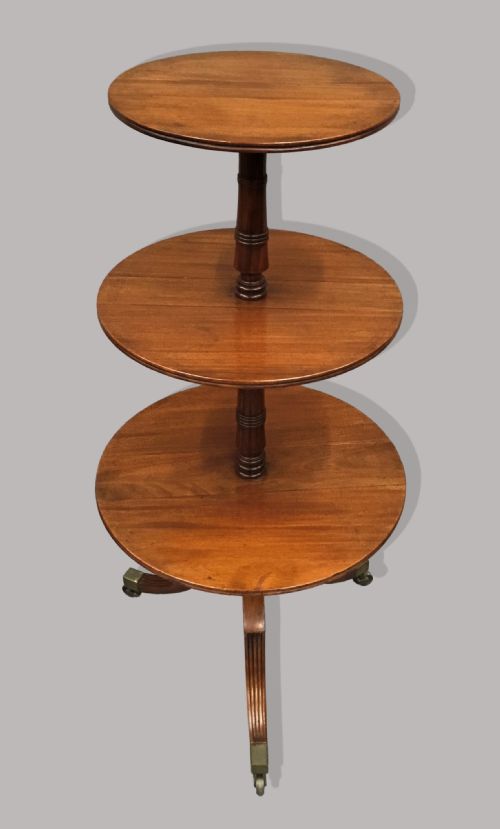


Brown Wood Dumbwaiter
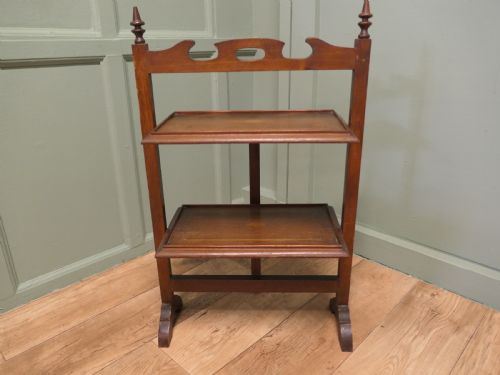
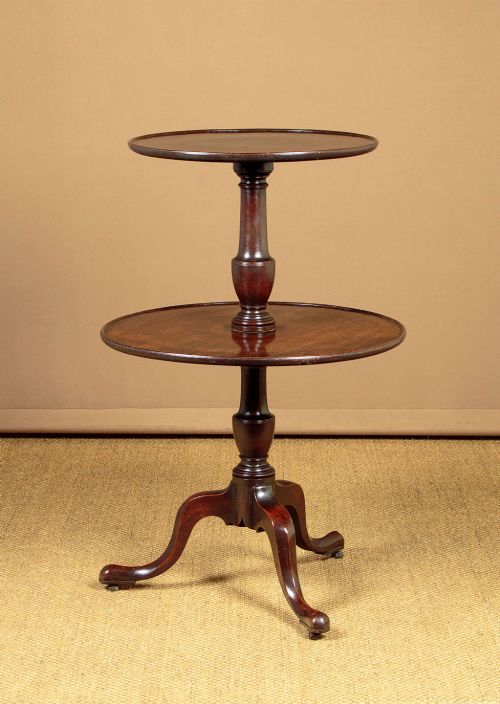
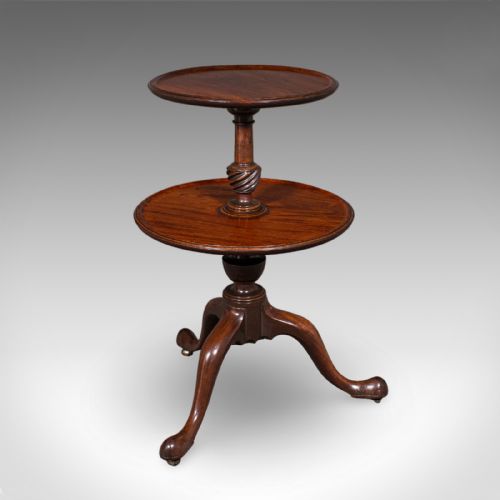
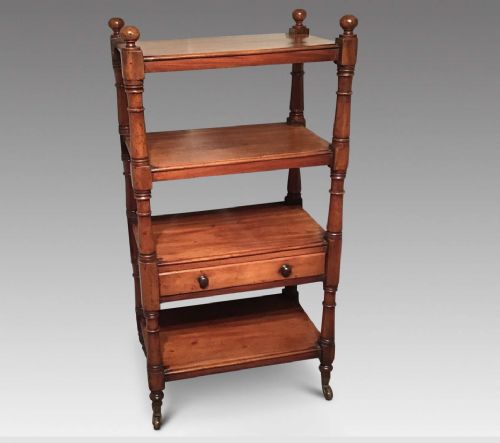
These brown wood dumbwaiter pieces are tiered serving tables and buffets designed to hold dishes or tea, offering practical multi-level display.
Brown Wood Dumbwaiter
A brown wood dumbwaiter serves as a multi-tiered table or buffet, designed historically to hold food and drink without requiring constant servants in the room. You will most frequently encounter two-tier and three-tier examples across this selection.
The periods represented span from the 18th century and Georgian eras through Regency, William IV, Victorian, and Edwardian times, all demonstrating traditional dining room utility. Forms range from round revolving tier tables to folding variants and serving buffets.
Origins include English and Irish workshops, featuring occasional tables, étagères, and hexagonal formats alongside standard dumb waiters. These pieces occupy dining rooms and living spaces alike, fulfilling the same functional role today as they did centuries ago.
Materials and construction methods
Makers relied principally upon mahogany as the primary timber, often selected for its dense grain and rich tone. Secondary woods and decorative elements include satinwood, boxwood, and brass hardware.
Surfaces frequently incorporate marquetry inlay and precise joinery to connect multiple tiers securely to central pillars or folding supports. Rise and fall mechanisms appear in specific utilitarian variants.
Turning and shaping techniques created the graduated circular, oval, and hexagonal tiers seen across Georgian and Regency outputs. Structural integrity depended upon robust pillar supports and stable tripod or pedestal bases.
Brown Wood Dumbwaiter Retail Price Guide 2026
Typical asking prices for brown wood dumbwaiter among the pieces listed under this phrase on Sellingantiques today, from the lower quarter to the upper quarter. They describe what is for sale here now, not the wider market.
Mahogany is the dominant material across these listings, spanning the Georgian, Regency, and Victorian periods.
Assessing craftsmanship and finish
The distinction between standard output and finer workshop production rests on timber selection and the crispness of turned details. Highly regarded pieces display deeply figured mahogany grain and precise inlay work rather than plain veneers.
Mechanisms such as folding hinges or rise and fall adjustments separate basic tiered stands from advanced metamorphic furniture. Smooth operation and tight joints indicate superior original construction.
Proportion and balance dictate the aesthetic success of a multi-tiered stand, where column thickness complements the graduating widths of the upper and lower shelves.
Gillow
The Brown Wood Dumbwaiter Glossary
- Dumb waiter
- A tiered freestanding table used for serving food or holding tableware without servants present.
- Étagère
- A piece of furniture consisting of a set of open shelves for displaying small objects or serving items.
- Metamorphic
- Furniture designed to transform into another form or function, such as a buffet converting to alternative use.
- Marquetry
- Decorative inlay using various woods to create pictorial or geometric patterns on the surface.
- Tiered table
- A stand featuring multiple levels of surfaces supported by a central column or upright framing.
Brown Wood Dumbwaiter: Frequently Asked Questions
What is a brown wood dumbwaiter used for?
These tiered stands traditionally held extra dishes, wine bottles, and tea service items during meals.
Today, they function effectively as side tables or display stands for plants and decorative objects in living rooms.
How many tiers do these tables have?
Most examples feature either two or three graduating shelves arranged vertically above a central base.
Certain variants include folding tiers or rise and fall mechanisms for adjustable height.
Which woods were used to build them?
Mahogany serves as the primary structural and visual timber across the majority of these serving tables.
Details often incorporate satinwood, boxwood inlay, and brass fittings to accent the dark grain.
How can I tell the period of a dumbwaiter?
Georgian and Regency pieces typically show cleaner classical column turning and solid mahogany construction.
Later Victorian and Edwardian examples occasionally introduce broader marquetry inlay or mechanical adjustments.