

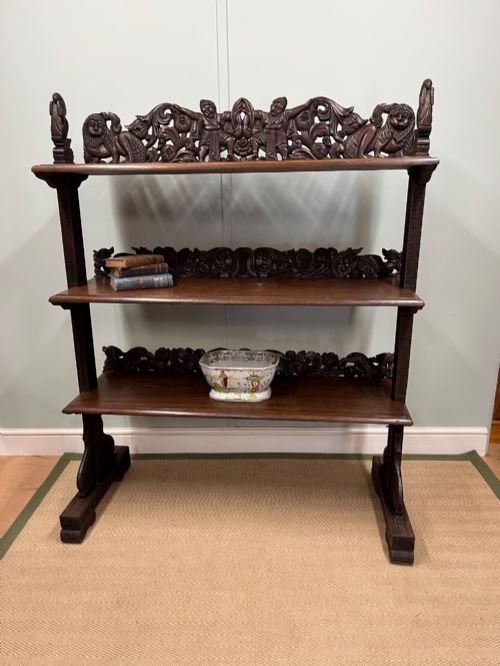


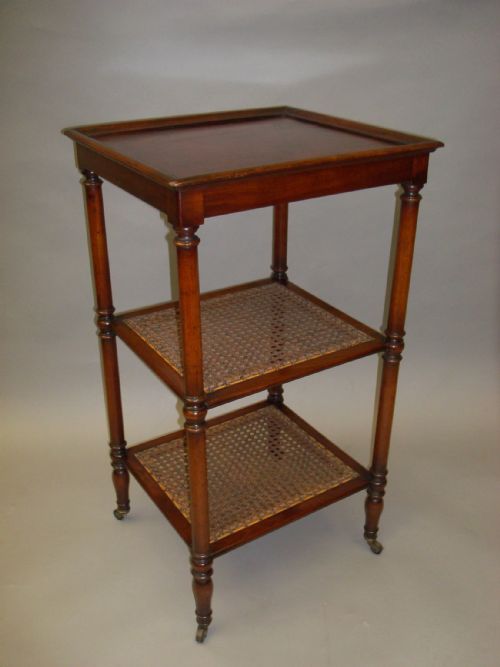
3 Tier Dumbwaiter
A 3 tier dumbwaiter stands ready with graduated circular trays to serve food and wine without the press of servants.
3 Tier Dumbwaiter
A 3 tier dumbwaiter is a tiered serving stand designed to hold dishes, glasses, or bottles across multiple revolving or fixed levels. When you search for this phrase, you find tiered tables from the eighteenth, nineteenth, and early twentieth centuries built to economise space in dining rooms.
The version you meet most often on this page is an eighteenth-century or nineteenth-century mahogany piece, frequently resting on a tripod base with graduated circular trays. These forms appear alongside oak, walnut, rosewood, and teak variants catalogued as buffets, serving tables, and etageres.
Makers designed these tiered pieces to stand beside a dining table or in a corner, allowing diners to help themselves during a meal. The multi-tiered format allows different courses or beverages to occupy separate levels within reach.
How they were made
Cabinet makers constructed these tiered pieces predominantly in solid mahogany, burr walnut, and oak, often turning central pedestals on a lathe and mounting the tiers on tripod legs. Some examples incorporate brass mechanisms for rise-and-fall adjustments, telescopic movement, or revolving actions.
Surfaces receive polish to highlight the grain of the timber, whether figured mahogany, fiddleback mahogany, or walnut. Structural joints rely on sturdy turned pillars and secure central column fixings to support the weight of multiple heavy wooden trays.
3 Tier Dumbwaiter Retail Price Guide 2026
Typical asking prices for 3 tier dumbwaiter among the pieces listed under this phrase on Sellingantiques today, from the lower quarter to the upper quarter. They describe what is for sale here now, not the wider market.
Listings feature mahogany, walnut, oak, rosewood, teak, and brass across Georgian, Regency, and Victorian periods.
What varies in quality
Quality rests in the timber selection and the precision of the turning on the central pedestal and graduated tiers. Dense, well-figured mahogany or burr walnut with clean, crisp moulding indicates a higher standard of workshop production.
Mechanical complexity also distinguishes the range, where telescopic rises, revolving pivots, and folding mechanisms operate smoothly without wobble. Original castors and undisturbed structural joints elevate the integrity of a piece compared to later alterations.
The 3 Tier Dumbwaiter Glossary
- Dumbwaiter
- A tiered piece of dining room furniture designed to hold food, wine, or tableware without the need for attendants. These stands use stacked circular trays supported by a central column.
- Tripod
- A base comprising three supporting legs radiating from a central pillar. This configuration provides stability on uneven dining room floors.
- Etagere
- A set of open shelves or tiers used for displaying or holding small items. The term applies to multi-level stands found across various periods.
- Buffet
- A piece of furniture used for serving food or storing tableware. In the context of tiered stands, it describes heavy sideboards with multiple levels.
- Revolving
- Describes trays or tiers designed to rotate around the central column. This movement allows diners to access items from any seated position.
3 Tier Dumbwaiter: Frequently Asked Questions
What is a 3 tier dumbwaiter used for?
These tiered stands served meals in dining rooms by holding extra plates, dishes, and bottles of wine within arm's reach. They reduced the reliance on domestic servants during dinner parties.
Today, they function as versatile display surfaces or side tables in living spaces, holding books, plants, or decorative objects across their multiple levels.
How do I tell an 18th century dumbwaiter from a Victorian one?
Eighteenth-century examples often feature lighter proportions, crisp tripod bases, and premium figured mahogany timbers associated with the George III period. Their turning tends to be restrained and elegant.
Victorian pieces frequently introduce heavier timbers like burr walnut, oak, or teak, alongside mechanical adjustments such as telescopic rises, brass mountings, and revolving pivots.
Are all tiers on these tables fixed in place?
Many traditional examples feature fixed circular trays mounted securely to a turned central column at graduated heights. The smallest tray sits at the top, stepping down to wider shelves below.
Other variations include revolving tiers that spin on their axis, as well as metamorphic or telescopic designs that adjust in height or fold away when not in use.
How do I care for a mahogany dumbwaiter?
Keep the timber away from direct heat sources and strong sunlight to prevent the polish from fading or the wood from drying out. Dust the tiers regularly with a soft, dry cloth.
Apply a conservative amount of beeswax periodically to nourish the mahogany surface and preserve the depth of the grain without building up a sticky residue.