


Brown Wood Dressing Stool
A brown wood dressing stool brings warmth and character to a bedroom, offering a practical perch for the vanity that anchors the room.
Brown Wood Dressing Stool
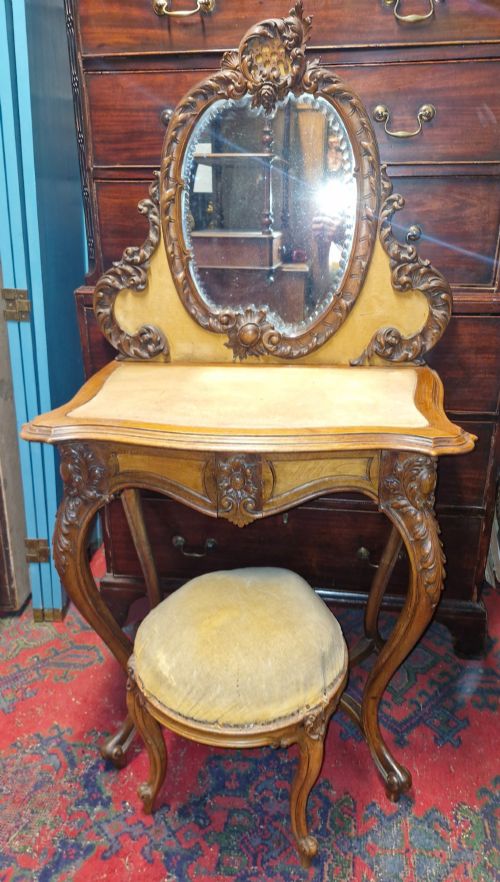
A brown wood dressing stool is a low seat designed for use at a dressing table, though many examples function equally well as piano stools or small window seats. When you browse this selection of brown wood dressing stool options, you encounter a range of periods from the eighteenth century through to the interwar decades of the twentieth century.
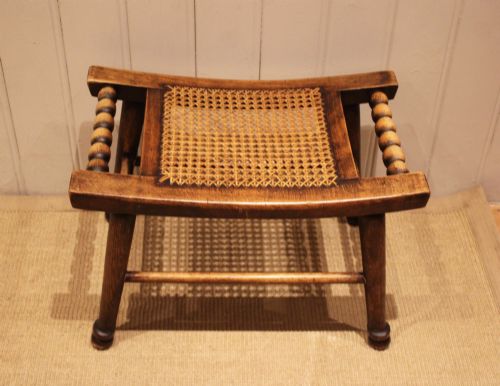
The forms vary from simple turned beech cane seat stools to grander carved walnut and mahogany frames. Styles span across Queen Anne, Regency, Victorian, and Georgian Revival interpretations, reflecting the shifting tastes in domestic seating across multiple generations.
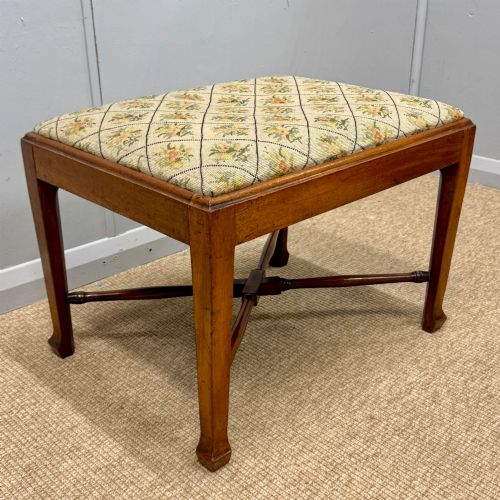
Many of these pieces arrive alongside dressing tables as matched sets, while others stand alone as independent seating. The construction relies heavily on traditional hardwoods such as mahogany, walnut, oak, and beech, upholstered in various fabrics or tapestry.
Materials and construction methods
Makers utilised dense timbers like mahogany and walnut for finer examples, employing detailed carving on cabriole legs and frames. Oak and beech appear frequently in simpler or provincial pieces, often shaped with turned legs and cross stretchers for added stability.
Upholstery techniques varied from traditional webbing and stuffing beneath period textiles to cane seating set directly into wooden frames. Brass accents and inlay work occasionally feature on mahogany and walnut surfaces, adding subtle decorative detail to the woodwork.
Distinguishing quality in older seating
Quality reveals itself in the crispness of the timber carving and the structural integrity of the frame joints. Superior pieces display carefully selected wood grain, hand-turned components, and robust underframes that withstand daily use.
The refinement of the legs, whether cabriole or straight-turned, separates standard utilitarian seating from more ambitious cabinetmaker output. Upholstery finish and the preservation of the original wooden patination further distinguish better examples.
The Brown Wood Dressing Stool Glossary
- Cabriole leg
- A furniture leg that curves out and then in, resembling an animal limb. This shape originates from ancient Chinese designs and became a defining feature of eighteenth-century and revival furniture.
- Cross stretcher
- A pair of intersecting wooden bars connecting the legs of a stool near the base. It provides structural reinforcement and adds a decorative geometric element.
- Cane seat
- A seating surface woven from rattan or split cane plants. It offers a lightweight, flexible panel that appears frequently on lighter bedroom chairs and stools.
- Patina
- The surface sheen and colour developed by wood over decades of handling, polishing, and exposure to light. This gradual ageing process distinguishes antique timber from modern finishes.
Brown Wood Dressing Stool: Frequently Asked Questions
What is a dressing stool?
A dressing stool is a small, low seat designed specifically to sit comfortably beneath a vanity or dressing table.
Historically, these seats provided practical seating for morning grooming routines and often matched the style of the main dressing furniture.
How do I date a wooden stool?
Dating relies on examining the timber species, joinery methods, tool marks, and stylistic revival cues visible on the frame.
Earlier pieces show hand-cut joinery and period-specific carving details, whereas twentieth-century revivals often copy eighteenth-century or Victorian proportions.
Can I use a piano stool at a dressing table?
Many piano stools share similar heights and proportions with dressing stools, making them suitable alternatives for a vanity.
Adjustable mechanisms or upholstered seats designed for musical instruments translate easily into practical bedroom seating.
Are these stools sturdy enough for daily use?
Most antique wooden stools are constructed from solid hardwoods like mahogany, walnut, or oak, built to withstand everyday sitting.
Checking the joints and stretcher stability ensures the frame remains dependable for regular placement in a modern bedroom.