




Green Fabric Stool
These green fabric stool examples offer a practical blend of period seating and tactile upholstery, combining heritage timber frames with textile finishes.
Green Fabric Stool
A green fabric stool encompasses various nineteenth-century forms including footstools, piano stools, ottomans, and window stools. These pieces serve functional seating and resting purposes within domestic spaces.
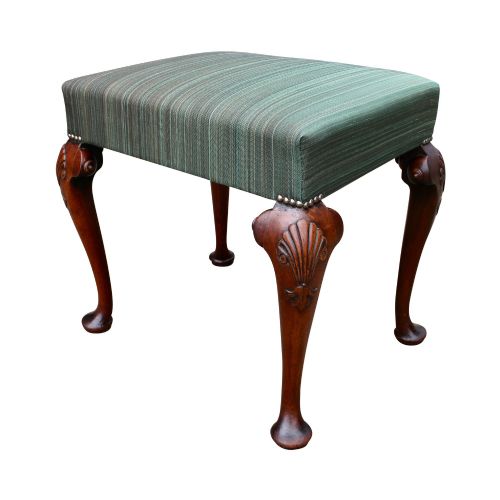
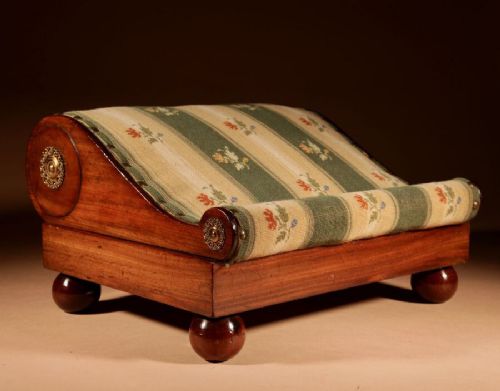
The selections encountered here span Victorian, Regency, and William IV periods alongside Queen Anne Revival and Biedermeier styles. Mahogany and walnut provide the primary timber foundations for these upholstered items.
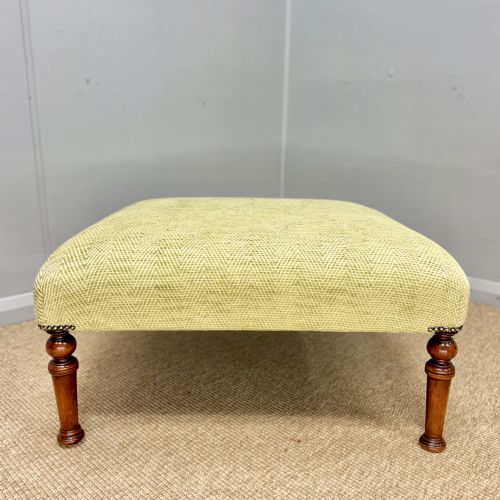
Continental examples and English country pieces appear alongside square herringbone upholstered designs. The convergence of solid timber frames and fabric surfaces defines this category.
How they were made
Maker construction relies heavily on solid walnut, mahogany, and ebonised wood to form stable foundational structures. Brass tacks frequently secure the upholstery materials to the timber frames.
Textiles including herringbone fabric provide the upper surfaces for these nineteenth-century footstools and ottomans. Swivel mechanisms appear on specific piano stool variants to allow rotational movement.
Listings feature nineteenth-century items spanning the Victorian, Regency, and William IV periods, constructed in mahogany, walnut, and ebonised wood.
What varies in quality
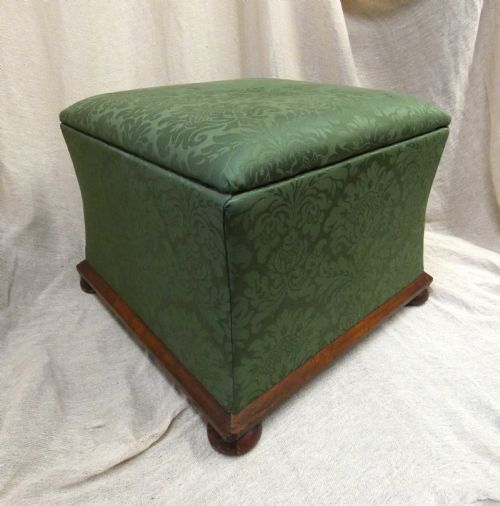
The refinement of the timber chassis distinguishes standard utility pieces from more elaborate examples such as waisted ottomans or work boxes. Cabinetmaker execution in turning and joinery dictates the structural integrity of the frame.
Upholstery precision, evidenced by the neat placement of brass tacks and the choice of woven textiles, alters the visual weight of the piece. Timber selection, moving between standard mahogany and solid walnut, sets the upper tier apart.
The Green Fabric Stool Glossary
- Footstool
- A low seat designed to support the feet while sitting in a larger chair. These pieces often feature timber legs matching contemporary furniture styles.
- Ottoman
- A padded upholstered seat or footstool lacking a back and arms. Examples from the nineteenth century sometimes incorporate internal storage or work box functions.
- Regency
- A design period spanning the early nineteenth century defined by classical restraint and revival motifs. Pieces from this era often exhibit waisted profiles.
- Biedermeier
- A Central European style prioritising utilitarian comfort and clean lines without excessive ornamentation. This aesthetic appears among nineteenth-century seating.
Green Fabric Stool: Frequently Asked Questions
What is a green fabric stool used for?
These pieces function primarily as footrests, piano seating, or small auxiliary seats in living spaces and dressing rooms.
Certain larger variants such as ottomans also incorporate internal compartments for storing sewing items or household sundries.
How do I date a green fabric stool?
Dating relies upon identifying timber species, construction methods, and stylistic markers associated with periods like the Regency or Victorian eras.
Turned legs, joinery techniques, and secondary woods help establish whether a piece originates from the early nineteenth century or the late 1880s.
What woods were used for these stools?
Carpenters and cabinetmakers utilised mahogany and walnut as primary framing materials for nineteenth-century seating.
Solid walnut and ebonised wood appear frequently alongside specific examples featuring brass tacks and swivel mechanisms.
Are piano stools different from footstools?
Piano stools are specifically engineered for height adjustment or rotational movement, often utilising swivel bases for musicians.
Footstools remain stationary low platforms designed strictly to support resting feet or serve as compact window seats.