
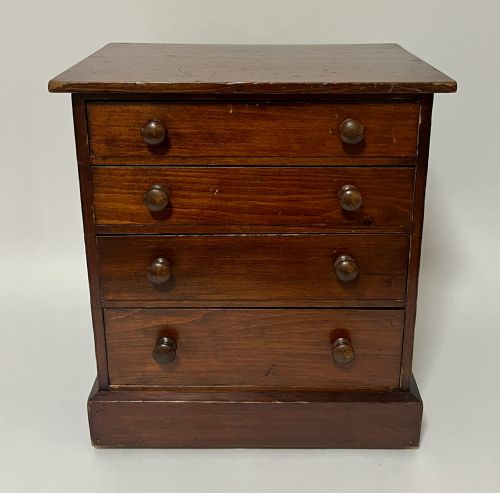


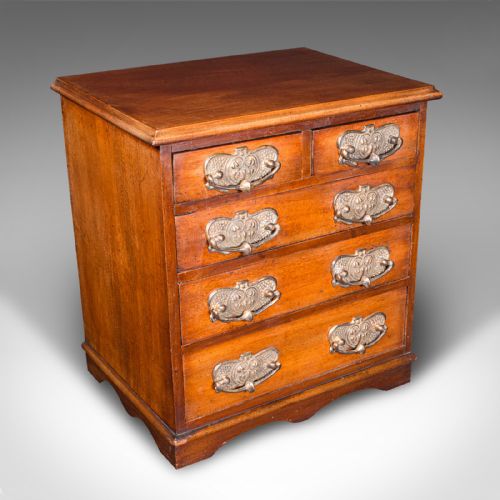


Brown Wood Desktop Chest
These brown wood desktop chest examples are compact storage pieces built for small treasures, offering period craftsmanship right on your table.
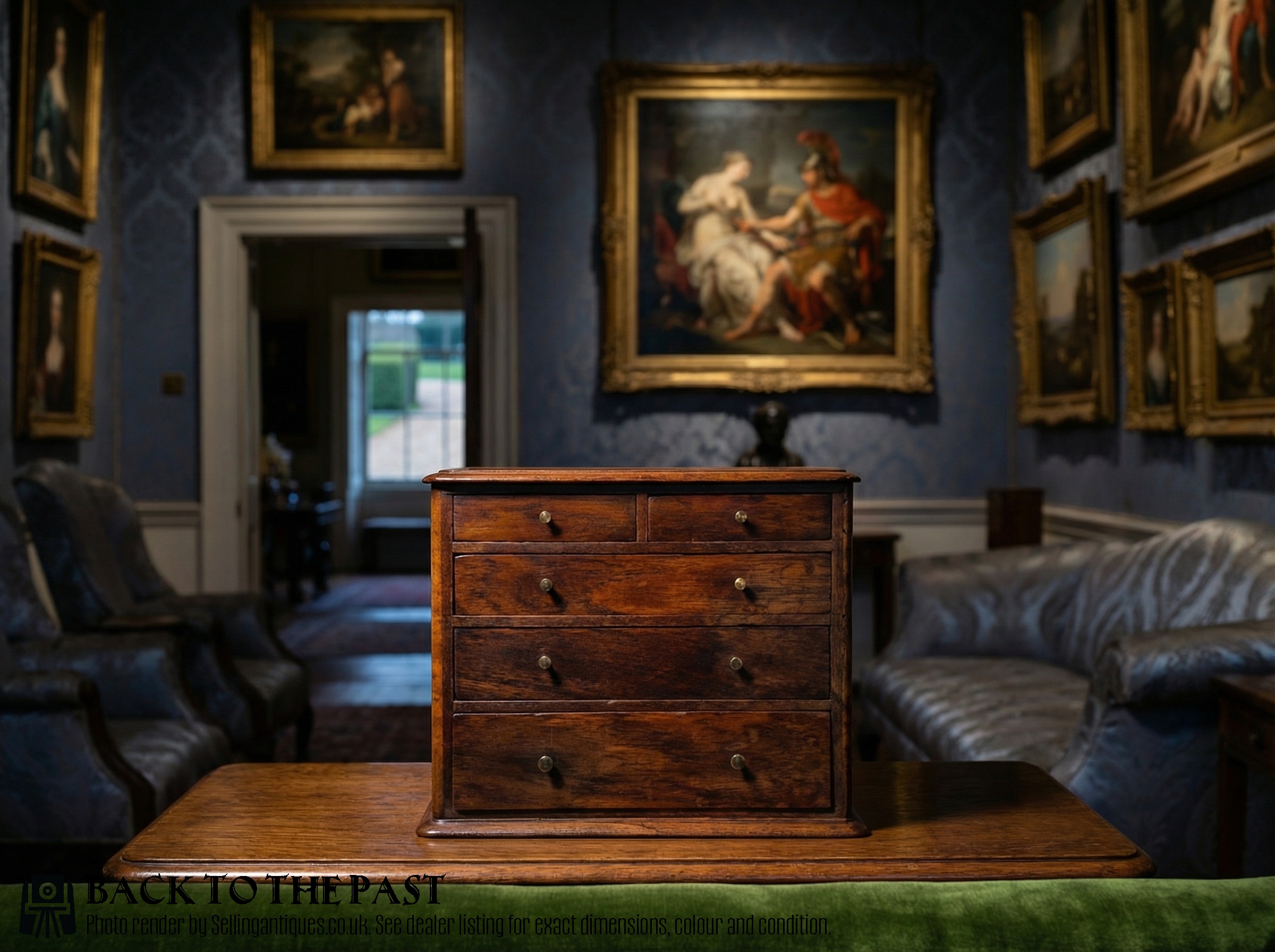
Brown Wood Desktop Chest
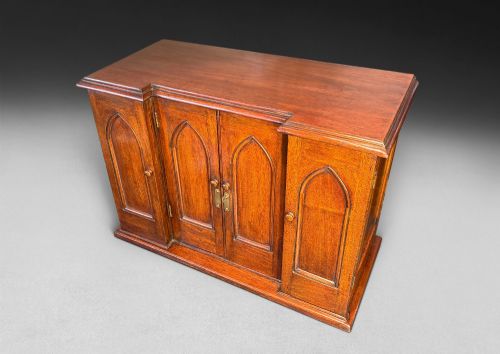
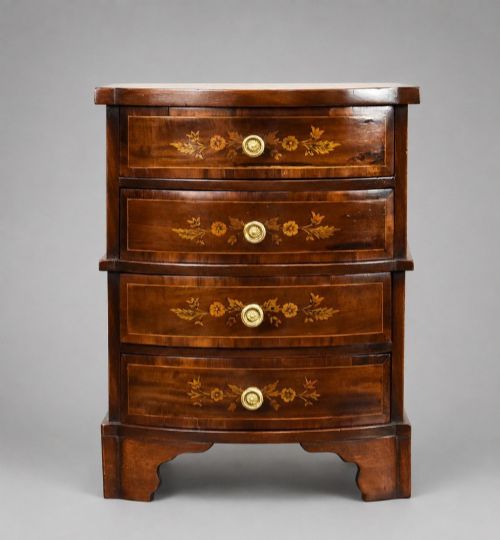
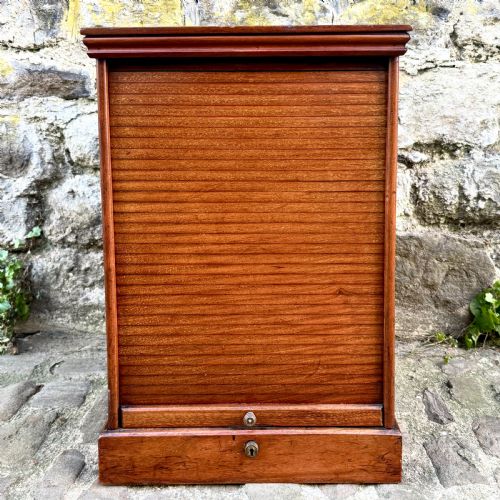
A brown wood desktop chest serves as a compact tabletop repository for valuables, specimens, or correspondence. Collectors encounter various forms here including miniature chests of drawers, collectors cabinets, apprentice pieces, and apothecary boxes.
The pieces span periods from the Georgian and Regency eras through the Victorian and Edwardian decades, up to the mid-twentieth century. Mahogany, walnut, oak, and pine appear frequently across these compact desktop formats.
Miniature chests of drawers and specimen cases dominate the selection, often mirroring the styles of larger furniture like the Gothic Revival and Arts and Crafts movements. Buyers most often meet traditional wood constructions designed for functional organisation on a desk or table.
How They Were Made
Cabinetmakers utilised dense timbers such as mahogany, walnut, rosewood, and oak for durability and fine grain patterns, frequently pairing them with secondary woods like deal and pine. Brass hardware such as flush handles, escutcheons, and hinges provide structural reinforcement and contrast.
Construction techniques include intricate marquetry, wood inlay, and ebonised mouldings to define the edges and drawer fronts. Surfaces are typically finished with polish or wax to highlight the natural qualities of the wood.
Some miniature chests come complete with tiny working locks, proving that historical cabinetmakers possessed boundless patience for tiny brass keys.
What Varies in Quality
The refinement of the timber selection and decorative details sets superior examples apart, such as the use of burr elm, satinwood inlay, or finely figured mahogany. Superior joinery, including precise dovetail drawers and well-fitted fall fronts, indicates higher workshop skill.
Condition and original hardware integrity influence the character of each piece. Retaining period brass fittings and intact interior linings distinguishes the most preserved examples from those with later replacements.
The Brown Wood Desktop Chest Glossary
- Apprentice piece
- A small furniture item demonstrated by a craftsman to prove skill before gaining guild admission. These frequently took the form of miniature chests of drawers.
- Collectors cabinet
- A specialised piece containing multiple small drawers or compartments for organising natural history specimens, coins, or trinkets. They often feature glazed or panelled locking doors.
- Marquetry
- The art of applying pieces of veneer to a structure to form decorative patterns and pictures. It appears on Edwardian miniature chests.
- Humidor
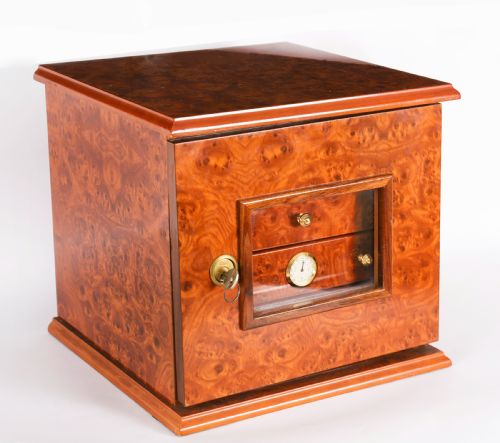
- A moisture-controlled box designed specifically for storing cigars. Oak and burr elm examples are found among twentieth-century desk pieces.
- Escutcheon
- A flat plate of brass surrounding a keyhole. It protects the surrounding wood from wear caused by the key.
Brown Wood Desktop Chest: Frequently Asked Questions
What were miniature chests used for?
Miniature chests served various purposes from holding jewellery and keepsakes to acting as salesman samples or apprentice demonstrations. Their multiple small drawers provided practical storage for precious items on a desk.
Today they function effectively as desktop organizers for modern stationery, small collections, or keepsakes while maintaining a distinct historical presence.
How do I care for a wood desktop chest?
Keep wooden desktop pieces away from direct sunlight and fluctuating heat sources to prevent the timber from warping or splitting. Regular gentle dusting preserves the polished finish.
Applying a traditional beeswax periodically maintains the moisture and natural lustre of woods like mahogany, walnut, and oak.
How can I tell the period of a chest?
Dating relies on observing construction methods, timber choices, and stylistic cues such as Regency brass work or Victorian Gothic mouldings. Secondary woods and drawer dovetailing also offer clues to the decade of manufacture.
Comparing the hardware and overall proportions to dated examples helps narrow down the origin between Georgian, Victorian, and Edwardian eras.
Are these chests suitable for daily use?
Sturdy construction in hardwoods like mahogany and oak makes these pieces durable enough for holding small everyday items. The drawers slide easily when maintained in proper humidity.
Care should be taken with delicate inlays or older glass panels found on specific specimen cases and correspondence chests.