


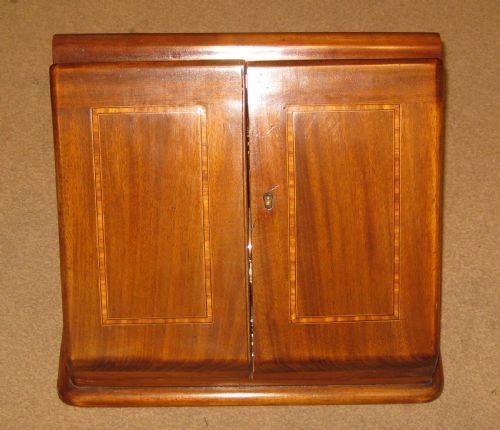



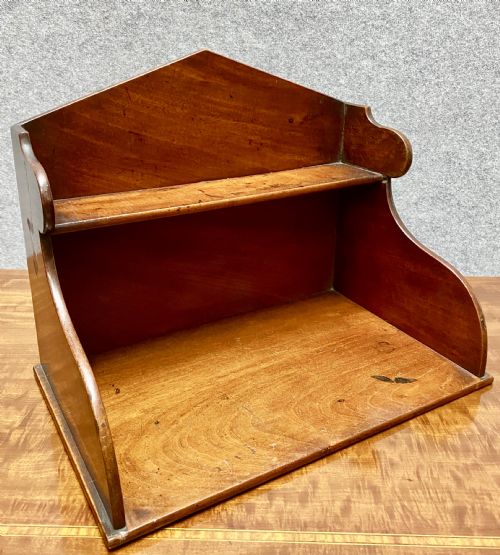

Brown Wood Desk Tidy
A brown wood desk tidy keeps letters, pens, and ink neatly contained on a writing table, combining everyday utility with period craftsmanship.

Brown Wood Desk Tidy
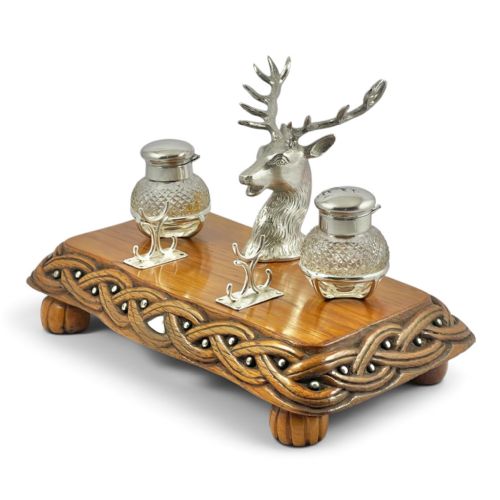
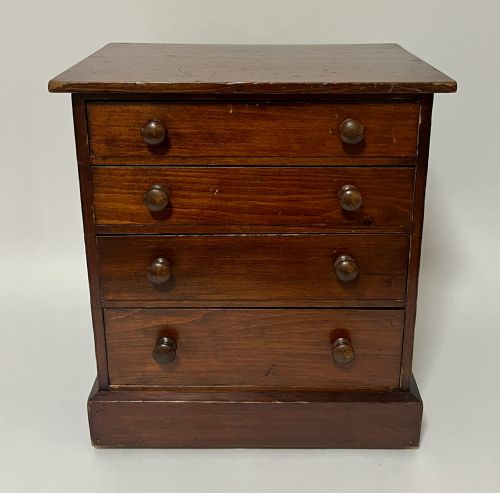
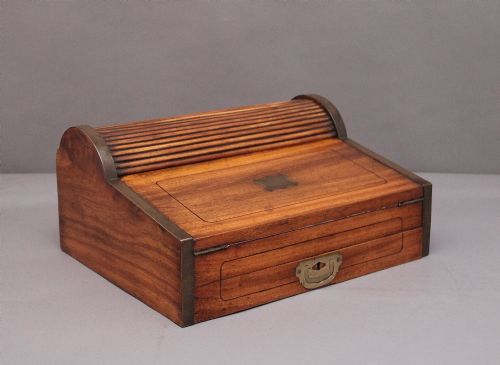
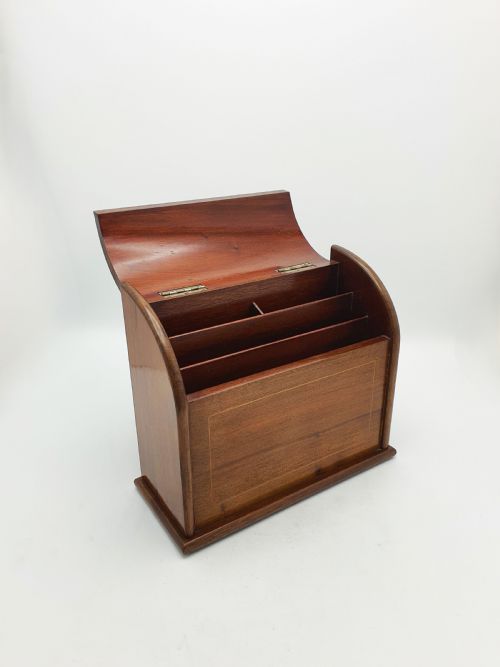
A brown wood desk tidy encompasses a range of wooden receptacles designed to organise correspondence and writing implements on a desktop. These items include stationary boxes, inkstands, writing slopes, and letter holders from various historical periods.
The pieces available here lean heavily towards nineteenth-century and early twentieth-century examples, spanning the Victorian and Edwardian eras. Mahogany and oak dominate the selection, often accompanied by brass mounts and glass inkwells.
Buyers will encounter diverse forms, from simple hinged-lid boxes and coin trays to elaborately carved Black Forest inkwells featuring animal figures. Each item reflects the desk management needs of its respective period.
How they were made
Construction relies heavily on traditional cabinet-making timbers such as mahogany, oak, and pine, occasionally paired with exotic woods like camphor or linden. Joinery techniques from the eighteenth to early twentieth centuries ensure sturdy enclosures for stationery and ink.
Decorative elements frequently include inlaid wood details, brass hinges, and detailed hand-carving, particularly seen in Swiss Black Forest pieces depicting dogs. Glass inserts serve as functional inkwells within wooden frames.
St. Bernard dogs carved from linden wood stand guard over nineteenth-century ink.
What varies in quality
Quality separates pieces by the crispness of their hand-carving and the precision of inlaid wood details. Superior items exhibit tight joinery, matching timber grains, and original brass or glass components that remain intact.
The presence of functional mechanisms, such as adjustable dates or secure hinged lids, distinguishes more elaborate stationery cabinets from simpler coin trays and letter holders.
The Brown Wood Desk Tidy Glossary
- Inkstand
- A desk stand holding one or more inkwells along with spaces for pens and sealing wax. These portable stands kept writing materials together before the invention of the fountain pen.
- Writing Slope
- A portable desk with a slanted, hinged lid that opens to reveal a storage compartment for paper and writing tools. The sloping top provided an ergonomic surface for handwriting.
- Stationery Box
- An upright cabinet or box designed to store writing paper and envelopes in upright partitions. They often feature hinged lids or fall-front doors.
- Black Forest
- A style of ornate wood carving originating from the mountainous region of Germany and Switzerland during the nineteenth century. These items typically feature naturalistic animal and plant motifs carved from linden wood.
- Letter Holder
- A desktop rack or stand intended to hold incoming and outgoing correspondence upright. They are frequently constructed from mahogany or oak with multiple wooden partitions.
Brown Wood Desk Tidy: Frequently Asked Questions
What is a desk tidy used for?
A desk tidy organises loose papers, letters, pens, and inkwells on a writing table. They kept workspaces orderly before modern office supplies existed.
Different configurations catered to specific tasks, such as holding incoming mail or storing bottled ink safely away from documents.
How do I date an antique desk tidy?
Dating relies on timber choices, construction methods, and stylistic cues like brass hardware or inlaid details. Victorian and Edwardian pieces show specific manufacturing traits distinct from Georgian items.
Examining secondary woods and fasteners helps confirm the period of manufacture.
What are Black Forest desk tidies?
Black Forest desk tidies are intricately hand-carved wooden accessories from Switzerland and Germany, usually depicting animals like dogs. They date predominantly to the late nineteenth century.
Linden wood was the primary material used by carvers to create these naturalistic figures.
Are inkwells included with desk tidies?
Many inkstands and desk tidies retain their original glass or metal inkwells, though some survive without them. Replacement glass inserts are common in older pieces.
Checking the fit within the wooden housing helps determine originality.
How do I care for wooden desk accessories?
Wood desk tidies require dusting with a dry cloth and occasional application of appropriate furniture wax to preserve the finish. Direct sunlight and excessive humidity should be avoided to prevent cracking.
Metal components like brass hinges benefit from gentle cleaning without harsh chemical polishes.