

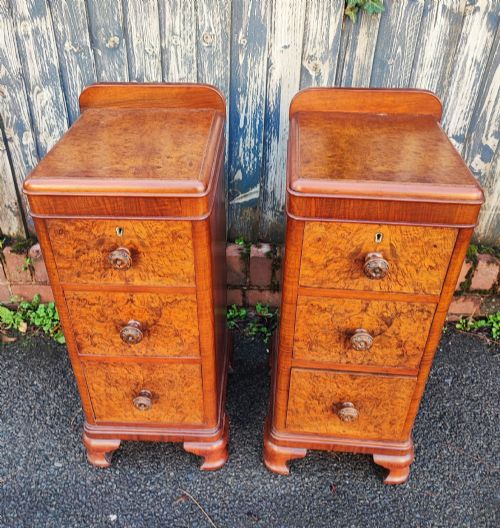
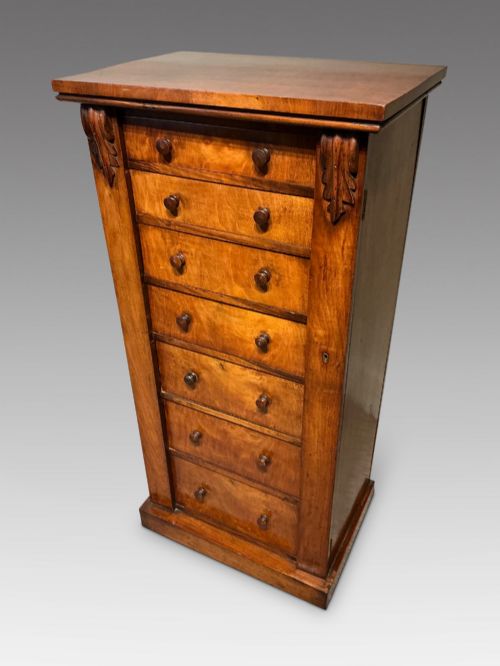
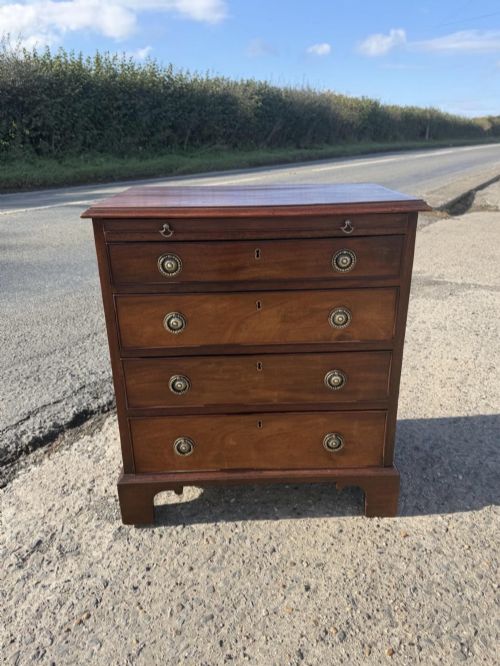
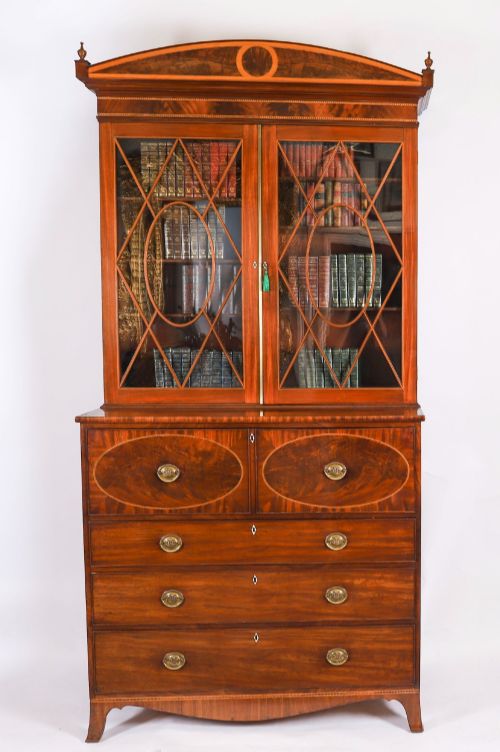
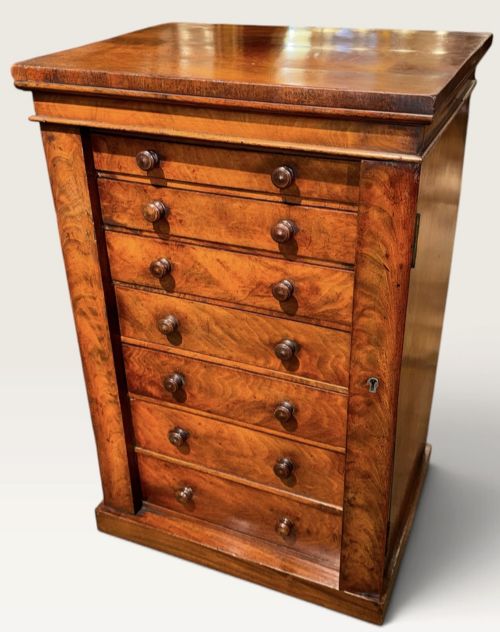
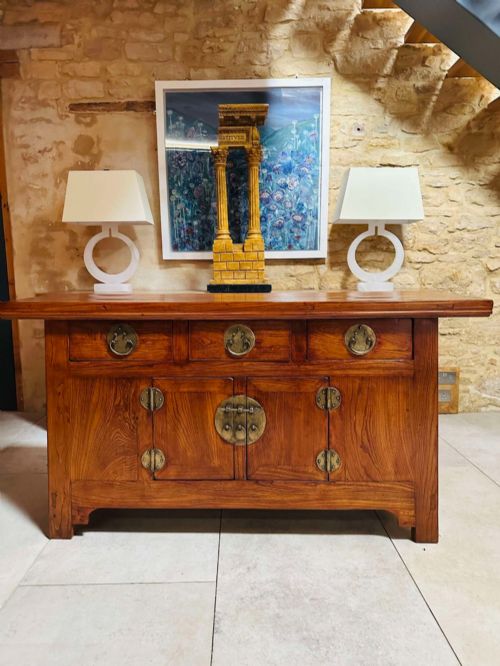
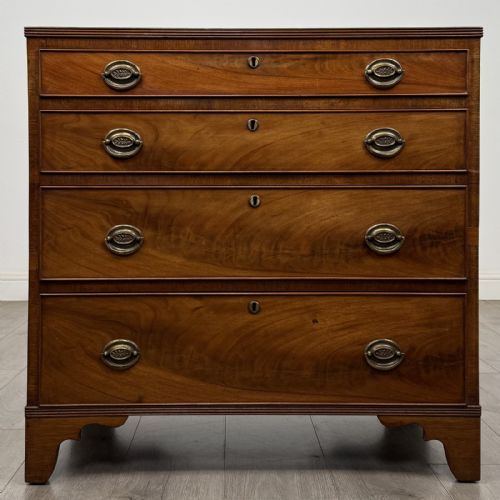
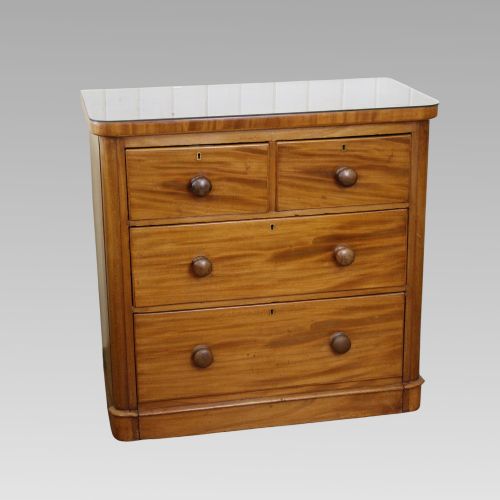
Brown Wood Chest of Drawers
A brown wood chest of drawers brings warmth and honest storage to a room, offering the rich grain of mahogany, satinwood, and kingwood.

Brown Wood Chest of Drawers
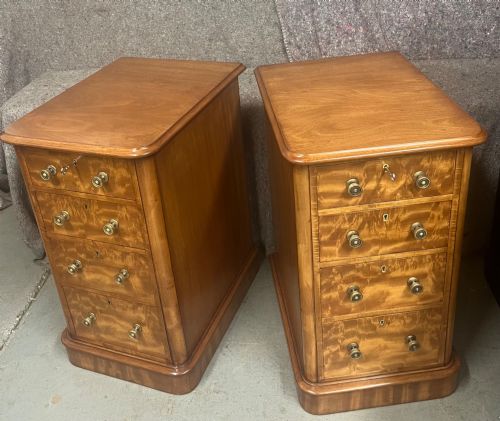
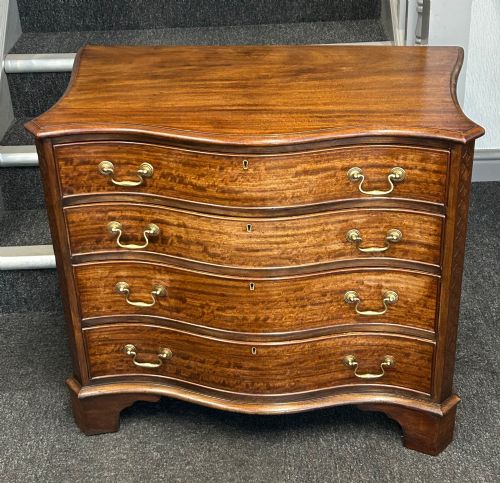
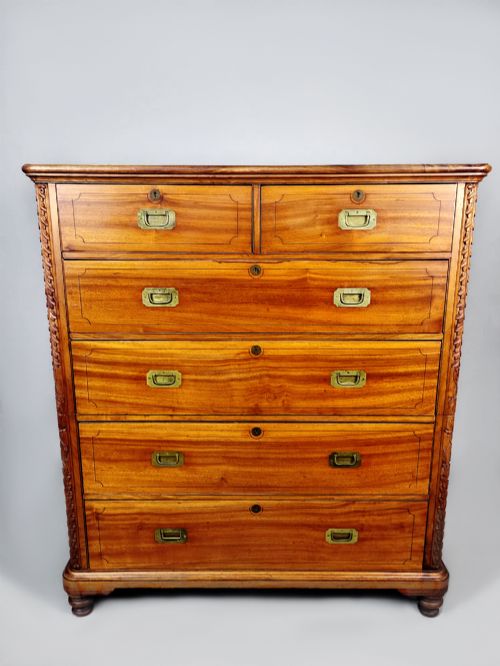
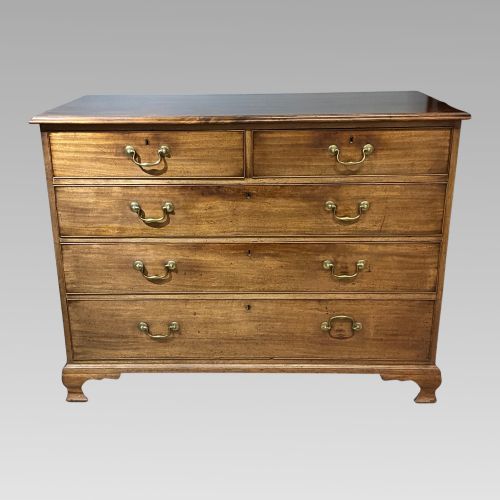
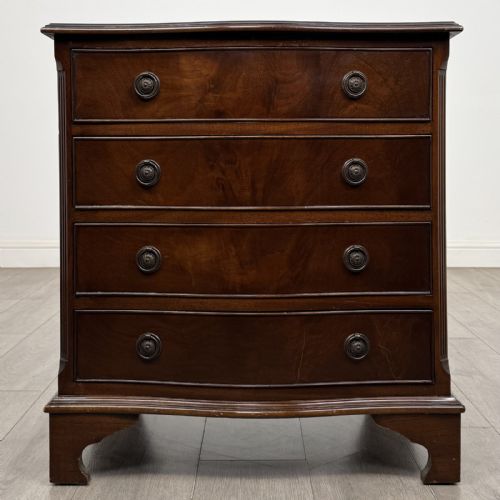
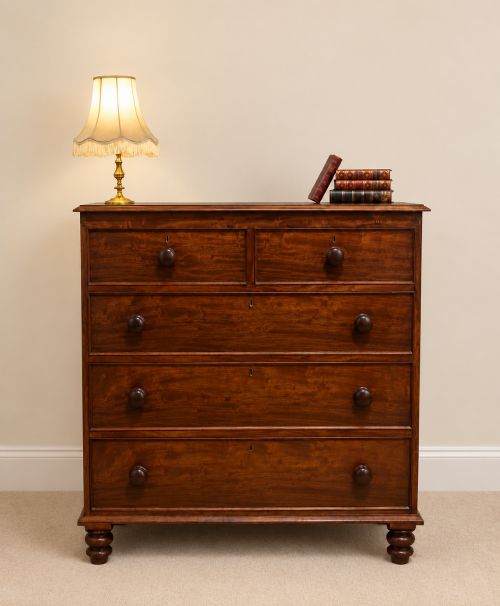
A brown wood chest of drawers provides substantial timber construction designed for domestic storage across multiple centuries. These pieces appear in forms ranging from compact four-drawer examples with brushing slides to grand chests on stand and serpentine shapes.
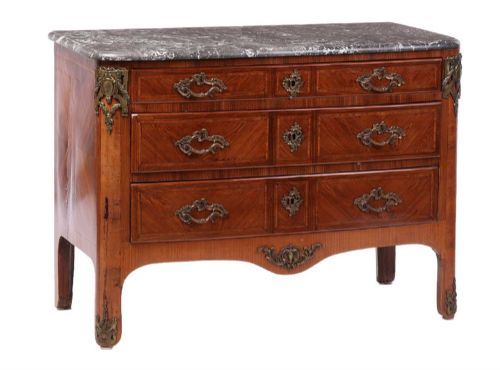
The selections span the eighteenth century, the Regency period, and the nineteenth century. Buyers encounter distinct regional and stylistic expressions, including Georgian proportions, Regency Egyptian Revival details, and French Louis Revival marquetry commodes.
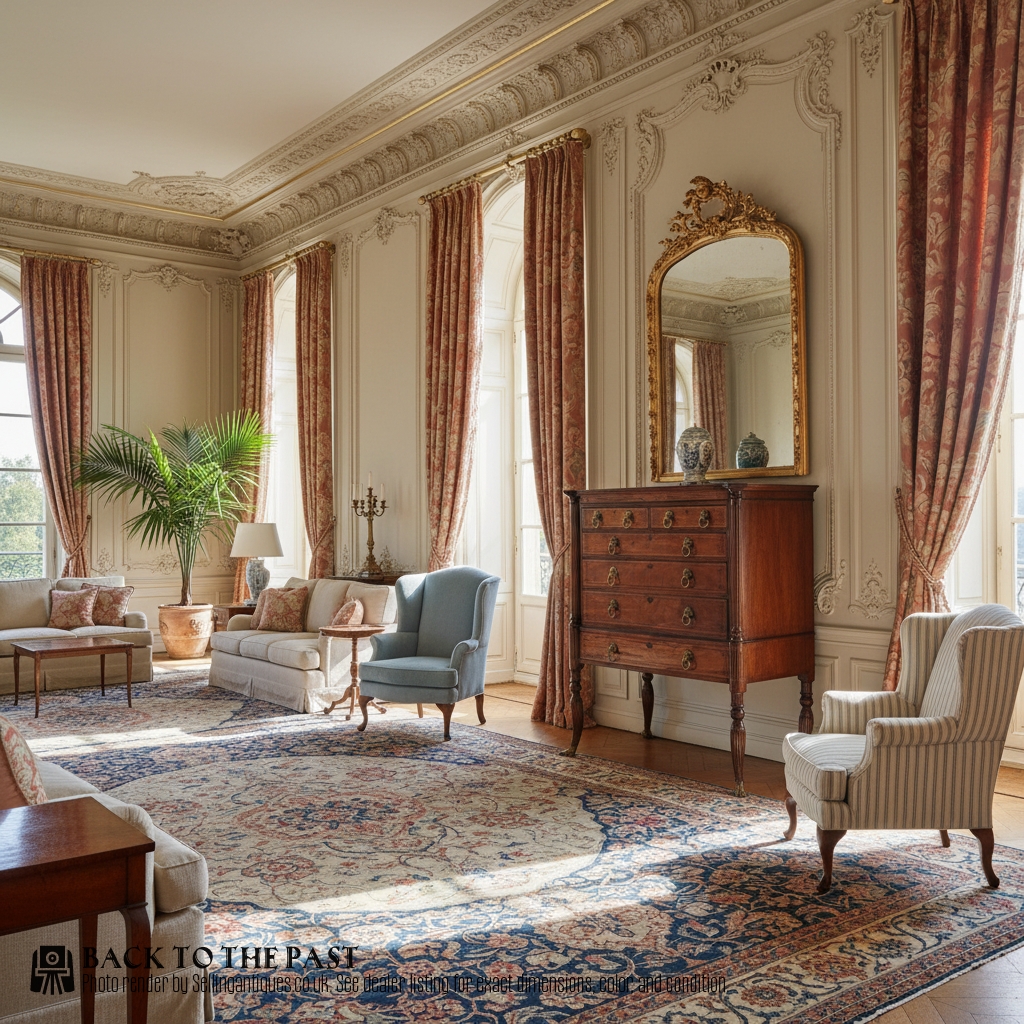
How they were made
Cabinet makers utilised primary timbers such as mahogany, oak, satinwood, and kingwood to construct the carcase and drawer fronts. Decorative enhancement relied on precision boxwood inlay and intricate marquetry patterns set into the timber surfaces.
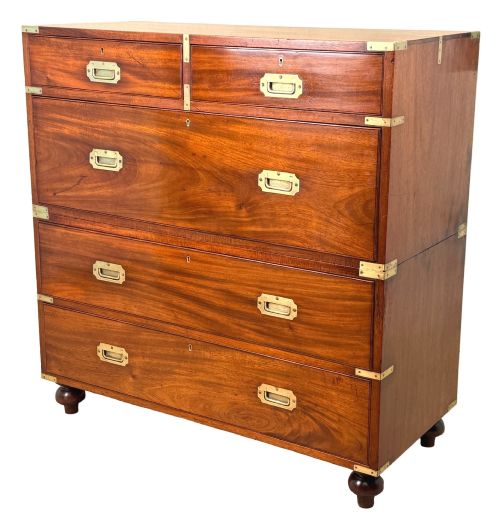
Metalwork played an integral structural and decorative role, incorporating cast brass handles and mounts, alongside gilt or polished ormolu details. Every joint and surface reflects traditional cabinet-making methods suited to heavy domestic use.
Brown Wood Chest of Drawers Retail Price Guide 2026
Typical asking prices for brown wood chest of drawers among the pieces listed under this phrase on Sellingantiques today, from the lower quarter to the upper quarter. They describe what is for sale here now, not the wider market.
Materials employed across these pieces include mahogany, oak, satinwood, kingwood, boxwood, brass, and ormolu.
What varies in quality
Superior examples distinguish themselves through the choice and matching of timber veneers, where grain patterns flow naturally across drawer fronts. Finer pieces demonstrate restraint and precision in boxwood inlay, marquetry, and the integration of auxiliary woods like oak.
The integration of functional elements such as a sliding brushing slide or well-fitted drawer linings marks the distinction between standard utility items and masterwork pieces. Hardware quality, from chased ormolu to solid brass mounts, further elevates the stature of the chest.
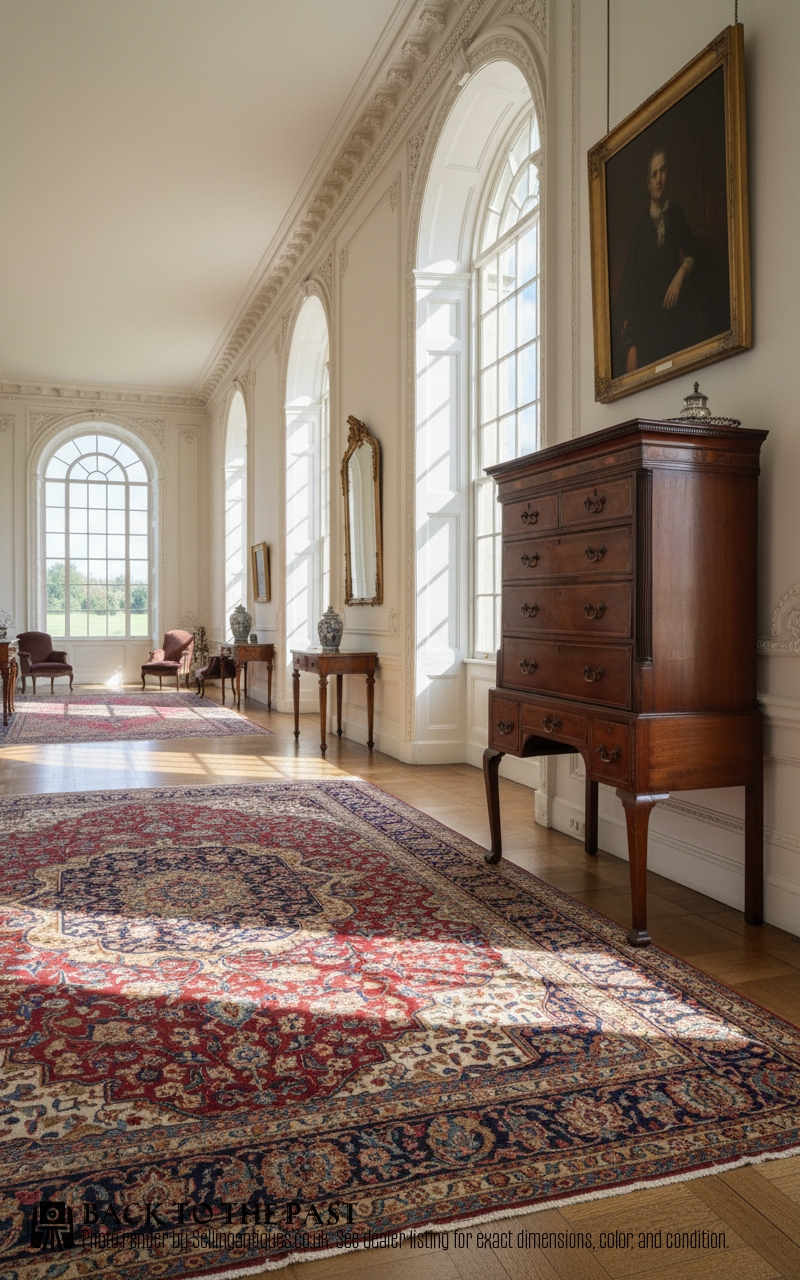
The Brown Wood Chest of Drawers Glossary
- Brushing slide
- A pull-out shelf housed above the top drawers, traditionally used for folding clothes or writing correspondence.
- Serpentine chest
- A storage piece featuring a gently curved front profile that undulates in a convex-concave rhythm.
- Chest on stand
- A tall drawer section elevated on an integrated lower frame or table structure with legs.
- Marquetry
- The art of applying decorative veneer pieces of various woods and materials to form pictorial or geometric designs.
- Ormolu
- Gilt bronze ornamentation cast and chased for mounting onto furniture surfaces.
Brown Wood Chest of Drawers: Frequently Asked Questions
What is a brushing slide?
A brushing slide is a pull-out wooden shelf located just beneath the top surface or top drawer of a chest. It provided a clean temporary surface for folding garments or grooming in historical bedchambers.
Today, this feature remains a practical surface for resting small items or holding a cup while browsing through stored contents.
How do I identify a chest on stand?
A chest on stand consists of an upper drawer section supported by a distinct lower frame with legs. This form lifts the main body higher off the floor and creates a lighter visual silhouette.
These pieces often date to the eighteenth century and combine substantial storage capacity with elevated architectural proportions.
What is serpentine front furniture?
A serpentine front curves outward in the centre and inward towards the edges, creating a distinct wavy profile. Cabinet makers shaped solid timbers or applied veneers carefully to follow this complex contour.
This form requires exceptional woodworking skill and immediately signals a more ambitious level of design and manufacture.
How do I care for antique wood furniture?
Maintain antique timber pieces by keeping them away from direct heat sources and fluctuating humidity. Regular dusting with a soft, dry cloth preserves the natural finish without chemical buildup.
Applying occasional natural wax feeds the timber and protects the historic surface grain over decades of daily use.