

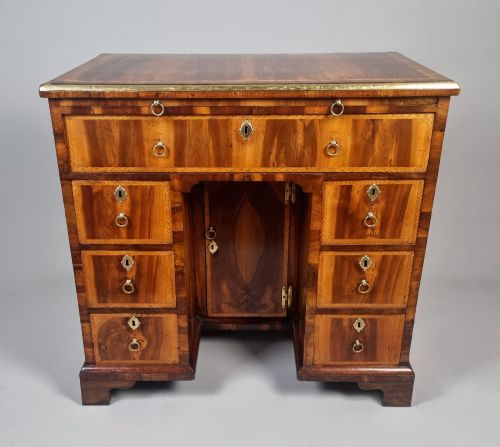
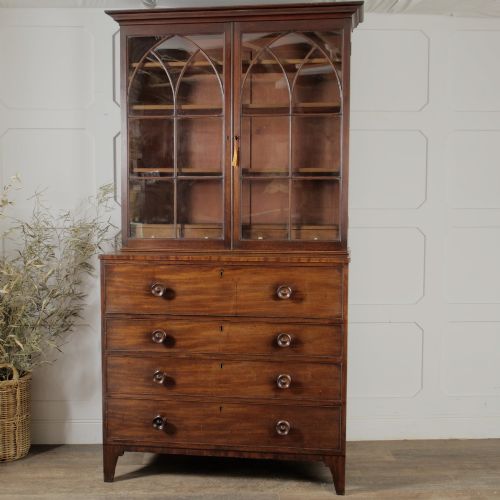
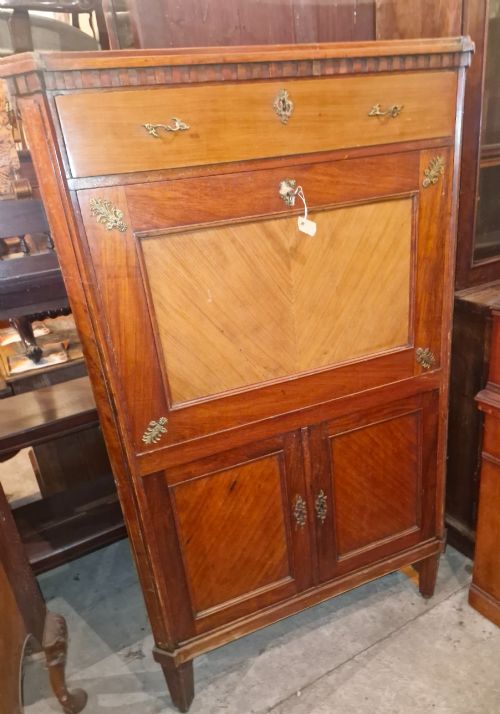
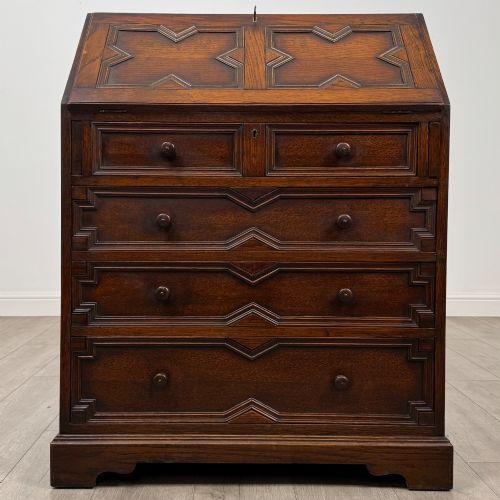
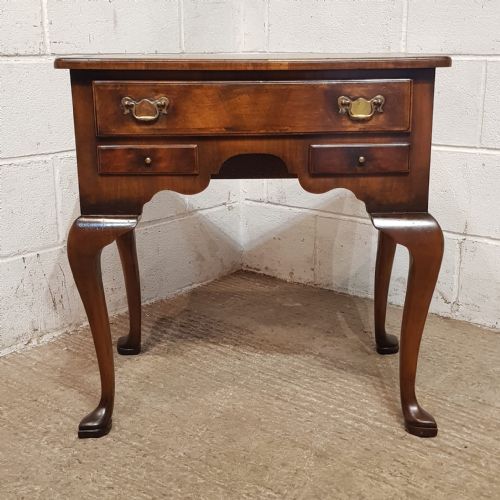
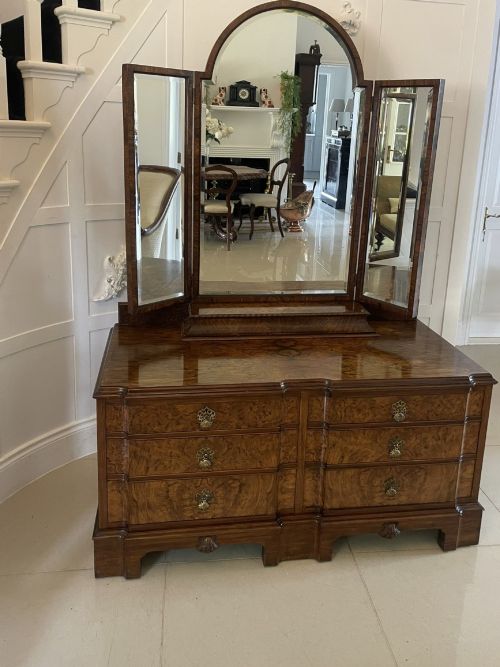

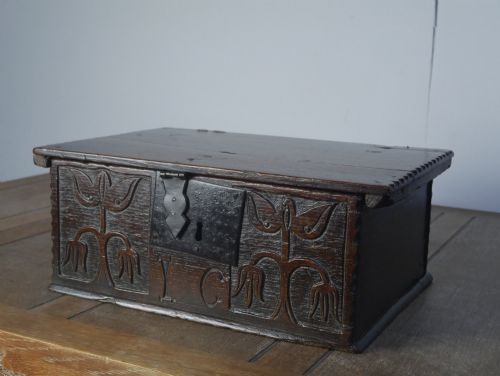
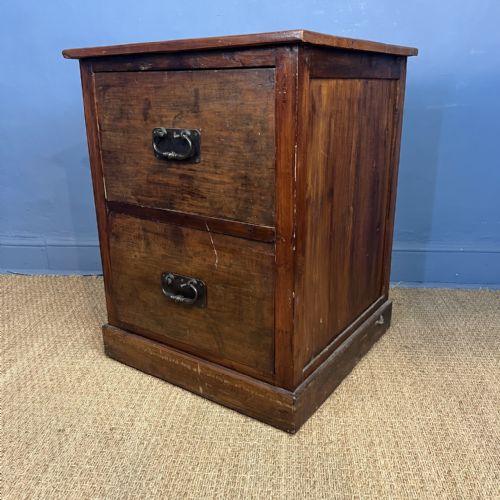
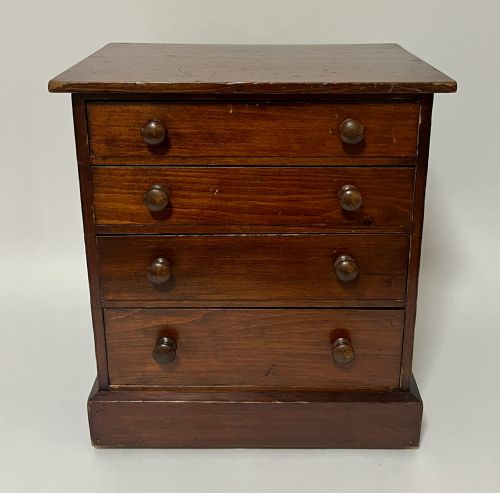
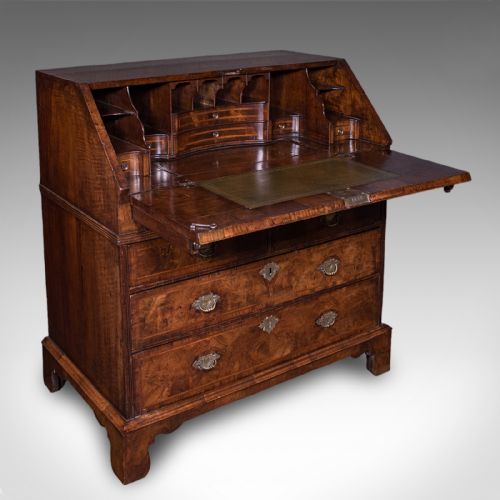
Brown Wood Chest Desk
A brown wood chest desk offers the dual utility of storage and a writing surface, bringing period character into a room.
Brown Wood Chest Desk
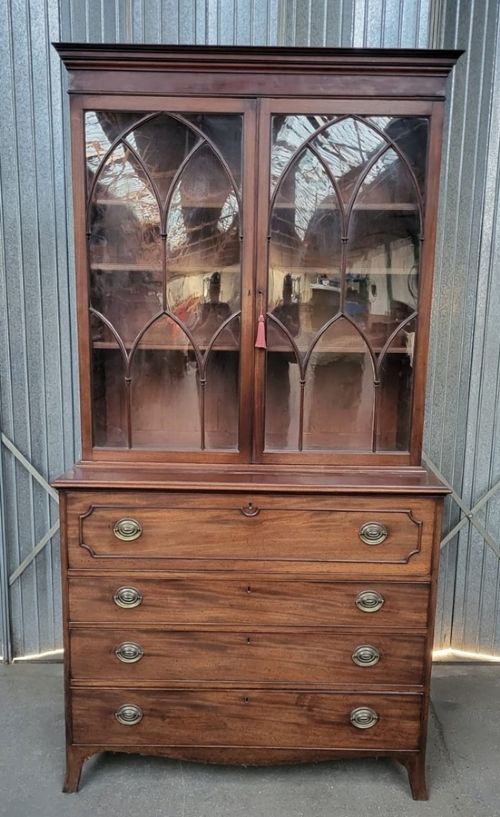
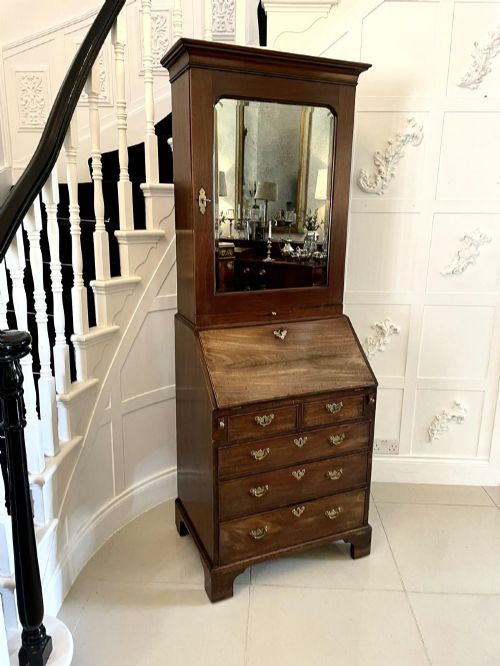
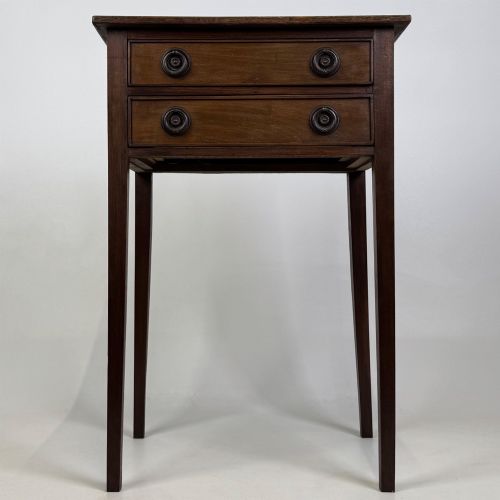
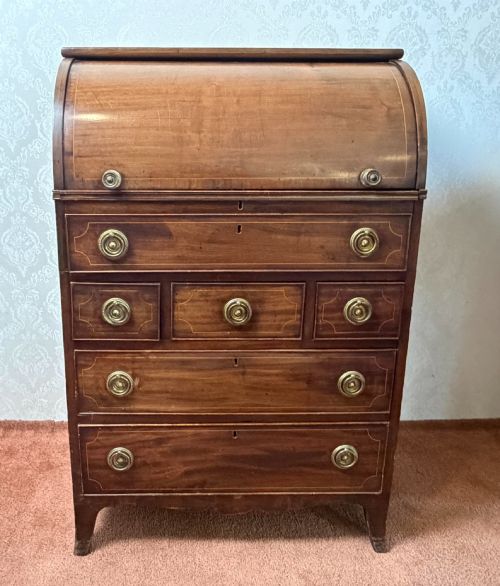
A brown wood chest desk combines the upright storage of drawers with a drop-front writing flap or fitted interior compartments. These pieces span Georgian, Victorian, and Edwardian periods, with mahogany and oak appearing frequently across the selection.
Buyers encounter forms ranging from fall-front bureaux and secretaire bookcases to campaign chests with integrated writing drawers. The selection leans heavily towards mahogany examples dating from the eighteenth and nineteenth centuries.
Many variants include fitted pigeonholes and small drawers concealed behind the main writing flap. These designs served both domestic writing needs and portable administrative use during travel.
Materials and construction methods
Cabinetmakers utilised solid timbers such as mahogany, oak, and walnut, frequently applying veneers of burr walnut or camphor wood to principal surfaces. Brass handles, corner brackets, and escutcheons provided structural reinforcement and visual contrast.
Joinery techniques relied on dovetailed drawer construction and framed panels to accommodate timber movement over time. Secondary woods like pine or oak appear in drawer linings and internal dividers.
Secret drawers hidden behind removable pigeonhole units offered Victorian writers a private space for confidential correspondence and small keepsakes.
Distinctions in craftsmanship
The standard of a brown wood chest desk rests on the choice of timber figure, the crispness of internal fitments, and the retention of original brass hardware. Finer pieces demonstrate careful grain matching across the fall front and drawer faces.
Structural integrity depends on smooth operation within the writing slide mechanisms and tight tolerances in the pigeonhole joinery. Pieces displaying subtle satinwood inlay or well-figured veneers generally represent more ambitious workshop production.
Edwards & Roberts
The Brown Wood Chest Desk Glossary
- Bureau
- A desk featuring a sloping hinged lid that opens to form a writing surface above a set of drawers. This form became popular during the eighteenth century for domestic correspondence.
- Secretaire
- A cabinet or chest containing a pull-out drawer or drop-front panel fitted with a writing surface and small compartments. It conceals writing materials behind standard drawer fronts.
- Campaign chest
- A modular chest of drawers made in two or more sections with recessed brass handles for military transport. These pieces often incorporate a secretaire drawer for field administration.
- Pigeonhole
- A small, open compartment within a desk interior used for sorting letters and papers. They are frequently framed by miniature drawers.
- Escutcheon
- A protective plate surrounding a keyhole, usually cast in brass. It prevents the timber around the lock from sustaining wear.
Brown Wood Chest Desk: Frequently Asked Questions
What is the difference between a bureau and a secretaire chest?
A bureau uses a sloping lid that drops forward to create a writing surface, exposing internal compartments immediately. A secretaire chest retains the appearance of a standard chest of drawers while housing a pull-out writing drawer inside.
Both forms provide concealed storage for writing materials, but the secretaire maintains the clean horizontal lines of a drawer stack when closed.
How do I date a mahogany chest desk?
Dating relies on observing construction details, timber selection, and handle styles. Earlier eighteenth-century pieces often feature solid mahogany with hand-cut dovetails and batwing brasses.
Nineteenth-century examples frequently show machine-sawn elements, secondary pine linings, and different veneer thicknesses. Comparing the internal drawer construction to known period styles clarifies the origin.
Were campaign chest desks used by the military?
Campaign chests were built in separate sections with flush brass handles and corner mounts specifically for transport by officers on campaign. The modular design allowed easier loading onto pack animals or wagons.
Many incorporate a central secretaire section to provide a stable writing desk in temporary quarters.
How should I care for a wood chest desk?
Maintain stable humidity and temperature away from direct heat sources to prevent timber splitting and veneer lifting. Regular dusting with a soft, dry cloth preserves the polished surface.
Occasional application of appropriate wax polish nourishes the timber without building up a heavy residue.