
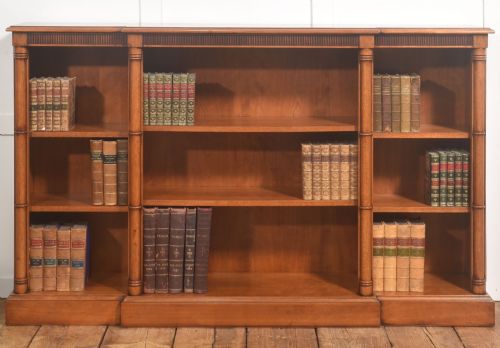
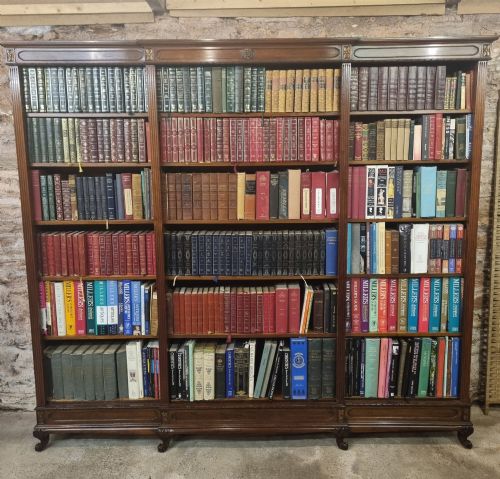
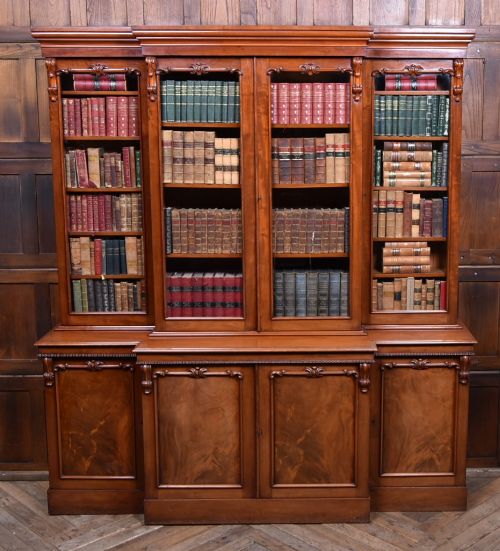
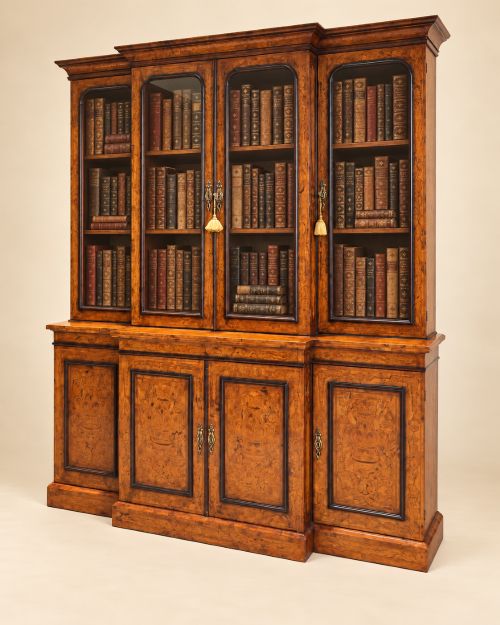



Brown Wood Breakfront Bookcase
A brown wood breakfront bookcase projects authority in a room, combining substantial storage with timber of distinct character.
Brown Wood Breakfront Bookcase
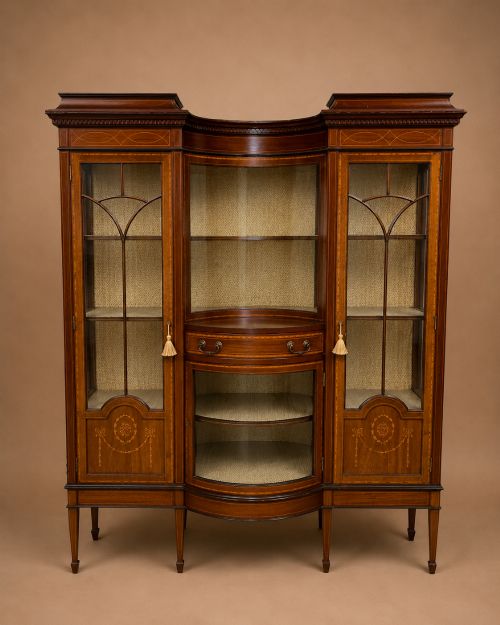
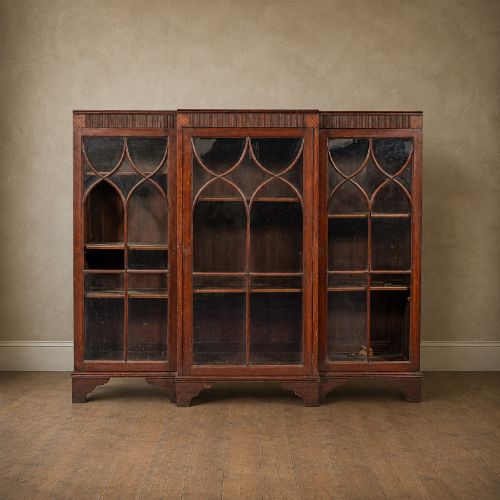
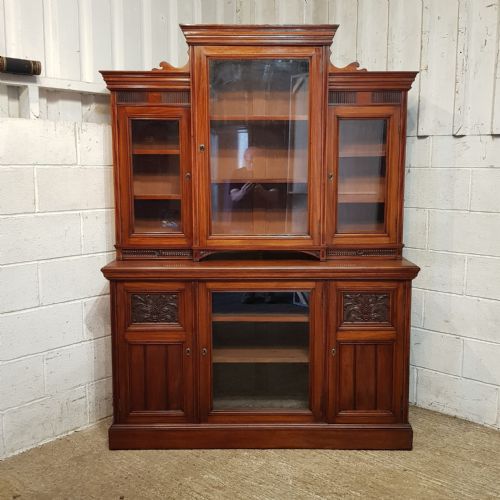
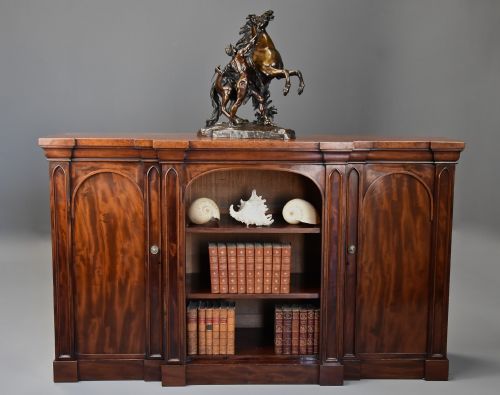
A brown wood breakfront bookcase sets a formal tone in a library or drawing room, characterised by a central section that extends forward from the flanking wings. Most examples encountered here belong to the nineteenth century and the Victorian era, though earlier eighteenth century pieces and later Edwardian variations appear.
Makers utilised mahogany, walnut, oak and rosewood to construct these large library pieces, often incorporating glazed doors to protect valuable volumes. The proportions are substantial, designed to anchor a large wall and display collections of books alongside decorative ceramics.
Distinctions in Quality
The standard of a brown wood breakfront bookcase rests on the selection of timber figures, such as symmetrical flame mahogany or burr walnut veneers, which demonstrate greater ambition in the workshop. Finer examples display meticulous joinery in the complex stepped facade and precise execution of carved details or marquetry.
Attribution to documented firms elevates a piece, as does the integration of secondary woods and original glass panes that survive intact within the large framework.
The inventory includes pieces influenced by George III, Regency, Gothic Revival and Sheraton Revival design traditions.
Collinson & Lock·Holland & Sons·Edwards & Roberts·Gillows
The Brown Wood Breakfront Bookcase Glossary
- Breakfront
- A cabinet facade featuring a central section that projects forward beyond the recessed side sections. This architectural arrangement creates depth and shadow across the front of large library pieces.
- Flame Mahogany
- A veneer cut from the branch junction of the mahogany tree, displaying a distinctive feather-like pattern. Cabinet makers used this timber on prominent surfaces to create striking visual movement.
- Crossbanding
- A narrow strip of veneer applied border-wise around a panel, with the grain running at right angles to the main surface. This technique frames the primary timber of the doors and shelves.
- Gothic Revival
- An architectural and decorative style drawing inspiration from medieval design, visible in pointed arches and tracery. This aesthetic influenced nineteenth century library furnishings.
- Marquetry
- The art of applying pieces of veneer to a structure to form decorative patterns and pictures. Craftsmen utilised various coloured woods to achieve floral or geometric designs on cabinet doors.
Brown Wood Breakfront Bookcase: Frequently Asked Questions
What is a breakfront bookcase?
A breakfront bookcase is a large cabinet with a tripartite facade where the central section projects forward from the two sides. This design provides architectural presence and allows for varied depth in the interior shelving.
Such pieces served primarily in grand libraries and formal reception rooms to house extensive private book collections behind glazed doors.
How do I date a brown wood bookcase?
Dating relies on observing the prevailing style, timber selection and construction methods, such as the transition from solid eighteenth century mahogany to nineteenth century veneering techniques. Details like Gothic Revival tracery or Sheraton Revival inlay offer further clues to the decade of manufacture.
Comparing the hardware, glass quality and secondary timbers helps confirm the historical period of the piece.
Where should I place a large bookcase?
These substantial pieces require a primary wall in a spacious room, such as a study, library or high-ceilinged drawing room, where their width and height can be accommodated properly. Placing them away from direct sunlight and heat sources protects the timber and veneer from drying out.
Sufficient clearance in front is necessary to allow the cabinet doors to open fully for access to the shelves.
How do I care for antique timber?
Maintaining antique wood involves keeping room humidity stable and dusting surfaces regularly with a soft, dry cloth rather than applying modern silicone sprays. Occasional application of appropriate wax feeds the grain and preserves the finish of mahogany and walnut.
Avoiding excessive moisture and rapid temperature shifts protects the structural integrity of large veneered carcasses.