


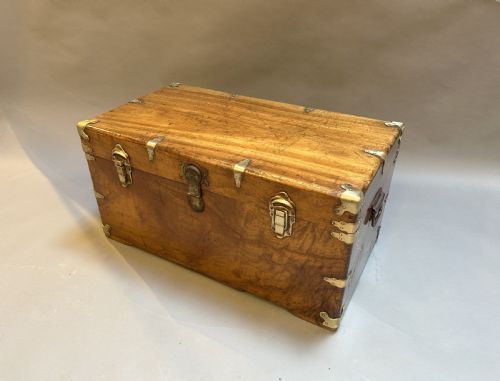
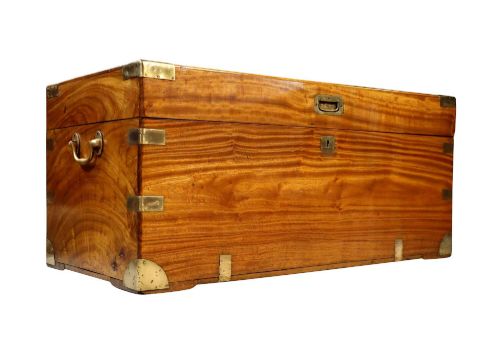
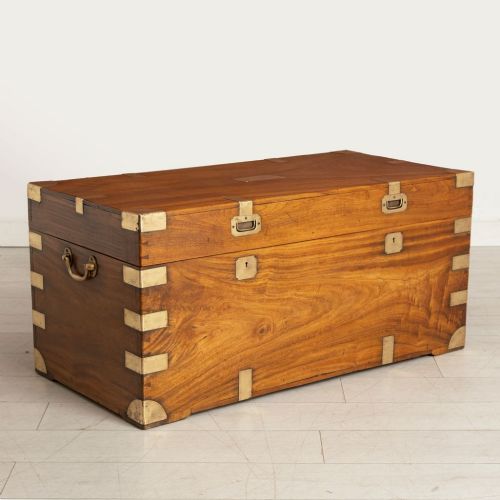
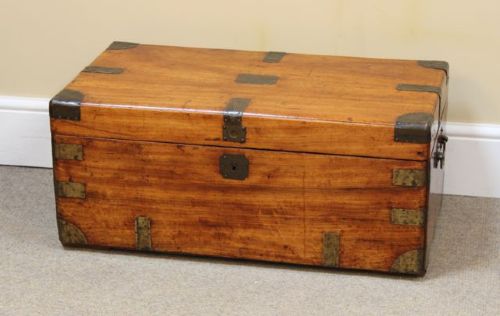
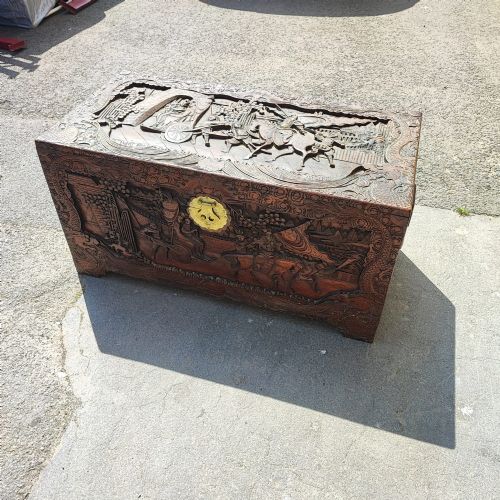
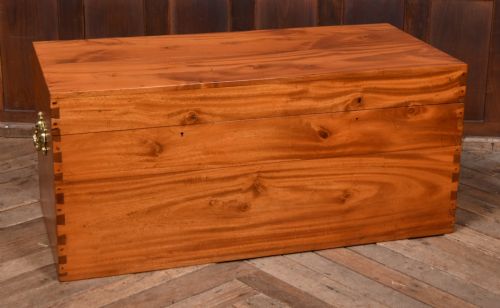
Brown Wood Blanket Box
A brown wood blanket box is a sturdy storage chest designed for linens and garments, offering substantial capacity and enduring practical utility.
Brown Wood Blanket Box
A brown wood blanket box serves as a functional receptacle for household linens and personal possessions, uniting utility with robust construction. These pieces span centuries of domestic and travel use, appearing as simple regional coffers or specialised military trunks.
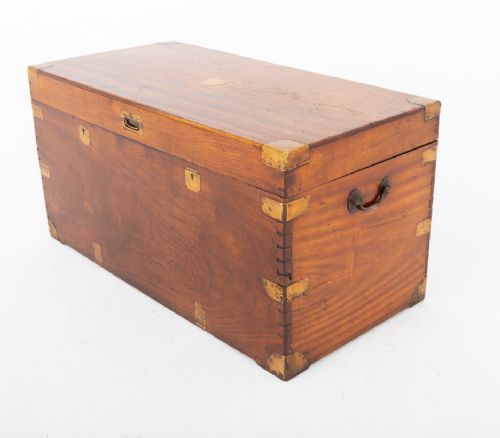
The selection on this page relies heavily on camphor wood examples alongside substantial oak, elm, and mahogany variants. Buyers encounter nineteenth-century campaign trunks fitted with brass hardware alongside earlier seventeenth-century coffers and later regional chests.
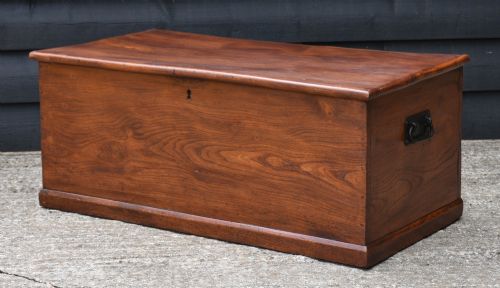
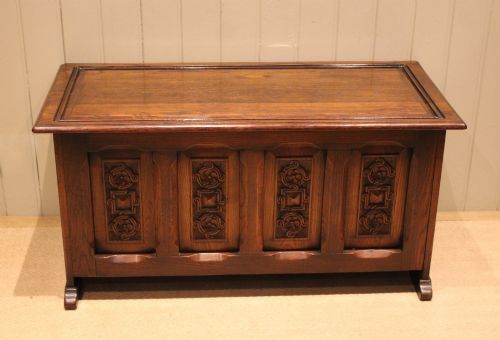
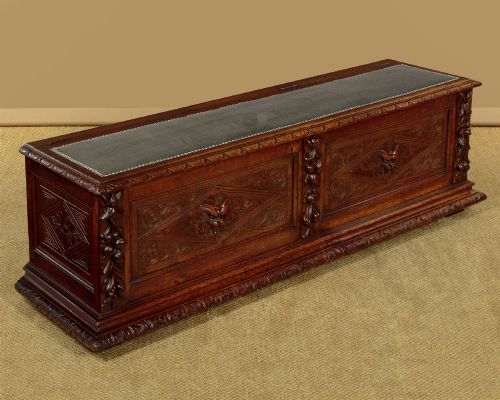
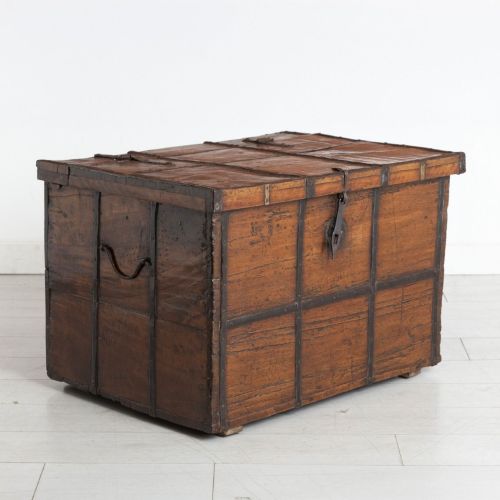
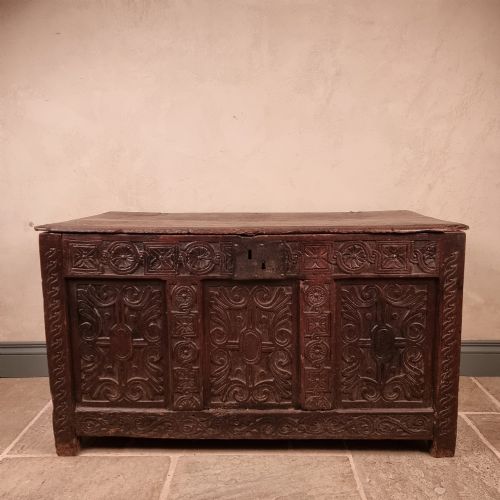
Camphor wood chests dominate the selection, often associated with campaign and travel use due to the timber's insect-repellent properties. Oak and elm plank coffers represent a heavier domestic tradition, frequently featuring carved decoration or straightforward joined construction.
Materials and Construction
Makers utilised dense timbers such as oak, elm, mahogany, and camphor wood to withstand heavy domestic handling or long journeys. Camphor wood provided a naturally aromatic grain that protected stored textiles, while native hardwoods like oak and elm offered rigid structural integrity.
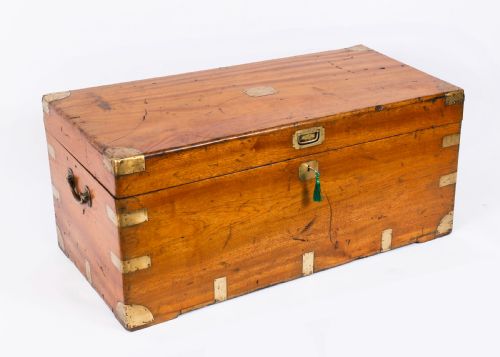
Metal reinforcement through brass corners, strapwork, and iron binding protected corners and edges during transit, particularly on campaign trunks. Joinery methods ranged from six-plank board construction secured with pegs to sophisticated dovetailed joints and framed panels.
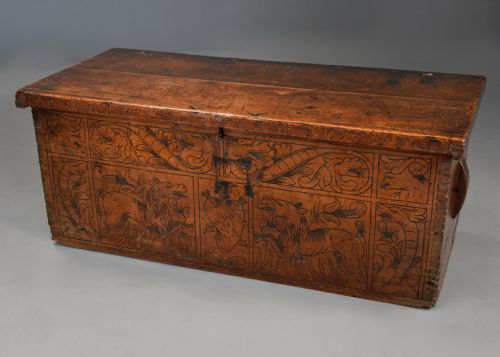
Surface finishing relied on natural polish, wax, or carved relief rather than heavy pigments, allowing the grain and colour of the brown wood to remain prominent. Iron and brass fittings were typically secured with hand-beaten or slotted screws and rivets.
The listings span multiple centuries, uniting seventeenth-century oak coffers with nineteenth-century camphor campaign trunks and twentieth-century steamer trunks.
Differentiating Quality
The integrity of original hardware, such as brass drop handles, strapwork, and functional locks, distinguishes superior examples from altered pieces. Original brass fittings with matching patination indicate an untouched state, whereas replacement elements alter the historical character.
The depth of carving and the precision of the joinery mark the division between standard utility pieces and finer examples. Crisp hand-carved panels on oak coffers or neatly dovetailed carcases in camphor wood demonstrate superior craftsmanship by the maker.
The condition of the timber carcase, including the retention of original lids, internal tills, and undisturbed interior scent or surface, dictates the overall desirability of the box. Minimal timber shrinkage and intact hinges preserve the mechanical function of the chest.
The Brown Wood Blanket Box Glossary
- Campaign trunk
- A portable chest constructed for military officers or travellers, typically featuring recessed brass handles, corner brackets, and durable hardwood bodies such as camphor.
- Coffer
- A heavy wooden chest traditionally used for storing valuables, documents, or household goods, often constructed from joined oak or elm planks.
- Camphor wood
- An aromatic timber prized for its insect-repellent qualities and distinct scent, frequently utilised for chests and trunks destined for maritime trade.
- Six-plank coffer
- An early form of chest constructed from six principal boards joined at the edges with pegs or nails, representing basic domestic storage.
- Till
- A small internal lidded compartment built inside a chest or trunk to keep small items separate from the main storage cavity.
Brown Wood Blanket Box: Frequently Asked Questions
What were blanket boxes used for?
These chests served primarily to store heavy textiles, woollen blankets, and garments in domestic settings. The dense timbers and tight lids protected textiles from dust, dampness, and pests.
Travel variants additionally functioned as luggage for officers and merchants on long voyages. Their robust construction allowed them to withstand rough handling during transit by ship or carriage.
Are these chests suitable for modern living?
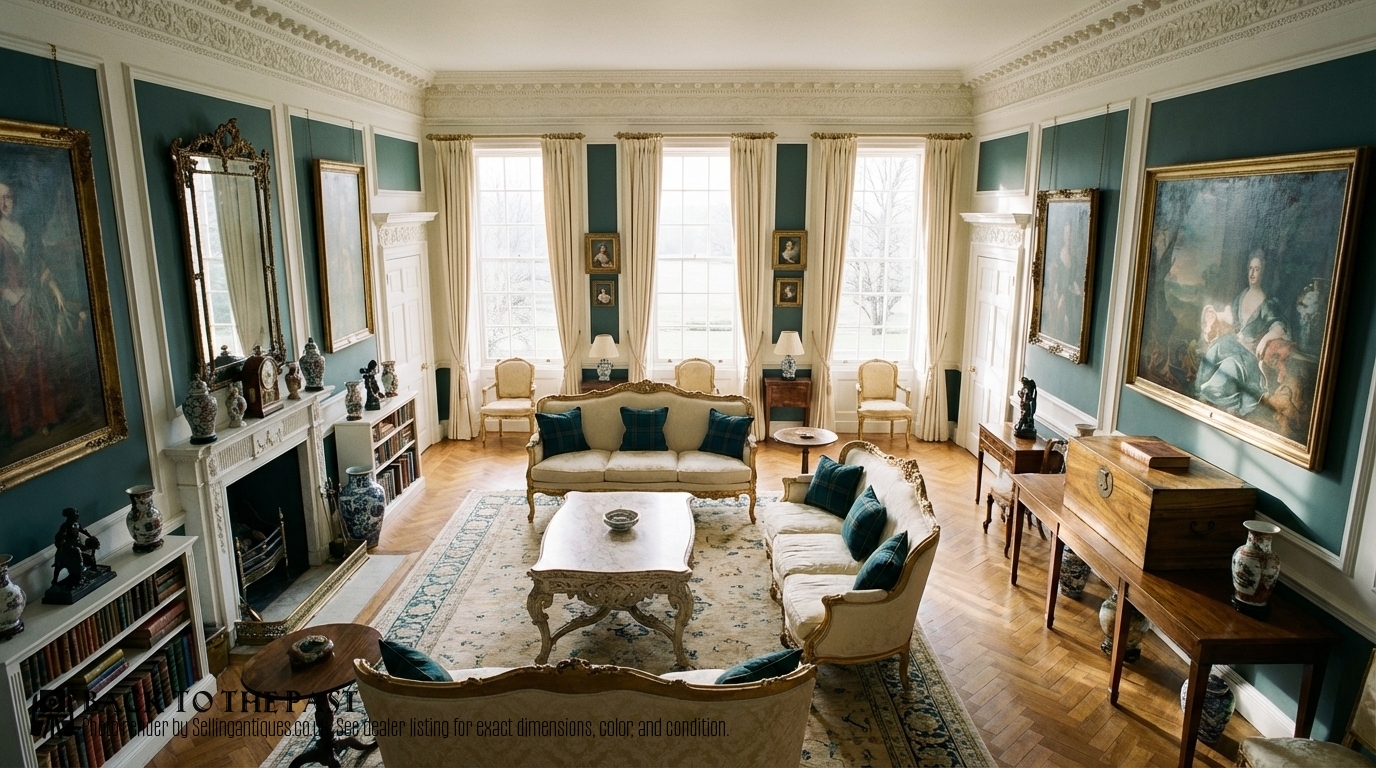
These boxes provide deep, concealed storage capacity for modern homes while functioning as coffee tables, end of bed storage, or hallway seating. Their neutral brown wood tones integrate easily into various interior schemes.
Placing items inside requires simple consideration of the internal timber condition and ventilation. Unfinished camphor interiors continue to emit a natural scent that freshens stored linens.
How do I date an antique wooden chest?
Dating relies on observing construction methods, timber species, hardware styles, and tool marks. Seventeenth-century examples often employ joined oak planks and hand-forged iron hinges, whereas nineteenth-century campaign pieces utilise dovetailed camphor and brass hardware.
Stylistic indicators such as carved panels, bracket feet, or recessed handles provide further chronological markers. Comparing the patination of the wood and metal components helps confirm the period of manufacture.