


Chinese Export Coffer
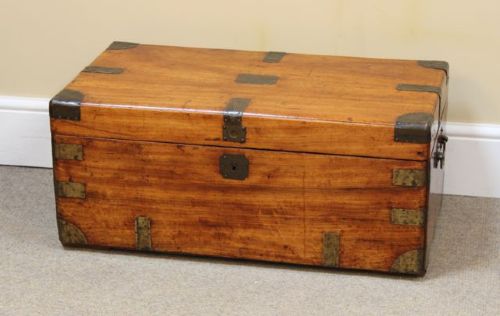
A Chinese export coffer is a robust travelling chest or trunk built for long voyages, offering generous storage and distinct trade-made character.
Chinese Export Coffer
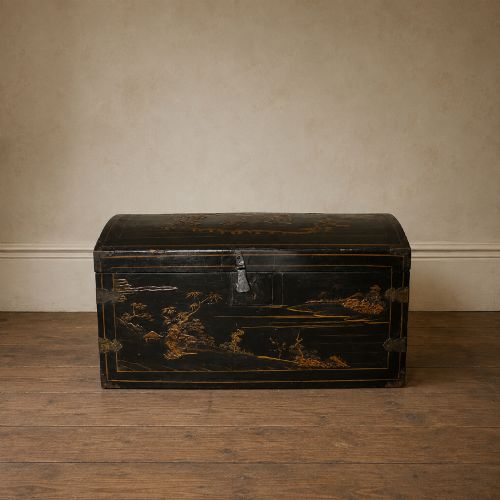
A Chinese export coffer is fundamentally a durable chest or trunk fashioned for overseas trade and long-distance travel, encompassing heavy storage chests, luggage trunks and occasional hall benches. When searching for a Chinese export coffer, buyers encounter sturdy camphor wood boxes alongside lacquered and leather-bound trunks spanning the eighteenth, nineteenth and early twentieth centuries.
The material selection leans heavily toward insect-resistant camphor wood and resilient hardwoods, often wrapped in pigskin or painted leather and secured with brass fittings. Many surviving examples show the distinct aesthetic of the Canton and China trade markets, merging traditional Chinese forms with European utility.

How they were made
Makers utilised fragrant camphor wood and dense hardwoods to construct the primary bodies, exploiting the natural oils of the timber to protect stored textiles from insects during maritime transit. These wooden carcasses were frequently reinforced with brass binding, corner plates and sturdy carrying handles designed to withstand the rigours of international shipping.
Surfaces received intricate treatments including black or red lacquer, gilt decoration, polychrome painted pigments and hand-carved motifs. Leather applications, particularly painted pig skin and red leather, were fastened with decorative brass tacks to create weather-resistant outer layers.
Camphor chests retain their distinctive botanical scent across the centuries, whispering of long-forgotten sea voyages and moth-free woollens.
What varies in quality
Quality rests upon the depth and finesse of the hand-carved decoration, the integrity of the lacquering and the substantial weight of the brass mountings. Finer chests display crisp, detailed carving across the camphor wood and well-preserved gilt or pigment work on lacquer surfaces.
Structural robustness also distinguishes the tier of execution, seen in the tightness of the joinery and the original retention of brass-bound campaign hardware. Lesser examples show simpler construction with minimal surface embellishment and heavily worn finishes.
The Chinese Export Coffer Glossary
- Camphor wood
- A fragrant, aromatic timber prized for its natural insect-repellent properties. It forms the primary structural material for many travel chests and trunks.
- China trade
- Commerce conducted between China and Western nations from the eighteenth to the early twentieth centuries. It generated a distinct hybrid material culture.
- Coffre fort
- A strongbox or heavily secured chest designed for the safe transport of valuables. These examples feature robust locking mechanisms and iron or brass reinforcement.
- Campaign case
- Portable furniture designed for military officers or travellers on the move. Such pieces typically incorporate recessed handles and protective brass corners.
- Pig skin
- Tough animal hide utilised as an outer protective covering for storage trunks. It was often painted and lacquered for decorative effect.
Chinese Export Coffer: Frequently Asked Questions
What is a Chinese export coffer?
A Chinese export coffer is a storage chest or trunk created in China for Western markets during the eighteenth and nineteenth centuries.
These pieces served merchants, travellers and officials as durable luggage that could endure long ocean voyages.
How were these chests used?
They functioned primarily as secure travelling trunks for transporting clothing, documents and valuable commodities across continents.
At home, their flat lids and sturdy construction allowed them to double as tables, benches or heavy storage containers.
Why use camphor wood?
Camphor wood emits a strong, natural aroma that effectively deters moths and silverfish from damaging stored textiles.
Its stability and resistance to humidity also made it an ideal timber for maritime conditions.
How do I care for a lacquered chest?
Lacquered surfaces require gentle dusting with a soft, dry cloth and protection from direct sunlight and extreme humidity.
Avoiding harsh chemical polishes preserves the original pigmented decoration and gilt work.