


Brown Wood Base Sculpture
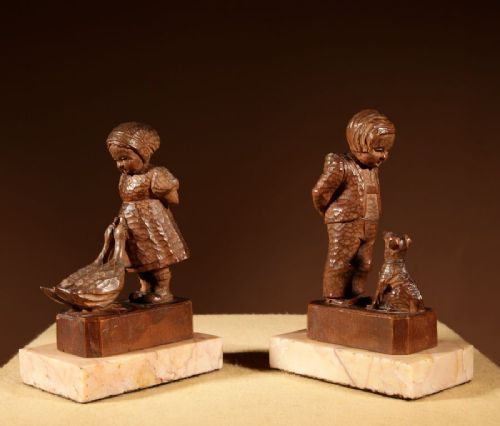
These brown wood base sculpture pieces bring together carved figures, animals, and religious objects anchored on timber or mixed media plinths.
Brown Wood Base Sculpture
When you search for brown wood base sculpture, you encounter a varied assortment of decorative objects, candlesticks, and figurative carvings spanning several centuries. The forms range from religious figures and crucifixes to animal studies, folk art, and functional pedestals with secret compartments.
The materials span different types of timber such as fruitwood, limewood, boxwood, and root wood, frequently paired with marble, bronze, or wrought iron. Pieces originate from diverse cultural traditions including British vernacular, German Baroque, Black Forest, and Japanese Meiji period workshops.
Most items rely on a substantial wooden base or trunk to support the main sculptural element, whether that is a bronze animal, a carved wooden figure, or an industrial anvil. These pieces function primarily as decorative objects or table lamps within an interior.
How they were made
Carvers utilised hand tools to shape limewood, fruitwood, boxwood, and root wood into intricate figures and naturalistic animal forms. Artisans selected specific timbers for their grain and density, allowing for detailed incisions on small components as well as robust support on larger trunks.
Mixed media construction frequently combines carved wooden elements with cast bronze, marble plinths, wrought iron, or gold leaf accents. Makers mounted heavy components like bronze elephants, tigers, or iron anvils onto fitted wooden bases to ensure stability and structural balance.
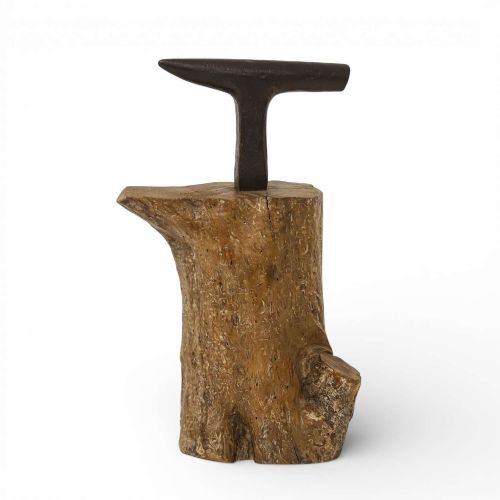
One unexpected item pairs a heavy farrier's anvil directly onto a rustic fruitwood trunk.
What varies in quality
The depth of carving and the naturalism of the form distinguish the standard of execution across these works. Finer examples exhibit anatomical precision in human and animal figures, whilst simpler vernacular pieces rely on robust proportions and utilitarian strength.
The integration between the sculpture and its mounting base affects the overall cohesion of the object. High-grade items demonstrate careful matching of materials, such as root wood bases or marble plinths chosen specifically to complement the primary bronze or wooden sculpture.
Eugene Emile Borga·Gyoko
The Brown Wood Base Sculpture Glossary
- Corpus Christi
- The body of Jesus depicted on a crucifix. This term identifies religious carvings and sculptures featuring the figure attached to a cross.
- Socle base
- A short plinth or pedestal supporting a statue, candlestick, or bust. This architectural support elevates the main sculpture.
- Root wood
- Timber sourced from the root system of a tree, displaying irregular and twisted grain patterns. Makers utilised this material for its organic contours and decorative visual texture.
- Meiji Period
- A Japanese historical era spanning from 1868 to 1912. Metalwork and carvings from this timeframe often display high levels of naturalistic detail.
- Black Forest
- A style of wood carving originating from the mountainous region in Germany. These pieces typically feature realistic depictions of animals and woodland themes.
Brown Wood Base Sculpture: Frequently Asked Questions
What periods do these sculptures cover?
The listings encompass items produced from the seventeenth century through to the early twentieth century. Examples span various historical periods including the seventeenth century, eighteenth century, nineteenth century, and Art Deco era.
Makers across these distinct periods utilised traditional woodworking techniques, incorporating regional styles such as German Baroque, Meiji Japanese craftsmanship, and British vernacular design.
What materials support the sculptures?
Sculptures rest on a variety of foundations including carved wooden trunks, fruitwood, boxwood, root wood, and marble bases. These dense materials provide necessary weight and stability for figures and animals.
Some objects combine wood with cast bronze, wrought iron, and gold leaf, creating mixed media compositions that highlight the texture of the timber plinth.
How were these wooden items used?
Many pieces served decorative functions within interiors, acting as table lamps, figurative ornaments, or freestanding pedestals with hidden compartments. Religious items like crucifixes and praying figures were utilised for devotional practices.
Other objects combined utilitarian items with display purposes, such as farrier's anvils mounted on wooden trunks or candlesticks shaped as female figures.
How do I identify Black Forest carvings?
Black Forest carvings are typically characterised by naturalistic wooden depictions of animals, children, and woodland motifs. These pieces often utilise limewood or other soft timbers with deep, detailed hand-carved textures.
Originating from the European region of the same name, they frequently present practical forms such as sculptures, pairs of figures, or functional household items.