


Brown Walnut Trinket Box
A brown walnut trinket box brings warmth and practicality to a dressing table, offering a sturdy home for small valuables.
Brown Walnut Trinket Box
A brown walnut trinket box typically appears in forms designed for desktop organisation, personal storage, or small keepsakes. The selection spans compact table boxes, jewellery chests, and inlaid receptacles intended to hold valuables securely.
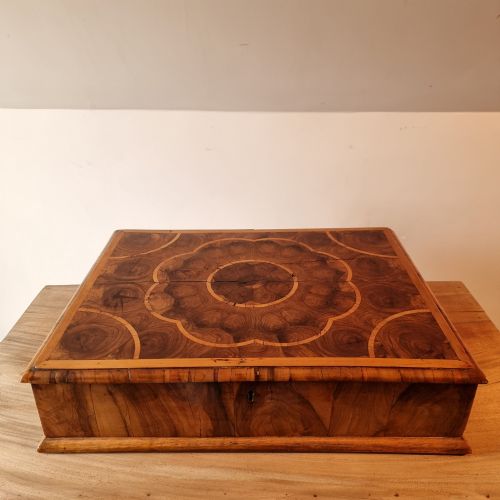
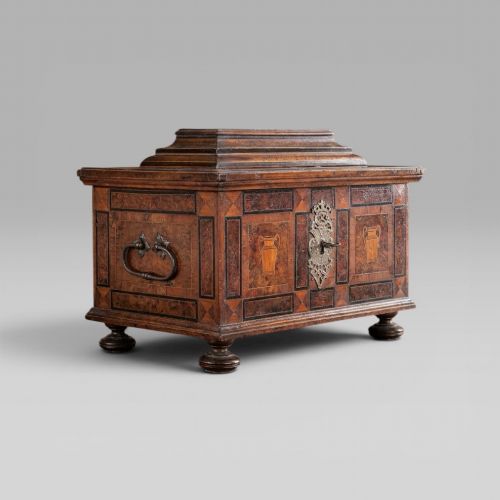
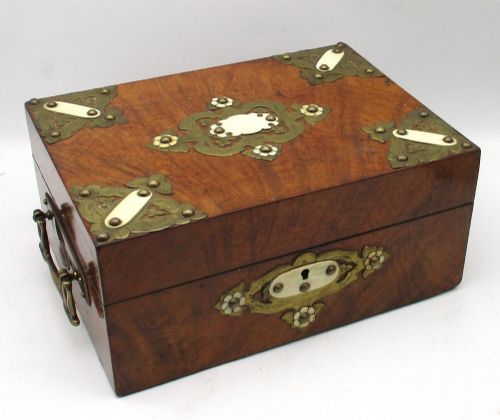
Most examples date from the nineteenth century, reflecting the Victorian preference for organised dressing tables and writing desks. Alongside these, buyers find earlier seventeenth and eighteenth-century specimens, alongside occasional Art Deco and later twentieth-century interpretations.
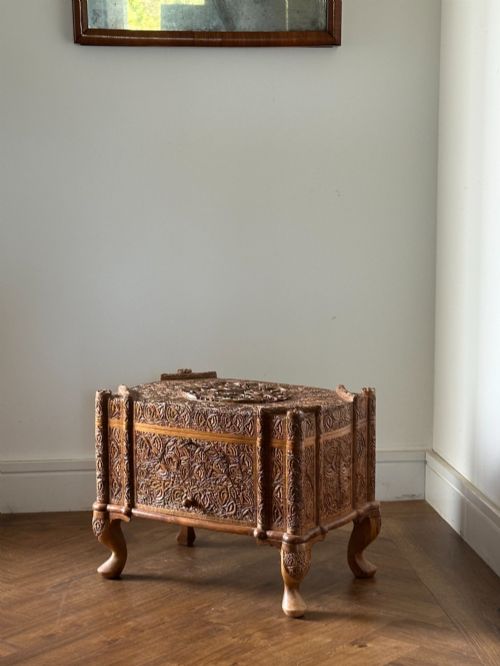
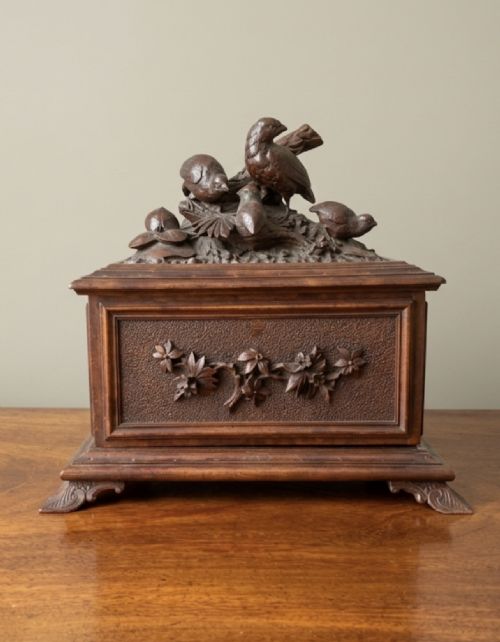
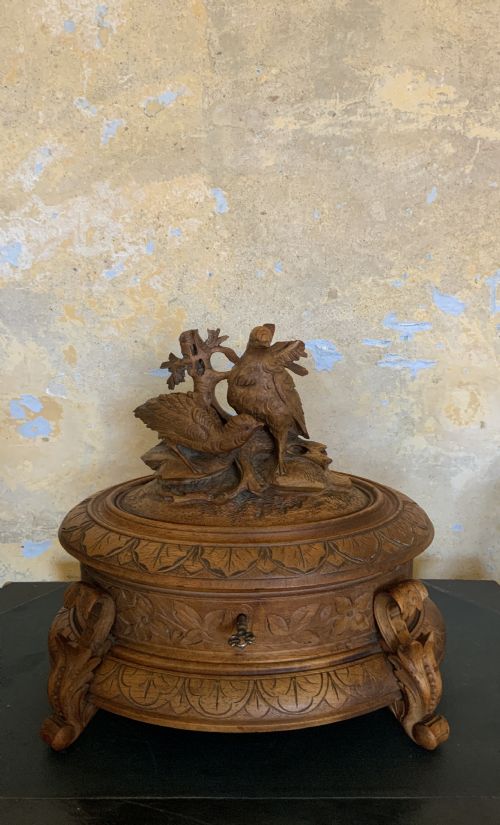
Makers utilised various formats, including parquetry-inlaid keepsakes, Tunbridge ware decorated containers, and carved Black Forest caskets. The overarching function remains the safe containment of personal items within a durable timber shell.
Materials and construction
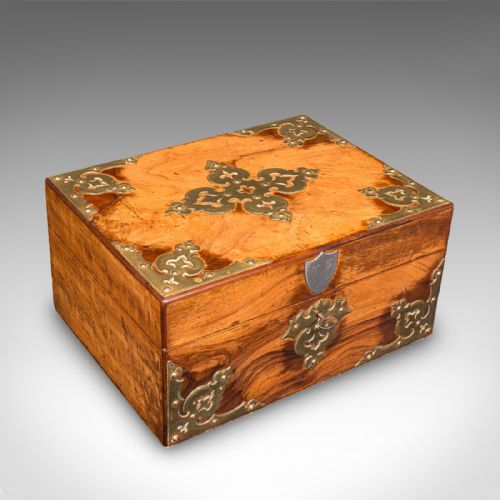
Makers relied primarily on walnut and burr walnut, valued for rich figuring and deep grain patterns, often reinforced with secondary timbers like mahogany, rosewood, or fruitwood. The timber is frequently paired with brass mounts, hinges, and escutcheons to provide structural integrity.
Surface decoration involves specialised techniques such as parquetry, marquetry, and Tunbridge ware inlay, where minute pieces of diverse wood types form geometric or pictorial mosaics. Carving also appears, particularly on Black Forest and continental pieces where relief work defines the exterior.
Listings feature periods spanning from the 17th Century through to the 1920s, constructed in walnut, burr walnut, mahogany, and rosewood.
Variations in quality
The standard of a brown walnut trinket box rests on the choice of timber and the precision of its grain matching. Highly figured burr veneers demand careful selection and skilled application by the cabinetmaker to achieve a cohesive visual plane.
Execution of decorative details dictates distinction between standard utility items and masterwork pieces. Crispness in parquetry patterns, tight joints, and the survival of original brass hardware elevate the standing of a box.
The Brown Walnut Trinket Box Glossary
- Burr Walnut
- Timber taken from a tree growth where the grain has swirled in a deformed manner, producing intricate patterns of eyes and rings highly prized for veneering.
- Tunbridge Ware
- Woodworking technique originating from Kent, involving the precise mosaic assembly of many tiny blocks of different coloured woods to create pictorial designs.
- Parquetry
- Geometric mosaic woodwork used for decorative veneer on floors, furniture, and small boxes, formed from small strips or blocks of timber.
- Marquetry
- Artful arrangement of veneered wood pieces applied to a structure to form decorative patterns, scenes, or floral motifs.
- Escutcheon
- A flat plate of brass or other metal surrounding a keyhole, serving both a protective function for the timber and a decorative purpose.
Brown Walnut Trinket Box: Frequently Asked Questions
What is a brown walnut trinket box used for?
These boxes serve as secure receptacles for storing rings, brooches, cuff links, and other small personal items on a dressing table or desk. Their compact dimensions allow them to sit neatly in domestic spaces while keeping valuables concealed.
Historically, similar containers held specific items such as snuff, tea, or letters, though modern owners utilise them primarily for general keepsakes and jewellery.
Are these boxes durable for daily use?
Walnut is a robust hardwood that withstands regular handling, making these containers well-suited for everyday storage of small accessories. Proper care involves keeping them away from direct heat sources to prevent veneer lifting or timber splitting.
Original hinges and locks require gentle treatment, particularly on nineteenth-century specimens where internal mechanisms may show age-related wear.
What makes early seventeenth-century boxes different?
Seventeenth-century pieces, such as lace boxes or continental caskets, display heavier timber construction and simpler joinery compared to later Victorian counterparts. Surface decoration frequently relies on floral marquetry or carved relief rather than complex geometric veneers.
These earlier items often lack internal compartmentalisation, consisting instead of a single open well designed for textiles or documents.