


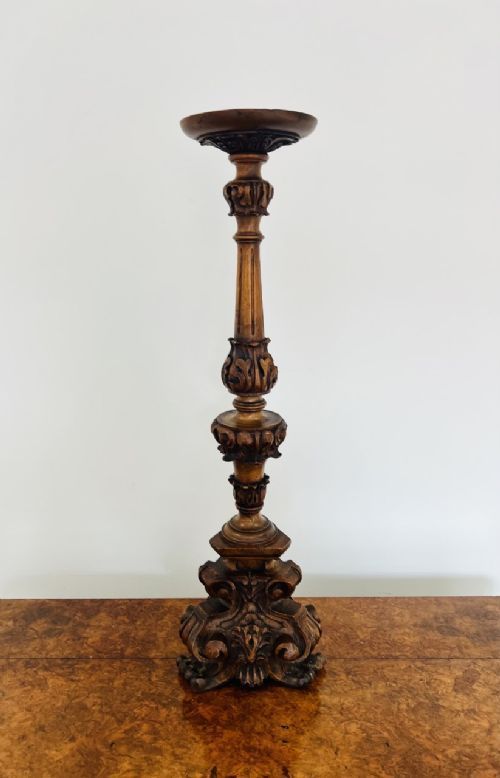
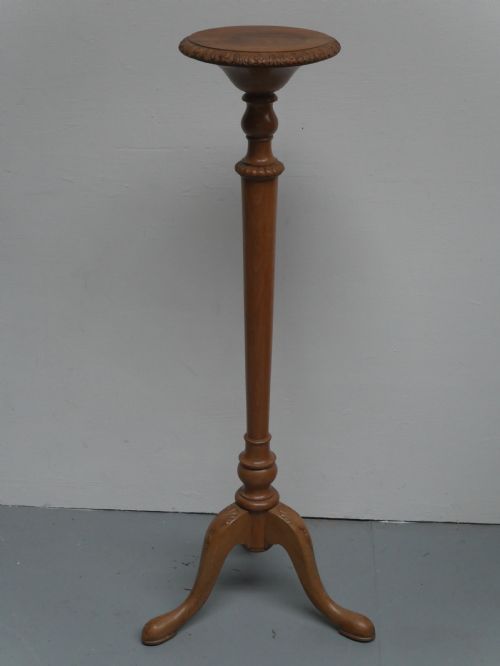


Brown Walnut Torchere
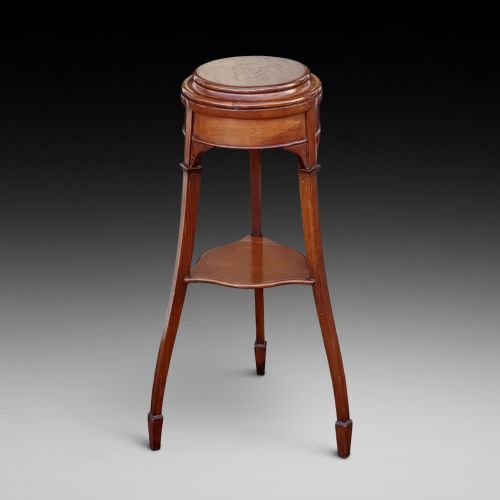
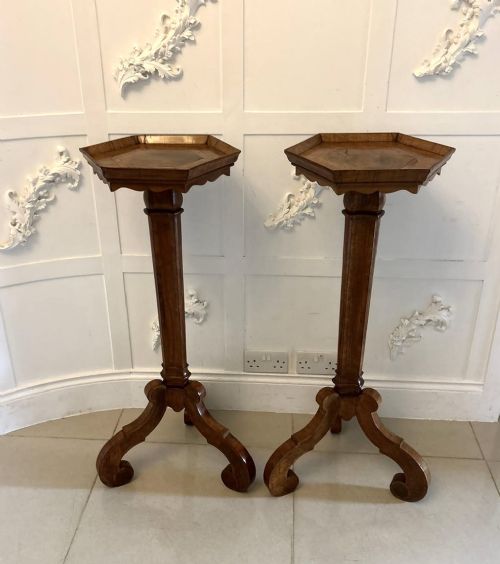
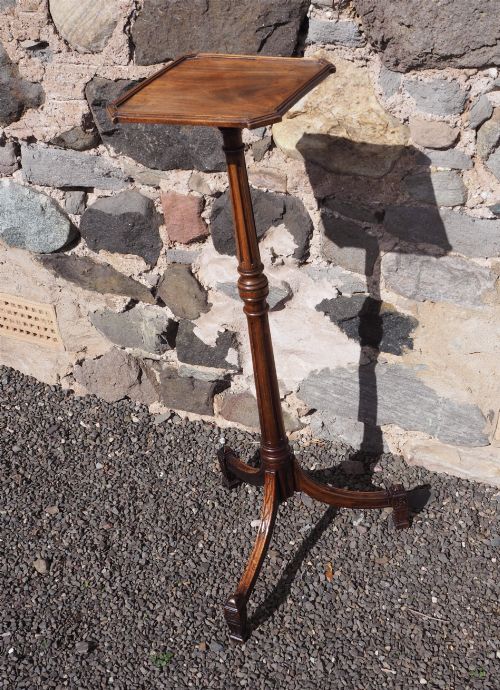
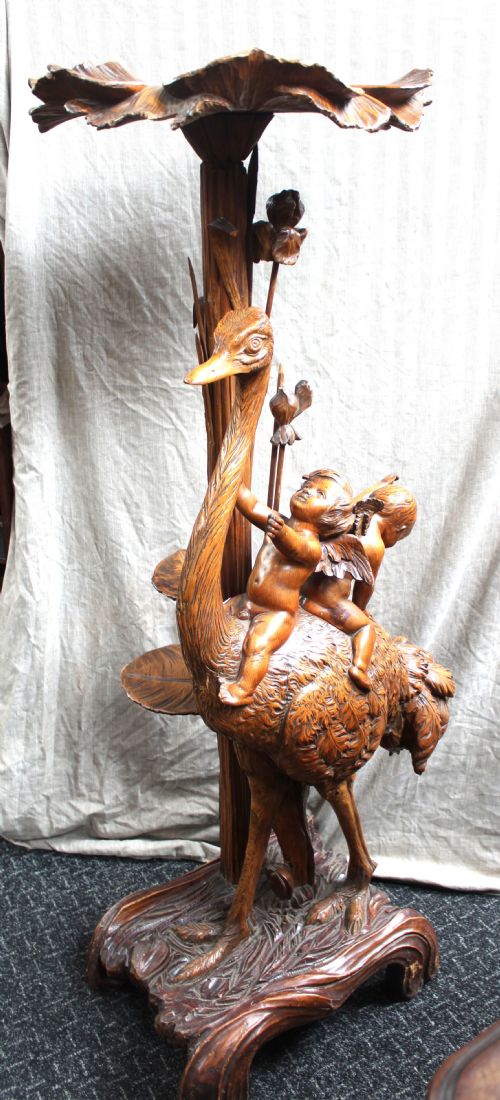
These brown walnut torchere stands offer elevated display for candles or plants, bringing centuries of carved timber and classical form into a room.
Brown Walnut Torchere
A brown walnut torchere serves primarily as a decorative stand for plants, sculptures, or candles, lifting items into the line of sight. When you search for brown walnut torchere, you encounter tall, slender supports rooted in historical furniture design.
The examples gathered here span from the seventeenth century through to the early twentieth century, taking forms such as tripod candle stands, jardiniere tables, and figural supports. Italian and Dutch aesthetics feature strongly alongside English Georgian and Victorian interpretations.
Makers utilised rich timbers and elaborate carving to create vertical interest in domestic interiors. Most items function as pedestals or plant stands, combining utility with distinct period styling.
Materials and construction methods
Walnut forms the primary structural material for these pieces, frequently enhanced by contrasting veneers such as kingwood and fruitwood marquetry. Artisans shaped the timber through turning and intricate carving to produce slender shafts and sturdy bases.
Inlaid floral details and marble inserts appear on specific examples to create textured surfaces. Traditional joinery secures the tripod or pedestal feet beneath upright columns designed to bear concentrated vertical weight.
Brown Walnut Torchere Retail Price Guide 2026
Typical asking prices for brown walnut torchere among the pieces listed under this phrase on Sellingantiques today, from the lower quarter to the upper quarter. They describe what is for sale here now, not the wider market.
Distinctions in craftsmanship
Quality reveals itself in the depth and crispness of the carved details on the timber. Superior pieces display fluid lines and deliberate proportions, whereas simpler items rely on basic turned forms without sculptural embellishment.
The choice of secondary timbers and the precision of marquetry inlay separate standard production from exceptional examples. Integration of materials like marble indicates a higher ambition in the original commission.
The Brown Walnut Torchere Glossary
- Torchere
- A tall ornamental stand originally designed to hold a torch or candle. These later evolved to support plants and decorative objects.
- Marquetry
- Decorative veneer work arranged in pictorial or floral patterns on the surface of the wood. It uses contrasting timber grains to create visual depth.
- Jardiniere
- A decorative container or stand for holding plants and flowers. They often incorporate waterproof liners or marble tops.
- Tripod
- A three-legged support base commonly found on candle stands and small tables to ensure stability on uneven floors.
- Pedestal
- An architectural support or base used to elevate a sculpture, urn, or plant.
Brown Walnut Torchere: Frequently Asked Questions
How do I date an antique torchere?
Dating relies on observing the prevailing style, construction techniques, and secondary timbers used in the piece. Seventeenth and eighteenth-century examples often feature simpler, robust turned structures, while later Victorian revivals incorporate heavier carving.
Comparing the decorative motifs, such as floral marquetry or specific revival styles, helps narrow down the era of manufacture alongside wood patina and wear patterns.
Where should I place a torchere stand?
A torchere fits well in corners, beside doorways, or flanking larger pieces of furniture where vertical balance is needed. Because their footprints are relatively small, they occupy minimal floor space while adding significant height.
Ensure the stand rests on level flooring to maintain stability, particularly when supporting heavy items like marble-topped planters or bronze figures.
What is the difference between a torchere and a plant stand?
While both provide elevated display surfaces, traditional torcheres originated specifically for lighting purposes with slender shafts. Plant stands and jardiniere tables often feature wider tops or inset basins designed to accommodate soil and moisture.
Over time, the terms overlap considerably in antique furniture, with many historic candle stands repurposed for botanical displays.