


Brown Walnut Tilt Top Table
A brown walnut tilt top table brings rich timber figure and practical folding design together in a compact footprint.
Brown Walnut Tilt Top Table
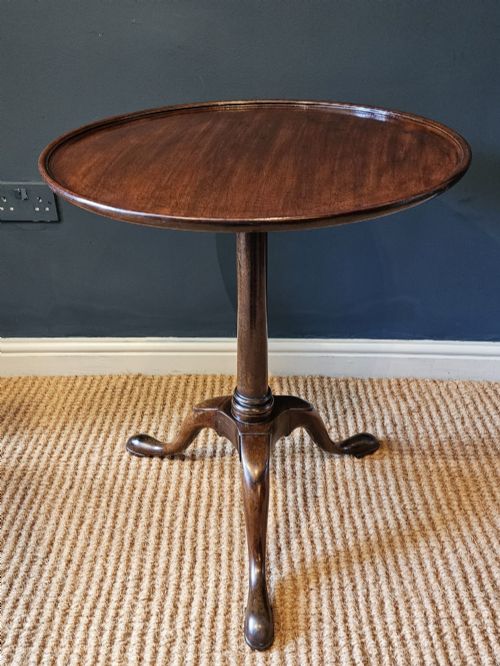
A brown walnut tilt top table serves primarily as a versatile surface that pivots vertically when not in use to save space against a wall. The examples found here span several distinct eras, from eighteenth-century Georgian and George II designs through to nineteenth-century Victorian interpretations.
Materials and Construction
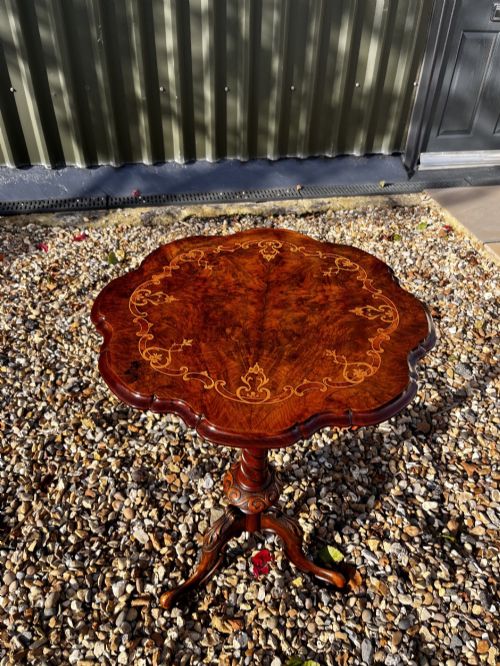
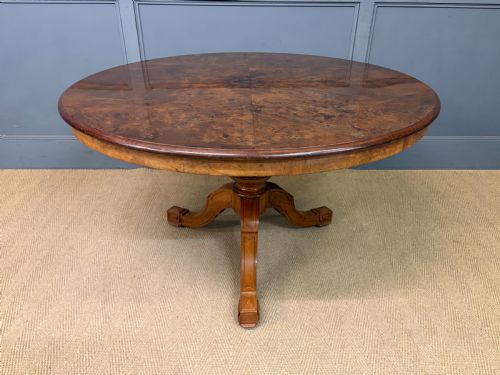
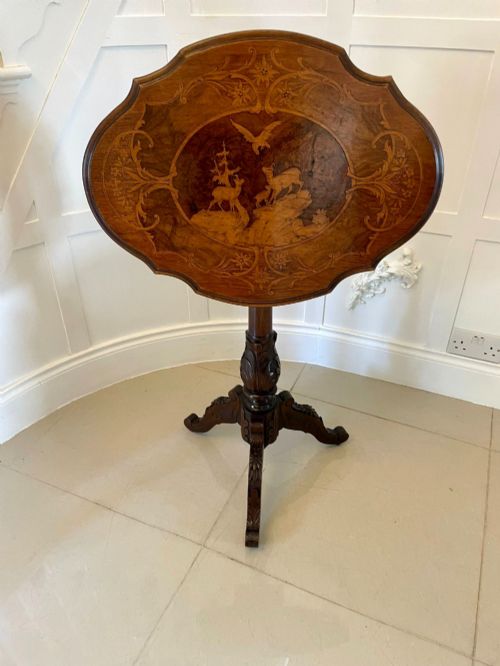
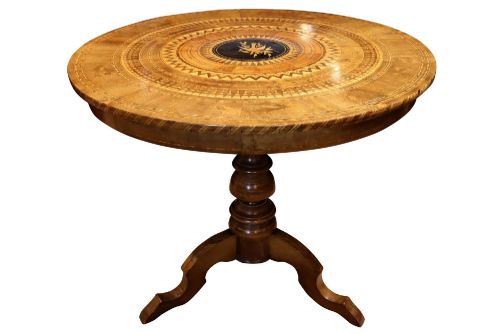
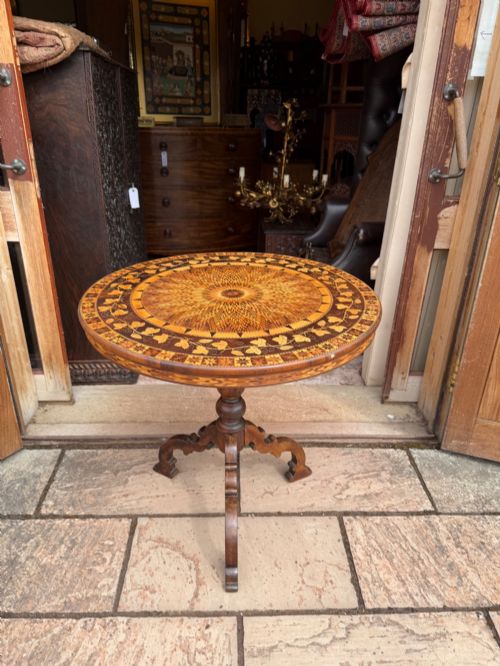
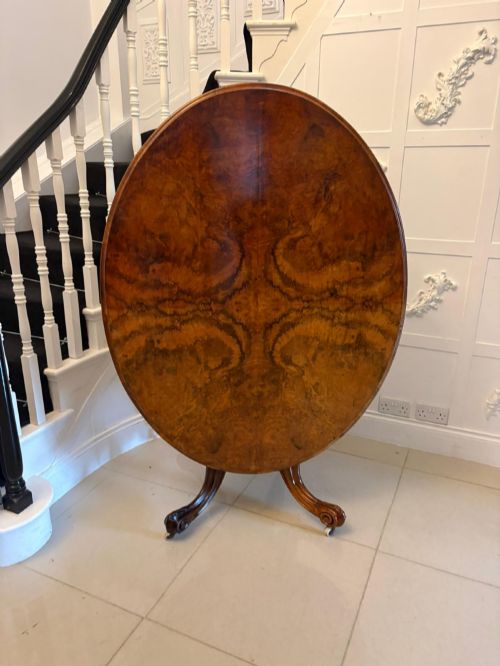
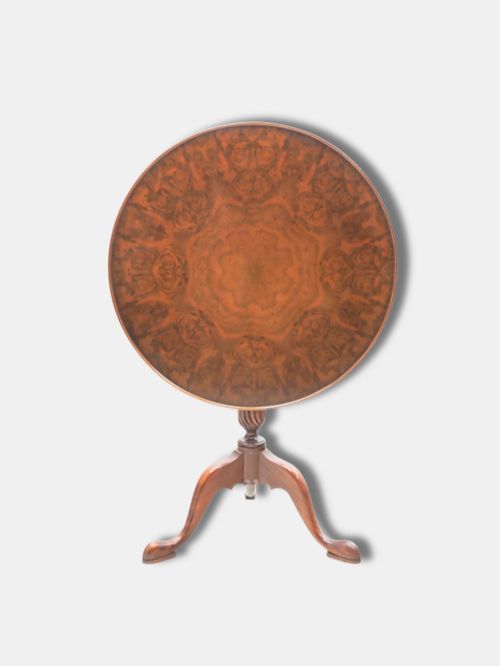
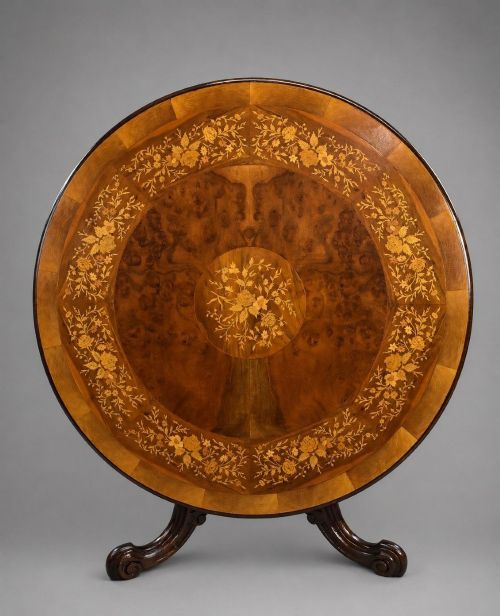
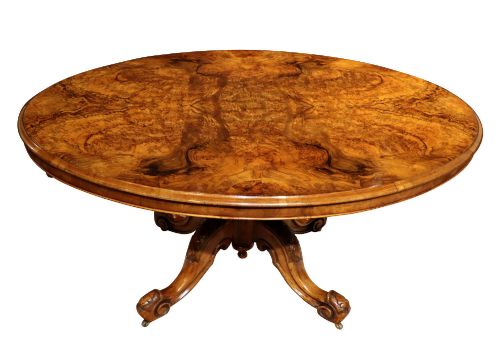
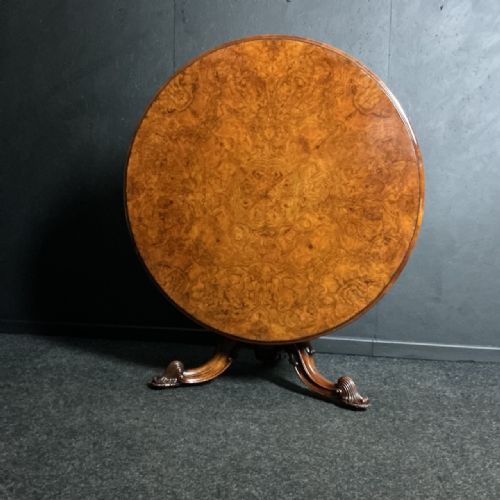
Cabinetmakers constructed these tables using solid walnut frameworks combined with highly figured burr walnut veneers applied to the table surfaces to create striking natural patterns. Marquetry inlay utilising lighter woods such as boxwood and fruitwood frequently embellishes the tops with intricate floral or geometric motifs.
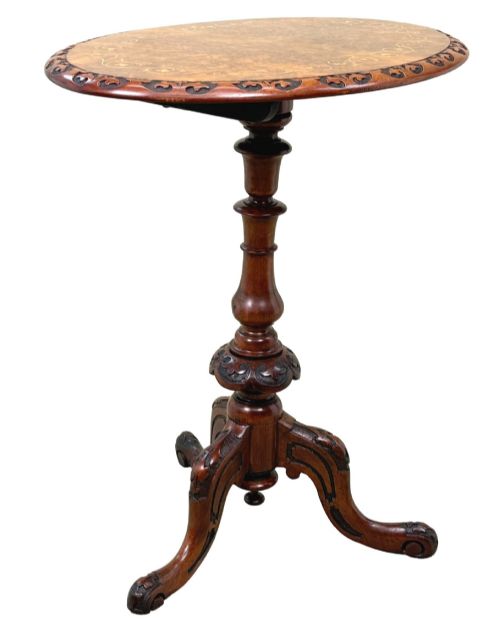
Structural joints often integrate brass mechanisms within the pivoting pivot blocks, allowing the surface to tilt and lock securely into a horizontal position. Carved pedestals and tripod legs rely on traditional joinery to support the substantial weight of the timber top.
Brown Walnut Tilt Top Table Retail Price Guide 2026
Typical asking prices for brown walnut tilt top table among the pieces listed under this phrase on Sellingantiques today, from the lower quarter to the upper quarter. They describe what is for sale here now, not the wider market.
Swiss Black Forest carvers occasionally contributed elaborate wildlife motifs to these English drawing room tables.
Judging Quality and Execution
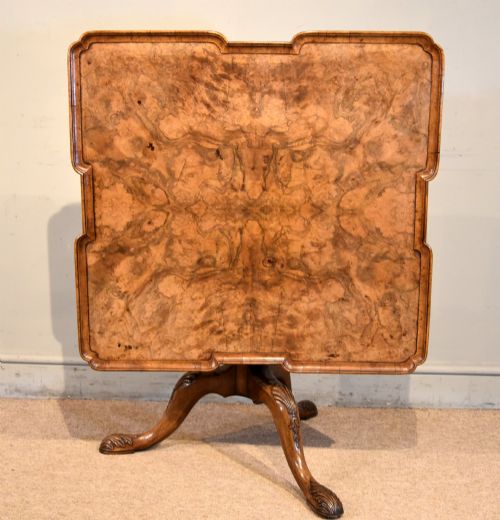
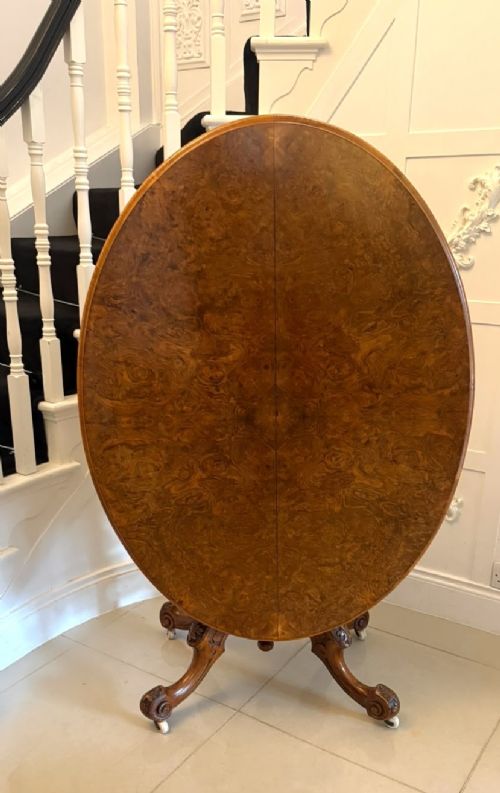
Quality reveals itself primarily in the selection and bookmatching of the burr walnut veneer across the surface, where superior examples display symmetrical, richly figured grain patterns. The crispness of the hand carving on the pedestal base and legs also distinguishes finer workshop production from standard commercial output.
The engineering of the tilting mechanism dictates mechanical longevity, with top-tier pieces operating smoothly without looseness in the pivot joint. Timber stability and the preservation of original marquetry inlay further separate exceptional surviving specimens from more heavily restored items.
Gillows·Holmes Baldock
The Brown Walnut Tilt Top Table Glossary
- Tilt top
- A table mechanism that allows the surface to rotate ninety degrees into a vertical position. This clever design enabled furniture to stand flat against a wall when not in active service.
- Burr walnut
- A wood harvested from the warted growths on walnut trees, yielding highly decorative swirling grain patterns. Cabinetmakers sliced this timber into thin veneers to ornament prominent table surfaces.
- Marquetry
- The art of applying decorative veneer pieces to a structure to form pictorial or geometric designs. Artisans frequently used contrasting timbers such as boxwood and fruitwood against a walnut ground.
- Tripod base
- A table support comprising three legs radiating from a central pillar. This configuration ensured steady placement on uneven floors.
- Loo table
- A large round or oval Victorian table designed for card games like loo. These examples almost universally feature tilt-top capabilities.
Brown Walnut Tilt Top Table: Frequently Asked Questions
What is a brown walnut tilt top table used for?
These tables functioned traditionally as flexible dining or parlour surfaces that could be tipped upright to clear the floor space. In modern homes, they serve equally well as occasional, lamp, or breakfast tables.
The hinged mechanism allows the piece to double as a decorative wall panel when folded, showcasing the figured burr walnut grain to visitors.
How do I identify a Victorian tilt top table?
Victorian examples typically feature rich burr walnut veneers, often enhanced with marquetry inlay or intricate central floral motifs. The bases generally employ heavy carved pedestals with tripod or quadrapod feet.
Examining the underside reveals the timber construction methods and the iron or brass pivoting hardware characteristic of nineteenth-century workshops.
What distinguishes George II walnut tables?
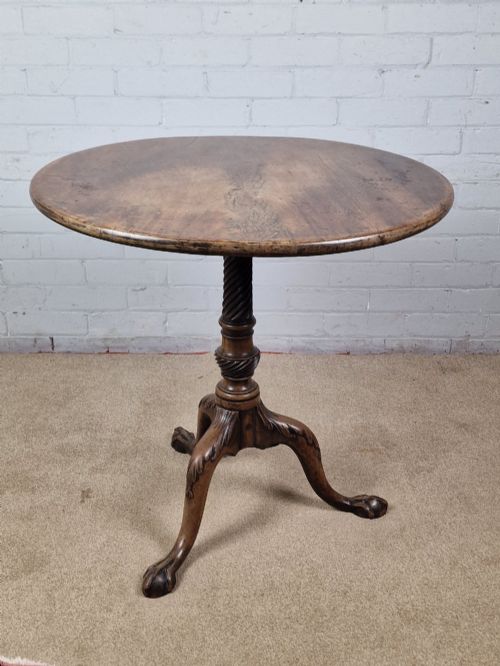
Tables from the George II era display earlier eighteenth-century proportions, often utilising rich red walnut timber rather than Victorian burr veneers. Their tripod supports tend to feature restrained, elegant lines rather than heavy carving.
These pieces represent earlier Georgian cabinetmaking traditions focused on solid timber properties and clean structural silhouettes.
How should I care for a walnut surface?
Protect the polished timber from direct sunlight and excessive heat fluctuations to prevent the walnut veneer from drying or cracking over time. Regular dusting with a soft, dry cloth preserves the original polish.
Avoid placing damp items directly onto the wood, and use appropriate coasters or mats to safeguard the historical finish.