


Brown Walnut Tabletop Drawers
These brown walnut tabletop drawers combine compact scale and rich cabinet-work, offering a practical solution for organising small treasures.
Brown Walnut Tabletop Drawers
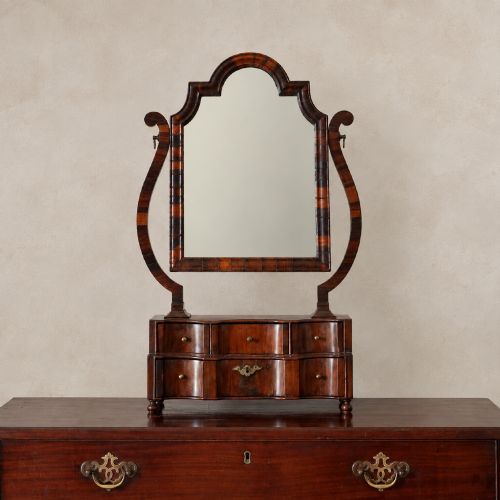
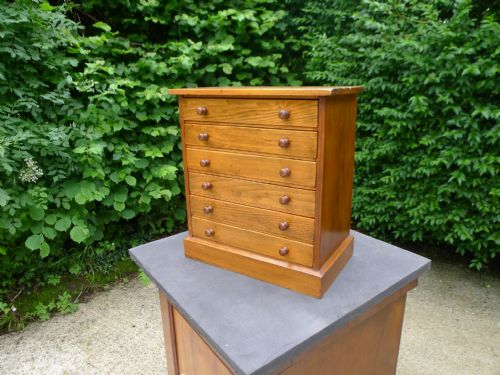
When you search for brown walnut tabletop drawers, you encounter a specialised selection of miniature furniture, collectors' cabinets, and dressing table mirrors dating from the seventeenth century through to the Edwardian period. The most common forms on this page are toilet mirrors and dressing table mirrors featuring small storage boxes beneath the glass, alongside miniature chests and table cabinets.
Examples span several distinct historical eras, including Queen Anne, Georgian, Victorian, and Dutch Neo-Classical styles. Many pieces incorporate functional compartments, bureau fitments, or small drawers intended for jewellery, toilet articles, or documents.
Origins vary from English country houses to continental workshops in Germany and the Netherlands, bringing diverse regional decoration such as marquetry and boxwood inlay to the same tabletop form.
Materials and construction methods
Cabinet-makers relied primarily on solid walnut and burr walnut veneers, selecting timber for deep colour and lively grain figures. Secondary woods and decorative accents such as laburnum, boxwood inlay, and brass handles provide contrast and structural definition.
Mirrors utilise original or historic mirror glass paired with pivoting frames, while the miniature chests and cabinets employ traditional dovetail joints and fitted internal compartments designed for small-scale storage.
Miniature chests were once thought to be toys for aristocratic children, though most served as apprentice masterpieces or stylish desktop catch-alls for pocket watch keys.
Judging quality in tabletop pieces
Quality rests upon the choice of timber and the precision of the cabinet-work, particularly in the figuring of the walnut veneer and the crispness of any inlay or marquetry. Superior examples display balanced proportions, harmonious grain matching across drawer fronts, and original brass hardware.
The sophistication of the internal fitment also distinguishes finer pieces, such as those with fitted bureau compartments or intricate miniature drawer arrangements, from simpler utilitarian boxes.
The Brown Walnut Tabletop Drawers Glossary
- Toilet mirror
- A small mirror mounted on a pivoting frame above a miniature chest base containing small drawers. These pieces sat upon dressing tables or chests of drawers during the seventeenth and eighteenth centuries.
- Burr walnut
- A prized wood veneer obtained from the deformed growth or burr of a walnut tree, yielding a swirling, highly decorative grain pattern. Cabinet-makers used it on prominent surfaces of fine cabinets and mirrors.
- Bureau fitment
- A small interior arrangement featuring pigeonholes and miniature drawers concealed behind a sloping or drop-front flap. It allowed owners to store writing materials and correspondence within a tabletop cabinet.
- Marquetry
- The art of applying decorative pieces of veneer to a structure to form intricate pictorial or geometric designs. Dutch makers frequently applied floral marquetry to dressing mirrors and cabinets.
Brown Walnut Tabletop Drawers: Frequently Asked Questions
What were tabletop drawers used for?
These small cabinets and mirrors served multiple practical purposes in period homes, primarily storing valuable personal items like jewellery, cosmetics, and documents. Owners placed them on larger pieces of furniture to keep daily essentials close at hand.
Many incorporated locking mechanisms to secure precious trinkets or private correspondence away from domestic staff and visitors.
How do I date a walnut dressing mirror?
Dating relies on observing construction methods, timber choice, and the overall style of the mirror supports and base drawers. Earlier pieces from the seventeenth and early eighteenth centuries often feature distinct bracket feet, feather banding, and hand-cut dovetails.
Later Victorian and Edwardian revivals frequently incorporate machine-sawn elements, different secondary timbers, and heavier plate glass beneath the swing mirror.
Where should I place a tabletop cabinet?
These compact pieces fit well on top of sideboards, chests of drawers, or desks where their rich walnut surfaces can be appreciated. Their shallow depth allows them to sit comfortably on narrower surfaces without dominating a room.
Avoid placing them in direct sunlight or near heat sources, as walnut veneer and older polishes are sensitive to rapid temperature fluctuations and strong light.
What is the difference between a toilet mirror and a dressing mirror?
The terms are often used interchangeably by dealers to describe mirrors designed for grooming that include small storage boxes or drawers beneath the glass frame. Historically, a toilet mirror specifically referred to one equipped for powdering and personal preparation.
Both forms typically feature a pair of upright arms holding a pivoting glass plate above a base fitted with one or more small drawers.