


Georgian Style Miniature Furniture
Georgian style miniature furniture brings scale-down craftsmanship to small spaces, offering remarkable period detail in compact forms.
Georgian Style Miniature Furniture
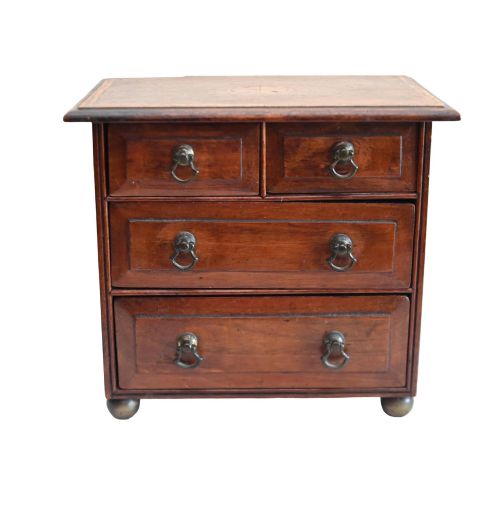
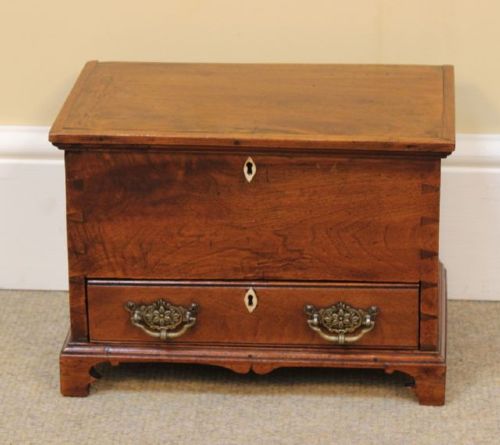
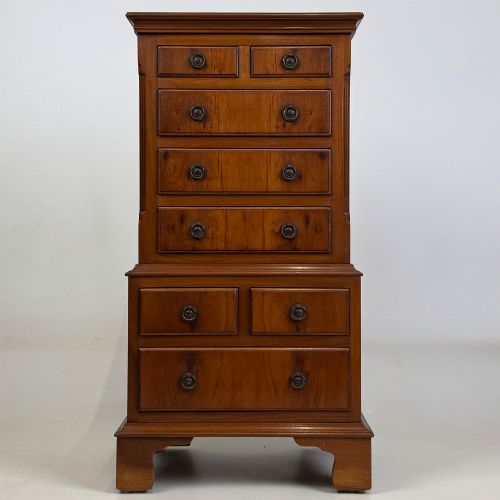
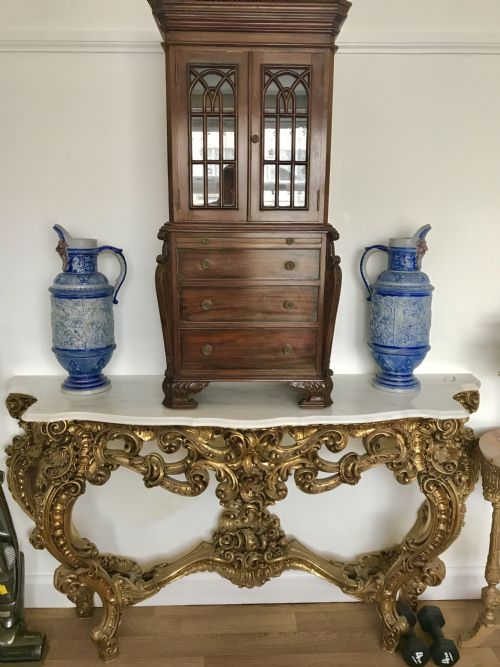
Georgian style miniature furniture encompasses small-scale seats, chests, and cabinets created across the nineteenth and twentieth centuries. These items replicate full-size domestic furnishings, spanning chair forms, display cabinets, and mule chests.
The selections on this page draw from periods including the eighteenth century, Regency, and Edwardian eras, alongside revival movements like Chippendale and George II style. Miniature furniture serves as cabinet-maker samples, apprentice pieces, or decorative furnishings designed for domestic display.
How they were made
Maker workshops utilised traditional cabinet timbers such as mahogany, walnut, oak, and yew wood. Details often include French polishing, hand carving, and applied brass or glass elements.
Makers adapted full-scale joinery techniques to reduced dimensions, sometimes scaling items down to a quarter size. Materials like bone and textile occasionally appear for subtle accents and upholstery.
Listings feature items from the eighteenth, nineteenth, and twentieth centuries, constructed in mahogany, walnut, oak, and yew.
What varies in quality
Proportion and fidelity to full-scale prototypes dictate the refinement of a miniature piece. Skilled makers maintained accurate architectural balance and timber figuring despite the reduced scale.
Surface finish and the crispness of hand carving separate workshop triumphs from simpler decorative items. Grain selection in timbers like walnut and mahogany elevates the visual depth of smaller surfaces.
The Georgian Style Miniature Furniture Glossary
- Apprentice piece
- A demonstration item created by a craftsman to prove skill before gaining master status. These often show exceptional attention to detail.
- French polishing
- A wood finishing technique that builds up a high-gloss surface using shellac dissolved in alcohol. This method enhances the natural grain of mahogany and walnut.
- Mule chest
- A blanket chest featuring one or more drawers at the base. Miniature versions duplicate this hybrid storage form in compact dimensions.
- Windsor
- A wooden chair construction style featuring a solid saddle-sculpted seat into which legs and spindles are inserted. Miniature examples replicate this rustic seating form.
Georgian Style Miniature Furniture: Frequently Asked Questions
What is miniature furniture used for?
These pieces were historically created as maker samples, apprentice demonstrations, or specialised children's items. Today they function as cabinet displays and collector pieces.
Their compact scale allows them to fit easily on shelves, desks, or mantelpieces without dominating a room.
How old is miniature furniture?
The pieces available span from the eighteenth century through to the twentieth century. Revival styles from the Edwardian period also feature prominently.
Dating relies on timber choice, construction methods, and stylistic cues borrowed from larger period furniture.
How do I care for miniature wood furniture?
Keep wooden pieces away from direct sunlight and fluctuating heat sources to prevent timber splitting or polish degradation. Gentle dusting with a dry cloth maintains the surface.
Avoid liquid cleaners unless specifically formulated for antique polished surfaces.