
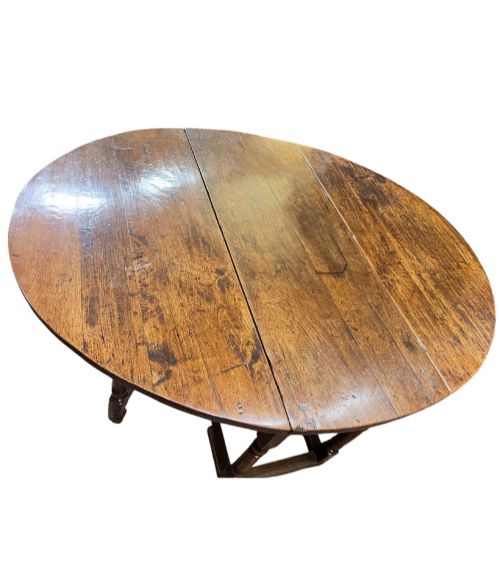
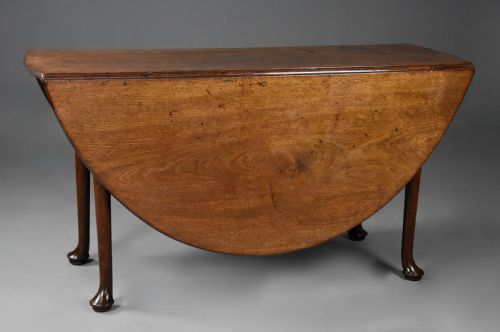
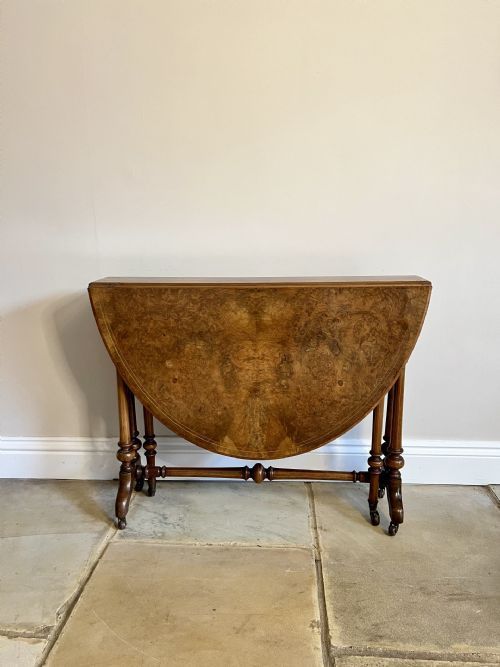


Brown Walnut Gateleg Table
A brown walnut gateleg table brings warmth and folding practicality to a room, spanning compact 17th-century forms and larger 18th-century dining pieces.
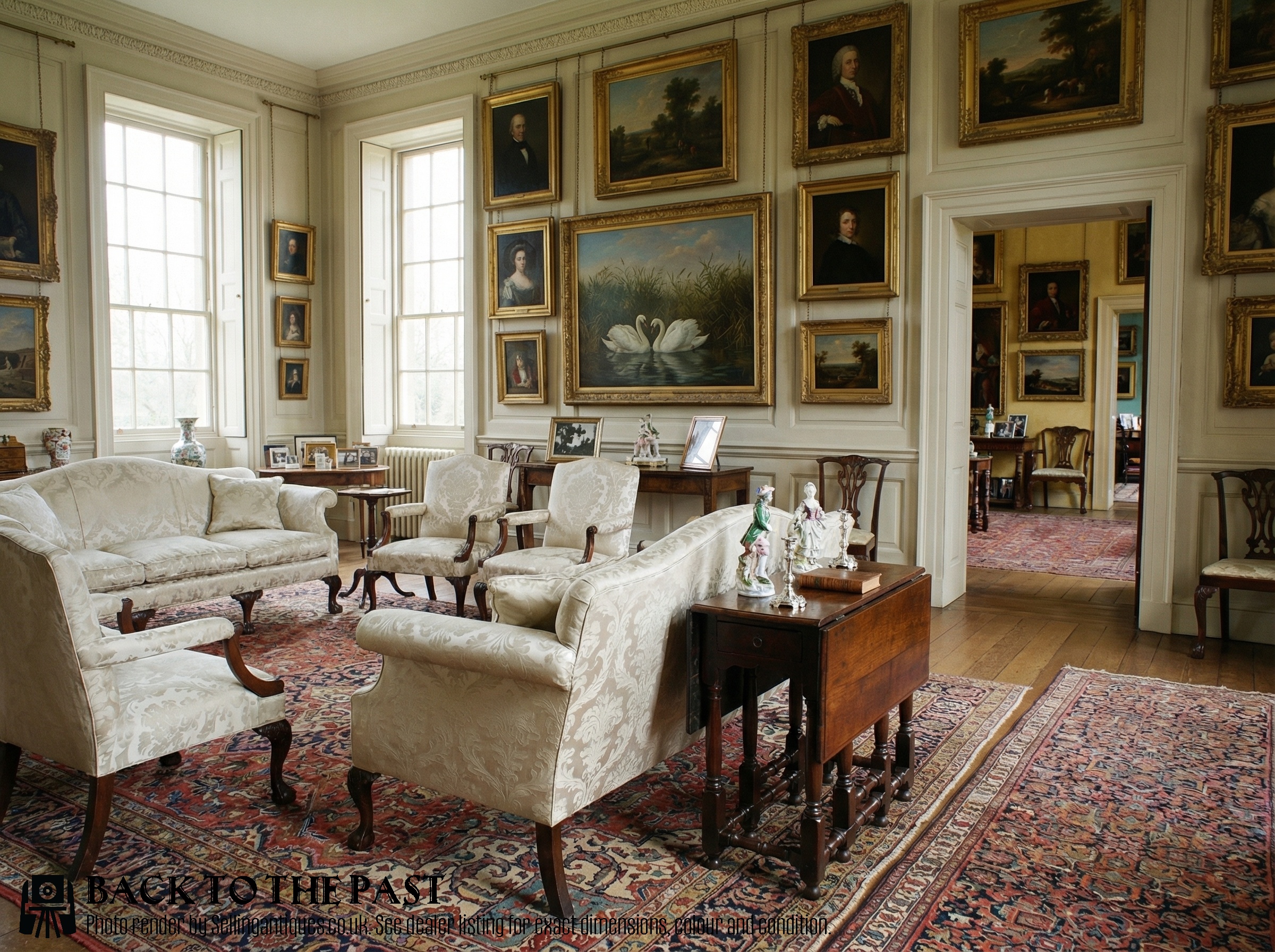
Brown Walnut Gateleg Table
A brown walnut gateleg table provides a sturdy surface supported by hinged legs that swing outward to hold drop leaves. These pieces appear frequently in Victorian variations such as Sutherland tables, alongside earlier 17th-century and 18th-century formats.
The selection ranges from small occasional, coffee, and tea tables to large solid drop-leaf dining tables. Most examples encountered here date from the Victorian period, utilising rich walnut timber and folding mechanisms.
Buyers select these tables for their versatility in smaller spaces and their rich timber tones. The combination of drop leaves and swinging gate legs allows the furniture to expand for dining or fold away compactly.
How they were made
Cabinet makers constructed these tables primarily from solid walnut and burr walnut veneers, often incorporating wood inlay and marquetry for decorative effect. Brass fittings frequently appear on castors or hinges, while ceramic elements sometimes feature within the hardware.
The folding action relies on hinged gate legs that pivot from the central frame to support the drop leaves. Joinery techniques connect the leaves securely to the fixed top, allowing smooth movement without compromising structural integrity.
Listings feature walnut and burr walnut timbers across Victorian, Georgian, and 17th-century periods.
What varies in quality
Quality depends upon the choice of timber figure, particularly the depth and pattern found in burr walnut veneers. Tables displaying finely figured grain and well-preserved patination command greater interest than plain surfaces.
The rigidity of the gate leg mechanism and the precision of the leaf joints dictate overall execution. Superior pieces maintain smooth operation in the folding leaves and tight, clean joinery throughout the underframe.
The Brown Walnut Gateleg Table Glossary
- Gateleg table
- A table with hinged leaves supported by swing-out legs. This design provides an expandable surface that folds down when not in use.
- Sutherland table
- A narrow-profile drop-leaf table with exceptionally slender folding leaves and gate legs. Victorian makers popularised this format for tea and occasional use.
- Burr walnut
- Timber taken from a tree growth showing swirling grain patterns. Cabinet makers prized this wood for decorative veneering on table tops.
- Drop leaf
- A hinged section of a table top that folds down. Supporting brackets or swing legs hold the leaf level when raised.
- Marquetry
- Inlaid wood pieces arranged to form decorative patterns on a surface. This technique often appears on Victorian table tops.
Brown Walnut Gateleg Table: Frequently Asked Questions
How do I use a gateleg table daily?
Keep the leaves folded down against the central base to save floor space in a hallway or living room. Swing the gate legs outward to support the leaves whenever you need an extra surface for dining or tea.
Avoid placing extremely hot items directly onto the polished walnut surface to protect the timber and veneer. Use coasters and placemats to preserve the finish during regular daily use.
What is a Sutherland table?
A Sutherland table is a specific type of drop-leaf table featuring very narrow leaves and a slender underframe. Victorian makers designed them to take up minimal space when folded completely flat.
They function well as occasional tables, tea tables, or compact desks in smaller rooms. The swinging gate legs operate independently to support each narrow leaf.
How do I date a walnut table?
Examine the construction methods, hardware, and overall style to establish the period of manufacture. 17th-century and 18th-century examples typically feature heavier solid timber frames and simpler structural lines.
Victorian and Edwardian versions often incorporate burr walnut veneers, marquetry inlay, and slender turned legs with castors. Comparing the leg turnings and hinge types helps clarify the approximate decade.
Is burr walnut durable?
Burr walnut provides a strong stable surface when applied as a veneer over a solid wood core. The swirling grain makes the wood visually striking while retaining good structural resilience.
Protect the veneer from direct sunlight and excessive moisture to prevent warping or fading. Regular dusting and occasional wax polishing will maintain the condition of the timber.