
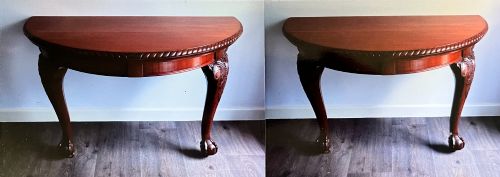
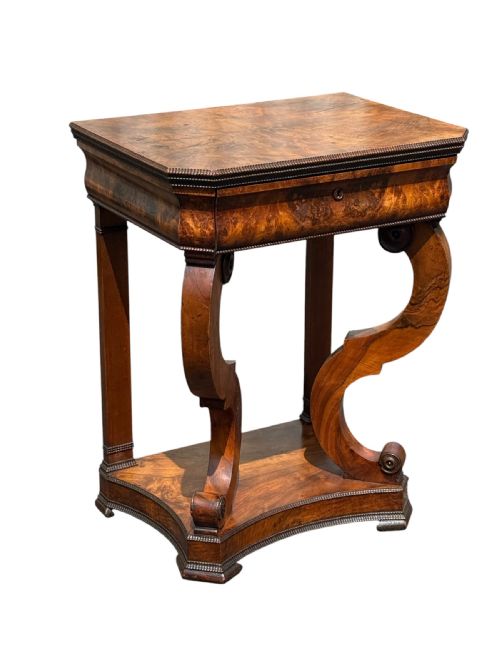
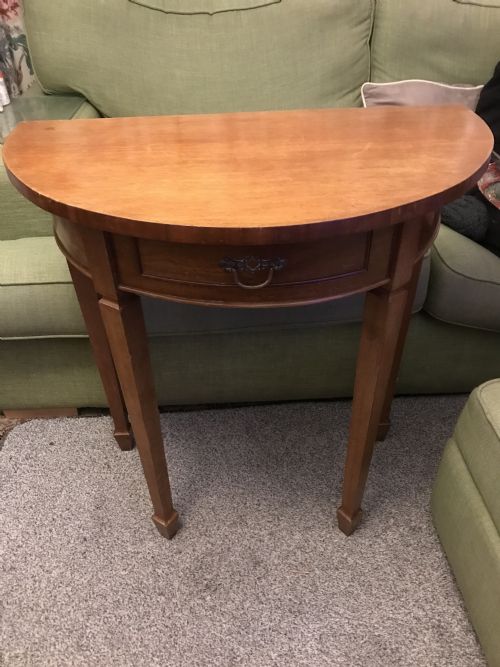
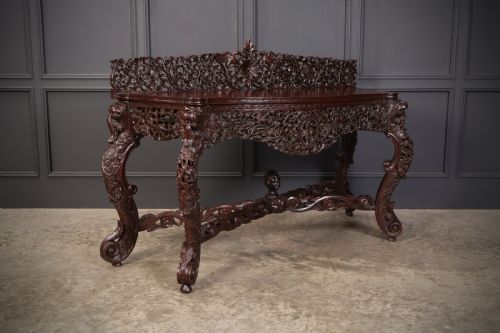

Brown Wall Table
These brown wall table examples offer practical display and architectural presence, bridging the gap between functional furniture and decorative console design.
Brown Wall Table
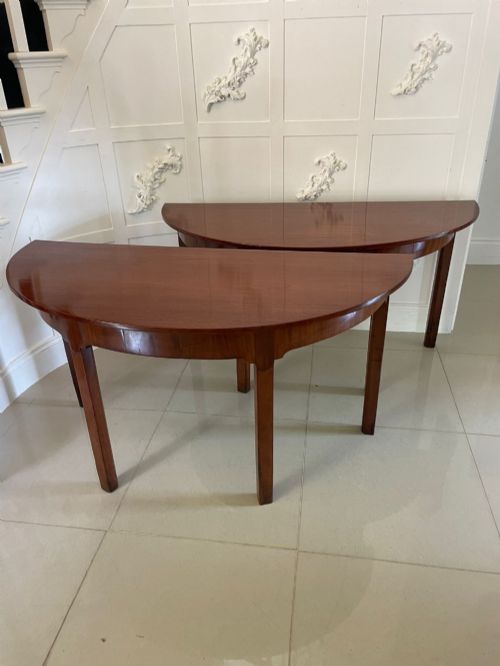
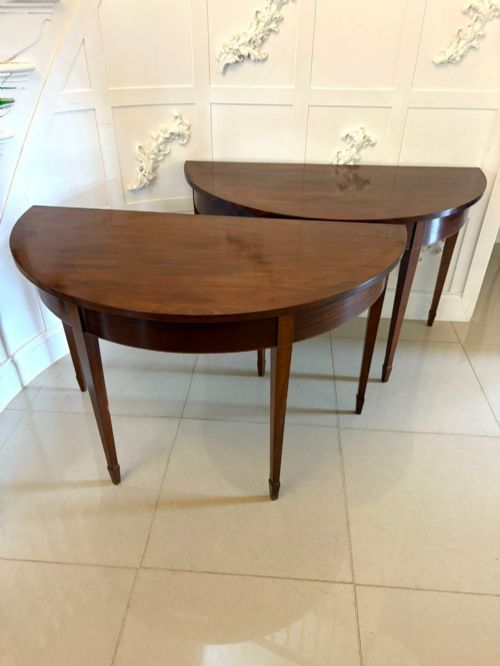
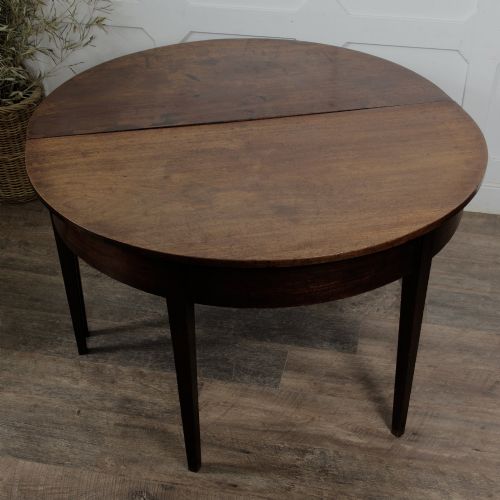
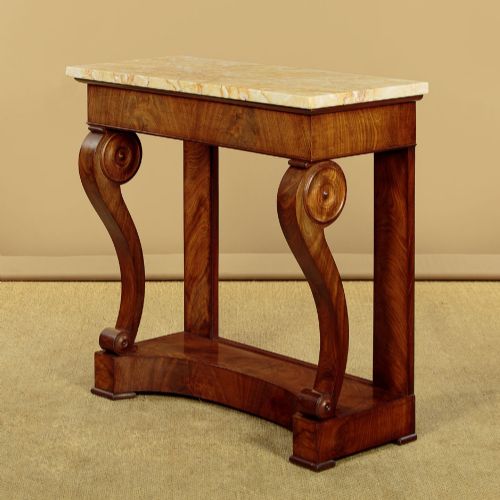
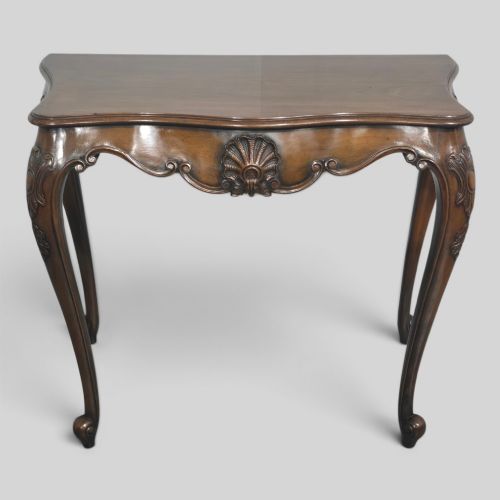
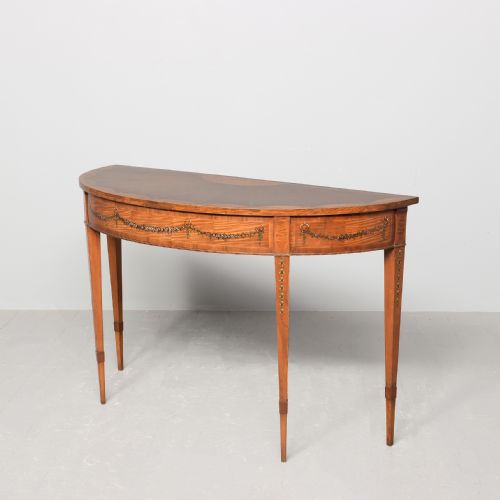
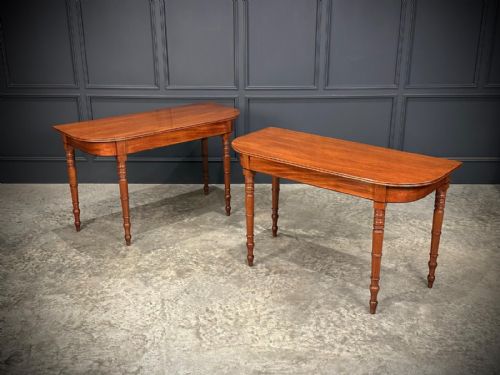
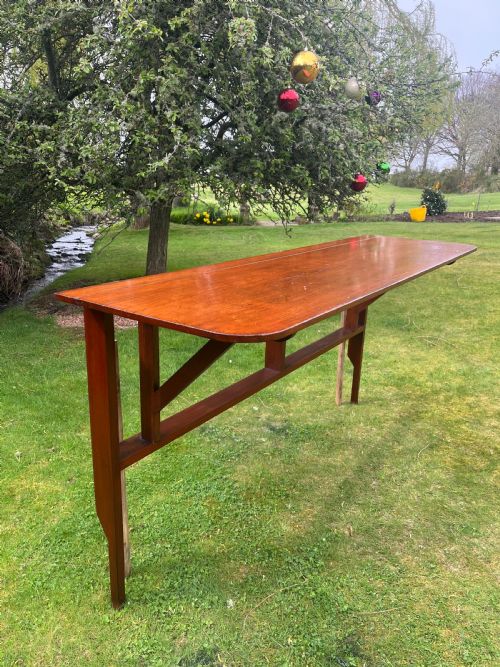
A brown wall table encompasses console tables, serving tables and hall tables designed to sit flush against a room's perimeter. When you search for this phrase, you encounter demi-lune, serpentine and rectangular forms spanning Georgian, Victorian and twentieth-century periods.
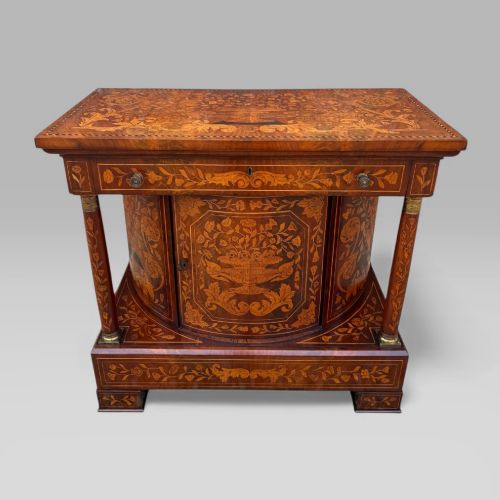
The materials you meet most frequently on this page are mahogany, walnut and oak, often paired with marble tops or intricate marquetry. These pieces originate from English, French and Italian workshops, reflecting diverse regional tastes in domestic furnishing.
How they were made
Cabinet makers utilised solid timbers and figured veneers such as mahogany, walnut and satinwood, applying brass mounts, ormolu and carved details to enrich the surface. Timber preparation involved careful selection of grain patterns, particularly figured mahogany and burr walnut, to create visual depth on flat and curved surfaces.
Marble inserts were cut and polished to fit recessed table tops, whilst glass, brass and copper elements provided structural and decorative contrast. Joinery methods relied on traditional framing and dovetailing to support wall-mounted or console configurations.
Console tables appear frequently in demi-lune and serpentine forms alongside French and Italian regional designs.
What varies in quality
The refinement of timber selection and veneer matching defines the upper tier of these tables, where figured grains flow seamlessly across curved demi-lune shapes. Lower grades rely on plain timber stock with minimal decorative inlay or simpler, heavier structural frames.
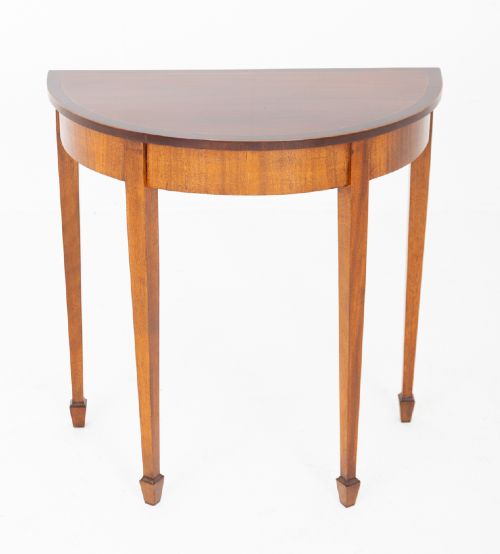
Hand-carved ornamentation, such as the detail found on Baroque style walnut bases or inlaid spade feet, distinguishes bespoke cabinetwork from utilitarian production. The integration of high-grade marble slabs and crisp brass hardware further separates exceptional pieces from standard examples.
Epstein and Co
The Brown Wall Table Glossary
- Demi-lune
- A half-moon shape used for table tops and frames designed to fit flat against a wall. This format dominates the console and serving table selections on this page.
- Marquetry
- The art of applying decorative veneer pieces to a structure to form intricate patterns or pictures. Craftsmen utilise various coloured woods to achieve tonal contrast.
- Ormolu
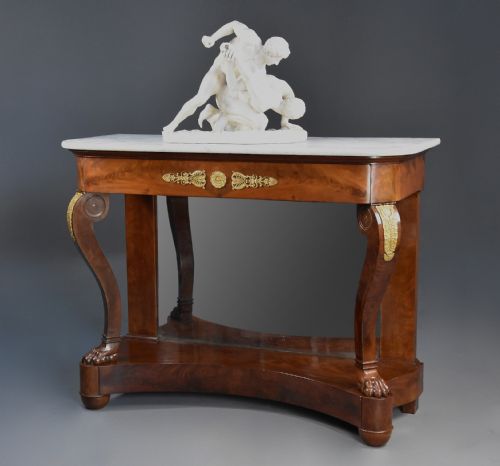
- Gilded bronze ornamentation applied to furniture pieces, particularly popular in French cabinetwork. It provides metallic highlight against dark woods like mahogany and walnut.
- Serpentine
- A curved line that is convex in the centre and concave at the sides. This contour adds dynamic movement to the front edge of a console table.
- Console table
- A table supported against a wall by consoles or legs, historically designed for display rather than dining. Many examples in these listings feature marble tops and rich wood veneers.
Brown Wall Table: Frequently Asked Questions
Where should I place a brown wall table?
These tables suit narrow entrance halls, living room perimeters or dining spaces where floor space is limited. Their flat backs allow them to anchor securely against vertical surfaces.
Pairing a table with a matching wall mirror or placing a decorative clock upon it creates a balanced focal point in a traditional interior.
What is the difference between a console and a side table?
Console tables are traditionally designed to stand against a wall, sometimes relying on wall brackets or fixed mounts for stability. Side tables are freestanding pieces that can be moved around a room more easily.
Many antique examples blur these distinctions, serving interchangeably as hallway stands or serving surfaces.
How do I date a mahogany console table?
Dating relies on stylistic clues such as the presence of Georgian bracket feet, Regency brass inlays, or Edwardian spade feet. Timber characteristics and construction techniques also provide clear indicators of period origin.
Tables from the eighteenth century tend to show dense, dark mahogany grains, whereas later nineteenth and twentieth-century pieces often utilise brighter figured veneers.