
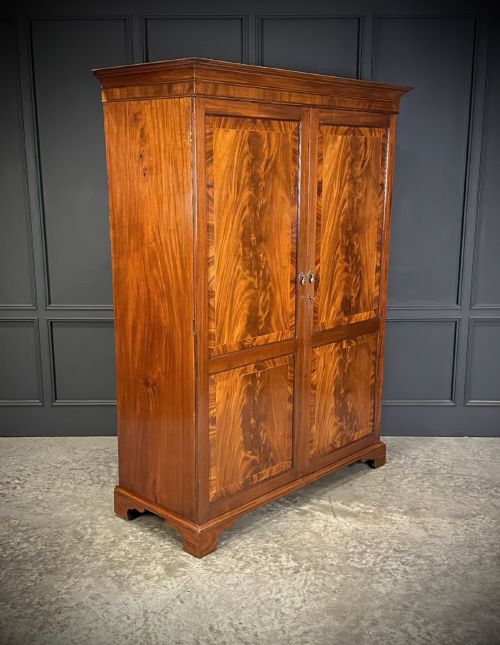
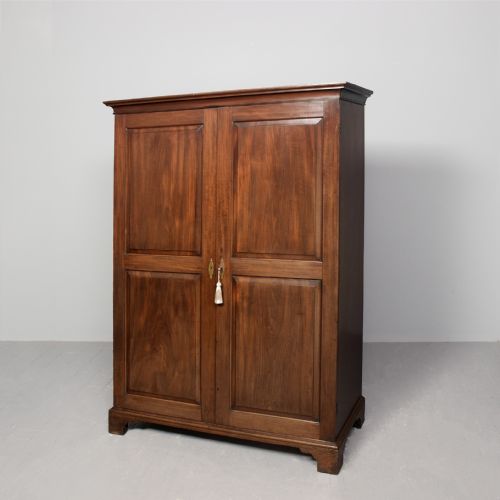
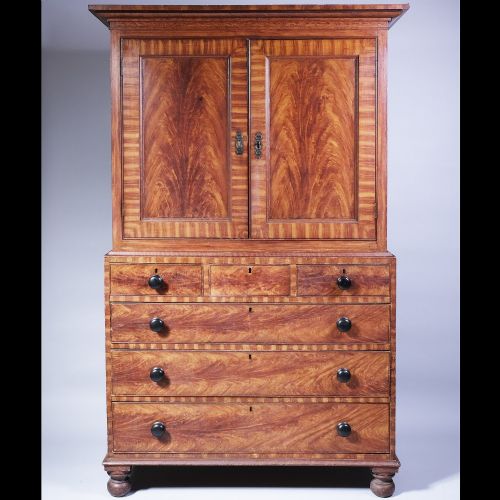
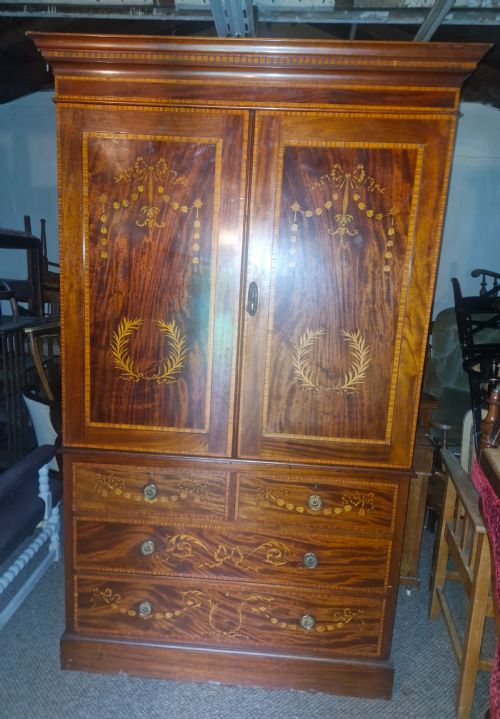
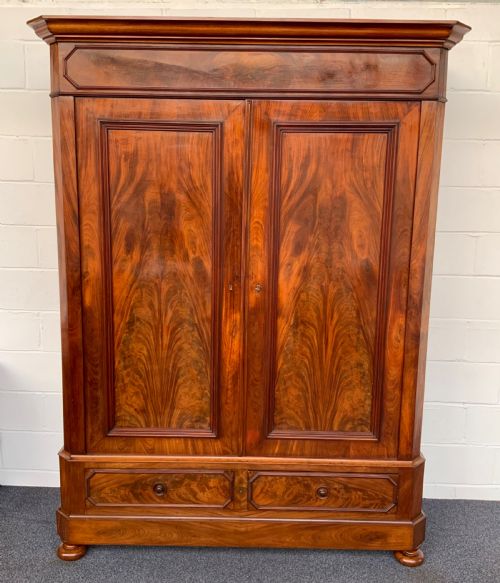


Brown Timber Linen Press
A brown timber linen press is a substantial storage piece built to hold folded textiles, and you are most likely to meet mahogany examples from the Georgian and Victorian eras.
Brown Timber Linen Press
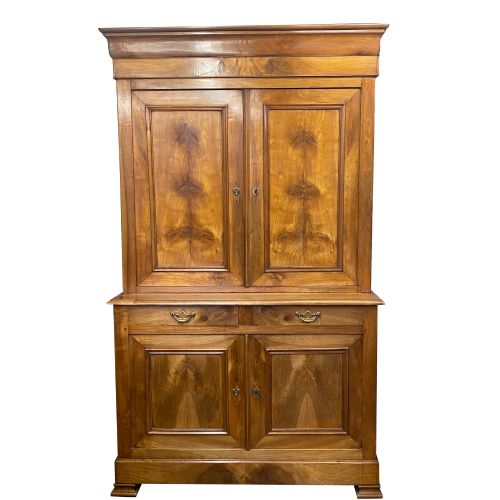
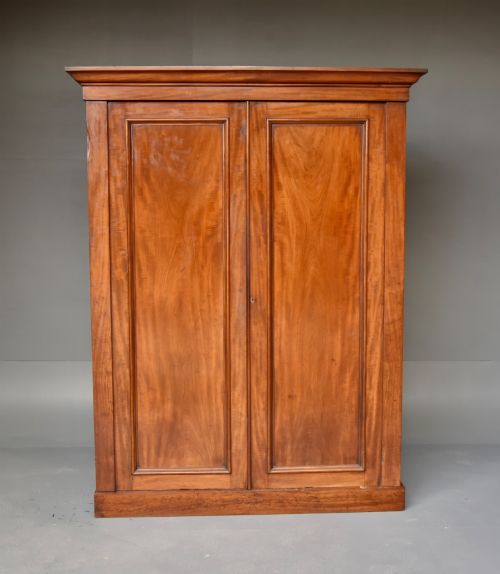
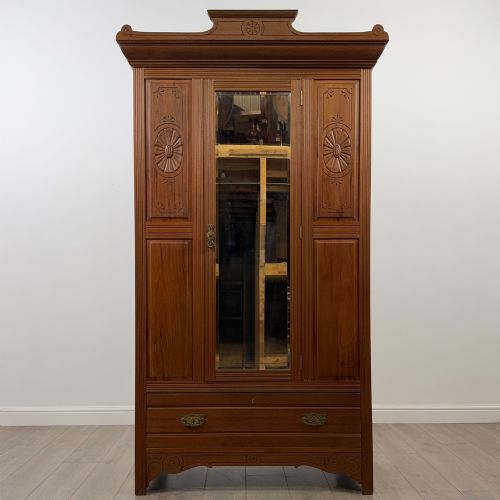
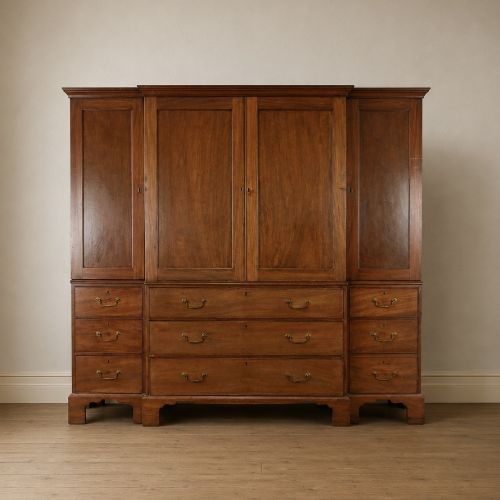
A brown timber linen press is a tall storage cabinet designed primarily for household linens, combining upper cupboard doors with lower drawers. When you search for a brown timber linen press, you will encounter substantial pieces of furniture intended for traditional bedroom or hallway storage. The selection spans formal Georgian breakfront designs to simpler nineteenth-century country iterations.
The pieces listed on this page range across multiple historical periods, notably the eighteenth and nineteenth centuries, alongside Edwardian and later interpretations. Mahogany and walnut dominate the structural timbers, though you also find cherry, chestnut, and teak among the recorded items. Forms overlap with wardrobes, armoires, and housekeepers cupboards, reflecting how these large storage cabinets served domestic routines.
Georgian and Victorian examples form the backbone of the selection, often presenting with panelled doors and fitted interior trays or shelves. You will also see regional variations such as French provincial armoires and Anglo-Indian cabinets sharing the broad functional category of heavy timber storage. These items rely on their imposing scale and rich timber grains to anchor a room.
How they were made
Makers built these presses using solid and veneered hardwoods over secondary softwood framing, selecting timber for strength and visual grain. Mahogany and walnut appear frequently, sometimes utilised as flame veneers over pine or oak carcases to create decorative door panels. Brass hardware, including drop handles and escutcheons, secures the doors and drawer fronts.
Construction methods relied on traditional joinery such as dovetailing for internal drawers and mortise and tenon frames for the main body. Surface finishes typically involved hand-applied polish, wax, or varnish to protect the timber and accentuate the natural figuring. Some regional examples feature painted finishes, scumble glaze, or polychrome decoration directly over the wood.
Listings feature items spanning from the seventeenth-century William and Mary period through to twentieth-century Edwardian and continental styles.
What varies in quality
Quality in these pieces depends heavily on the selection of timber and the precision of the cabinetmaker's joinery. Superior examples display carefully matched grain patterns across the doors and drawers, alongside robust internal construction that prevents sagging under heavy linen loads. The crispness of carved details and the retention of original brass fittings further separate finer pieces from utilitarian storage.
Proportion and scale dictate the visual success of the piece, with better makers achieving balanced cornices and well-scaled plinths. The integrity of the timber movement and the smooth operation of internal slides or drawers indicate the original standard of workshop production. Pieces that retain their fitted interior trays show a higher degree of original utility and completeness.
Druce & Co.·Mercier
The Brown Timber Linen Press Glossary
- Linen press
- A tall cupboard featuring upper doors enclosing sliding trays for folded textiles, mounted above a chest of base drawers. This form evolved to protect household linens from dust before modern wardrobe hanging space became standard.
- Breakfront
- A piece of furniture where the central section projects forward from the flanking outer wings. This architectural arrangement creates depth and shadow on large wardrobes and bookcases.
- Flame mahogany
- A veneer cut from the fork of the mahogany tree where the branch meets the trunk, producing a distinctive flickering flame pattern. Cabinetmakers prized this figure for principal display surfaces like cupboard doors.
- Scumble painted
- A decorative paint technique where a translucent top glaze is manipulated with combs or rags to imitate the grain of finer woods. It allowed simpler timbers like pine to mimic costly hardwoods.
- Dovetail
- A joint formed by interlocking wedge-shaped fingers, used primarily in drawer construction to resist pulling forces. Hand-cut dovetails vary in width and regularity according to the maker's hand.
Brown Timber Linen Press: Frequently Asked Questions
What is the difference between a linen press and a wardrobe?
A traditional linen press contains sliding interior shelves or trays specifically sized for folded textiles, usually positioned above a chest of lower drawers. Wardrobes are designed primarily for hanging garments on vertical rails.
Over time, many presses were converted internally to take hanging rails by removing the original trays. Examining the interior configuration helps reveal the piece's original domestic function.
How do I date a brown timber linen press?
Dating relies on observing structural characteristics, timber choices, and hardware styles associated with specific design periods. Georgian pieces often display architectural cornices and bracket feet, while Victorian examples tend to be heavier with round-cornered plinths.
Internal construction details, such as drawer linings and backboards, provide further clues. Secondary woods like oak point to earlier construction, whereas deal and pine become common in nineteenth-century country pieces.
How do I clean and maintain antique timber?
Maintain the surface by dusting regularly with a soft, dry cloth and applying microcrystalline wax sparingly when the wood appears dry. Avoid placing heavy timber furniture near direct heat sources or in strong sunlight, which causes the wood to dry out and split.
Harsh chemical cleaners strip the historic finish and should be avoided entirely. Gentle care preserves the patina developed over centuries of use.
Can these large cupboards be dismantled for transport?
Many period linen presses and wardrobes were built in two or more sections, such as a base chest and an upper cupboard, to facilitate moving them between rooms. Breakfront designs and larger armoires often dis-assemble into distinct carcase parts.
Checking how the cornice, middle moulding, and base lock together reveals whether the piece breaks down. Professional delivery teams familiar with antique furniture are recommended for assembly.