


Brown Timber Buffet
These brown timber buffet pieces offer substantial storage and timeless craftsmanship, anchoring a dining room with rich wood grain and period character.
Brown Timber Buffet
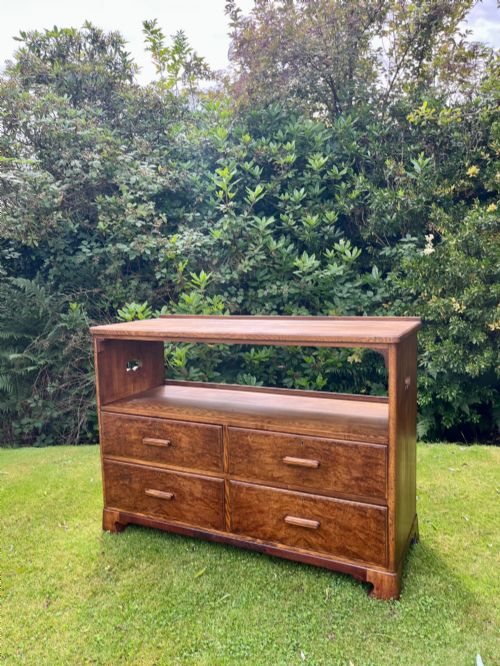
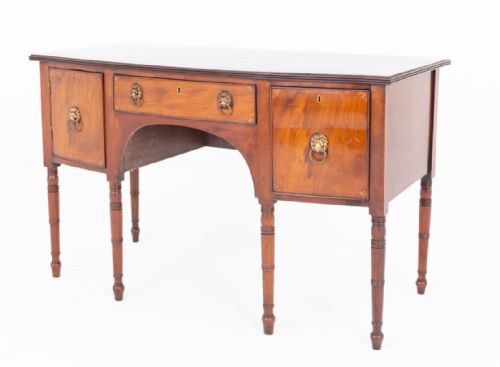
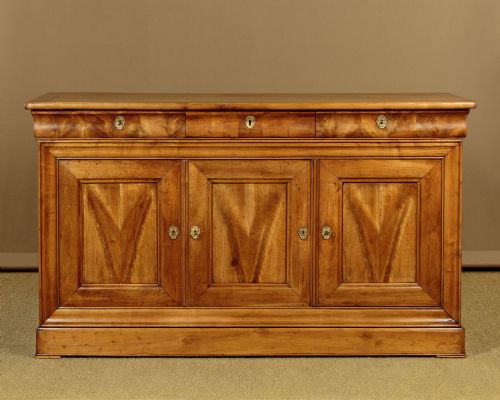
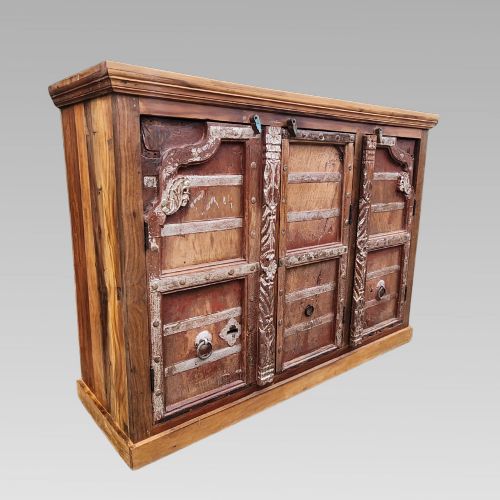
When you search for a brown timber buffet, you are looking at substantial storage furniture designed for dining spaces, encompassing sideboards, cabinets, and cupboards. These pieces provide functional storage for tableware and provisions whilst serving as a focal point in traditional and period rooms.
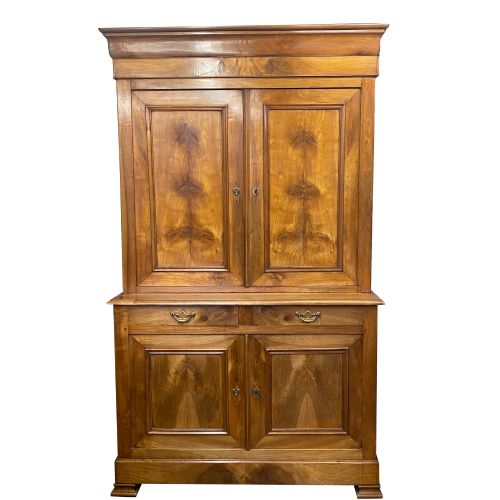
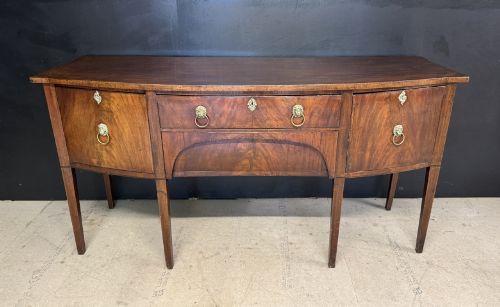
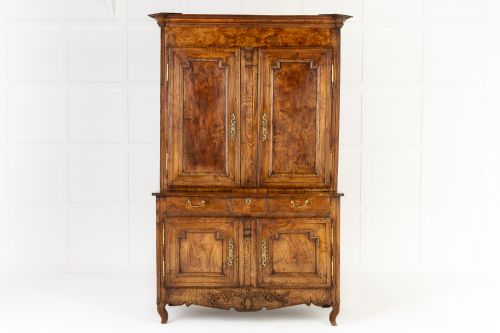
On this page, you are most likely to meet mahogany, cherrywood, and elm examples dating from the eighteenth century through to the early twentieth century. Common forms include serpentine front sideboards, two-part housekeeper cupboards, and enfilades from various European and English traditions.
How they were made
Construction relies heavily on dense hardwoods such as mahogany, walnut, and cherrywood, often selected for rich natural grain patterns. Cabinetmakers utilised structural timbers like elm and ash for internal framing and carcass construction.
Surface decoration frequently incorporates boxwood and satinwood inlay to create contrasting borders and geometric patterns. Metal fittings in brass and iron provide functional handles and hinges that complement the timber tones.
Materials represented include mahogany, walnut, cherrywood, elm, ash, and rosewood, frequently enhanced by boxwood and satinwood inlay.
What varies in quality
The sophistication of the timber selection and veneer matching marks the division between standard utility pieces and high-end cabinet work. Superior examples display carefully figured grain patterns across large unbroken surfaces, such as drawer fronts and sideboard tops.
The precision of the joinery and the refinement of secondary details, including inlaid stringing and carved mouldings, indicate the standard of craftsmanship. Original hardware and undisturbed patination on the timber further distinguish finer periods.
Whytock and Reid·Gillow
The Brown Timber Buffet Glossary
- Serpentine
- A front profile characterised by a gentle convex centre flanked by concave curves, common on finer eighteenth-century sideboards. This shape requires advanced woodworking skill to execute accurately.
- Buffet deux corps
- A tall two-part storage cabinet or cupboard, typically originating from French regional traditions. The upper section generally sits upon a deeper base.
- Inlay
- A decorative technique where contrasting materials such as boxwood or satinwood are inserted into recesses within the primary wood surface. It creates ornamental borders and geometric motifs.
- Enfilade
- A long sideboard or cabinet designed for formal dining rooms, frequently encountered in French provincial furniture. These pieces offer extensive surface area and multiple cabinet doors.
Brown Timber Buffet: Frequently Asked Questions
How do I date a brown timber buffet?
Dating relies on examining construction methods, timber choices, and stylistic markers such as inlay patterns or leg designs. Eighteenth-century pieces typically feature hand-cut dovetails and native timbers like mahogany or elm.
Later Victorian and 1930s examples introduce machine-sawn components and different veneering techniques. Comparing the hardware and secondary woods helps confirm the period of origin.
Where should I place a sideboard?
Sideboards and buffets function best in dining rooms or large hallways where their storage capacity and surface area remain accessible. They serve well against a primary wall to anchor the room's proportions.
Ensure adequate clearance for opening cabinet doors and drawers without obstructing walking routes. Positioning them away from direct heat sources protects the timber from drying out.
How do I care for antique timber?
Maintain antique timber surfaces by dusting regularly with a soft, dry cloth and avoiding harsh chemical cleaning products. Periodic application of quality beeswax feeds the wood and preserves the natural patina.
Keep the furniture away from direct sunlight and radiators to prevent the wood from warping or cracking. Stable room humidity levels help maintain the integrity of historic joints and veneers.
What is the difference between a buffet and a sideboard?
Buffets traditionally emphasise closed cupboard storage for food and serving dishes, often taking slightly taller or more robust forms. Sideboards frequently incorporate a combination of drawers and cabinets tailored for cutlery and linens.
Over time, regional terminology blurred these distinctions, leading makers to use the terms interchangeably for similar dining room furniture.