
Brown Satinwood Desk
A brown satinwood desk brings refined warmth to a room through delicate timber grain and classic writing surfaces.
Brown Satinwood Desk
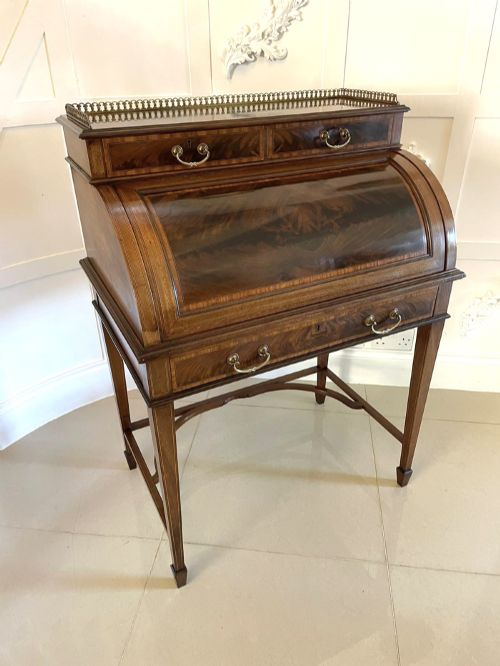
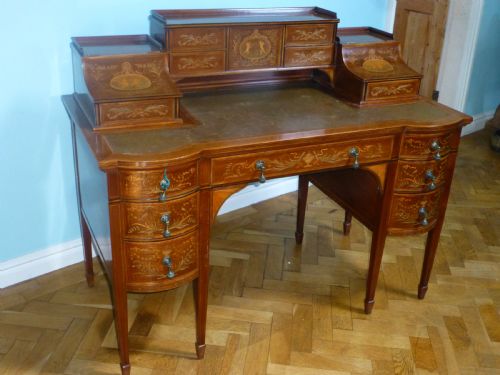
A brown satinwood desk is a writing surface constructed from or veneered in light timber, frequently accented with darker contrasting woods. These pieces span several distinct eras, appearing most often in Edwardian interpretations and nineteenth century revivals.
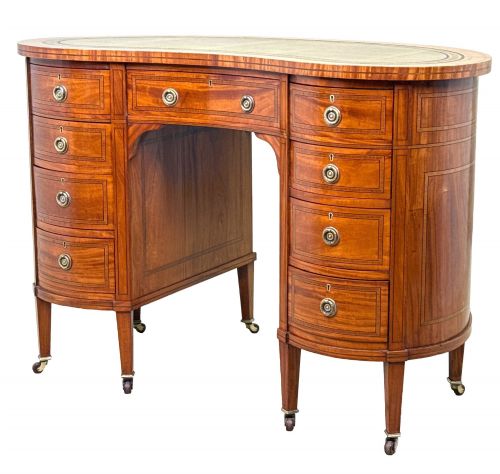
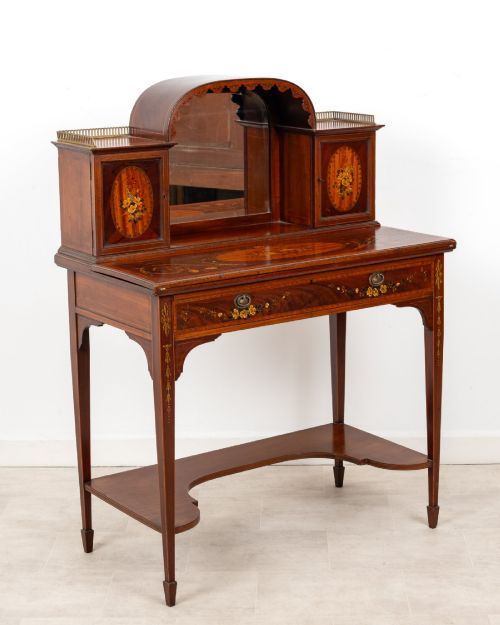
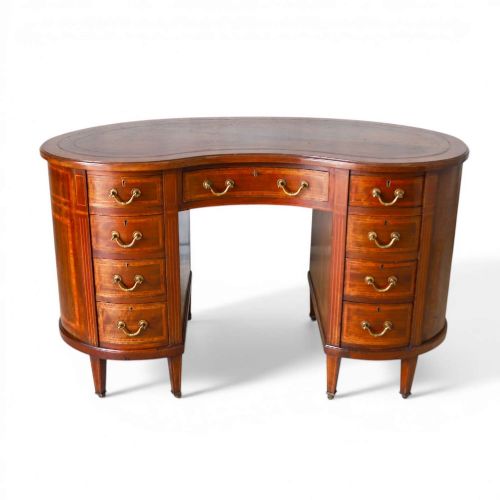
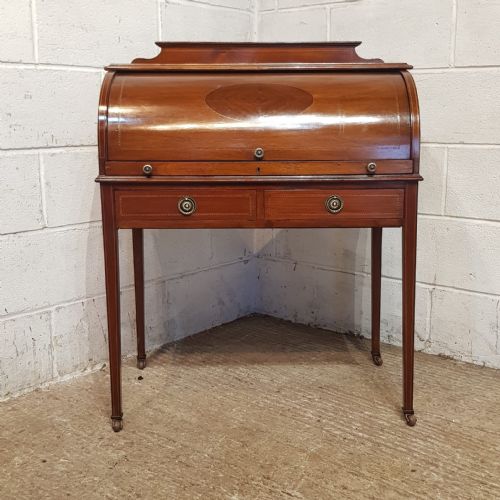
The selection ranges from compact ladies writing tables and kidney shaped forms to elaborate cylinder desks and Carlton House variants. Makers from the Victorian and Edwardian periods utilised satinwood alongside mahogany and walnut to create sophisticated writing furniture.
Materials and construction
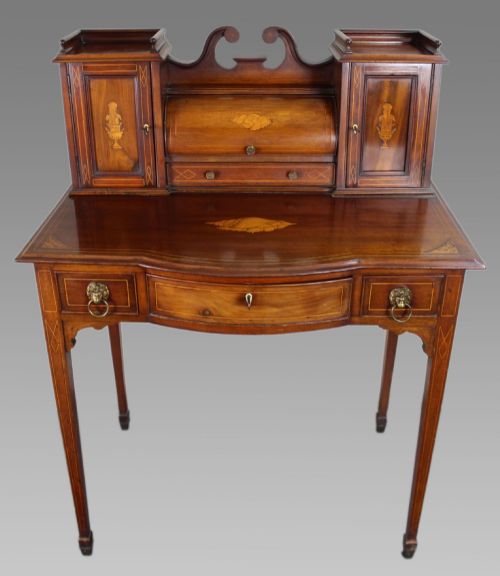
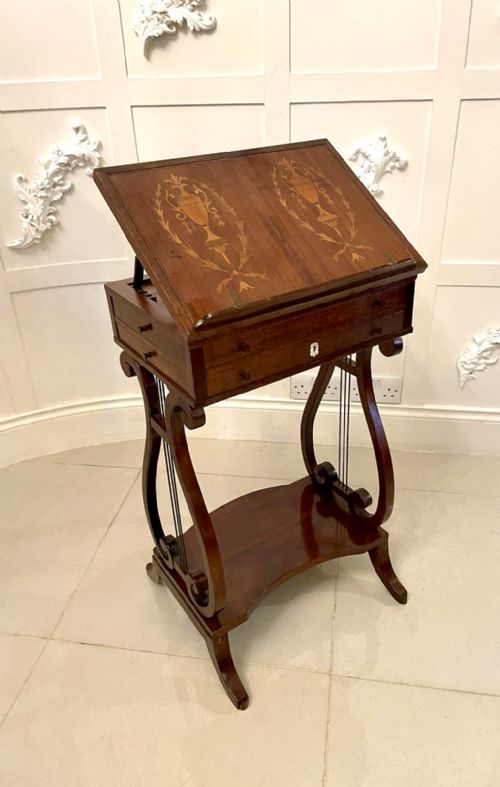
Cabinetmakers combined solid woods and veneers, laying satinwood across structural carcasses of mahogany or walnut. Surfaces frequently received intricate marquetry and inlay work, using contrasting timbers to form geometric borders and delicate floral motifs.
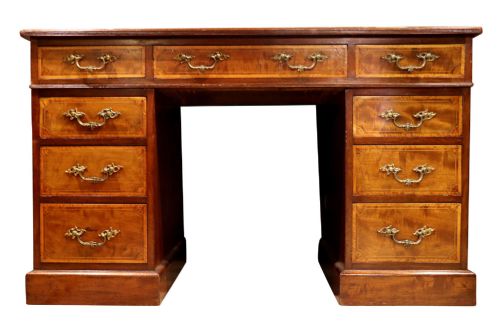
Writing surfaces were typically inset with panels of leather or fabric, bordered by subtle tooling. Metal components such as brass handles and ormolu mounts added functional contrast to the polished wooden frames.
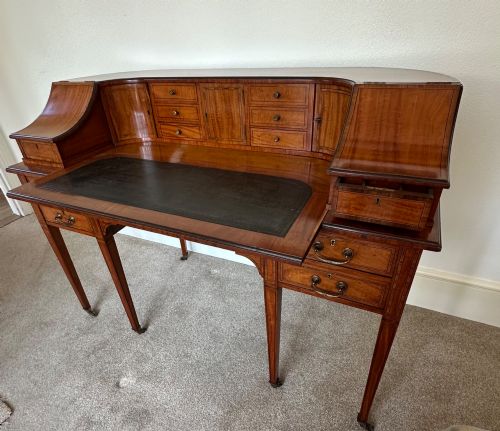
Form variations include kidney shapes, cylinder mechanisms, and Carlton House writing tables.
Judging the range
Distinction across these pieces rests on the crispness of the inlay work and the depth of figure in the satinwood veneer. Finer examples display meticulous botanical marquetry and retain original hardware, such as stamped brass handles.
Structural integrity and the retention of secondary timbers define better workshops. Pieces bearing maker stamps from prominent London firms demonstrate superior internal drawer construction and balanced proportions.
Edwards & Roberts·Maple & Co·James Shoolbred
The Brown Satinwood Desk Glossary
- Satinwood
- A dense, lustrous timber originating from tropical regions, valued for its golden sheen and smooth texture. It takes a high polish and serves as the primary veneer for decorative furniture.
- Carlton House desk
- A form of writing table featuring a curved superstructure fitted with small drawers and pigeonholes around the perimeter. It typically includes a pull-out leather-lined writing slide.
- Kidney desk
- A writing table shaped with a curved, kidney bean outline designed to fit comfortably against the body. These pieces often feature freestanding pedestals with drawers beneath the curved top.
- Marquetry
- The art of applying small pieces of veneer to a structure to form decorative patterns or pictures. Craftsmen selected different coloured woods to create contrast without relying on paint.
- Cylinder desk
- A writing cabinet enclosing a roll-top cylinder mechanism that conceals a pull-out desk surface and internal pigeonholes. When closed, the curved wooden shutter protects the writing area.
Brown Satinwood Desk: Frequently Asked Questions
How do I care for satinwood?
Keep wooden surfaces away from direct sunlight to preserve the golden tone of the timber. Apply a microcrystalline wax periodically to maintain the polished finish without building up heavy residue.
Avoid placing hot cups or damp items directly on the polished surface. Use felt pads beneath desk accessories to prevent scratching the delicate veneer.
Are these desks suitable for daily work?
Many antique writing tables accommodate modern laptops and paperwork if the writing height aligns with your chair. Consider the kneehole clearance and depth of the surface before placing equipment.
Protect original leather or fabric writing surfaces with a custom blotter if you write heavily by hand. The underlying structure remains sturdy for regular writing tasks.
How do I distinguish Edwardian from Georgian pieces?
Edwardian interpretations frequently employ lighter satinwood veneers combined with mahogany framing and machine-cut inlays. These pieces often date from the widespread Sheraton Revival movement around nineteen hundred.
Georgian originals display heavier construction techniques and hand-cut dovetails within the drawer linings. The timber patination on eighteenth-century pieces shows deeper oxidation over time.