


Brown Sail Boat Artwork
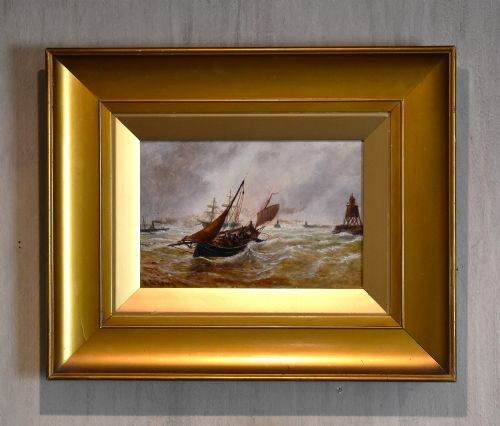
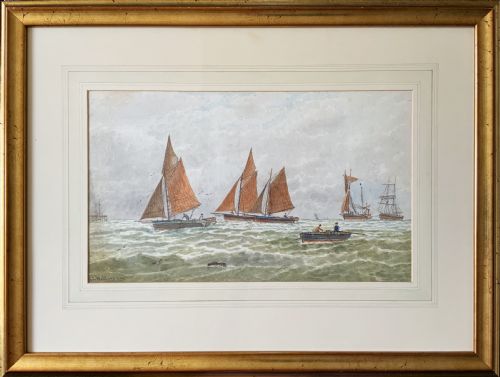
Brown sail boat artwork captures maritime movement on canvas and paper, bringing historic coastal life directly into your room.
Brown Sail Boat Artwork
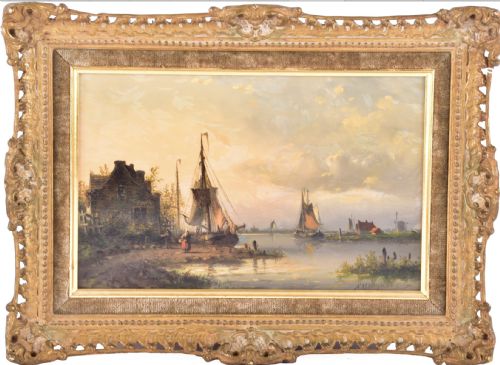
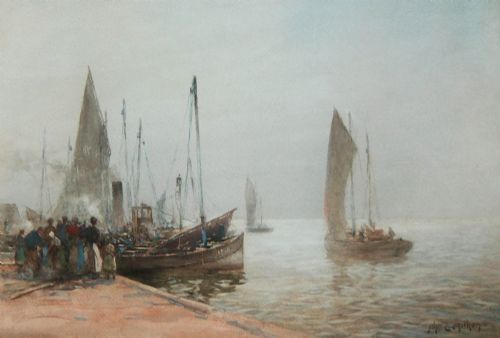
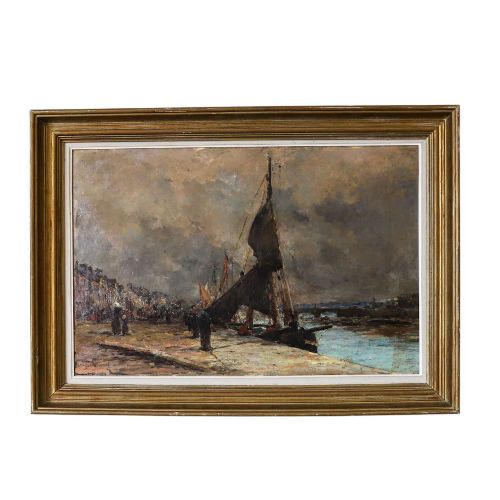
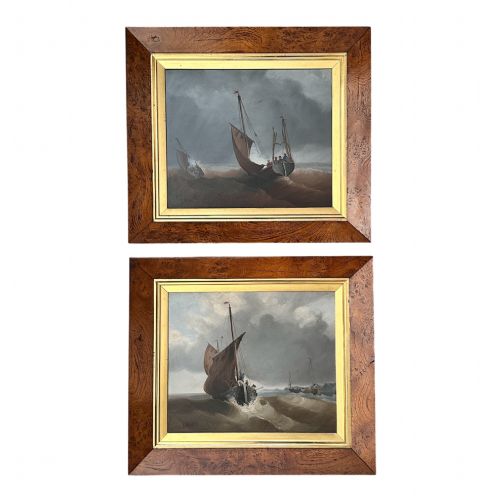
Brown sail boat artwork encompasses maritime paintings, watercolours, and framed wall art depicting ships, harbours, and coastal scenes. These pieces capture vessels navigating open waters, docking in British and European ports, or resting on shores.
Buyers will most frequently meet nineteenth-century works and early twentieth-century examples on this page. The selection spans delicate watercolour paintings on paper and substantial oil paintings on canvas housed in gilt frames.
The subjects range from tranquil fishing boats and Thames barges to dramatic naval engagements and bustling harbours. Each piece records maritime history through the distinctive artistic styles of the Victorian era, British Impressionism, and Post-Impressionism.
Materials and technique
Artists painted these maritime scenes using oil on canvas, oil on board, and watercolour pigment applied to paper. Canvas works allowed for rich layering and textured depictions of turbulent seas, while watercolours achieved luminous, transparent effects for coastal light.
Many of these historic paintings retain their original wooden and gilt frames, which provide structural support and complement the maritime palette. The combination of traditional pigments, paper, and timber reflects the standard workshop practices of nineteenth and early twentieth-century artists.
Maritime subjects on this page include bustling Dutch harbours, English fishing ports, naval warships, and quiet coastal riverscapes.
Assessing quality and execution
Quality rests upon the artist's command of perspective, light, and maritime anatomy, particularly in the rigging and hull structures of the sailing vessels. Superior examples demonstrate confident brushwork and accurate atmospheric conditions that convey the movement of water and wind.
The preservation of the paper or canvas also dictates the standing of a piece, with fine works maintaining their original pigment vibrancy without excessive fading or discolouration. Additionally, the craftsmanship of the accompanying period gilt frame contributes significantly to the overall integrity of the artwork.
James E. Aitken·John Moore of Ipswich·Bernard Benedict Hemy·George Stanfield Walters·Thomas Bush Hardy·Edward Henry Eugene Fletcher·George Henry Knight·John Callow·Fred Mayor·Walter Sweet·Owen Bowen·Frank Wasley·Micheal Matthews·Bertram Priestman·Charles Edward Wilson·Maurice Sijs
The Brown Sail Boat Artwork Glossary
- Watercolour pigment
- A colour medium ground with water-soluble binders, frequently utilised on paper for luminous coastal scenes. It allows artists to build delicate translucent washes.
- Gilt frame
- A wooden picture surround coated with a thin layer of gold leaf or metallic paint. These frames enhance the visual weight and historical context of nineteenth-century oil paintings.
- Post-Impressionism
- An art movement extending beyond Impressionism that focuses on expressive forms and symbolic use of colour. Works in this style often display bolder brushstrokes and simplified coastal shapes.
- Seascape
- A painting, photograph, or other work of art that depicts the sea. These compositions frequently centre on shipping vessels, harbours, and coastal weather.
- Canvas
- A heavy woven fabric stretched across a wooden stretcher bar to serve as a durable support for oil painting. It provides a textured surface that holds thick pigment applications.
Brown Sail Boat Artwork: Frequently Asked Questions
What periods do these artworks cover?
The collection spans from the eighteenth century through the Victorian era up to the mid-twentieth century. Most items originate from the nineteenth and early twentieth centuries.
Artists during these periods documented changing maritime technology, transitioning from traditional sailing ships and fishing boats to steam-powered vessels.
How should I hang watercolour paintings?
Watercolours require careful placement away from direct sunlight to prevent the pigments and paper from fading over time. UV-protective glass and professional framing help safeguard these delicate works.
Keep them in rooms with stable humidity levels to protect both the paper support and the surrounding frame.
What is the difference between oil and watercolour marine art?
Oil paintings utilise heavy pigments on canvas or board, offering rich textures and deep tones suited to dramatic seas and stormy skies. Watercolours use translucent washes on paper for lighter, more atmospheric coastal views.
Oils are generally more robust, whereas watercolours require protective glazing.
Are these pieces signed by the artists?
Many of the works feature visible signatures, initials, or studio attributions left by the original nineteenth and twentieth-century painters. These signatures often help identify the specific coastal region or harbour depicted.
Unsigned pieces rely on stylistic evidence and period framing for attribution.
How do I identify a Victorian marine painting?
Victorian marine pieces typically focus on detailed rigging, trading vessels, and coastal fishing fleets rendered in realistic nineteenth-century palettes. They frequently appear in ornate gilt frames characteristic of the period.
The subject matter often reflects Britain's maritime dominance and coastal industry during the nineteenth century.