
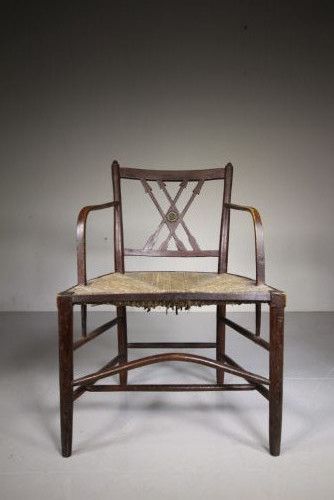

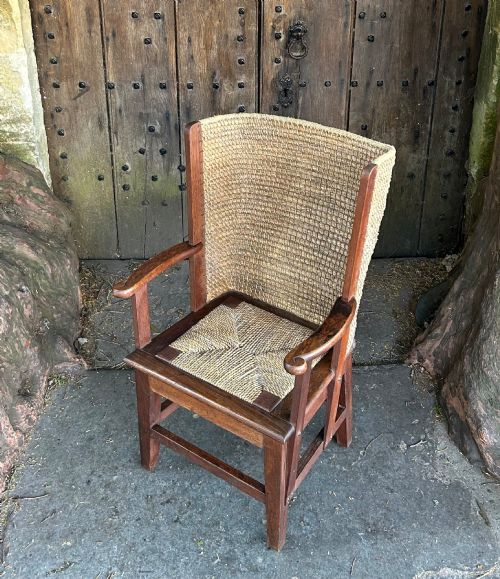
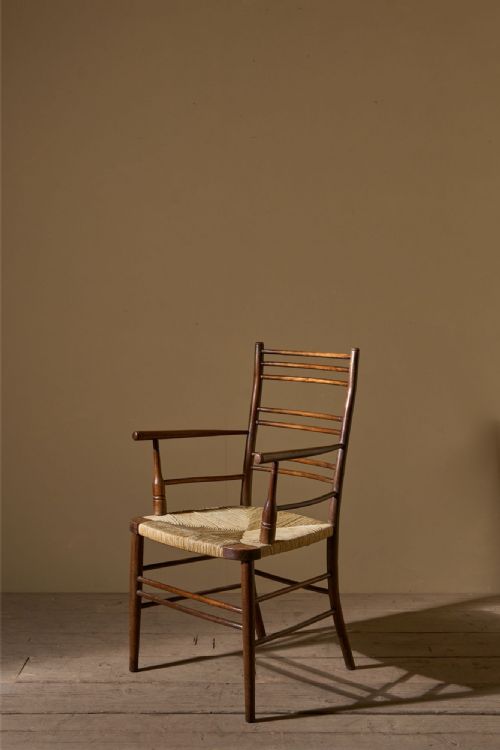
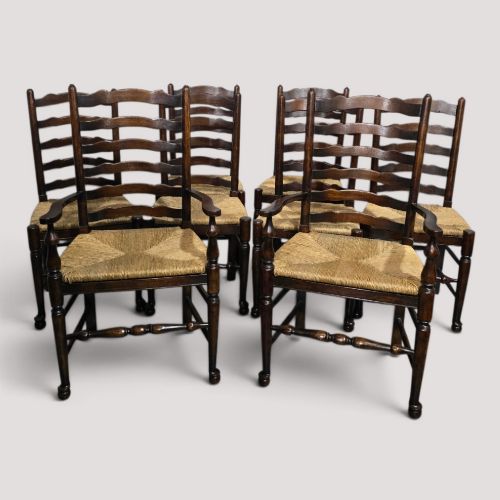
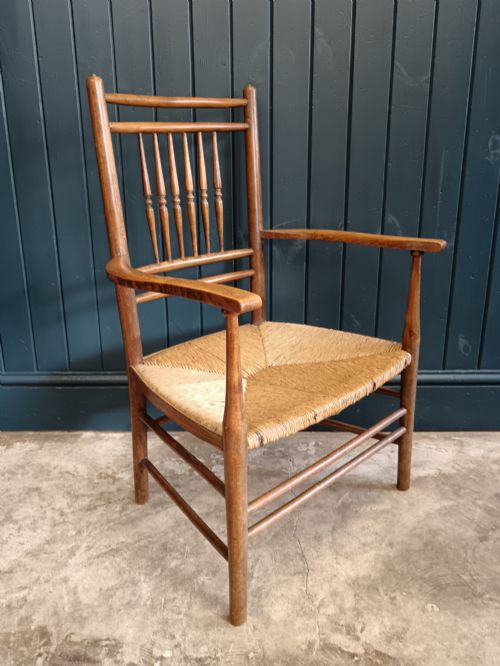


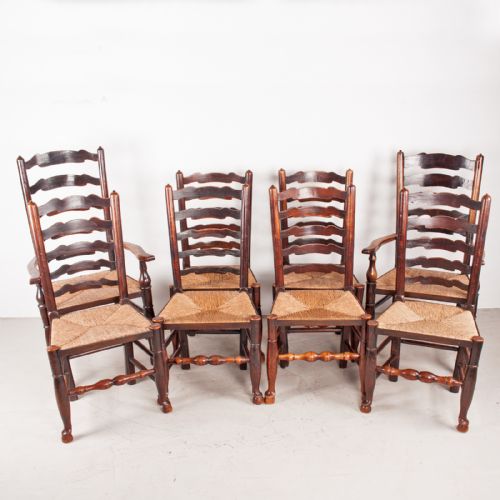
Brown Rush Seated Armchair
A brown rush seated armchair brings vernacular warmth to an interior, combining sturdy native timbers with traditional twisted seating.
Brown Rush Seated Armchair
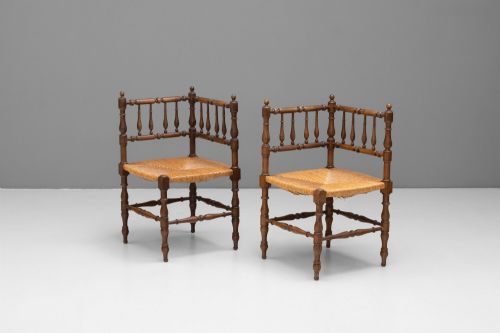
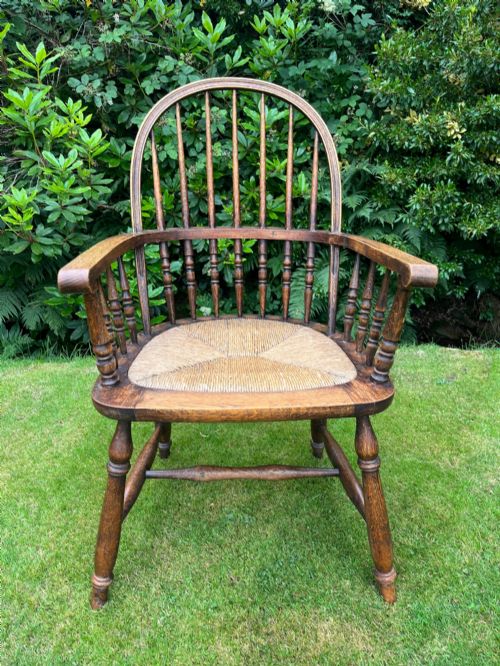
A brown rush seated armchair is a vernacular seating form rooted in regional British and European country traditions. These chairs combine timber frames with woven organic cord seating, spanning periods from the Georgian era through the Arts and Crafts movement and the early twentieth century.
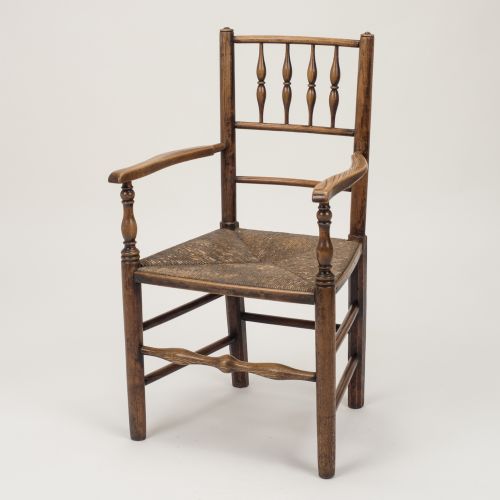
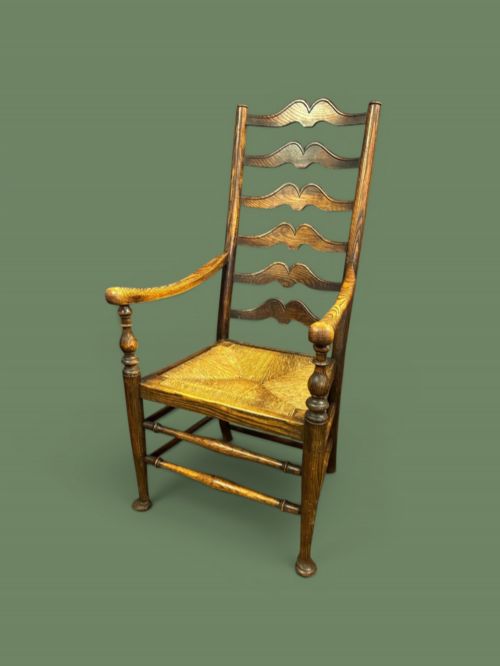
The brown rush seated armchair appears most frequently in native woods like elm, ash, and oak, often shaped into ladder-back, spindle-back, or country carver configurations. Regional variations range from Lancashire and Cheshire ladder-backs to Scottish crofter chairs and Sussex fireside seating.
Makers utilised local timbers for strength and resilience, creating practical seating for farmhouse kitchens, parlours, and country houses. Their survival rests on honest construction and straightforward utility rather than courtly fashion.
How they were made
Frames are constructed from solid native hardwoods such as elm, ash, oak, fruitwood, and beech, turned on lathes or shaped by hand. Joinery relies on traditional pegged mortise and tenon joints to withstand daily domestic strain.
Seats are woven by hand using dried marsh grass or rush twisted around a core to form a durable, textured pad. This organic material acquires a rich brown patina over decades of handling and exposure to light.
Listings feature native hardwoods including elm, ash, oak, fruitwood, and beech combined with traditional woven rush across the eighteenth, nineteenth, and early twentieth centuries.
What varies in quality
Quality depends on the harmony of timber selection, the crispness of turned spindles, and the tightness of the rush weave. Chairs retaining their original painted or polished surfaces demonstrate superior historical integrity compared to those stripped or heavily restored.
Proportion and stance separate standard utility pieces from masterworks of regional design. A well-balanced frame with elegant rake to the back legs and finely proportioned arm supports commands greater regard.
Liberty Morris And Co·E W Godwin·Dicon Nance St Ives Studio
The Brown Rush Seated Armchair Glossary
- Rush
- Dried marsh grass woven to form resilient, textured seating pads. It shrinks and tightens as it dries, providing a supportive surface.
- Ladder-back
- A chair back featuring horizontal arched wooden slats between upright posts. This traditional form offers strong structural support.
- Spindle-back
- A chair back filled with multiple slender turned wooden rods. This construction lightens the visual weight of heavy hardwood frames.
- Carver
- An armchair designed with supportive armrests, traditionally placed at the head of a dining table or used as a fireside seat.
- Vernacular
- Objects built by local artisans using regional materials and traditional methods for everyday use, distinct from high-style urban furniture.
Brown Rush Seated Armchair: Frequently Asked Questions
How do I clean a rush seat?
Dust the woven surface regularly with a soft brush to remove grit from the crevices. Avoid excess moisture, which causes brittle marsh grass to snap.
Treat the timber frame with appropriate beeswax while keeping polishes away from the woven cord.
Are these chairs comfortable for daily use?
Country armchairs offer supportive upright seating derived from utilitarian domestic requirements. The woven rush yields slightly to the body, providing natural give.
Adding a loose cushion allows for extended sitting without altering the historical integrity of the piece.
How do I identify a regional style?
Examine the turning of the spindles and the profile of the ladder slats, which often follow distinct geographic traditions. Lancashire and Cheshire chairs display characteristic tiered uprights.
Scottish and Cumbrian examples utilise heavier framing timbers suited to harsher domestic environments.
Can damaged rush seating be repaired?
Woven rush can be completely re-plied and re-woven by a skilled specialist using traditional marsh grass materials. Expert restoration preserves the structural frame while renewing the functional surface.
Patch repairs are rarely successful due to the tension required across the entire woven pad.